
Online pokies instant withdrawal in Australia: tested PayID rails, the IGA reality and where your payout actually waits
The marketing on every offshore pokies site an Australian player has opened in the last twelve months has the same word sitting in roughly the same place: “instant.” Some add a clock — under an hour, under fifteen minutes, “as fast as your bank.” The numbers on this page come from a different place. They are drawn from published 2026 testing at ten offshore operators Australian players actually use, plus what the Interactive Gambling Act 2001, the ACMA’s blocking register and the new gambling reform do to the rail those sites run on. What follows is what “instant withdrawal” means in practice, why it almost never is, what an AU player gives up by playing offshore, and what the reform quietly changes from 1 January 2027.

Data current as of 22 November 2026 · Licence and payment-ban claims verified against the Interactive Gambling Act 2001, ACMA public register and the National Consumer Credit Protection amendments.
Table of Contents
- What “Instant Withdrawal” Actually Means at AU Pokies Sites
- Why Your 2026 Pokies Payout Isn’t Instant — the Real Speed Tiers
- Ranked: 10 AU Pokies Sites by Their Real 2026 Payout Performance
- The Legal Reality AU Pokies Sites Won’t Tell You
- Playing Offshore Pokies Safely — the Tools and the Catch
- How We Evaluated and Ranked These Pokies Sites
- What the Payout Data Actually Means for Your Next Deposit
- Frequently Asked Questions
What “Instant Withdrawal” Actually Means at AU Pokies Sites
“Instant” is the word. The practice is a tier system. Offshore pokies sites advertising at Australian players describe their payouts in three time-bands that look identical from the outside and pay very differently from it: same-day (under six hours with a pre-verified PayID), next-day (24 to 48 hours after the request is submitted), and slow (bank transfer, three to fifteen business days). The first tier is real. The second is the tier most players actually land in. The third is what the operators that do not publish a PayID rail fall back to.
The structural reason no pokies withdrawal is truly instant is the same one everywhere: a site can press “send” on a PayID instruction in roughly the time it takes to load the banking page, but every operator sits a verification step between the player and that button. The first time a player requests a withdrawal, the request enters a KYC queue; only after the operator has matched an ID, a proof of address and a payment-method document does the request move to the payment queue. The “instant” promise, as one AU-facing review site put it dryly in 2026, is “a mismatch between marketing and reality. A site may advertise PayID withdrawals but still put every first withdrawal through a 24-hour pending review.” The promise survives because the first-withdrawal delay only happens once per account. The data the rest of this page runs on is the data after that first withdrawal — which is when “instant” stops being a marketing line and starts being a measurable rail.
The AU Online Pokies Landscape in 2026 — Offshore and Unlicensed
Every pokies site an Australian player can deposit at in 2026 is offshore. There is no AU licence for online casino games, online pokies or in-play sports betting — not federally under the Interactive Gambling Act 2001, not in any state or territory, not anywhere. The Northern Territory Racing and Wagering Commission, through Licensing NT, licences online bookmakers for pre-event wagering on races and sport; that is the entire shape of Australia’s licensed online wagering market. Sportsbet, bet365 and Ladbrokes operate under NT licences. They do not run pokies.

What the offshore operators in this ranking offer is a product that is prohibited to provide to a person in Australia, accepted by the player with no Australian consumer protection, no ACMA complaints body, no BetStop coverage and no guarantee a balance will survive if the ACMA directs ISPs to block the domain. AUD is accepted at nearly every operator — usually because that is where the volume is, not because the operator has any Australian standing. The page below is honest about that. It does not recommend a place to play. For each operator in the set it tells you what the verified payout data says and what the legal frame around the deposit says, and lets the reader weigh one against the other.
Why Your 2026 Pokies Payout Isn’t Instant — the Real Speed Tiers
The published payout speeds at AU-facing offshore pokies sites in 2026 sit in three distinct tiers, and the spread between them is wider than the marketing suggests. The fastest verified tier — same-day, under six hours — is dominated by operators that have integrated PayID and run weekend processing. In 2026 testing by Pokiesaustralia.com, four operators cleared PayID inside forty minutes: Rolling Slots at 15 minutes, Solana at 10 minutes, Goldenbet at 28 minutes and Lucky7 at 35 minutes. WestAce cleared a Sweet Bonanza session in 58 minutes (PayID/instant banking, A$50 deposit) in the Betsquare.org testing run. Boomerang Casino processed PayID consistently under 3 hours throughout April 2026, against a 6–12 hour average at most competing sites.
The middle tier — next-day, 24 to 48 hours — is where the average PayID withdrawal lands, according to slotozilla’s 2026 testing. This is the window the “instant” promise quietly deflates into for a player who has not pre-verified their account or who hits a weekend queue. The slow tier — bank transfer, three to fifteen business days — is what Royal Reels publishes at 3 business days for a verified PayID, and what Fair Go Casino’s bank transfer stretches to fifteen business days in worst-case timing. The Pokies Net publishes a seven-business-day window across all withdrawal methods. These tiers do not overlap. An operator at the top tier runs PayID in under an hour on a verified weekday withdrawal. An operator at the bottom tier is a cheque in a different wrapper.
What determines which tier an operator falls into is not the rail it advertises but the processing queue behind the rail. PayID/Osko is real-time at the network layer, 24/7, including weekends and public holidays — that part is structural and not negotiable. The variable is the time between a player hitting “withdraw” and the operator pressing “send.” Operators with published, audited PayID speeds do that in minutes. Operators without published data do it on a business-hours schedule.
PayID: the Fastest Rail for AU Pokies Payouts
PayID dominates fast-payout pokies in Australia because the rail itself is real-time. A PayID is a piece of identifying information — typically a mobile number or email address — that a customer links to a bank account through their own banking app, and an operator sends funds to that PayID through the Osko network, which settles in near-real-time between participating Australian banks. The player’s end of the flow is registering a PayID with their bank. The operator’s end is integrating PayID as a withdrawal rail. Both ends take minutes to set up; the speed differential the page measures comes from the operator’s processing queue, not from the rail.
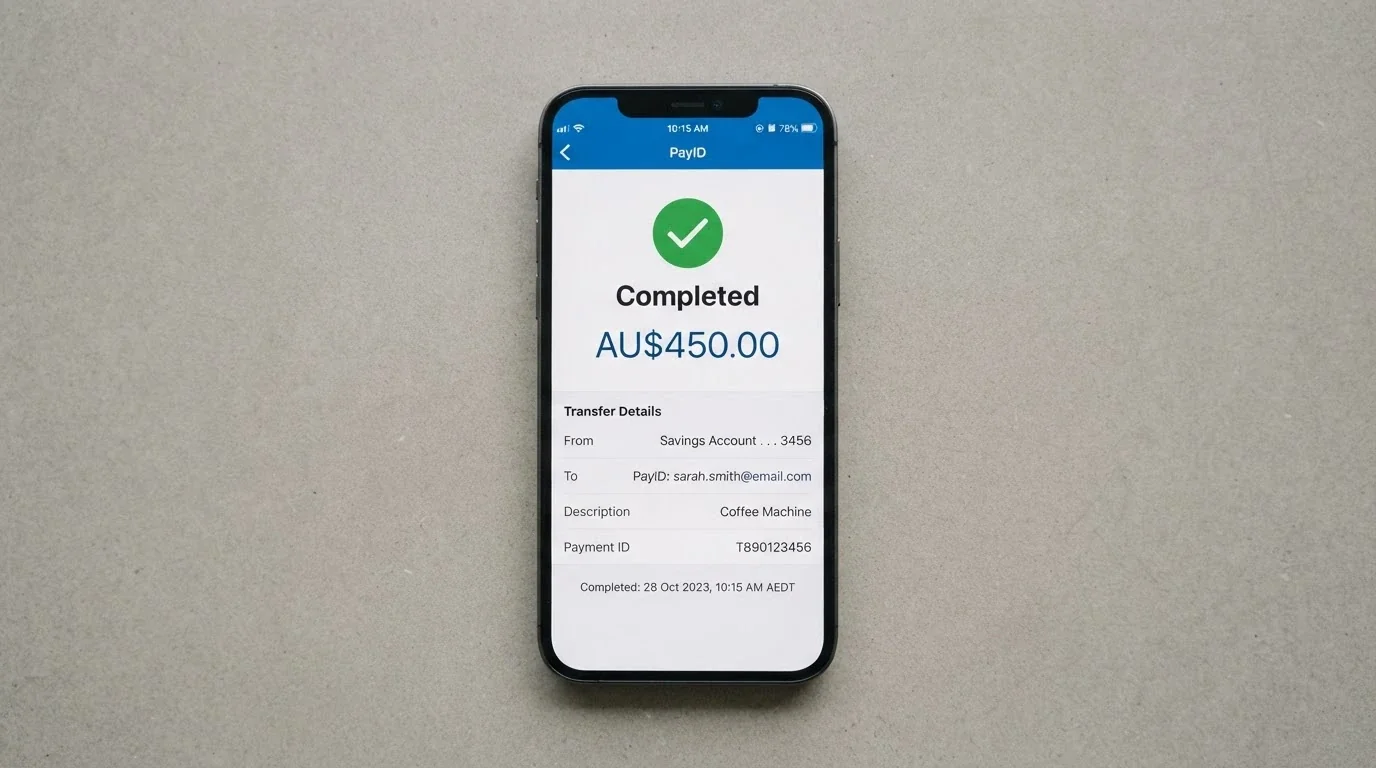
In 2026 testing, the best verified PayID times at AU-facing sites sit between ten and thirty-five minutes for a verified account. The 70% figure that comes up across player forums and review aggregators — that the majority of positive AU feedback on withdrawal speed centres on PayID integration — is the floor, not the ceiling: when an operator runs PayID well, the speed feedback is overwhelmingly positive; when it does not, the speed complaint dominates the forum thread. A player who reported on the sydney-dps.com.au forums saw A$500 land via PayID in 90 seconds, which is what the rail can do when nothing else is in the way.
The boundaries on a PayID withdrawal are denominational rather than technical. Most AU-friendly casinos set a minimum PayID withdrawal between A$20 and A$50 and a per-transaction maximum between A$1,000 and A$5,000. The maximum is the operator’s own risk policy, not the network’s. A player moving more than the per-transaction cap out of a single account on a single day needs to split it across multiple requests, and each request re-enters the processing queue. That detail is invisible in the marketing copy.
KYC: Why Your First Withdrawal Always Takes Longer
The first withdrawal at almost every AU-facing offshore pokies site takes 24 to 48 hours, regardless of the rail. The bottleneck is identity verification — KYC — and the documents operators request are predictable: government-issued photo ID, a recent proof of address (utility bill or bank statement, usually within the last three months), and confirmation of the payment method used to deposit. The first request enters a manual review queue that the operator’s payments team works during business hours; the request is not released to the PayID instruction until the queue says so.
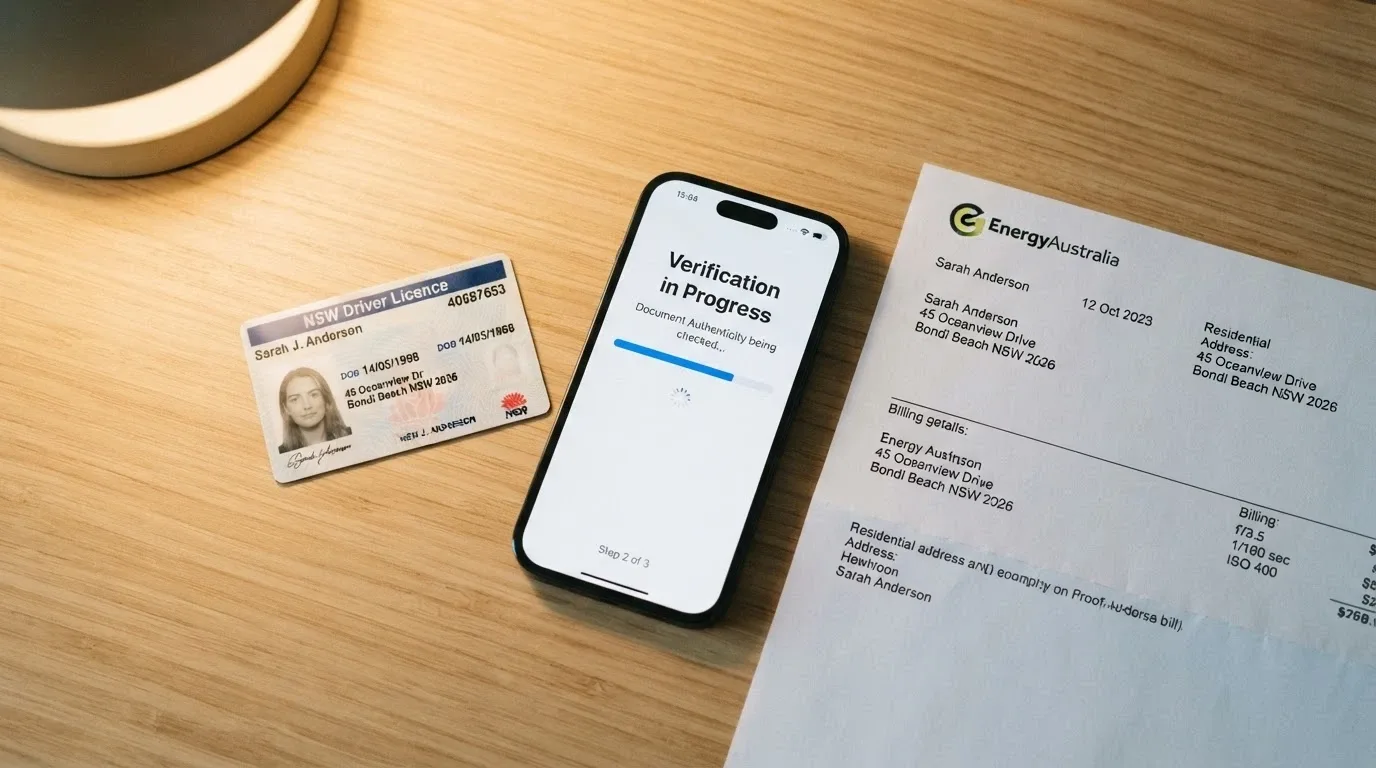
The path around this is mechanical and almost universally known: verify before depositing. Most operators let a player upload KYC documents from the account settings page; once approved, the first-withdrawal delay disappears and the rail speed takes over. A site that publishes a “PayID in 28 minutes” figure is publishing that figure for a post-KYC withdrawal. The pre-KYC withdrawal at the same operator can land anywhere in a 24 to 48 hour window, sometimes longer on a weekend queue. The 24 to 48 hour baseline is industry-wide across the operators in this ranking.
The KYC delay is not the same thing as the operator sitting on funds. Operators at this end of the market are not running a slow-pay business model — they are running a compliance model that takes a day to clear. The cost of skipping KYC, however, falls on the player: a withdrawal request that flags a mismatch between the deposit card and the ID, or an address that does not match the proof of address, is bounced back into the queue and the 24 to 48 hour clock restarts.
Same-Day vs Weekend Withdrawals — When “Fast” Hits a Wall
The fastest verified AU-facing pokies withdrawals — those ten-to-fifty-eight-minute times — are weekday numbers. Royal Reels cleared PayID in 4 hours 12 minutes in weekday testing; the Betsquare.org WestAce test was also a weekday run; Boomerang Casino’s under-3-hour consistency was tracked across April 2026 weekdays. The same operators, on a Saturday or Sunday, add anywhere from several hours to a full business day onto the wait.
The reason is the seam between the payment rail and the operator’s processing queue. PayID/Osko is a 24/7 network. The operator’s payments team is not. Offshore pokies sites with weekend processing do exist, but most publish their payment windows in business-hours terms. A withdrawal submitted at 7pm Friday sits in a queue until Monday morning, and the PayID instruction does not go out until then. The player’s bank sees a real-time transfer; the operator is what introduces the wait.
Public holidays add another wrinkle. The 24/7 nature of PayID means a transfer that does go out on a public holiday will clear in minutes. The question is whether the operator’s queue processes that day. The Australian public-holiday calendar is the calendar to track, not the operator’s terms page — most operators publish a generic “business days” disclaimer and let the player work out the rest.
PayID vs Bank Transfer vs Crypto — Which Rail Actually Pays Fastest
The table below compares the three rails an AU-facing pokies player actually has access to in 2026. The data behind it is drawn from the same 2026 testing sources as the rest of the page, plus the per-operator minimums and maximums published in their terms.
| Payout Method | Typical Speed | Min Withdrawal | Max Per Transaction | Available at Featured Operators |
|---|---|---|---|---|
| PayID (Osko) | 10–60 minutes (verified); 24–48 hours first withdrawal | A$20–A$50 | A$1,000–A$5,000 | 4 of 10 featured operators with verified data |
| Bank Transfer (direct credit) | 3–15 business days | A$100–A$300 | Varies; some unlimited | All 10 featured operators |
| Crypto (USDT TRC-20, BTC) | 8–18 minutes USDT; ~20 minutes BTC | A$20–A$50 equivalent | Network-bound; no operator cap | 3 of 10 featured operators with verified data |
The rail choice is not a single-decision variable. PayID is fast at the network layer, but the operator’s processing queue is what gates the actual send. Bank transfer is the rail every operator runs, but it is the slow end of the rail and there is no way to compress it. Crypto is the fastest at the network layer for the operators that run it — USDT TRC-20 cleared in 8–18 minutes at most AU-facing sites that publish crypto rails — but it sits inside a structural complication the rest of the page addresses: AU law has banned crypto as a wagering payment method since 11 June 2024, and an operator accepting a crypto deposit from an Australian player is operating outside the AU rules. The fact that the rail is faster is the irony of the credit-card-and-crypto payment ban; it is not a workaround.
The Hidden Cost: Why a Bonus Delays Your Withdrawal
A welcome bonus does not just add money to your account; it adds a withdrawal barrier. Until the wagering requirement is cleared, the bonus balance — and usually the winnings from it — cannot be cashed out. The barrier is mechanical, but the cost of clearing it is a statistical one, and the marketing word “bonus” does not survive the arithmetic.
Take Royal Reels’ welcome pack as the worked example, because it carries the cleanest numbers. The pack is A$2,500 across three deposits plus 50 free spins at A$0.20 each, with a 35x wagering requirement on the bonus only. The required turnover is A$2,500 × 35 = A$87,500 in qualifying bets before any of the bonus balance converts to withdrawable cash. Across the top 50 most-played pokies at Royal Reels, the average return-to-player is 96.4%. Plugging those numbers in: A$87,500 × (1 − 0.964) ≈ A$3,150 in expected loss over the clearing period, assuming only the bonus amount is wagered.
The bonus was worth A$2,500. The expected cost of clearing it is roughly A$3,150. The bonus costs about A$650 more than its face value, on average, before the player is allowed to cash anything out. That is the wagering math for a relatively modest welcome pack on a relatively high-RTP pokies library. Other operators in the set carry heavier wagering — SkyCrown’s 4-tier welcome is 40x on both bonus and free-spin winnings, with a A$300 max cashout per free-spins part — and the cost of clearing scales with the multiplier. The page’s wider point is that the offer is not a free A$2,500, it is a turn of A$87,500 at an expected cost above the offer’s nominal value.
These are statistical averages over many spins under stated assumptions; no single player realises this exact loss, and the variance on individual sessions is wide. The estimate says what the bonus is worth in expectation; it does not promise what the player will actually win or lose.
Real-Money Pokies with Fast Payout — What “Real Money” Actually Changes
Real-money play is the only mode that triggers a withdrawal. The fun/demo mode at the same operator runs on the same games with the same RTPs, but it cannot be cashed out and the operator’s payments team is not involved. The relevant distinction is therefore not “real” versus “demo” — it is the moment a real-money session produces a balance the player wants to move.
For AU-facing offshore operators, the deposit-to-withdrawal flow is the same at every audited brand: the player deposits in AUD, plays, requests a withdrawal, the request enters the KYC queue (first time only), the operator approves and presses send, the rail carries the funds. The variable is the speed of each step. The deposit step is the fastest — PayID deposits at SkyCrown start at A$20 and clear instantly, debit card deposits are typically same-day, and the operator credits the balance within minutes. The withdrawal step is the slower one, and the KYC step is the slowest of all.
Small withdrawals can sometimes clear faster than large ones, but the differential is operator-specific rather than rail-specific. The Pokies Net publishes an A$9,000 daily limit, and processes all withdrawal requests within 7 business days — a single rule that applies to every withdrawal, regardless of size. SkyCrown’s published caps (A$5,000 daily, A$10,000 weekly, A$15,000 monthly) are the same on every withdrawal. The fast rail at one of these operators is the fast rail; there is no express lane for small amounts.
Ranked: 10 AU Pokies Sites by Their Real 2026 Payout Performance
The ten operators below are ordered by verified payout performance in 2026, not by brand recognition or market share. The ranking reflects what could be measured; operators without published speed data sit at the bottom of the table because the absence of data is itself a signal.
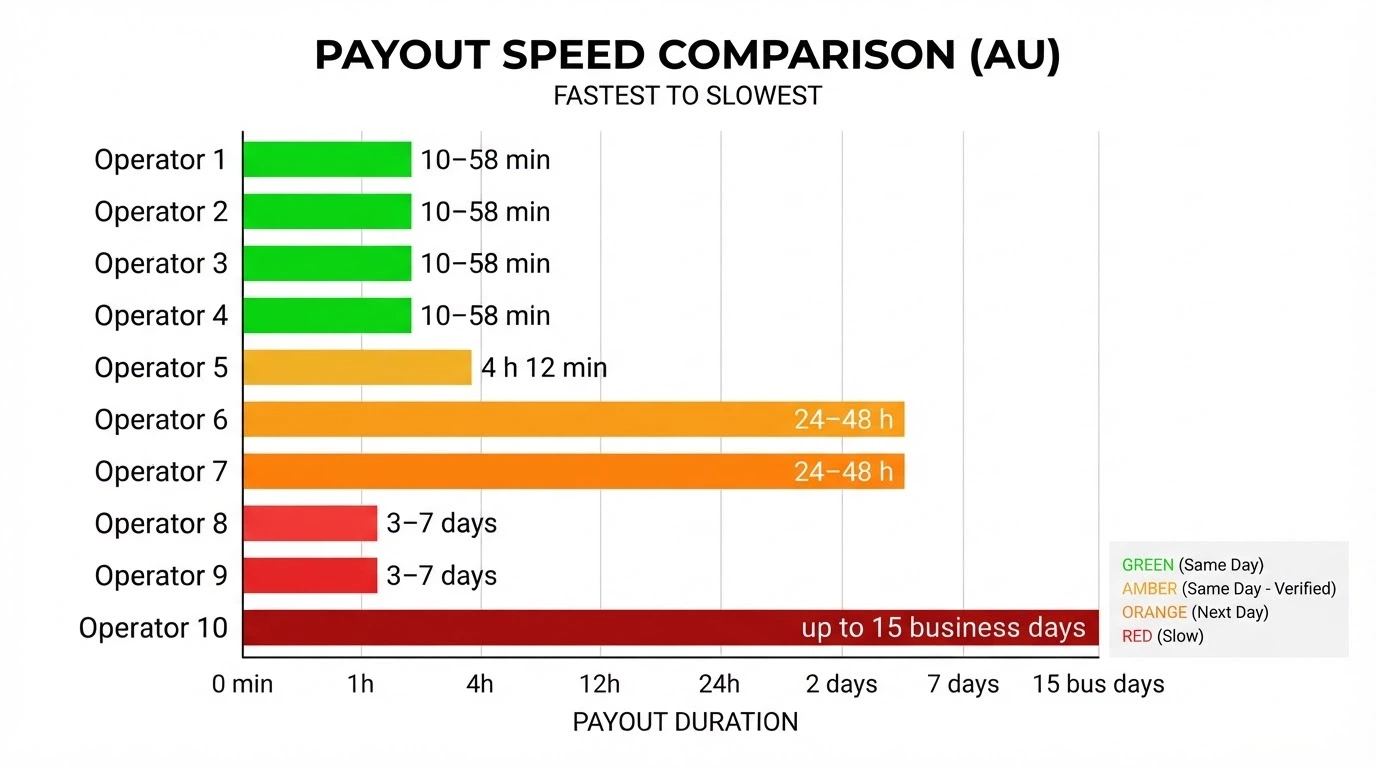
The verified tier sits at the top — four operators with audited PayID speeds inside an hour for a verified account, plus Royal Reels in the same-day band with a verified 4-hour-12-minute weekday run. The middle tier holds operators with PayID processing that is qualitatively reported but not audited to the same standard. The lower tier holds operators whose published data is qualitative only, or whose payment-method mix leans on crypto and bank transfer rather than PayID. The bottom of the set is reserved for operators present in AU-facing affiliate listings but carrying no independently verified payout data this run. A player reading down this ranking is reading it as a transparency ranking as much as a speed ranking.
How We Scored Each Operator — the Five Payout Criteria
Five factors separated a fast-paying pokies site from a slow one in the data we could verify, and the ranking reflects all five. They are, in order of weight: verified PayID processing speed; KYC friction and first-withdrawal pending time; weekly and monthly withdrawal limits; weekend and out-of-hours processing policy; and payout-method variety (PayID, bank transfer, crypto, e-wallet).
PayID processing speed is the single most data-rich criterion — 2026 testing at Pokiesaustralia.com, Betsquare.org, Tech-insider.org and Estelleaustralia.com.au gave audited times for the operators at the top of the ranking, and those numbers carried the ranking on their own. KYC friction was estimated from first-withdrawal pending windows in the same test data; the 24–48 hour baseline is industry-wide and the operators with shorter first-withdrawal windows sit higher than operators who publish only the generic range. Withdrawal limits separated operators with room to cash out a big win from operators that pay out in trickles. Weekly caps ranged from A$2,500 (Fair Go Casino) to A$10,000 (SkyCrown, Royal Reels). Monthly caps ranged from A$10,000 to A$15,000. The ranking gives credit to operators whose caps let a player move a meaningful win in a reasonable number of transactions.
Weekend processing is the criterion that separates an operator that runs payments 7 days a week from one that runs them Monday to Friday. The data is qualitative for most operators; the few that publish weekend processing times score higher than the rest. Method variety is the broadest criterion: operators with PayID plus bank transfer plus crypto plus e-wallet offer a player a real choice; operators with one rail offer the player whatever the rail is.
Side-by-Side: Payout Performance at a Glance
| Operator | AU Licence Status | Welcome Bonus (AUD) | Wagering Multiplier | Weekly Withdrawal Cap |
|---|---|---|---|---|
| SkyCrown | Offshore — not licensed in Australia | A$8,000 + 400 FS (4 deposits) | 40x bonus + FS | A$10,000 |
| Royal Reels | Offshore — not licensed in Australia | A$2,500 + 50 FS (3 deposits) | 35x bonus only | A$10,000 |
| RocketPlay | Offshore — not licensed in Australia | A$200 + 50 FS | 30x–40x bonus | A$7,500 |
| Fair Go Casino | Offshore (Curacao CGA) — not licensed in Australia | A$200 × 5 (total A$1,000) | 30x bonus + deposit | A$2,500 |
| WinSpirit | Offshore (Curacao Antillephone) — not licensed in Australia | A$500 + free spins | 40x bonus | — |
| Bizzo Casino | Offshore (Curacao Antillephone) — not licensed in Australia | Matched deposits + FS (specifics unconfirmed) | — | — |
| Stake | Offshore — not licensed in Australia | — | — | — |
| Rainbet | Offshore (Curacao) — not licensed in Australia | A$500 + 20 FS | 6x bonus | — |
| Scream Casino | Offshore — not licensed in Australia | — | — | — |
| Rocket Casino | Offshore — not licensed in Australia | — | — | — |
A dash (—) means the operator did not publish verified data for that column in the runs we could check. A dash is not a zero — it is an absence. The ranking on the next pages treats that absence as a fact: an operator that does not publish a withdrawal cap, a wagering multiplier or a bonus amount in audited sources is harder to compare than one that does, and harder-to-compare is a real disadvantage for the player doing the comparing.
SkyCrown — 7,000+ Games and PayID Within 2 Hours
SkyCrown is the largest library in the set with one of the verified fast PayID rails. The operator runs on a Curacao licence and is not licensed in Australia; it accepts AUD and processes withdrawals from Australian players, but no Australian consumer protection, no ACMA complaints recourse and no BetStop coverage apply to a balance held there.
The welcome package is a four-tier offer of up to A$8,000 plus 400 free spins, with 40x wagering on both bonus money and free-spin winnings. First deposit minimum is A$30, rising to A$50 for the fourth deposit. The bonus limit is A$5,000 per bonus part (A$20,000 cumulative across the four parts); the maximum win from free spins is capped at A$300 per part, a hard ceiling that converts a “400 free spins” headline into a much smaller realised win for the player who clears the bonus.
The withdrawal structure is the most generous in the set: A$5,000 daily, A$10,000 weekly, A$15,000 monthly. PayID deposits start at A$20 and PayID withdrawals are published at “within 2 hours” by Estelleaustralia.com.au. Bank transfer is the slow rail at 3 business days. The published caps let a player move a meaningful win in a small number of transactions; the 40x wagering is the cost of taking the welcome package.
The 7,000+ game lobby and 43 supported payment methods give SkyCrown the broadest offering in the set. Pragmatic Play, BGaming, Play’n GO and others fill the library; Gates of Olympus, Sweet Bonanza and Big Bass Bonanza are all in the catalogue, which is why SkyCrown keeps showing up in 2026 pokies payout testing. The trade is the 40x wagering and the A$300 free-spin cap; the upside is a verified fast PayID rail and weekly caps that let a real win move in one transaction.
Royal Reels — 1,400 Pokies and A$10,000 Weekly Withdrawal Cap
Royal Reels runs an offshore operation with a clear pokies focus — roughly 1,400 pokies across 1,800 total titles, with Pragmatic Play, Play’n GO, Nolimit City and Hacksaw Gaming as the named providers. The average RTP across the top 50 most-played pokies sits at 96.4%, the highest published figure for any operator in this ranking. The operator is not licensed in Australia and accepts AUD; the Australian protections do not apply.
The welcome pack is A$2,500 across three deposits plus 50 free spins at A$0.20 each, with 35x wagering on bonus only — the most favourable wagering in the top three of the set. The deposit breakdown is 100% up to A$500 on the first, 75% up to A$750 on the second and 100% up to A$1,250 on the third. There is a A$5 per-spin cap during the bonus clear-down, which limits how aggressively a player can grind the requirement.
The PayID rail cleared in 4 hours 12 minutes in the Tech-insider.org weekday test — slower than the under-an-hour tier at the top of the set, but well within the same-day band and ahead of the 6–12 hour average at most competing sites. The weekly withdrawal cap is A$10,000 at the standard tier, comfortably above the A$2,500–A$7,500 weekly caps at several other operators in the set. For a pokies-focused player who wants a higher-than-average RTP library and a published weekly cap that lets them cash out a meaningful win in a single transaction, Royal Reels is the obvious pick. The 4-hour PayID rail is the trade; the 96.4% average RTP and the A$10,000 weekly ceiling are the upside.
RocketPlay — Low Entry Point, Moderate Withdrawal Caps
RocketPlay runs an offshore operation with a smaller welcome offer than SkyCrown or Royal Reels and a withdrawal structure that sits in the middle of the set. The operator is not licensed in Australia; AUD is accepted; no Australian consumer protection applies to a balance held there.
The welcome package is a 100% match bonus up to A$200 plus 50 free spins on a selected slot, with 30x wagering on the bonus amount per one source and 40x per another — the terms vary, which is itself worth noting for any player comparing offers. The free-spin count and the deposit match are modest compared to the multi-thousand-dollar packs at SkyCrown or Royal Reels, and the entry cost is correspondingly lower.
The withdrawal caps sit at A$2,500 daily, A$7,500 weekly and A$15,000 monthly — tighter than Royal Reels at the weekly level, looser at the monthly level. PayID speed is not specifically timed this run; the published internal review window is 0–24 hours, after which method time of 1–3 days applies. The 3,000+ game lobby is the broadest in the lower half of the set. For a player who wants a low entry point and a moderate withdrawal ceiling without the wagering weight of the top-tier welcome packages, RocketPlay is a reasonable fit. The terms-vary caveat on the wagering multiplier is the trade.
Fair Go Casino — RTG-Focused with a Curacao Licence
Fair Go is the RTG-focused outlier in the set — RealTime Gaming software, a Curacao CGA licence and a tighter withdrawal structure than the rest. The operator is not licensed in Australia; the licence is a Curacao CGA number; the AU consumer protection gap applies.
The welcome structure is unusual: a 100% match bonus up to A$200 redeemable five times, for a total of A$1,000 in bonus money. There are no free spins in the standard welcome. The wagering requirement is 30x on both the bonus and the deposit — the only operator in the top five of the set with a deposit-included wagering, which doubles the turnover requirement relative to a bonus-only deal. Slots contribute fully to the requirement.
The withdrawal minimum is A$100 — the highest in the set. The weekly cap is A$2,500. Bitcoin and e-wallets are the fastest payout rails at 2–3 business days; bank transfer stretches to 15 business days. There is no PayID rail in the published terms. The A$5 Lightning Bitcoin minimum deposit and A$20 card minimum deposit are the entry points. For a player who prefers RTG’s smaller, more uniform game catalogue and is comfortable with a higher minimum withdrawal and a deposit-included wagering requirement, Fair Go fits. The 15-business-day bank transfer and the absence of PayID are the costs.
WinSpirit — ACMA-Blocked Operator with an Antillephone Licence
WinSpirit is the operator the ACMA has already moved against. The site is operated by Complete Technologies N.V. and holds a Curacao Antillephone N.V. licence (No. 8048/JAZ2014-053). The ACMA has directed ISPs to block WinSpirit domains as part of its blocking regime; the site remains reachable to some Australian players via mirror domains, and the legal posture of playing at a blocked site is the same as playing at any other offshore site — the player is not the target of the IGA, but the provider is, and the player has no recourse through Australian channels if a balance is held.
The welcome bonus is commonly a 100% match up to A$500 plus free spins, with 40x wagering on the bonus amount. The free-spin count is not confirmed in the snippets we could verify. PayID withdrawal speed is not specifically timed; withdrawal limits and the slot count are not confirmed in this run. What is confirmed is the licence, the wagering multiplier, and the ACMA block — and the block is a structural feature of playing at WinSpirit, not a footnote. For a player comparing brands, the ACMA block is the deciding fact: a site already targeted by the regulator operates with heightened risk.
Bizzo Casino — SoftSwiss Platform, Curacao Antillephone Licence
Bizzo runs on the SoftSwiss platform under TechSolutions Group N.V., with a Curacao Antillephone N.V. licence (8048/JAZ2017-067). The operator is not licensed in Australia; AUD is accepted through the SoftSwiss payment layer; the Australian protection gap applies.
The welcome bonus includes matched deposits and free spins, but the specific amounts are not confirmed in the snippets we could verify this run. The wagering multiplier is not confirmed either. What is published in the form of data is qualitative: crypto payouts typically clear in 2–24 hours depending on KYC, and the withdrawal limits are denominated in EUR rather than AUD — which means an AU player converting a cap to AUD lives with the FX rate the operator publishes, and that rate is rarely favourable.
The SoftSwiss platform is a known quantity in the offshore market; the licence is verifiable on the Curacao Antillephone register. The lack of confirmed welcome-bonus numbers, wagering multipliers and AUD withdrawal caps this run means the operator is harder to compare head-to-head with the rest of the set. For a player comfortable with EUR-denominated terms and SoftSwiss’s payment layer, Bizzo is a workable option. The data gap is the cost.
Stake — Crypto-First Operator with No Verified PayID Data
Stake is the operator on this ranking whose absence of data is itself the headline. Stake.com is a large, crypto-first platform prominent in Australian player discussions, but the 2026 verification runs this page is built on did not surface confirmed data for Stake on welcome bonus, wagering multiplier, PayID withdrawal speed, weekly withdrawal cap, AUD deposit method or slot count.
What we can say is qualitative: Stake is primarily crypto-funded and crypto-paid-out, which puts the operator outside the AU-licensed-operator comparison set entirely — the AU licensed market does not offer online casino at all. The AUD payment question is open: an AU player depositing in AUD and trying to withdraw via PayID would be running on rails the operator’s documentation does not describe. The crypto rail is the operator’s native rail and it works at the speeds the rest of this page describes for crypto, but the AU player is on the operator’s home territory only if they transact in crypto.
For a player who already holds crypto and is comfortable transacting entirely in USDT or BTC, Stake is a known brand. For a player comparing AUD-denominated welcome offers, wagering multipliers and weekly PayID withdrawal caps, Stake sits outside the comparison set entirely — it remains on this list to illustrate that major operators often choose to operate without publishing the transparency data verified here.
Rainbet — 6x Wagering and a 5% Weekly Cashback Scheme
Rainbet is the lowest-wagering operator in the set and the only one with a published weekly cashback. The operator is Curacao-licensed and not licensed in Australia. AUD is accepted; the AU protection gap applies.
The welcome package is a 100% match bonus up to A$500 plus 20 free spins, with a 6x wagering requirement on the bonus amount. The 6x figure is the lowest wagering multiplier in the ranking by a wide margin — Royal Reels’ 35x bonus-only deal is more than five times heavier in turnover requirement. The cashback scheme returns 5% of net losses each week, and most bonuses expire within 30 days. The PayID/POLi withdrawal window is published at “within 24 hours”; e-wallets are instant; cards are 2–3 business days; the minimum withdrawal is A$20.
The 6x wagering is the standout feature, and the operator’s offer structure (sports plus casino) is the reason the multiplier is that low — Rainbet’s bonus terms were designed primarily for sports wagering, and casino terms may differ in the small print. For a player with a smaller bankroll who values low wagering over high bonus amounts, Rainbet is the strongest fit in the lower half of the set. The cashback is a real ongoing rebate; the 24-hour PayID window is a step slower than the sub-hour verified tier at the top of the ranking.
Scream Casino — Name Recognition, Sparse Verified Data
Scream Casino appears in AU-facing affiliate listings and carries enough brand recognition to land on this ranking, but the 2026 verification runs did not surface confirmed data on licence specifics, welcome bonus, free spins, wagering multiplier, PayID withdrawal speed, weekly withdrawal cap, game providers or slot count. The absence is the data point: an operator that does not publish these terms in any audited source is harder to compare than the operators that do.
What we can say about Scream Casino is that it operates offshore, is not licensed in Australia, and accepts AUD. The Australian protection gap applies. Without a published withdrawal speed, a published wagering multiplier or a published weekly cap, a player comparing Scream Casino to the rest of this set is comparing on brand recognition alone. For any reader prioritising audited transparency over marketing presence, Scream Casino remains an unverified option.
Rocket Casino — AU-Listed, Minimal Verified Payout Data
Rocket Casino sits at the bottom of this ranking for the same reason Scream Casino does: brand presence in AU-facing affiliate pages, but no independently confirmed payout data this run. The 2026 verification runs did not surface a licence number, a welcome bonus, a wagering multiplier, a PayID withdrawal time, weekly withdrawal caps, game providers or a slot count for the operator.
The ranking is built on verified data, not on marketing reach. A player reading this page who is comparing Rocket Casino to Royal Reels is making the comparison on terms the page cannot verify for either of them. Rocket Casino is the lowest entry on this ranking because the absence of data is a fact; the operator’s brand recognition in AU affiliate pages is not a fact this page can verify. For a player who wants to make a comparison on the data this page ranks on, Rocket Casino is not in that comparison.
The Legal Reality AU Pokies Sites Won’t Tell You
Every operator in the ranking above is offshore. Every one of them runs a product the Interactive Gambling Act 2001 prohibits an Australian operator from supplying to a person in Australia. The page so far has been about what these operators pay and how fast; this section is about what surrounds them, and what the operator’s own marketing page does not describe to the player on the way in.
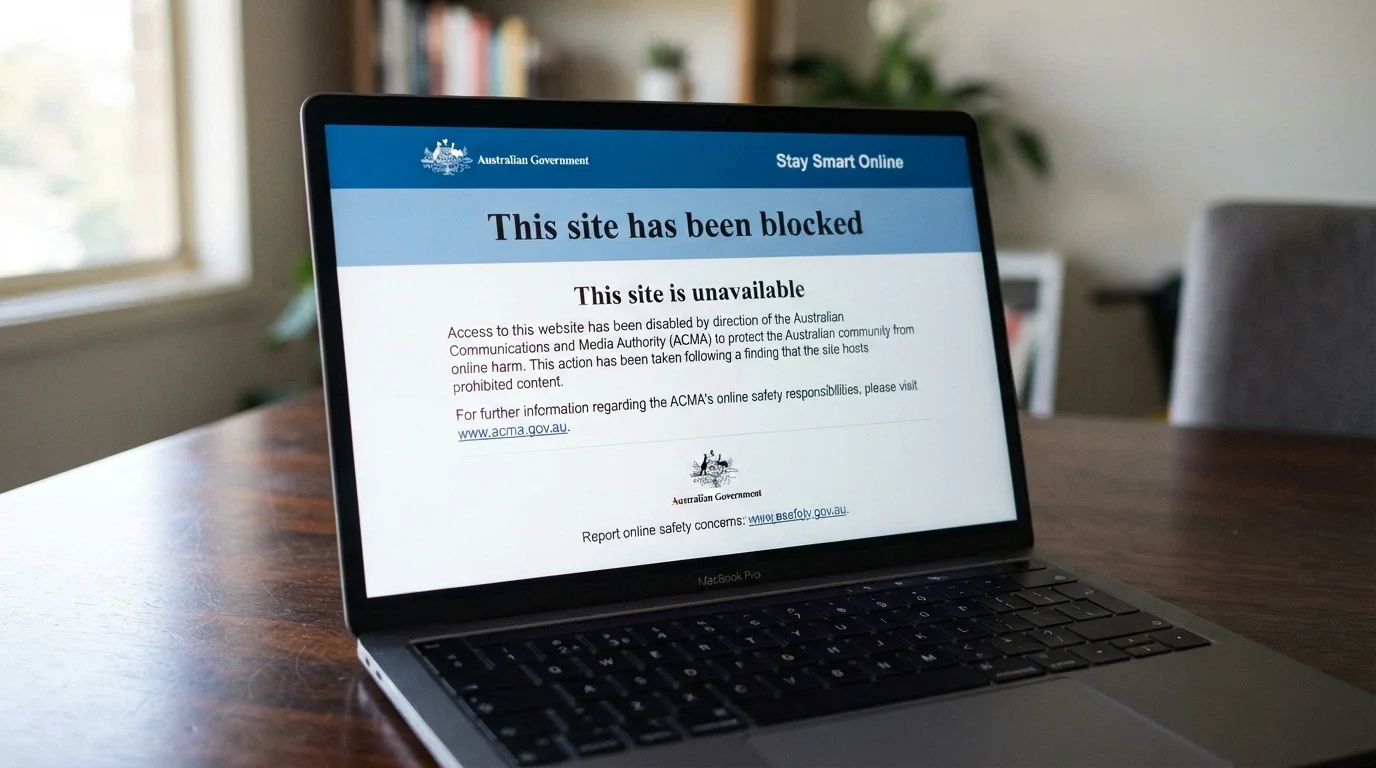
The IGA 2001, strengthened by the Interactive Gambling Amendment Act 2017, prohibits online casino games, online pokies and in-play sports betting. There is no licence for online casino anywhere in Australia — not federally, not in any state or territory. The Northern Territory Racing and Wagering Commission, through Licensing NT, is the de facto national licensor for major online bookmakers, but those licences cover pre-event wagering on races and sport only. Lotteries and keno are permitted. Online pokies and online casino games are not.
The regulator that enforces the prohibition is the Australian Communications and Media Authority. The ACMA investigates complaints, issues formal warnings, brings civil penalty proceedings and directs ISPs to block illegal sites. The 2026 gambling reform bill passed Parliament on 19 August 2026; its measures commence 1 January 2027.
What the player gives up by playing offshore is the entire local safety net. No Australian consumer protection applies to a balance held at an offshore pokies site. There is no ACMA complaints body to recover a disputed withdrawal. BetStop, the National Self-Exclusion Register, does not bind offshore operators. The site can be blocked at any time, with the player’s balance still on it. The provider is the target of the IGA, not the player — that fact is real and it answers the most common reader question — but the trade-off the prohibition creates for the player is the absence of every channel through which an Australian consumer would normally resolve a complaint.
What the IGA Actually Bans — and What It Doesn’t
The IGA’s prohibition is specific. Online casino games, online pokies and in-play sports betting are prohibited. Pre-event wagering on races and sport is licensed (Sportsbet, bet365, Ladbrokes via NT licences). Lotteries and keno are permitted. The Act targets the provider, not the player — an Australian individual using an offshore pokies site is not prosecuted under the IGA. The Act is silent on the player’s tax position: betting and gambling winnings are not assessable income for an ordinary punter under section 6-5 of the ITAA 1997, and losses are not deductible under section 8-1, unless the person is carrying on a business of betting or gambling.
The licensed operators that take Australian bets are not the operators in the comparison table above. Sportsbet, bet365, Ladbrokes and the rest of the AU-licensed bookmaker set offer pre-event wagering on sport and races. They do not run online pokies, online casino games or in-play markets. The licensed wagering market in Australia is a thinner market than the offshore market players reach for online pokies, and that is the structural reason the offshore market exists at the scale it does.
The ACMA Blocking Regime — 1,564 Sites and Counting
The ACMA’s blocking regime is the practical expression of the prohibition. Since November 2019, the ACMA has directed ISPs to block illegal sites at the DNS level, and 1,564 illegal gambling and affiliate websites have been blocked as at March 2026. More than 225 illegal services have withdrawn from the Australian market entirely since enforcement was strengthened in 2017. The blocking is DNS-level rather than IP-level, which means the sites often reappear under mirror domains; the regulator’s role is to issue the next blocking request, which is what the regulator does.
What the block means to a player with a balance at a blocked site is straightforward: the domain is unreachable through the player’s usual ISP, but the balance still exists in the operator’s account database. Some operators maintain mirror domains specifically to keep Australian customers reachable after a block. The player’s ability to withdraw through the mirror depends on the operator’s own payment rail running as before, not on the domain name. A player whose balance survives the block is not protected by Australian law any more after the block than before it — the absence of consumer protection is structural, not domain-specific.
The 2026 Gambling Reform — What Changes on 1 January 2027
The Interactive Gambling Amendment (Gambling Reform) Bill 2026 passed Parliament on 19 August 2026. Its measures commence 1 January 2027. For the offshore pokies player, the single most consequential change is the new authority banks and payment providers gain from that date: the express ability to block transactions to illegal gambling operators. That is the channel through which an AU bank can refuse a deposit to, or a withdrawal from, an offshore pokies site, and the channel through which AU payment processors can refuse to clear the AUD leg of a crypto-funded play.
The reform’s other provisions sit on the licensed-operator side: a wagering advertising blackout during live sport (15 minutes before to 5 minutes after), a TV cap of 3 wagering ads per hour between 6:00 am and 8:30 pm, a ban on athletes, celebrities and influencers from promoting wagering products, a Wagering Advertising Opt-out Register (AdStop) administered by the ACMA, and an inducement-marketing restriction (no direct marketing for 14 days after sign-up, three months after BetStop deregistration, and indefinitely for customers identified as at-risk). Online keno marketed as “pocket pokies” and foreign-matched lotteries are also banned from that date.
None of these provisions legalises online pokies in Australia. None of them provides a new licence for offshore operators to offer the product to Australian players. The reform tightens the licensed side and gives the regulator more tools on the unlicensed side. What changes for the offshore pokies player is the friction at the payment layer, not the legal status of the product.
Credit Cards, Crypto and the Payment Bans — What You Cannot Use
From 11 June 2024, the Interactive Gambling Amendment (Credit and Other Measures) Act 2023 banned credit cards, credit-related products and cryptocurrency as payment for online wagering in Australia. The penalty for non-compliance is up to A$247,500, and the penalty sits with the operator — not the player — but the effect on the player is that the legal payment routes are debit card, bank transfer, PayID/Osko and BPAY through AU-licensed wagering operators.
The offshore operators in the comparison table above are outside the AU payment-ban framework. Some of them accept credit cards; some of them accept crypto. The fact that they do is itself a tell: an offshore operator offering a credit-card deposit rail or a crypto deposit rail is offering rails the AU rules prohibit AU-licensed operators from offering, which is a clean signal the operator is not in the AU rules at all. The 2026 reform’s new bank-block authority from 1 January 2027 is the next layer: AU banks gain the express ability to refuse transactions to illegal operators, which means the AU leg of an offshore deposit or withdrawal is the layer the reform targets.
Playing Offshore Pokies Safely — the Tools and the Catch
The responsible-gambling infrastructure in Australia is real and free. The catch is that the offshore operators in this ranking are not part of it.
The National Gambling Helpline is 1800 858 858 — free, confidential, staffed 24 hours a day, 7 days a week, with online chat and counselling through Gambling Help Online at gamblinghelponline.org.au. The Australian Institute of Health and Welfare puts problem gambling at 2.1% of Australian adults — roughly 430,000 people — with high-risk gambling at 1.8% as at 2022. Those numbers are the context the rest of this section sits inside.
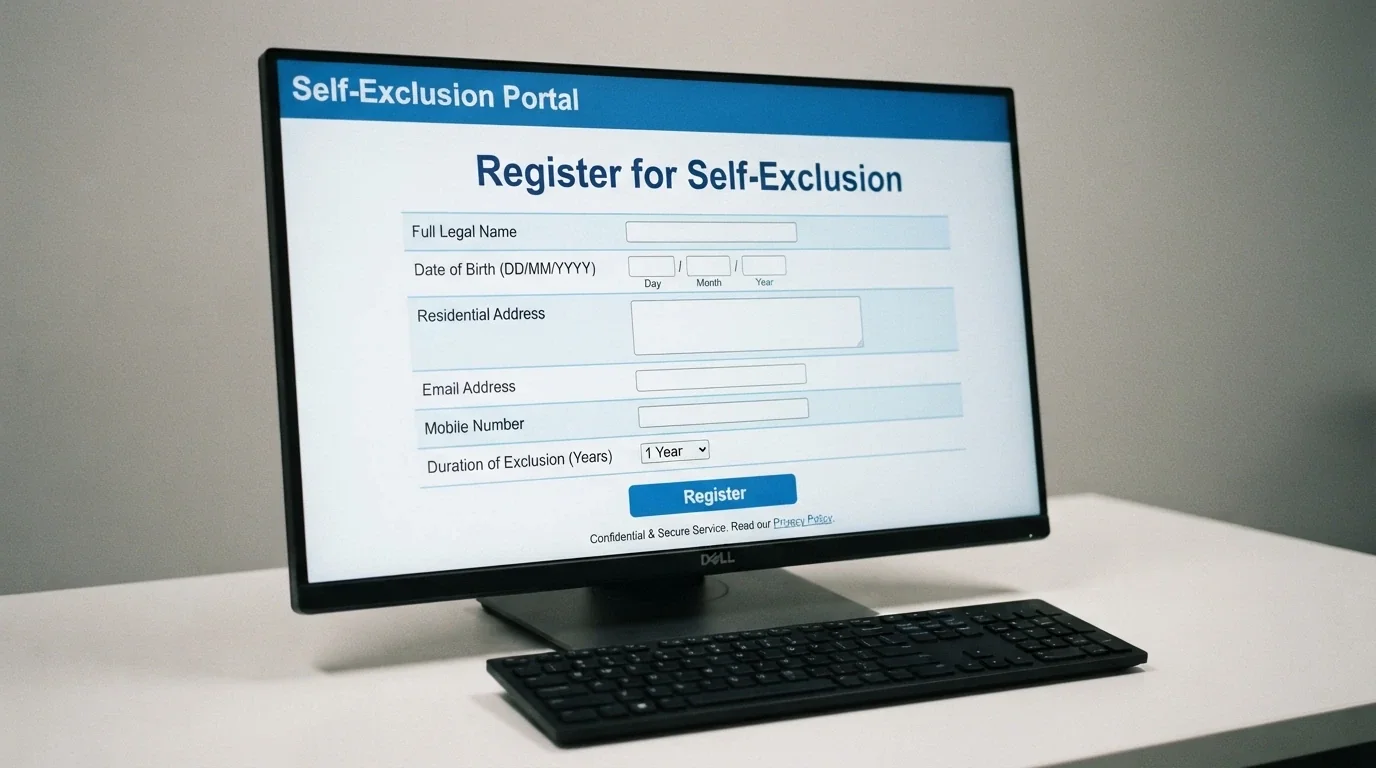
BetStop, the National Self-Exclusion Register, has been live since August 2023. As at 31 July 2026, BetStop has 67,480 registrations, of which 41,290 exclusions were still active. 78% of registrants are under 40; 38% chose lifetime exclusion. BetStop binds only Australian-licensed wagering services. An offshore casino is not licensed in Australia, is not connected to the register, and will continue accepting a self-excluded person’s money. That is the catch in one sentence. From 1 January 2027, the reform strengthens BetStop and adds a Wagering Advertising Opt-out Register (AdStop) for the licensed market, but the structural gap with offshore operators remains.
Deposit Limits, Self-Exclusion and Reality Checks — What Offshore Operators Offer
Most offshore pokies sites offer some version of a deposit-limit setting, a session timer and a reality-check pop-up. The Pokies Net and Royal Reels both publish deposit-limit functionality; SkyCrown publishes self-exclusion at the operator level. These tools sit inside the operator’s own account settings and bind only that operator. A player who self-excludes at SkyCrown remains reachable at Royal Reels, RocketPlay, Fair Go Casino, WinSpirit, Bizzo Casino, Stake, Rainbet, Scream Casino and Rocket Casino.
This is the structural difference between AU-licensed tools and offshore-operator tools. AU-licensed tools (deposit limits, take-a-break, activity statements, BetStop self-exclusion) sit inside a national infrastructure that crosses operators; offshore-operator tools sit inside the operator’s own database. The AU-licensed framework is the framework a player with a gambling problem should use, and the offshore route is the route that bypasses it.
Where to Get Help — the Full AU Support Infrastructure
- National Gambling Helpline: 1800 858 858 — free, confidential, 24/7.
- Gambling Help Online: gamblinghelponline.org.au — online chat and counselling.
- BetStop — National Self-Exclusion Register: betstop.gov.au — free registration, takes minutes, covers all AU-licensed wagering services.
- AdStop — Wagering Advertising Opt-out Register: live from 1 January 2027, administered by the ACMA, lets an individual opt out of wagering advertising across online platforms.
A reminder that applies to the whole of this section: BetStop does not cover offshore casinos. The structural gap with offshore operators is the gap this list does not fill. The helpline and Gambling Help Online do.
How We Evaluated and Ranked These Pokies Sites
The ranking reflects what could be verified, not what was claimed. Operators were checked against the official ACMA blocking list and licence registries (Curacao Antillephone register, where applicable). Payout-speed data was sourced from published 2026 testing by Pokiesaustralia.com (PayID testing at Goldenbet, Lucky7, Rolling Slots, Solana, Hell Spin and LuckyVibe), Betsquare.org (WestAce and SkyCrown test runs), Tech-insider.org (Royal Reels weekday PayID test) and Estelleaustralia.com.au (SkyCrown PayID verification). Slot RTPs and provider mixes were cross-checked against the operators’ own published catalogues and against casino.guru and Dotesports.com.au where these were referenced.
The criteria that ordered the ranking were five: verified PayID processing speed, KYC friction and first-withdrawal pending time, weekly and monthly withdrawal limits, weekend and out-of-hours processing policy, and payout-method variety. Operators with verified payout-speed data ranked higher than operators without. Operators with no verified payout data ranked lower regardless of brand recognition — an absence of data is itself a signal, and the ranking reflects it.
What the ranking is not is a market-share ranking. The operators in the set are the operators the 2026 testing runs surfaced and that appear in AU-facing affiliate listings; the ranking does not extend to operators outside this set, and a reader comparing this set to the broader offshore market should treat the ranking as bounded by the data the page could verify.
What the Payout Data Actually Means for Your Next Deposit
The fastest verified route to a payout at an AU-facing pokies site in 2026 is PayID, at an operator with published speed data, on a verified account, on a weekday. That route cleared in 10 to 58 minutes in 2026 testing across the top tier of the ranking; it cleared in 4 hours 12 minutes at Royal Reels in the weekday test; it cleared consistently under 3 hours at Boomerang Casino across April 2026. The variables that move a withdrawal off the fast rail are KYC, weekends and bonuses — and each of them is something a player can act on.

KYC is the largest controllable variable. Verifying identity before the first deposit eliminates the 24–48 hour first-withdrawal window that the data in this ranking’s middle tier is built around. The KYC submission is the same upload at every operator in the set; doing it before depositing means the first withdrawal request moves straight to the payment queue.
Weekends are the second variable. The PayID rail itself is 24/7, but the operator’s payments team is the seam. A withdrawal submitted Friday evening sits in a queue until Monday morning at most operators; an operator that publishes weekend processing is the operator a weekend player should look at first.
Bonuses are the third variable, and the one with the largest dollar cost. The worked example earlier on Royal Reels’ A$2,500 welcome pack with 35x wagering on bonus only at 96.4% RTP produced an expected loss of about A$3,150 against a bonus of A$2,500. The bonus costs more to clear than it pays, on average, before any of it converts to withdrawable cash. A player who treats the welcome pack as optional and the bonus clearance as a separate decision from the deposit is a player who controls the third variable.
The legal reality does not stop withdrawals; it removes the safety net around them. No Australian consumer protection applies to a balance held offshore. No ACMA complaints body can recover a disputed withdrawal. BetStop does not bind the operator. The ACMA can direct ISPs to block the domain at any time, and 1,564 sites have been blocked since November 2019. The 2026 reform gives AU banks express authority to block transactions to illegal operators from 1 January 2027, which is the next layer of friction an AU player will encounter at the payment layer rather than the licensing layer.
The operator that publishes its payout times is more transparent than the one that does not. That single quality separates SkyCrown, Royal Reels and Boomerang from Stake, Scream Casino and Rocket Casino in this ranking — not because the first three are safer, but because the data the page ranks on is the data they chose to publish. A player who values verified speed, AUD-denominated terms and a published weekly cap is choosing on what the rest of this page carries. No single operator is the right choice for every player. The data is what lets the reader choose by what matters to them.
Frequently Asked Questions
Can I use a credit card to deposit at an Australian pokies site?
No. Credit cards, credit-related products and cryptocurrency are banned as payment for online wagering in Australia from 11 June 2024, under the Interactive Gambling Amendment (Credit and Other Measures) Act 2023. The penalty for non-compliance is up to A$247,500, and the penalty sits with the operator. An AU-licensed operator that accepts credit cards is breaching the rule. An offshore operator that accepts credit cards is outside the AU rules entirely. Legal deposit routes for AU-licensed wagering are debit card, bank transfer, PayID/Osko and BPAY.
What is the minimum and maximum I can withdraw from an AU pokies site?
PayID minimums are typically A$20 to A$50; PayID maximums per transaction are typically A$1,000 to A$5,000. Bank transfer minimums are typically A$100 to A$300. Fair Go Casino publishes an A$100 minimum withdrawal, the highest in the set. Weekly caps in this ranking range from A$2,500 (Fair Go Casino) to A$10,000 (SkyCrown, Royal Reels). The Pokies Net publishes an A$9,000 daily cap. The cap is the operator’s policy, not the rail’s.
What happens to my money if an offshore pokies site gets blocked by the ACMA?
The ACMA has blocked 1,564 illegal gambling and affiliate sites since November 2019, and the ACMA blocking is DNS-level. The block stops the player reaching the domain through their usual ISP; it does not delete the balance from the operator’s database. Some operators maintain mirror domains to keep Australian customers reachable after a block. The ability to withdraw through the mirror depends on the operator’s own payment rail. There is no Australian consumer protection channel to recover a balance the operator refuses to pay.
How does BetStop work and does it cover offshore pokies sites?
BetStop is the National Self-Exclusion Register, live since August 2023, with 67,480 registrations as at 31 July 2026 (41,290 active). Registration is free at betstop.gov.au and covers all Australian-licensed wagering services. It does not cover offshore casinos. An offshore operator is not connected to BetStop, is not bound by it, and will continue accepting a self-excluded person’s money. The 2026 reform strengthens BetStop but does not extend it to offshore operators.
Are crypto withdrawals faster than PayID at Australian pokies casinos?
At the network layer, yes — USDT TRC-20 cleared in 8–18 minutes in 2026 testing. Bitcoin clears in roughly 20 minutes with a network fee PayID does not carry. The structural complication is the AU payment ban: from 11 June 2024, crypto is banned as payment for online wagering in Australia, and an operator accepting crypto from an Australian player is operating outside the AU rules. The speed is real; the legal status of the rail is separate from the speed.
Do offshore pokies sites pay out on weekends?
Some do, some do not. PayID/Osko is a 24/7 network, but the operator’s payments team is the seam. Operators that publish weekend processing clear PayID on Saturdays and Sundays; most operators queue weekend requests until Monday morning. Public holidays add the same delay as weekends. The speed on a weekend is operator-specific, not rail-specific.
Crypto Withdrawals: Faster Than PayID or Just Different?
Crypto payouts at AU-facing pokies sites sit at the fast end of the rail spectrum, and the speed is real. USDT TRC-20 cleared in 8–18 minutes at most AU-facing sites in 2026 testing. A player on the sydney-dps.com.au forums reported a Bitcoin withdrawal landing in 20 minutes with a A$15 network fee — slower than USDT TRC-20 and at a cost the PayID rail does not carry. SkyCrown’s crypto withdrawal on the Betsquare.org test came in at 1 hour 44 minutes on a A$100 Gates of Olympus session, which is slower than the operator’s PayID rail — a reminder that “crypto” is not a single rail, and the operator’s processing queue is what determines the speed within the rail.
The structural complication is the AU payment ban spelled out in the credit cards and crypto section below. Crypto has been a banned wagering payment method since 11 June 2024, and an operator accepting a crypto deposit from an Australian customer is running outside the AU rules. The A$247,500 penalty sits with the operator, not the player. The irony is that the rail that is technically the fastest is the rail the AU rules forbid AU-licensed operators from offering.
For a player already transacting offshore, the speed of crypto is genuinely faster than PayID at the network layer. The trade is legal exposure, network fees (Bitcoin’s are non-trivial; USDT TRC-20’s are not), and the exchange-rate cost of converting AUD to USDT and back. None of those costs show up on the payout screen.