
A $10 PayID no-deposit bonus at an Australian online casino in 2026: what the offer is, what the fine print takes, and what offshore status means
 Available in AU
A “no deposit” offer sounds like a free gift. It is not. The casino is lending you bonus credits or free spins, and the loan comes with two numbers attached — a wagering multiple and a maximum cashout cap — that together decide whether the offer is worth claiming at all. This page walks Australian players through what a $10 PayID no-deposit casino claim really contains, who is making it, what the law in Australia does and does not do about it, and what the fine print takes back.

Data current as of 18 October 2026, verified against the Australian Communications and Media Authority register and the Interactive Gambling Act 2001.
Table of Contents
- What a $10 PayID No-Deposit Casino Actually Is — and What It Isn’t
- Why Your 2026 No-Deposit Bonus Is Smaller Than It Looks
- The Offshore Casinos Advertising $10 No-Deposit Bonuses to Australians
- How PayID Became the Deposit Method Unlicensed Casinos Rely On
- Is It Legal? What Australian Law Actually Says About $10 Casino Bonuses
- Staying in Control: Responsible Gambling When the Operator Has No Australian Licence
- How We Selected and Ranked These $10 PayID Casinos
- Should You Claim a $10 No-Deposit Bonus? What the Fine Print Means for Your Money
- The Questions Australian Players Ask Most About $10 PayID No-Deposit Bonuses
- Frequently Asked Questions
What a $10 PayID No-Deposit Casino Actually Is — and What It Isn’t
The phrase stitched together in the search bar is doing three jobs at once. It specifies a minimum entry point of ten Australian dollars. It names a payment rail — PayID, the country’s instant bank-to-bank transfer system built on the New Payments Platform and processed through Osko. And it names a bonus format that requires no upfront deposit from the player. A casino that genuinely delivered on all three would be a licensed Australian wagering operator that allowed a $10 minimum top-up via PayID and credited a small bonus on signup without asking for money first.
That operator does not exist. Online casino games — pokies, blackjack, roulette and the rest — are prohibited to persons in Australia under the Interactive Gambling Act 2001. There is no licence for them anywhere in the country, federally or in any state or territory. The only wagering products that can be licensed are pre-event sports and race betting, lotteries and keno. So when a player sees a “no deposit bonus” for online pokies pitched at Australians, the entity behind it is almost always an offshore operator offering an unlicensed product.
The offshore site can still use PayID. That is the part that confuses people. PayID is a payments rail operated by Australian banks; it is not a regulator, and it does not check the licence of the business on the other end of the transfer. An offshore casino that lists a PayID address as its deposit option is using a legal Australian payment method attached to an illegal Australian gambling product. The rail is real, the licence is not.
A no-deposit bonus is a casino promotion that credits bonus funds or free spins to a new player without requiring a deposit. In the few licensed contexts where they appear, they tend to carry higher wagering requirements than deposit bonuses and a maximum cashout cap — the two numbers the rest of this page keeps returning to. On offshore sites reaching Australian players, the same structure applies, but with no Australian consumer protection sitting behind it if the operator refuses to pay.
The Australian-market reality behind the headline
The market the search results show is built on that gap between what is licensed and what is marketed. The Interactive Gambling Amendment Act 2017 closed the loopholes offshore operators had used and gave the Australian Communications and Media Authority its enforcement powers. Since its first blocking request in November 2019, the ACMA has had 1,564 illegal gambling and affiliate websites blocked by Australian internet providers as of March 2026. More than 225 illegal services have withdrawn from the Australian market entirely since enforcement was strengthened in 2017. The numbers keep moving: a site on a comparison page today can be on the blocked list by next month.
The $10 figure is the floor these offshore sites land on because it is the lowest meaningful top-up on an AU-friendly payment rail. Below ten dollars, the cost of processing the transfer eats the deposit. At ten, the player clears the threshold for a welcome package and the casino clears the threshold for treating the account as active. The pitch is built for a player who wants to test the lobby for the cost of a pub lunch.
It is worth saying plainly at the top what the rest of the page returns to: every operator named in this article is an offshore entity offering an unlicensed product to Australian players. The wagering terms, the no-deposit offers, the bonus codes and the PayID acceptance for each one could not be independently verified during research. The list should be treated as a starting point for further checks, not as a checkout page.
Why Your 2026 No-Deposit Bonus Is Smaller Than It Looks
The “$10 free, no deposit required” headline and the bonus terms attached to it rarely agree. The headline is marketing language, and marketing language for a no-deposit offer works by minimising the conditions that decide what you actually keep. The conditions are written in the fine print, and they are not subtle: every one of them is a number that shrinks the headline value.
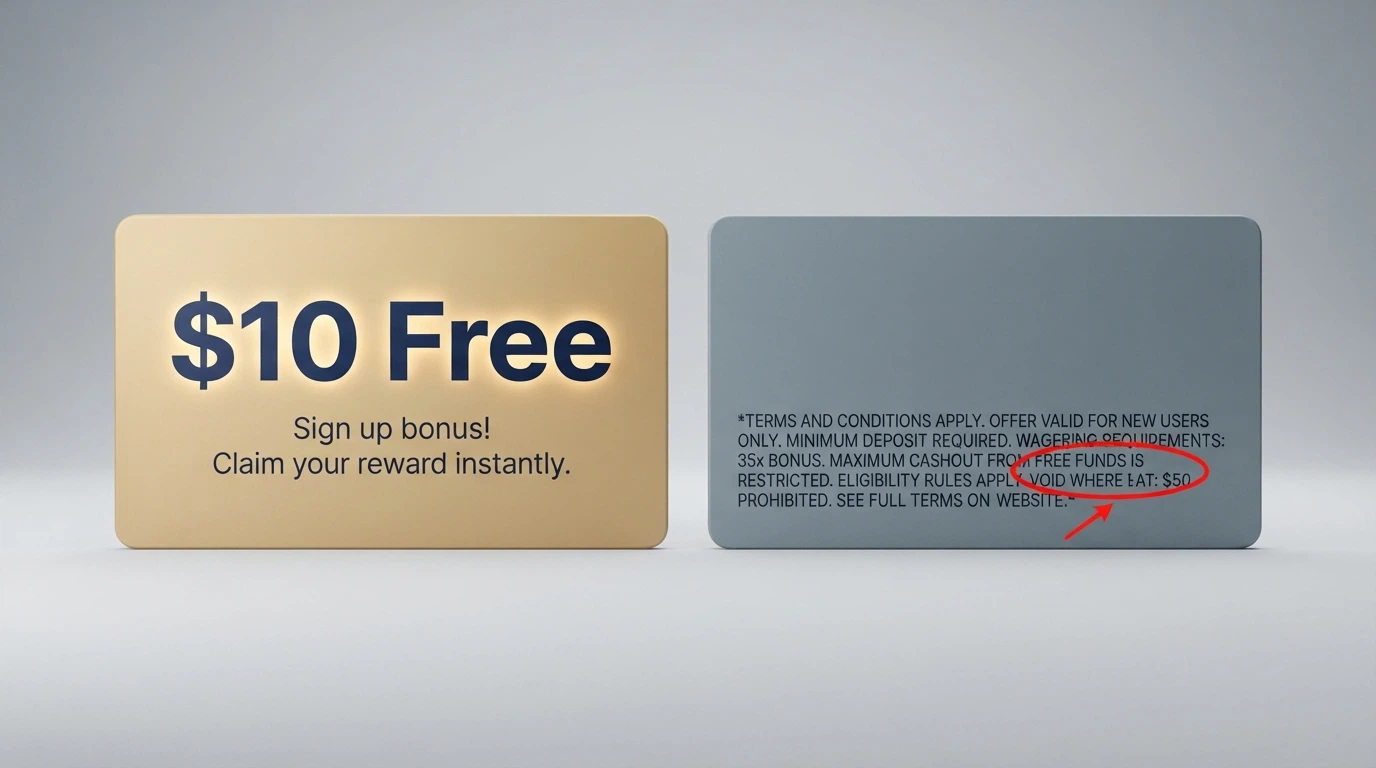
What follows is a walk through the bonus formats an Australian player is most likely to see pitched at a $10 entry point, and where the value erodes for each one.
No-deposit bonuses: free money with a catch
A no-deposit bonus is credited to a new account without the player making a deposit. The format varies: bonus credit that can be spent on pokies or table games, free spins on a specific slot, or a small free chip locked to a single game. In every case the casino is putting bonus funds on your account that you cannot withdraw directly. Before the funds — or the winnings produced by the free spins — can be withdrawn, the player has to satisfy the wagering requirement.
Wagering is the lever. A 40× wagering requirement on a $10 no-deposit bonus means $400 of qualifying bets before any withdrawal is allowed. A 60× requirement, which is common at this end of the market, lifts that to $600. The casino is not giving you $10; it is lending you $10 on the condition that you gamble forty to sixty times that amount first.
On top of the wagering, the bonus carries a maximum cashout cap. Any winnings above the cap are forfeited when you withdraw. The cap is usually small — $50, $100, occasionally $200 — because the casino is pricing the risk of letting you win without ever depositing. A player who runs a $10 free-spin bundle into a $300 balance and then tries to withdraw can find the cap returned and the rest of the balance removed. That is the design, and it is the reason the marketing word “free” appears in the headline and the qualifier “up to” appears in the small print.
Welcome and match bonuses at the $10 threshold
A welcome bonus is what the casino pays you in return for an opening deposit. A 100% match on a $10 deposit adds $10 in bonus credit; a 200% match adds $20. The percentage is the headline; the cap is the second number, and the deposit size is the third. A player depositing only $10 realises only a fraction of what the same percentage match would deliver at $100 or $200, because most welcome packages are scaled to a larger deposit than the minimum.
Deposit bonuses of this kind typically carry lower wagering requirements than no-deposit bonuses — a 30× to 40× multiple is common, against the 40× to 60× typical for a no-deposit bundle — and the maximum cashout cap is usually looser or absent. The trade is straightforward: you are putting your own money down to unlock the offer, so the casino can afford to be less defensive about the size of your eventual withdrawal. The $10 minimum deposit is the player’s lever against the welcome package: it lets them in cheaply, but it does not let them in big.
Free spins and no-deposit free-play variants
Free spins credited without a deposit are the most common no-deposit format in this corner of the market. A casino may credit 20 to 50 free spins on a single named pokie at a fixed value per spin — typically the smallest coin denomination the game allows. The winnings land as bonus funds subject to wagering, and the maximum cashout cap applies at the end of the chain.
The difference between “free spins” and “free chip” is worth keeping straight. A free spin runs the reels once at a stake the casino has set, on a game the casino has chosen, and pays whatever the result table returns. A free chip is a fixed dollar amount of bonus credit you can spend on a restricted game list, with your own stake and your own bet pattern. Both are no-deposit bonuses in form; the difference is in how the player’s input shapes what gets wagered.
Game restrictions are common. Even within a free-spins bundle, the wagering requirement may contribute only partially on certain games — table games and live-dealer games often count at 10% or 0%, leaving the full requirement to be worked through on pokies. A player who spreads their bonus across multiple games may find the requirement moves much more slowly than the headline suggests.
Pokies-targeted bonuses and bonus codes
“Pokies” is the Australian term for slot machines, and most no-deposit offers pitched at Australian players are restricted to them. A pokies-only bonus cannot be wagered on blackjack, roulette or any table game; the bonus credit sits there until the player opens a qualifying pokie. That restriction is what makes the offer viable for the casino: pokies carry a higher house edge than table games, so the casino can afford to credit bonus funds that are spent almost entirely on slots.
Bonus codes are the strings players enter — at signup or at the cashier — to unlock an offer. They exist for marketing tracking more than anything else: an affiliate site can run a specific code, the casino can attribute sign-ups to a campaign, and the offer terms can vary by code without the headline changing. Codes expire, terms attached to codes change, and a code that worked last month may produce a different bonus this month. The current terms on the operator’s own page are the only ones a player should be working from.
Wagering, cashout caps and the fine print that resets the deal
Two numbers do most of the work. The wagering multiple converts the headline bonus into a turnover target — a $10 bonus at 40× becomes $400 of qualifying bets before any withdrawal is allowed. The maximum cashout cap converts any winnings into a ceiling — even after the wagering is cleared, only a fixed amount can be withdrawn from bonus-derived funds.
A worked illustration makes the arithmetic visible. Take a $10 no-deposit bonus with a 50× wagering requirement and a $100 maximum cashout. The player must place $500 of qualifying bets before any withdrawal is permitted. Suppose the bonus funds are spent on a pokie at a 96% return to player. Expected loss across $500 of qualifying bets is $20. If the player finishes the wagering with a balance below the $100 cap, the full balance is theirs to withdraw; if the balance is above the cap, the cap is paid and the rest is removed. The “free” headline, in other words, has been paid for twice: once in expected loss while the wagering clears, and once in any winnings the cap swallows. Both numbers are stated as illustrative; the live terms for any operator named in this article were not verified during research and may run higher or lower than the example.
Validity windows add a third layer. Most no-deposit bonuses expire — often within seven days of credit, sometimes shorter. If the wagering is not cleared inside the window, the bonus and any winnings tied to it are removed. A player who returns to the offer three days later to find an empty bonus balance has not been robbed; they have hit the clock.
The Offshore Casinos Advertising $10 No-Deposit Bonuses to Australians
Every operator that surfaces for an Australian player searching for a $10 PayID no-deposit bonus is, by definition of the product they are offering, an offshore entity. The reason is structural: online casino cannot be licensed anywhere in Australia, so any casino accepting Australian players is doing so without an Australian licence. The comparison below is not between licensed and unlicensed brands — it is between unlicensed brands, ranked by their AU-facing footprint.
| Operator | Legal status in Australia |
|---|---|
| Rocket Play | Offshore — no AU casino licence (online casino prohibited under the IGA 2001) |
| Skycrown | Offshore — no AU casino licence (online casino prohibited under the IGA 2001) |
| Royal Reels | Offshore — no AU casino licence (online casino prohibited under the IGA 2001) |
| WinSpirit | Offshore — no AU casino licence (online casino prohibited under the IGA 2001) |
| Stake | Offshore — no AU casino licence (online casino prohibited under the IGA 2001) |
| FairGO | Offshore — no AU casino licence (online casino prohibited under the IGA 2001) |
| Scream Casino | Offshore — no AU casino licence (online casino prohibited under the IGA 2001) |
| Bizzo Casino | Offshore — no AU casino licence (online casino prohibited under the IGA 2001) |
| Rocket Casino | Offshore — no AU casino licence (online casino prohibited under the IGA 2001) |
| Rainbet | Offshore — no AU casino licence (online casino prohibited under the IGA 2001) |
The columns the comparison would normally carry — welcome bonus size, wagering multiple, maximum cashout, PayID acceptance, minimum deposit, current promotional codes — are not in this table. They were not independently verified for any of the ten operators during research. Where a comparison page elsewhere shows specific figures beside these names, treat those figures as the operator’s own marketing copy rather than independently audited terms.
Rocket Play
Rocket Play holds the largest AU-facing footprint of the ten operators ranked here, dominating the offshore-tracked traffic share for Australian players. This popularity is a measure of scale, not a sign of regulatory approval. As an offshore provider, it is entirely unauthorized to offer casino services to Australians.
Terms such as the welcome bonus, wagering multiplier, and maximum cashout were not verified during research. The operator’s own site remains the only authoritative source for current offers. Before claiming, verify the fine print: marketing budgets for large operators often drive fresh offers, but the bonus terms can shift rapidly. Always cross-check the current terms page against any third-party comparison.
The largest AU-facing footprint of the ten — paired with the same offshore status and the same gap in verified terms as the rest.
Skycrown
Skycrown ranks second in AU-facing traffic. As is common across the offshore market, widespread brand familiarity here does not translate to regulatory compliance. The brand serves Australian players while operating from abroad, without any form of domestic gambling licence. Its presence in the local market is driven by marketing, not by any form of domestic authorisation.
Bonus specifics like free spins, wagering requirements, and cashout limits were not verified during research. Skycrown’s promotional materials will detail the offer, but players should confirm current terms on the operator’s site before depositing. Remember that an offshore operator cannot truthfully claim to be licensed in Australia; verify the offer details directly to understand the conditions attached to your play.
A high-traffic offshore operator with the same legal status as the rest of the set, and the same gap in verified terms.
Royal Reels
Royal Reels is a familiar name to many, but that recognition should not be confused with regulatory safety. It functions as an offshore casino, meaning it is not permitted to operate within Australia. The history of the brand does not grant it any special legal standing or protection for Australian users.
Offer details—including the wagering multiple and cashout cap—were not verified during research. Do not conflate brand familiarity with safety: Royal Reels is an offshore operator with no Australian licence. When weighing this option against others, use the operator’s official terms page as the only source for current conditions rather than assuming long-standing brand presence equates to stronger regulatory standing.
The brand recognition is real, the regulatory standing is not — the two should not be confused by a player comparing offshore options.
WinSpirit
WinSpirit occupies a smaller portion of the AU-facing traffic share. It functions as an overseas entity, which means it cannot legally provide casino games to Australian residents. While its smaller player base is less visible, it holds no domestic licence, and community-reported data on withdrawal performance is typically scarce.
Specific bonus conditions such as wagering requirements and validity windows were not verified during research. Because WinSpirit has a smaller footprint, independent player feedback on payouts and dispute handling is thinner. Players should prioritize checking official terms before committing funds and should weigh the limited community reports against the operator’s size when considering the risk.
A smaller AU footprint than the top of the table, the same offshore status, and a thinner pool of independent reporting to cross-check the terms against.
Stake
Stake is a global brand with name recognition that exceeds the scope of its Australian offerings. However, its international status does not equate to holding an Australian casino licence. Players engaging with the site are dealing with an unlicensed overseas provider, and should confirm current AU-facing terms on the operator’s site before committing.
Bonus terms, including wagering and cashout caps, were not verified during research. Stake’s global profile does not equate to Australian regulatory standing. Players should confirm current AU-facing terms on the operator’s site before making any commitment. While large global brands may have different reputational considerations in disputes, these are not protections enforceable under Australian law.
A large global brand with limited AU-specific product depth, and the same offshore legal status as the rest of the set — the global profile is marketing reach, not local standing.
FairGO
FairGO uses branding that suggests fairness, yet it remains a marketing decision rather than a regulatory one. It is an overseas operation without an Australian casino licence. Players who interpret the brand name as a sign of regulatory safety should be aware that it holds the same status as every other unlicensed site on this list.
Bonus terms, including the wagering multiplier and maximum cashout, were not verified during research. “Fairness” in branding is a marketing choice, not a regulatory designation. Players should confirm all current offer conditions on the operator’s own site rather than relying on brand naming as an indicator of safety. Verifying the terms—not the brand name—is the only way to gauge the actual value of an offer.
The brand signals one thing, the regulatory reality signals another, and a player reading the marketing should weigh the gap.
Scream Casino
Scream Casino operates as a smaller offshore brand. Because it is based abroad, it carries no domestic permit to serve Australian customers. This reduced market footprint often results in less community discussion regarding payout consistency, making it essential for players to exercise caution.
Specific bonus details, such as wagering requirements and cashout caps, were not verified during research. For smaller offshore brands, the due-diligence process is identical to that of larger ones: prioritize the operator’s own terms page. Independent player reporting is often thinner for less familiar names, making careful verification of offer conditions even more critical before staking any money.
An unfamiliar offshore operator where due diligence is the same as for any other name on the list, and where the thinner reporting makes that due diligence slightly more important.
Bizzo Casino
Bizzo Casino has a modest AU footprint. It is an overseas entity and holds no Australian licence. Its market position is consistent with other unlicensed operators; limited user feedback is typical for a brand of this scale.
Terms like the wagering multiple and cashout cap were not verified during research. A smaller player base often means less aggregated feedback on withdrawal speeds and dispute resolution. Before claiming any offer, always confirm the current terms directly on the operator’s site and treat the modest AU presence as a prompt for thorough individual due diligence.
Modest AU presence, offshore status, and unverified terms — none of those three vary much from the top of the table.
Rocket Casino
Rocket Casino is distinct from Rocket Play, despite the shared naming. It operates as an independent overseas entity and lacks any Australian licence to offer its games. Verification of current offer terms should be conducted solely on its official site.
The welcome bonus, no-deposit bonus, free spins, wagering multiplier, bonus validity, maximum cashout, PayID acceptance and minimum deposit were not verified during research. The brand disambiguation is itself the most useful thing a player can take from this entry — if a comparison page has confused the two names, the terms being quoted are unlikely to be reliable. The operator’s own current terms page is the only source worth working from.
An easy brand to confuse with Rocket Play, but a separate offshore operator with its own terms — verify on the operator’s own page rather than trusting a comparison that conflates the two.
Rainbet
Rainbet is another overseas operator in the market. It carries no local casino licence, as none can be issued for this product class. The differences between Rainbet and dominant brands are primarily driven by marketing budgets rather than any meaningful distinction in regulatory standing.
The welcome bonus, no-deposit bonus, free spins, wagering multiplier, bonus validity, maximum cashout, PayID acceptance and minimum deposit were not verified during research. A player weighing Rainbet against any of the larger names on this page is mostly weighing marketing budgets and the size of the bonus headline; the legal status, the gap in verified terms, and the offshore reality do not vary. The current terms on the operator’s own page are the only authoritative source.
The value of including the smaller names is the cross-check, not the offer — every operator in this set carries the same legal standing, and the differences between them are commercial rather than regulatory.
How PayID Became the Deposit Method Unlicensed Casinos Rely On
PayID is a real Australian payment rail. It is run by the country’s banks, processed through the New Payments Platform, settled in seconds, and used every day for transfers between ordinary bank accounts. The legal deposit routes for licensed Australian wagering are debit card, bank transfer, PayID/Osko and BPAY. PayID is on that list because it is a clean, low-friction rail for moving Australian dollars from a player’s bank account to a licensed operator’s account.
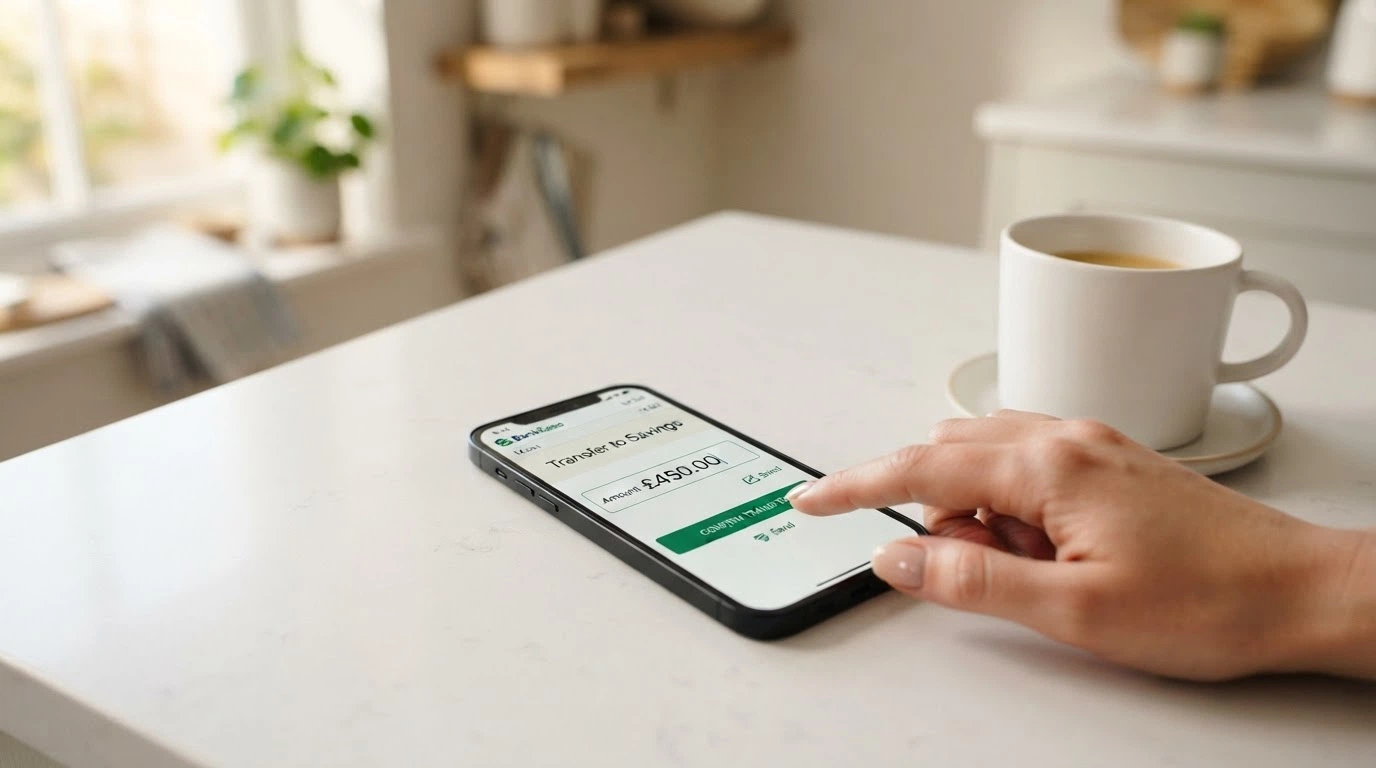
Offshore casinos use PayID for the same reason licensed operators do: it is fast, it is Australian, and it converts a bank transfer into a transfer the player can complete from a phone. What it is not, despite the appearance, is a regulator. The rail moves the money; the rail does not check the licence of the business on the other end. An offshore casino that lists a PayID handle as its deposit option is using a legal Australian payment rail attached to an illegal Australian gambling product.
A useful tell for the player: the payment methods on offer at the deposit screen. Licensed Australian wagering accepts debit cards, bank transfer, PayID/Osko and BPAY. From 11 June 2024, credit cards, credit-related products and crypto have been banned as payment for online wagering in Australia. An operator that asks for a credit card number or a Bitcoin wallet address is operating outside Australian rules — the payment method is itself a flag.
PayID as a casino deposit rail: how it works and who really processes it
A PayID transfer works by linking a payment to an identifier — an email address, a phone number, or an Australian Business Number — rather than a BSB and account number. The payer enters the identifier into their banking app, confirms the amount, and the transfer settles through the New Payments Platform via Osko, usually in seconds. The receiver does not see the payer’s bank account details, only the identifier the payer chose to share.
For a casino deposit, the flow looks like this: the player opens the cashier, selects PayID, and is given a PayID identifier — typically an email or a phone number — to send the deposit to. The player opens their banking app, enters that identifier, types the deposit amount, and authorises the transfer. The casino’s PayID account receives the funds almost immediately, and the player’s casino balance is credited within seconds in the best case.
The processing that the rail does is a transfer between two bank accounts. The processing the casino does is a credit to the player’s casino balance, on terms the casino has set. PayID does not confirm the casino is licensed, does not verify the player is over 18, and does not record the transaction as a gambling payment in a way that any Australian regulator can act on. The rail is the easy part; the regulation is on the other side of the deposit, and at an offshore casino there is none.
The $10 minimum deposit: what it buys and what it doesn’t
The $10 floor is the price point the offshore market converges on because it is the lowest meaningful top-up on PayID. Below it, the cost of processing the transfer erases the deposit. At $10, the player clears the threshold for a welcome package and the casino clears the threshold for treating the account as active. The figure is a marketing choice, not a regulatory one.
What $10 buys is entry. The player can open an account, claim the welcome package if the operator is running one, and play with a small balance. What $10 does not buy is safety. The minimum deposit is a payment threshold, not a sign that the operator is licensed, audited, or subject to Australian consumer protection. The two are easy to read together because they sit on the same deposit screen.
A player who notices the operator also offers credit card deposits or cryptocurrency deposits has moved from “outside Australian rules” to “explicitly outside Australian rules.” From 11 June 2024, credit cards, credit-related products and crypto have been banned as payment for online wagering in Australia. An operator that still asks for either is not licensed under the Australian regime, and is not subject to the consumer protections that licensing brings.
Is It Legal? What Australian Law Actually Says About $10 Casino Bonuses
The short answer is no, and the long answer explains why the question keeps coming up anyway. Online casino games — pokies, blackjack, roulette, baccarat, the rest — are prohibited to persons in Australia under the Interactive Gambling Act 2001. There is no licence for online casino anywhere in the country, federally or in any state or territory. The Interactive Gambling Amendment Act 2017 closed the loopholes offshore operators had been using and gave the Australian Communications and Media Authority its enforcement powers. The Interactive Gambling Amendment (Credit and Other Measures) Act 2023 added the credit-card and crypto ban that took effect on 11 June 2024. The Interactive Gambling Amendment (Gambling Reform) Bill 2026 passed Parliament on 19 August 2026 and adds further restrictions from 1 January 2027.
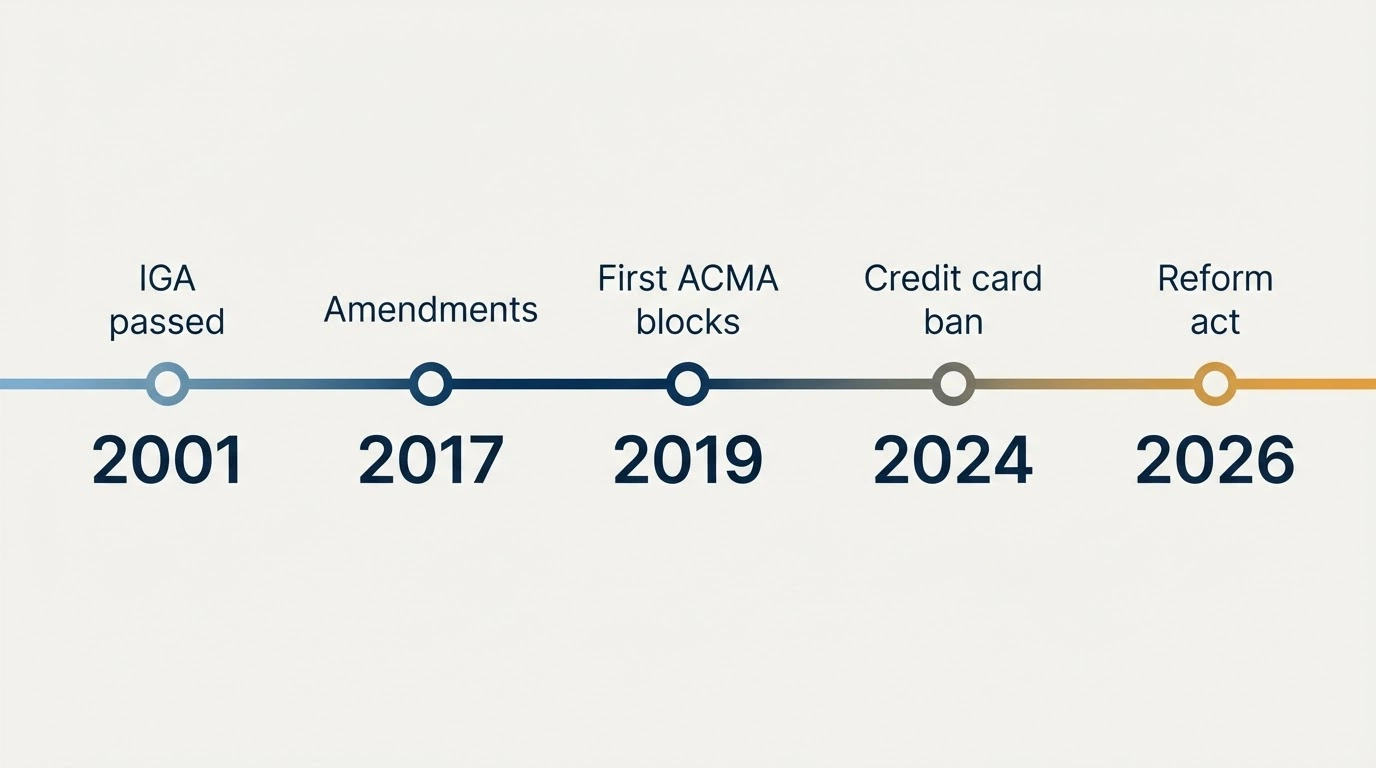
The Act targets the provider, not the player. Section 15 of the Interactive Gambling Act 2001 makes it an offence to provide online casino to a person in Australia; it does not make it an offence for a person in Australia to use such a service. The result is a market in which the operator is breaking Australian law by offering the product and the player is not breaking Australian law by accessing it, but the player is also not protected by Australian law if the product fails.
The IGA prohibition: what is banned, what is licensed, and where the line sits
The line the IGA draws is by product. Online casino games, online pokies and in-play sports betting are prohibited. Pre-event sports and race betting, lotteries and keno are licensable through state and territory regulators — the de facto national wagering licence is issued by the Northern Territory Racing and Wagering Commission through Licensing NT. The line does not bend for the payment method used: an offshore casino offering online pokies is prohibited whether it accepts PayID, a bank transfer, or a Bitcoin wallet.
Where the line gets complicated is at the state level. Inducements — sign-up offers, referral bonuses, the marketing a $10 no-deposit bonus represents — are prohibited or tightly limited by several Australian states, with rules that differ by jurisdiction. The 2026 reform layers federal restrictions on top from 1 January 2027: direct marketing of inducements will be banned for 14 days after a customer signs up with a licensed operator, and indefinitely for customers identified as at risk of gambling-related harm. Offshore operators, by definition, are not subject to any of those state or federal inducement rules.
A side question that comes up around online gambling and is worth answering once: the tax treatment of winnings. Player winnings from betting and gambling are not assessable income under section 6-5 of the ITAA 1997, and losses are not deductible under section 8-1, unless the person is carrying on a business of betting or gambling. The ATO’s published guidance is consistent with that line, and no Australian case has held an ordinary punter’s winnings assessable. The legality of the activity and the tax treatment of the winnings are two separate questions; the tax answer does not make the activity legal.
ACMA enforcement, site blocking, and the 2026 reform that changes the rules
The ACMA has been the regulator driving the offshore market out of reach since the 2017 amendments. Its tools include formal warnings, civil penalty proceedings, infringement notices, and the power to direct Australian internet service providers to block illegal sites. Since its first blocking request in November 2019, the ACMA has had 1,564 illegal gambling and affiliate websites blocked. More than 225 illegal services have withdrawn from the Australian market entirely since 2017. The block list is published, regularly updated, and worth checking before signing up with any offshore name.
The 2026 reform adds three new mechanisms. Banks and payment providers gain express authority to block transactions to illegal gambling operators from 1 January 2027, which means a PayID transfer to an unlicensed casino can be declined at the bank level. Wagering advertising is capped at three ads per hour between 6:00 am and 8:30 pm, with a live-sport blackout from 15 minutes before until 5 minutes after a live event. Athletes, celebrities and influencers are barred from promoting wagering products. Direct marketing of inducements is restricted — banned for 14 days after a customer signs up with a licensed operator, indefinitely for at-risk customers, and for three months after a person deregisters from BetStop.
The table below lays out the reform’s main provisions and what each one means for an Australian player weighing a $10 no-deposit bonus from an offshore casino.
| Reform measure | What it changes | Commencement date | What it means for $10 PayID casino players |
|---|---|---|---|
| Bank-blocking authority | Banks and payment providers can block transactions to illegal gambling operators | 1 January 2027 | A PayID transfer to an unlicensed operator can be declined at the bank level — the rail itself becomes a filter |
| Hourly advertising cap | Wagering ads limited to no more than three per hour between 6:00 am and 8:30 pm | 1 January 2027 | The volume of “no-deposit bonus” pitches a player sees on broadcast media will fall |
| Live-sport blackout | No wagering ads in the 15 minutes before and 5 minutes after a live sporting event | 1 January 2027 | Cross-promotion during sports broadcasts is cut off, reducing incidental exposure |
| Athlete and influencer ban | Athletes, celebrities and influencers barred from promoting wagering | 1 January 2027 | Fewer paid endorsements of offshore casinos on social media |
| Inducement marketing cool-down | Direct marketing of inducements banned for 14 days after signup, indefinitely for at-risk customers | 1 January 2027 | The “claim now” email or SMS dries up sooner for a fresh sign-up with a licensed operator |
| BetStop deregistration cool-down | Direct marketing of inducements banned for three months after BetStop deregistration | 1 January 2027 | An ex-BetStop user is not immediately re-pitched the moment they leave the register |
The credit-card and crypto ban has been in force since 11 June 2024 under the earlier Interactive Gambling Amendment (Credit and Other Measures) Act 2023, with a penalty of up to A$247,500 for an operator that fails to enforce it. The mechanism the 2026 reform adds is the bank-blocking authority, which converts the payment-method ban from a rule the player has to follow into a filter the bank applies automatically. For a player using PayID at an offshore casino in 2026, the practical effect from 1 January 2027 is that a transfer to a blocked operator may simply not arrive.
Staying in Control: Responsible Gambling When the Operator Has No Australian Licence
The responsible-gambling infrastructure in Australia is real, well-resourced, and largely inside the licensed system. The gap a $10 no-deposit bonus player falls into is that the offshore casino accepting their deposit is not inside that system, and most of the protections that come with it do not extend across the boundary. The tools an Australian player expects — deposit limits, self-exclusion, harm-minimisation messaging — are tools the offshore operator may or may not offer, and there is no Australian regulator to enforce them if they don’t.
The starting point for any Australian player thinking about gambling harm is the prevalence figure. About 2.1% of Australian adults — roughly 430,000 people — experience problem gambling, and the Australian Institute of Health and Welfare put high-risk gambling at 1.8% in 2022. Those are not abstract numbers; they describe the population the rest of this section is written for.
Deposit limits, loss caps and self-exclusion: what an offshore casino actually honours
BetStop — the National Self-Exclusion Register — has been live since August 2023. One registration excludes a person from every Australian-licensed online and phone wagering service in a single step. As at 31 July 2026, the register had 67,480 registrations, of which 41,290 exclusions were still active — more than 60% of everyone who had ever signed up. 78% of registrants were under 40, and 38% chose a lifetime exclusion. These figures describe a register that is being used seriously by a population that knows it needs the help.
BetStop binds Australian-licensed wagering services only. An offshore casino is not connected to the register and will continue to accept deposits and wagers from a self-excluded person. The “self-exclusion” an offshore casino offers on its own site is a setting that the operator can change unilaterally, ignore, or expire without notice. It is a request, not an enforceable block. A player who has registered with BetStop and then opened an account with an offshore casino has stepped outside the protection the registration gives them.
Deposit limits and loss caps at an offshore casino work the same way: they are operator-side features, not regulator-side rules. A licensed Australian operator has its deposit-limit commitments enforced by its regulator; an offshore operator’s deposit-limit feature is a UX choice. Reality-check prompts, time-out features and session reminders are similarly voluntary. A player who relies on these tools at an offshore site is relying on the operator’s goodwill.
Help resources and the real numbers on gambling harm in Australia
Help is available, and it is free. The National Gambling Helpline — 1800 858 858 — is staffed 24 hours a day, seven days a week, and is free from any Australian phone. Gambling Help Online — run by the same network — offers online chat and counselling, and is designed for the population the prevalence figures describe: people who have noticed their own gambling starting to cause harm, and the people around them.
From 1 January 2027, the 2026 reform layers one further protection onto the licensed system: direct marketing of inducements will be banned for three months after a person deregisters from BetStop, closing the gap that allowed a freshly deregistered user to be re-pitched immediately by a licensed operator. Offshore operators are not subject to this rule, which is itself a reason the protection matters most for licensed play.
The figure to keep in mind when weighing any “no deposit” offer is the one the Australian Institute of Health and Welfare published in 2022: about 2.1% of Australian adults — roughly 430,000 people — experience problem gambling, with high-risk gambling at 1.8%. A free $10 bonus is genuinely free only when it is genuinely recreational. For the population those percentages describe, the same offer is the start of a different kind of transaction, and the help lines above exist because that transaction has ended badly for enough Australians that the country built infrastructure around it.
How We Selected and Ranked These $10 PayID Casinos
The ranking is built from three sources. The first is the Australian regulatory record: the Interactive Gambling Act 2001, the 2017 amendments, the 2023 credit-card ban, and the 2026 reform. That record establishes that every operator in the set is offshore and unlicensed in Australia, and it is the reason the legal-status column in the comparison table is identical for all ten names. The second source is the ACMA’s enforcement record — the 1,564 blocked sites, the 225 withdrawn services — which establishes the enforcement environment the offshore market operates in. The third source is the offshore operators’ AU-facing footprint, which establishes how visible each operator is to Australian players and how much community reporting exists around each one.

The selection criteria the ranking applies are limited by what could be verified. The regulatory record is auditable. The ACMA’s block list and withdrawal record are public. The AU-facing footprint is a marketing metric, not a quality signal — it tells you how many Australians an operator has reached, not whether the product is fair. Live operator bonus terms, current no-deposit offers, active bonus codes, PayID acceptance and minimum deposit figures could not be verified for any of the ten operators during research, and they are not in the comparison table. Where a comparison page elsewhere carries specific figures beside these names, those figures are the operator’s own marketing copy rather than independently audited terms.
The ranking should be read as a list of who reaches Australian players with an offshore casino product, in what order, and against what regulatory background — not as a verdict on which operator is safer, fairer, or better. None of the ten is licensed in Australia; the differences between them are commercial, not regulatory, and the gap in verified terms applies equally to all ten.
Should You Claim a $10 No-Deposit Bonus? What the Fine Print Means for Your Money
The arithmetic of a no-deposit bonus is the same wherever it appears. The casino credits you a small amount of bonus funds or free spins; the wagering requirement converts that headline into a turnover target; the maximum cashout cap converts any winnings into a ceiling. A player who finishes the wagering inside the cap keeps the difference; a player who finishes outside the cap keeps the cap and loses the rest. The headline “$10 free” is, in almost every case, the smallest amount the offer could deliver.
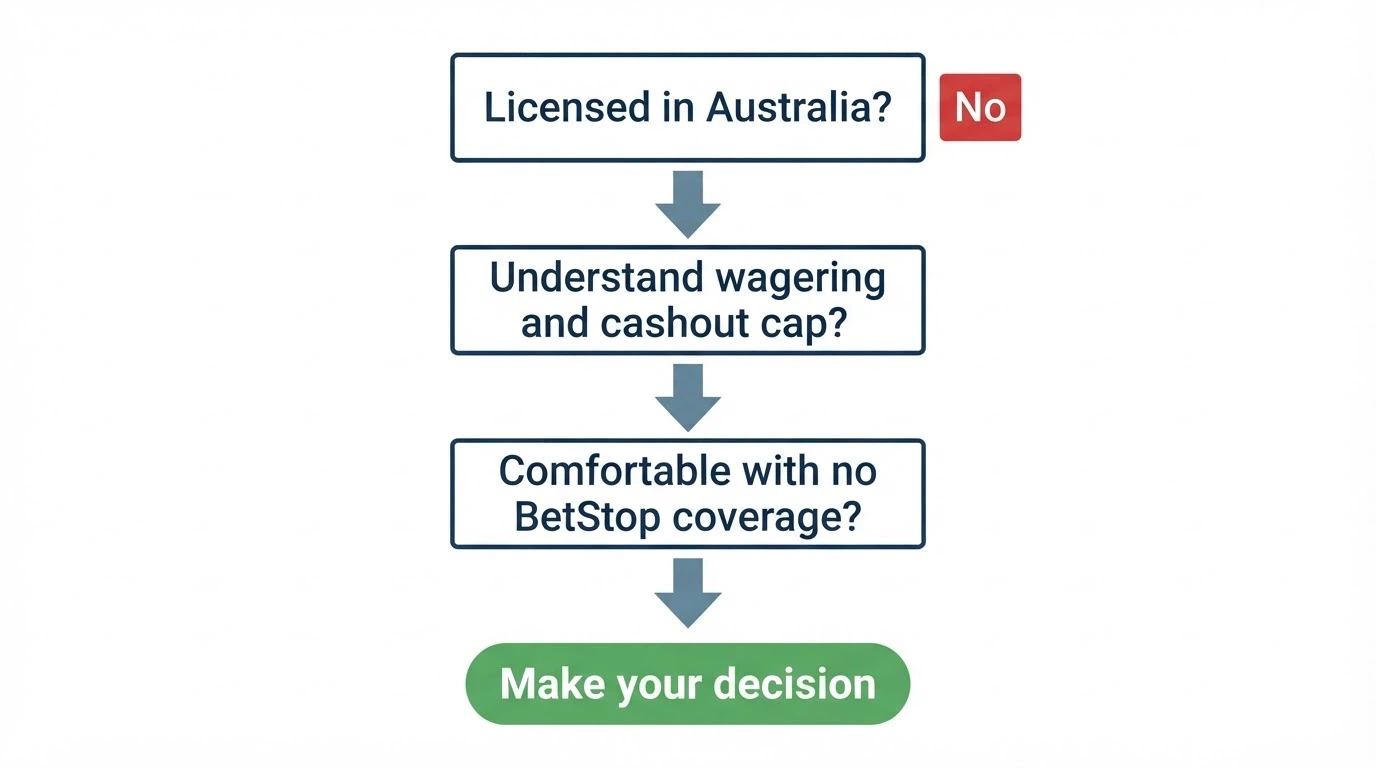
The offshore context adds a layer the licensed context does not. A licensed Australian wagering operator is regulated by an Australian regulator, subject to Australian consumer protection, and connected to BetStop for self-exclusion. An offshore casino is none of those things. If the operator refuses a withdrawal, voids a win, or disappears, the Australian player has no Australian complaints body to appeal to, no ACMA recovery process to invoke, and no guarantee that BetStop’s registration will hold. The block list adds another risk: a casino that is accessible today can be on the ACMA block list next month, and a balance held with the operator at the time the block lands is held with an offshore entity the Australian player can no longer reach.
The payment method is the last tell. A licensed Australian wagering operator accepts debit card, bank transfer, PayID/Osko and BPAY. From 11 June 2024, credit cards and crypto have been banned as payment for online wagering in Australia. An operator asking for a credit card or a Bitcoin wallet is, by its own payment screen, advertising that it is not licensed under Australian rules.
For a player who can afford the $10 as a one-off entertainment spend, who has read the bonus terms on the operator’s own page, who understands that the offer is a marketing expense and not a windfall, and who is not on BetStop and does not need to be — the offer is what it says it is. For a player outside any of those conditions, the same offer is the start of a transaction the Australian regulatory system is not built to protect. The fine print does not care which reader it lands on.
The Questions Australian Players Ask Most About $10 PayID No-Deposit Bonuses
Six questions come up across nearly every Australian player thread about $10 PayID no-deposit bonuses, and the answers to each one are already developed in the sections above. The block below gathers them so a reader looking for a single answer can find one without re-reading the article.
What the six most-asked questions reveal about the AU player’s real concerns
Three themes run through them. The first is legality — whether the offer is real, whether claiming it is allowed, and what Australian law does to the operator on the other end. The second is arithmetic — what the bonus costs in turnover, what it allows the player to keep, and how fast the fine print closes the gap. The third is offshore risk — what the lack of an Australian licence means for the player’s money and the player’s protections when something goes wrong.
Each theme maps to a section above. Legality is developed in the section on Australian law and the ACMA’s enforcement record. Arithmetic is developed in the section on bonus structure and the worked illustration of the wagering-and-cap mechanism. Offshore risk is developed in the comparison table, the operator write-ups, and the responsible-gambling section that follows. The questions below point the reader back to those sections, and answer the most common version of each in a paragraph.
Frequently Asked Questions
Can I really get a no-deposit bonus at an Australian online casino?
Online casino and online pokies are prohibited under the Interactive Gambling Act 2001, so no Australian licence exists for the product a no-deposit bonus would unlock. The offers pitched at Australians come from offshore operators outside Australian law — accessible from Australia, but with no Australian consumer protection if the operator refuses to pay.
What are wagering requirements on a no-deposit bonus and how much do I need to bet before I can withdraw?
A wagering requirement is a multiple applied to the bonus amount — a 40× rule on a $10 no-deposit bonus means $400 of qualifying bets before any withdrawal is permitted. No-deposit bonuses typically carry higher wagering than deposit bonuses, and not every game contributes fully. Always check the operator’s own terms page for the exact figure on the offer being claimed.
What is the maximum I can cash out from a $10 no-deposit bonus?
Offshore no-deposit bonuses include a maximum cashout cap — a fixed ceiling on winnings from bonus funds. Anything above the cap is forfeited at withdrawal. The cap was not verified for any operator named in this article; the current terms on the operator’s own page are the only source for the offer being marketed today.
Does BetStop cover offshore casino sites that accept Australian players?
No. BetStop — the National Self-Exclusion Register — binds Australian-licensed wagering services only. An offshore casino is not connected to the register and will continue to accept deposits and wagers from a self-excluded person. Self-exclusion at an offshore site is a request, not an enforceable block, and the BetStop registration does not extend across the offshore boundary.
What happens to my money if the ACMA blocks the casino I am playing at?
The block cuts Australian players off from the site but does not return balances. If you hold funds when the operator is added to the ACMA block list, recovery depends entirely on the operator’s own terms — no Australian complaints body can chase the money on your behalf.
Are PayID casino withdrawals instant or do they take days?
PayID itself settles in seconds, but a casino withdrawal is not the same as a peer-to-peer transfer. Offshore casinos add processing time on top — identity checks, anti-fraud reviews, queue position — and that delay is theirs, not PayID’s. The bank’s rail is fast; the operator is the bottleneck.
Written by the editors at Trusted Casinos Australia.