
Online Casino Reload Bonuses in Australia: What the Terms Actually Cost in 2026
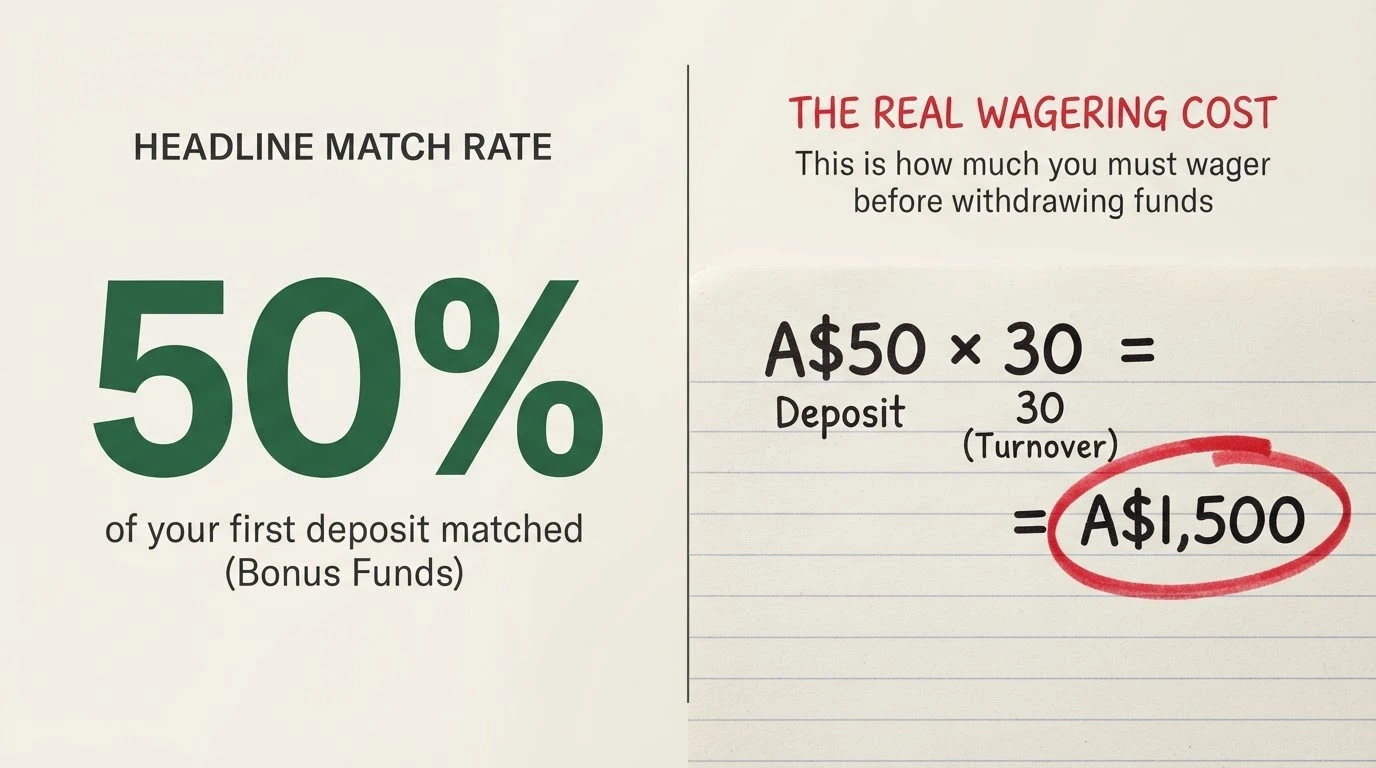
A 50% reload match on a A$100 deposit looks like A$50 free. It is not. The wagering requirement turns that A$50 into a A$1,500 turnover obligation before any of it — or any winnings it produces — becomes withdrawable cash. Every casino offering a reload bonus to an Australian punter sits offshore, because no Australian online casino licence exists. The reload is the carrot. The wagering is the price. The offshore position is the context no bonus page leads with.

Current as of 16 October 2026 — operator licence claims verified against the ACMA register.
Table of Contents
- Why Your Reload Bonus in 2026 Is Smaller Than It Looks
- Not One of Them Holds an Australian Licence: The Offshore Casinos Ranking for 2026
- Why Every Online Casino Reload Bonus an Australian Sees Sits Offshore
- Playing Safely When the Safety Nets Do Not Reach
- How We Chose and Ranked These Reload Bonus Casinos
- Your Reload Bonus Strategy — What to Do Next
- Frequently Asked Questions
Why Your Reload Bonus in 2026 Is Smaller Than It Looks
A reload bonus is the offer a casino sends to a player who has already deposited at least once. A follow-up match, usually a percentage of the new deposit, credited as bonus funds. Welcome bonuses are the acquisition offer — larger, one-time, designed to convert a first deposit into a funded account. Reload bonuses are the retention offer: smaller in headline match, recurring, and tuned to keep the existing customer depositing. The Australian-facing market sits between roughly 25% and 75% match for the standard reload, smaller than the welcome offers that bookend them and sometimes more demanding on the terms that govern how the bonus is cleared.
The “free money” framing is the marketing. The wagering requirement is the cost. Every dollar of bonus credit you accept multiplies the play the casino wants from you, and the operator’s terms decide whether that play is realistic for the bankroll you’ve actually brought. The maths is the same in every case; only the size of the numbers changes.
What a Reload Bonus Actually Is
A reload bonus is a deposit-match offer aimed at players who have already signed up and funded an account. The mechanic is straightforward. You deposit, the casino adds a percentage of your deposit as bonus credit, and you play with the combined balance under a wagering requirement that must be cleared before any withdrawal. The match percentage is the headline figure — typically 25% to 75% on standard reloads at Australian-facing casinos, with weekend and loyalty-tier variants pushing higher. The wagering requirement is the operating number, and it is where the offer is really priced. Most reload bonuses carry a 30x to 40x multiple on the bonus amount, with the broader market averaging closer to 30x to 45x. Above 40x the maths turns uncomfortable: the volume of play required approaches the point where the house edge alone — typically 2% to 5% on pokies — eats through the bonus before the requirement clears.
A worked example makes the arithmetic plain. Take a A$50 bonus with a 30x wagering requirement. The turnover you must produce is A$1,500. With most reloads capping the bet at somewhere between A$3 and A$7.50 per spin, using A$5 as a working midpoint, that A$1,500 turnover needs 300 spins. At five seconds per spin — a normal pace on a pokie — that is 1,500 seconds of play, or roughly 25 minutes of unbroken spinning. The headline “30x” reads one way on the bonus page; the same number reads differently when you clock what 25 minutes of A$5 spins at the house edge actually costs. That figure is a statistical estimate — an average over many spins, not a guaranteed outcome for any single player — and it assumes only the bonus amount is wagered.
Many reloads apply the turnover to the deposit plus the bonus rather than the bonus alone, a structure that roughly doubles the requirement and is the source of most player complaints about bonuses that looked generous on paper and proved unreachable in practice. The same A$50 bonus with a 30x deposit-plus-bonus requirement is not a A$1,500 turnover. It is closer to A$4,500, because the deposit and the bonus are added together before the multiple is applied. The arithmetic doubles. The match stays the same. The cost quadruples on the player’s side.
How Reload Bonus Offers Land in Your Account
Reload bonuses are not automatic. Most Australian-facing casinos require either an opt-in at the cashier before depositing, a bonus code at the deposit stage, or a click-through from a promotional email. The deposit is the trigger. Most reloads carry a minimum deposit threshold, commonly A$20 to A$35, and the match percentage and ceiling are stated on the bonus page before the player commits.
Reload offers come in cycles. Weekly reloads run on a fixed schedule, often Monday or Friday, with terms refreshed each cycle. Weekend reloads are the larger offers of the week — at Australian-facing casinos, weekend matches commonly run 50% to 75% up to A$1,000, the ceiling the offshore market treats as a generous reload. Loyalty tiers change the reload a returning player sees: higher-tier players may receive reduced wagering requirements, larger match percentages, or exclusive reload codes delivered by account manager. Some platforms reserve their best reload terms for the players who have already deposited the most.
A “reload” in marketing language covers several distinct structures. The standard match reload is the most common — a percentage of deposit credited as bonus funds, subject to wagering. The free-spins reload credits a fixed number of free spins rather than a cash match, with the wagering applied to any winnings the spins produce. The cashback reload returns a percentage of net losses over a defined period as bonus credit, usually with lighter wagering than a match reload. Each carries a different cost profile, and the same match percentage can mask very different real costs depending on which structure the operator has chosen.
The scale of welcome offers at Australian-facing casinos is worth flagging as a separate reference point. Welcome bonuses at some operators reach 200% match up to A$4,500 with 40x wagering, or 250% match up to A$1,000 with 35x wagering — a step change above the standard reload range and a reminder that the retention offer is by design a smaller number than the acquisition offer that came before it.
Pokies Reload Bonuses — Where the Wagering Counts
Reload bonuses are designed to be cleared on pokies. The game-contribution weighting makes this explicit: slots and pokies typically contribute 100% toward the wagering requirement, while table games — blackjack, roulette, baccarat — contribute between 10% and 20%. The reload bonus is, in practical terms, a pokie bonus.
The arithmetic of that gap is brutal. A A$1,500 turnover requirement cleared on pokies at A$5 per spin is 300 spins and roughly 25 minutes of play. The same A$1,500 turnover cleared on blackjack, where the house edge is lower but only 10% to 20% of each bet counts toward the requirement, requires A$7,500 to A$15,000 in actual blackjack wagers to produce the same clearing progress. A player running blackjack strategy for hours to clear a A$50 bonus is running the wrong race.
Free-spin reloads sit in their own category. Free-spin offers credit a number of spins at a fixed stake on a named pokie, with any winnings paid as bonus funds and subject to wagering. The validity window is short — anywhere from 24 hours to 14 days — and the wagering applies to the spin winnings, not the spin value. Free-spin reloads read as a smaller obligation than a cash match reload but often carry comparable wagering on what they do pay. A “free spin” with 35x wagering on the winnings is not free in any sense the player feels.
The pokie bias is not accidental. Offshore operators design reload bonuses for the games that contribute fully to the wagering, because that is where the requirement clears fastest and the house edge compounds quickest. A reload bonus cleared on pokies returns the house its expected margin on every spin. A reload bonus cleared on table games costs the house more, which is why contribution rates are calibrated against the games the house wants you to play.
Crypto Reloading and Bitcoin Bonuses
Crypto reload bonuses exist. Several of the offshore operators Australian players access run reload promotions denominated in Bitcoin, Ethereum, or USDT, often with a small percentage premium over the fiat equivalent on the rationale that the deposit cost the operator less to process. The marketing is straightforward: deposit crypto, claim the reload, play.
The problem is what accepting a crypto reload from Australia signals. Credit cards, credit-related products and digital currency have been banned as payment methods for online wagering in Australia since 11 June 2024 — a ban that applies to operators offering wagering services to Australians. An operator that takes Bitcoin from a player in Sydney is not operating under Australian law. The cryptocurrency offer is not a feature; it is a marker that the operator is outside the local regime and the local consumer protections that come with it. Penalties for non-enforcement of the credit and crypto ban can reach A$247,500, a measure of how seriously the regulator treats the issue.
The legal fallback for Australian players is clear. Debit card, bank transfer, PayID/Osko and BPAY are the routes that comply with the prohibition. A reload offer denominated in crypto is technically available; the regulatory question is what an Australian player gives up by taking it.
Reloading via PayID — Fast Deposit, Same Offshore Risk
PayID reloads at Australian-facing casinos work the way PayID works everywhere else. You enter the casino’s PayID identifier — typically an email, phone number or ABN — confirm the amount, and the funds land in the casino account within seconds through the Osko network. No card details, no app, no waiting for a transfer to clear. For Australian players used to the friction of paying overseas merchants, the deposit experience is the smoothest part of the offshore transaction.

The same warning applies. PayID is a legal deposit route for licensed wagering operators in Australia, and the fact that an offshore casino also accepts it does not change the operator’s legal status. The Australian-licensed wagering market — Sportsbet, bet365, Ladbrokes, the big TAB-affiliated bookmakers — does not offer online casino products and therefore does not offer casino reload bonuses. A smooth PayID deposit at an offshore casino is a comfortable way to fund an unlicensed product. The comfort is in the rail, not in the destination.
| Reload bonus type | Typical match | Wagering range | Validity window | Max bet while wagering |
|---|---|---|---|---|
| Standard reload match | 25–75% | 30x–40x | 3–30 days | A$3–A$7.50 |
| Weekend reload match | 50–75% up to A$1,000 | 30x–40x | 3–7 days | A$3–A$7.50 |
| Free spins reload | — | 30x–40x on spin winnings | 24 hours–14 days | A$3–A$7.50 |
Not One of Them Holds an Australian Licence: The Offshore Casinos Ranking for 2026
Every operator an Australian player can access for an online casino reload bonus in 2026 is offshore. The Interactive Gambling Act 2001 prohibits the supply of online casino games to persons in Australia, and no state or territory issues a licence for the product. There is no Australian-licensed online casino to rank. What follows is a ranking of the offshore operators that hold the largest share of the Australian market for this product, measured by tracked traffic and revenue, with the licence column left to state the obvious truth: no one listed here is licensed to do what they are doing.

| Operator | AU licence status | Est. AU market share |
|---|---|---|
| Rocket Play | Offshore | 9.4% |
| Skycrown | Offshore | 8.55% |
| Royal Reels | Offshore | 2.51% |
| WinSpirit | Offshore | 1.55% |
| Stake | Offshore | 1.28% |
| Rainbet | Offshore | ~1.28% |
| Scream Casino | Offshore | ~0.99% |
| FairGO | Offshore | ~0.80% |
| Bizzo Casino | Offshore | ~0.57% |
| Rocket Casino | Offshore | ~0.57% |
The share figures come from a market-tracking dataset of Australian-facing casino brands and reflect revenue, not player satisfaction or bonus fairness. A brand’s position on this list tells you how many Australians are reaching it, not whether the offer they find there is worth claiming.
Rocket Play
Rocket Play sits at the top of the Australian-facing offshore market on the strength of roughly A$632.69M in tracked AU revenue and a 9.4% market share — a brand that has built its reach on game library size and aggressive bonus marketing rather than any Australian regulatory standing. The site holds no Australian licence, because none exists for the product, and operates under an offshore authorisation that Australian consumer law does not recognise.
Reload bonus specifics at Rocket Play could not be confirmed from publicly verifiable material this round, and that gap matters. A 9.4% share means thousands of Australians are claiming reloads from this operator, and the terms of those reloads are what determines whether the bonus is worth the wagering. Before depositing, the player should look for the same four numbers the market as a whole treats as standard: match percentage in the 25% to 75% range, wagering between 30x and 40x on the bonus, validity of at least a week, and a max bet cap of A$3 to A$7.50 while wagering is active. Anything outside those bands is a signal to read the small print carefully.
Rocket Play is the largest reach on the Australian-facing offshore list, and its size does the marketing for it. Whether that reach translates into fair reload terms is a question only the operator’s own bonus page answers, and the player should treat that page as the first thing to check before committing a deposit.
Skycrown
Skycrown is the second-largest Australian-facing brand on the data, with roughly A$436.07M in tracked AU revenue and an 8.55% share of the market. The pattern is familiar: large game library, regular reload promotions, no Australian licence, no Australian consumer protection on the funds a player deposits. Skycrown operates under an offshore authorisation in the same regulatory environment as the other brands on this list.
Reload bonus terms at Skycrown were not confirmable from this guide’s verification round. A player looking at a Skycrown reload should apply the standard market check — covering match percentage, wagering, validity, and bet caps — and should be wary of any reload that reads as significantly more generous than the market range. A 200% match with no other context is more likely to be a welcome-style headline than a recurring reload, and reloads that read as more “generous” than the standard range tend to carry heavier conditions elsewhere in the terms.
Skycrown is a high-volume choice for Australian players who reach offshore casinos, and the volume is the marketing. The player’s job is the wagering.
Royal Reels
Royal Reels sits in the middle of the Australian-facing offshore set with a 2.51% share and roughly A$243.99M in tracked AU revenue — a meaningful presence, well behind the top two, ahead of most of the field. Royal Reels holds no Australian licence, because the licence does not exist, and operates offshore. The brand has invested in Australian-facing payment options and local currency support, a usability advantage rather than a regulatory one.
Reload terms at Royal Reels could not be verified this round. A mid-tier operator on the Australian-facing market is more likely than not to publish standard reload offers in the 25% to 75% match range with 30x to 40x wagering and a validity of a week or two, but the specifics on this brand should be checked on the operator’s own bonus page before claiming. The four-number check — match, wagering, validity, max bet — applies.
Royal Reels is a reasonable mid-tier option for the Australian punter who has decided to play offshore, and the absence of confirmed terms means the player must do the verification work themselves. Treat the bonus page as part of the offer, not as a footnote.
WinSpirit
WinSpirit holds a 1.55% share of the Australian-facing offshore market with roughly A$110.3M in tracked AU revenue. The brand is smaller than the top of the ranking but still well ahead of the bottom of the list, and presents itself to Australian players in much the same way the rest of the offshore set does — local currency, local payment options, no Australian licence.
Reload bonus terms at WinSpirit were not surfaced in this verification round. The standard reload mechanics for a brand at this market position are well within the typical market bands, but the specifics for WinSpirit need to be checked on the operator’s bonus page before any deposit is committed. A player running the standard four-number check should be able to assess the offer in a minute or two.
WinSpirit is a smaller-footprint choice, and smaller-footprint offshore operators carry the same licence gap as the bigger ones. The size of the brand does not affect the regulatory position; the Australian player gives up the same consumer protections at WinSpirit as at the top of the ranking.
Stake
Stake is the only crypto-native operator in this ranking, with a 1.28% share of the Australian-facing market and roughly A$115.67M in tracked AU revenue. The brand built its identity around cryptocurrency deposits and same-game betting products, and the bonus structure reflects that. Reload offers at Stake have historically been lighter on cash matches and heavier on rakeback, weekly bonuses and promotions denominated in Bitcoin or USDT. The crypto-native positioning is the marketing, and it carries a regulatory cost.
The Australian complication is direct. Crypto has been a banned payment method for online wagering in Australia since 11 June 2024, and an operator accepting Bitcoin from a player in Australia is outside Australian law on payment alone. Stake’s Australian-facing presence is built on a payment rail that the Australian regulator has explicitly prohibited for this product. The reload bonus Stake offers may be competitive; the way the player funds the account that triggers the bonus is the regulatory exposure.
Stake is the only brand in this ranking whose primary deposit method is incompatible with Australian law as a standing matter. A player who chooses Stake accepts the crypto position as part of the deal. For an Australian punter, that is a more pointed decision than the same choice would be from almost any other market.
Rainbet
Rainbet holds roughly 1.28% of the Australian-facing offshore market — a share essentially tied with Stake’s, though Rainbet’s profile is different. The brand sits in the same mid-tier cluster and presents to Australian players with standard offshore casino positioning: game library, regular reload promotions, no Australian licence.
Reload bonus specifics at Rainbet could not be verified this round. A player assessing a Rainbet reload should apply the standard market check — covering match percentage, wagering, validity, and bet caps — and should treat any reload offering terms significantly outside the typical 25% to 75% match and 30x to 40x wagering bands as worth a careful read. The standard reload structure is well-understood; the question on any individual operator is whether the published terms match the pattern.
Rainbet is a comparable alternative to Stake on share alone, and a comparable regulatory situation to every other operator on this list. The choice between them is a question of game library, payment options and bonus structure, not licence status, where the answer is identical.
Scream Casino
Scream Casino sits at roughly 0.99% of the Australian-facing offshore market — just under 1% of tracked share, a smaller position than the top of the ranking but still a measurable Australian reach. The brand operates offshore in the same regulatory environment as the rest of the list, with no Australian licence and no Australian consumer protection on player funds.
Reload bonus terms at Scream Casino were not confirmed in this round. The standard market check — match, wagering, validity, max bet — applies to the published terms before any deposit. A sub-1% share brand is not necessarily offering worse terms than a 9% share brand, but the player has fewer independent reviews and less word-of-mouth to draw on, which makes the operator’s own bonus page more important to read in full.
Scream Casino is a smaller offshore option with the same regulatory exposure as the rest of the set. The size of the Australian-facing audience does not change what protections a player has or does not have, because the protections in question do not exist at any share level.
FairGO
FairGO carries the only .com.au domain on this list — a marketing signal that suggests Australian ownership and Australian targeting, and a regulatory signal that means nothing. Domain extensions are not licences, and the .com.au suffix tells a reader nothing about whether the operator holds an Australian authorisation for the product it sells. FairGO holds no Australian online casino licence, because no such licence exists.
FairGO sits at roughly 0.80% of the Australian-facing offshore market. The brand has built a small but consistent presence among Australian players, and the local domain gives it a discoverability edge on search that has nothing to do with the licence position. Reload bonus terms at FairGO were not confirmed this round. A player assessing the offer should apply the standard market check and treat the .com.au domain as a marketing artefact, not a regulatory endorsement.
FairGO is the clearest example on this list of why “Australian-looking” is not “Australian-licensed”. The domain looks local. The operator is offshore. The player protections are absent. A brand can carry the most Australian-facing name in the market and still offer an unlicensed product, and that is exactly what FairGO does.
Bizzo Casino
Bizzo Casino holds roughly 0.57% of the Australian-facing offshore market — one of the smaller positions in the ranked set, ahead only of Rocket Casino on share. The brand operates offshore in the same regulatory environment as the rest of the list, with no Australian licence and no recourse for the Australian player under Australian consumer law.
Reload bonus specifics at Bizzo Casino were not available in this verification round. The market-standard reload mechanics — match percentages in the 25% to 75% range, wagering of 30x to 40x on the bonus, validity of three to thirty days, and a A$3 to A$7.50 max bet cap while wagering is active — are the bands a player should be checking the published terms against. Anything outside those bands is a reason to read the small print more carefully.
Bizzo Casino is the second-smallest brand in the ranked set, and the smallest shares do not change the regulatory exposure. An Australian player who reaches Bizzo reaches an offshore operator that does not hold an Australian licence, and the consequences of that fact are the same at 0.57% share as at 9.4%.
Rocket Casino
Rocket Casino closes the ranking at roughly 0.57% of the Australian-facing offshore market, tied with Bizzo Casino at the bottom of the tracked set. The brand is a small Australian-facing presence, operating offshore with no Australian licence and offering an unlicensed product to Australian players in the same way the rest of the list does.
Reload terms on this brand were not confirmable this round. A player assessing a Rocket Casino reload should run the standard four-number check — looking at match percentage, wagering, validity, and bet caps — and should be particularly alert to any terms that read as more favourable than the market standard, since the published terms are the only verifiable data point on a small-share brand. Reload terms on a small-share brand can shift quickly; what looked generous last month may have been replaced.
Rocket Casino is the smallest Australian-facing brand in the ranked set, and the smallest share on the list is not a quality verdict. The decision to play at the bottom of the ranking is a decision about game library, bonus structure and payment options, not about regulatory exposure, which is identical at every position on the list.
How a Good Reload Stacks Up Against a Bad One
Four numbers separate a fair reload from a trap. The match percentage is the headline. The wagering multiple is the operating cost. The validity window is the clock. The max-bet cap is the throttle. A reload that looks generous on the first number and unreasonable on the second is more common than the marketing suggests, and the player who reads only the match is the player the bonus page is written for.
A reload in the standard market range — typically 25% to 75% match, 30x to 40x wagering, and three-to-thirty-day validity — sits in the band the broader offshore market treats as ordinary. A reload above 40x wagering starts to become difficult to clear at standard pokie house edges; the volume of play required approaches the point where the expected loss through the bonus alone exceeds the bonus value. The card-player analysis of wagering requirements places 40x as the rough ceiling for a manageable playthrough, and a reload above that ceiling is a different product from one inside it.
The max-bet cap does more work than it looks. A A$5 cap on a A$1,500 turnover requirement produces 300 spins, which at five seconds per spin is roughly 25 minutes of play — manageable. A A$3 cap on the same requirement produces 500 spins, or roughly 42 minutes. Lower caps stretch the clearing time without changing the wagering. The bonus still costs the same in expected loss, but the player sits at the screen longer. The cap exists to prevent bonus abuse through high-stake short-volume play; the player feels it as slower clearing, not as a different offer.
The bright spot in the data is the share of reloads that carry no withdrawal cap. The vast majority of reload bonuses at Australian-facing casinos — 88% by one count — are uncapped, meaning the bonus and its winnings can be withdrawn once the wagering is cleared, with no separate ceiling on the payout. That is the favourable end of the bonus structure, and it is worth weighting more heavily than the match percentage when comparing offers. An uncapped reload at 35x wagering is a better offer than a capped reload at 25x match, every time.
Reading a Reload Casino Review — What the Numbers Actually Mean
A reload casino review that leads with a star rating and a one-paragraph verdict is selling the review, not the offer. The useful content of a review is in the bonus terms page it points at: match percentage, wagering multiple, validity window, max bet, contribution rates, restricted games, and the maximum cashout if any. A review that omits those numbers is an advertisement. A review that publishes them and lets the reader judge is a tool.
The licence field is the next filter. Any review that describes an operator as “Australian licensed” for an online casino product is wrong — the licence does not exist, and no operator on the offshore list holds one. A review that describes the operator as offshore and lists the jurisdiction of the actual licence is giving the reader the information they need to understand what consumer protections apply, which is essentially none under Australian law.
The payment-method list is a free compliance test. A review that lists credit cards or cryptocurrency among the accepted deposit methods is describing an operator that is taking payments banned for online wagering in Australia since June 2024. That is not a feature; it is evidence the operator is outside Australian law. A review that describes the accepted methods as debit card, bank transfer, PayID, or BPAY at least confines the operator to the legal rails, even if the product itself remains unlicensed.
The 2017 amendment to the Interactive Gambling Act was the moment offshore operators lost the legal grey area they had been operating in. A review that does not acknowledge the post-2017 enforcement environment is reading from a pre-amendment playbook. The 2026 reform — passed in August and commencing in January — adds another layer of restrictions on inducements, advertising and payment processing. A review written before the reform passed is already behind the regulatory curve, and any review that promises a “future legal” Australian online casino is making a promise the legislation does not authorise.
Why Every Online Casino Reload Bonus an Australian Sees Sits Offshore
The Interactive Gambling Act 2001 makes it an offence to provide an online casino, online pokies or in-play sports betting to a person physically in Australia. The offence sits with the provider, not the player — Australians are not prosecuted for placing a bet, and the criminal exposure belongs to the operator serving the product. But the offence itself is why every casino reload bonus an Australian is offered sits offshore. No operator with an Australian presence can legally offer the product, and no licence exists for them to acquire.
The 2017 amendment to the Interactive Gambling Act strengthened the original statute, closing the loopholes offshore operators had been using to argue they were not actually targeting Australians and giving the Australian Communications and Media Authority the enforcement teeth — including formal warnings, civil penalty proceedings and the power to direct ISPs to block illegal sites — that have driven the offshore market into its current shape. The amendment did not legalise online casino. It made the prohibition harder to argue around.
The licensed wagering market in Australia — the operators holding Northern Territory, New South Wales, Victorian or other state and territory wagering licences — does not include online casino products. Sportsbet, bet365, Ladbrokes and the other major bookmakers offer racing and pre-event sports betting, lotteries and keno. They do not offer online pokies, online blackjack, online roulette, or any other casino game. A reload bonus is a casino product. There is no licensed version of the thing this guide is about.
ACMA Enforcement — 1,564 Sites Blocked and Counting
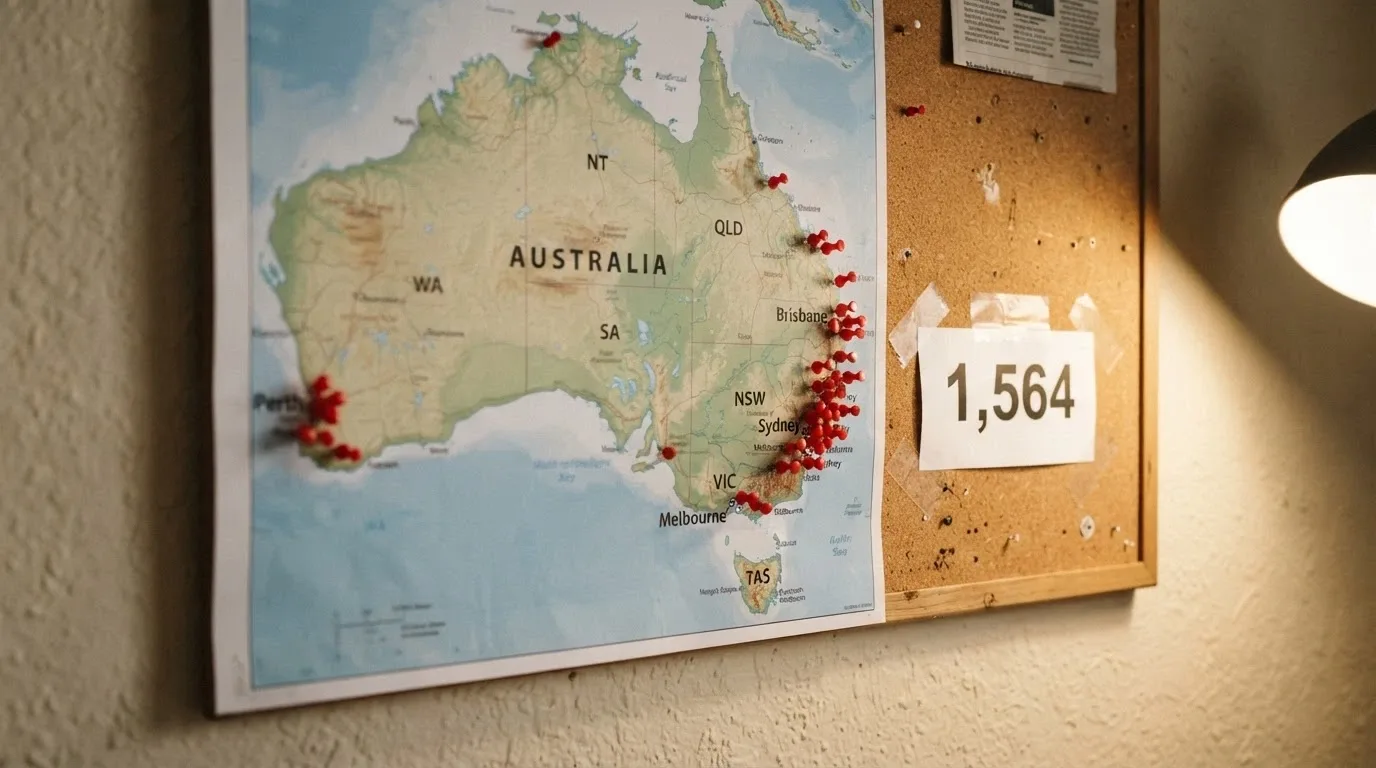
The Australian Communications and Media Authority has directed Australian ISPs to block 1,564 illegal gambling and affiliate websites since its first blocking request in November 2019. The blocking is DNS-level: the site’s domain stops resolving for Australian users, and the site effectively disappears for anyone trying to reach it from an Australian connection. More than 225 illegal gambling services have withdrawn from the Australian market entirely since enforcement was strengthened in 2017, including some that pre-empted a blocking request rather than fight it.
The practical consequence for a player with a balance on a blocked site is sharp. The site may still be operating in other jurisdictions, but the player cannot reach it to withdraw, and there is no Australian consumer protection body with jurisdiction over the operator’s funds. ACMA’s mandate is to enforce the prohibition; it does not act as a dispute resolution service for players who have funds trapped on a blocked site. The blocking count is a reminder that the offshore market Australian players access is not a stable supply — the same legal architecture that authorised those blocks can authorise another one tomorrow, on a site where a player holds a balance.
From 1 January 2027, the blocking architecture extends. Banks and payment providers gain express authority to block transactions to illegal gambling operators, allowing the financial system to refuse payments to and from offshore casinos at the rail rather than relying on DNS-level disruption. That change does not legalise the product; it makes the legal status more enforceable from a different angle.
Licensing — Who Has One and Who Never Will
Australia’s online wagering licensing is state and territory business, with the Northern Territory Racing and Wagering Commission administered through Licensing NT acting as the de facto national licensor for major online bookmakers. NT wagering licences run for terms of up to 20 years and cover racing and pre-event sports betting — the two product categories the IGA permits to be licensed and supplied to Australians. The NT also levies a 5% wagering tax on wagers minus payouts plus a 0.05% racing levy. State point-of-consumption taxes typically add another 10% to 15% on top of that.
What the NT licence does not cover is online casino. A bookmaker holding an NT wagering licence is licensed to take bets on the Melbourne Cup and the start of the State of Origin; the same operator is not licensed to offer an online pokie, an online blackjack table, or a reload bonus on either. The licence structure is the reason every Australian-facing online casino is offshore. There is no licence category to apply for.
Land-based casinos in Australia — Crown in Melbourne and Perth, The Star in Sydney and Gold Coast, plus the state-licensed venues in each jurisdiction — operate under separate state and territory casino licences and offer table games, pokies and other casino products inside their physical premises. The land-based licence is real, but it does not extend to an online casino product. The licensed casino is the building. The online version is the unlicensed offshore operation.
The 2027 Reform — What Changes and What Does Not
The Interactive Gambling Amendment (Gambling Reform) Bill 2026 passed Parliament on 19 August 2026. Its measures commence on 1 January 2027. The reform tightens the advertising and inducement framework around wagering services without legalising the underlying online casino prohibition, and the changes most relevant to reload bonus players are the new inducement rules and the payment-blocking authority.
From 1 January 2027, wagering advertising is subject to a cap of three ads per hour between 6:00 am and 8:30 pm, with a live-sport blackout from 15 minutes before the start of a live event until 5 minutes after it ends. Direct marketing of inducements — bonuses, free bets, “join now and get” offers — is prohibited for 14 days after a customer signs up. Athletes, celebrities and influencers are barred from promoting wagering products in any channel. Online wagering advertising must reach only logged-in, verified 18+ users. The inducement prohibition extends to three months after a BetStop deregistration and indefinitely for at-risk customers.
The payment-blocking authority runs alongside. Banks and payment providers can block transactions to illegal gambling operators, which means a reload deposit to an offshore casino from an Australian bank account becomes a transaction the bank can refuse rather than a transaction the casino accepts. The change is structural — it gives the financial system a lever the IGA framework did not previously authorise. It does not legalise the product. The prohibition on providing an online casino to a person in Australia remains the law; what changes is the ability to enforce it at the payment rail.
What the reform does not do is more important for the reload bonus question. The reform does not introduce an Australian online casino licence. It does not grandfather existing offshore operators into a regulated market. It does not legalise the product. A reload bonus in 2026 still sits at an offshore operator, and the player protections that come with a licensed product still do not exist for the player who claims it.
Playing Safely When the Safety Nets Do Not Reach
The Australian player-protection framework is real and reasonably comprehensive — for the products it covers. BetStop, the National Self-Exclusion Register, has been live since August 2023. The National Gambling Helpline operates 24 hours a day, free of charge, with online chat and counselling through Gambling Help Online. State-based services in each jurisdiction provide face-to-face support. The licensed wagering operators must offer customer-set deposit limits, activity statements and time-out tools under their state and territory conditions. The architecture exists.

The architecture stops at the licensed border. None of the offshore operators an Australian reaches for a casino reload bonus is covered by BetStop, none is required to offer deposit or loss-limit tools, and none of the Australian consumer protection mechanisms applies to funds deposited with them. The player-protection framework reaches as far as the IGA does — to the licensed wagering operator offering a pre-event sports bet — and no further. A reload bonus at an offshore casino sits outside the framework entirely.
The harm prevalence data is the reason the framework exists. Roughly 2.1% of Australian adults — approximately 430,000 people — experience problem gambling, with high-risk gambling prevalence at 1.8%. Those numbers are the population the BetStop register and the Helpline are designed to reach. An Australian punter playing at an offshore casino is gambling within that population but outside the support structure.
BetStop and the Offshore Self-Exclusion Gap
BetStop is the National Self-Exclusion Register, operated by the Australian Communications and Media Authority. A single registration excludes a person from every Australian-licensed online and phone wagering service in one step. As at 31 July 2026, BetStop had received 67,480 registrations in three years of operation, of which 41,290 exclusions were still active — more than 60% of everyone who had ever registered. Seventy-eight per cent of registrants were under 40, and 38% chose lifetime exclusion.
The register is comprehensive within its scope. The scope is Australian-licensed wagering. An offshore casino is not connected to BetStop, and a self-excluded player can still register an account, deposit funds, claim a reload bonus, play and withdraw at any of the operators on the ranking in this guide. The gap is not a flaw in the register — BetStop cannot compel an offshore operator to honour an Australian self-exclusion — but it is the single biggest player-protection hole in the reload bonus market for Australian players. The tool that ends gambling at every licensed bookmaker in Australia ends gambling at no offshore casino.
A player who has registered with BetStop and continues to gamble at an offshore casino is gambling without the structural backstop the registration was designed to provide. The Helpline and Gambling Help Online remain available, and the practical advice for anyone in that position is to use them. The offshore gap is the reason those services exist as a separate channel, and the channel is open regardless of where the gambling happens.
Deposit Limits, Loss Limits and Reality Checks — Tools the Offshore Operators Skip
Licensed wagering operators in Australia must offer customer-set deposit limits and activity statements under their state and territory conditions. The specifics differ between jurisdictions — New South Wales, Victoria, the Northern Territory, and the other states each set their own requirements — but the underlying obligation is the same. A player can set a deposit cap, a session time cap, or a loss limit, and the operator must honour it. The licensed product is built around player-set guardrails.
The offshore operator offering an Australian-facing reload bonus is not subject to those requirements. There is no federal deposit, loss or stake ceiling for online gambling in Australia, and the reason is that the product is banned outright rather than regulated — there is no licensing regime to attach the ceiling to. A player reaching an offshore casino for a reload bonus will find varying degrees of optional limit-setting inside the operator’s own responsible-gambling tools, but the absence of any mandatory standard is itself the standard. The licensed and unlicensed markets are not the same product with different branding; they are two different markets with two different player-protection architectures, and the player at an offshore casino is in the second one.
The 2027 reform adds another layer on the licensed side. From 1 January 2027, direct marketing of inducements — bonuses and reload offers — is prohibited for 14 days after a customer signs up with a licensed operator, with extensions to three months after BetStop deregistration and indefinite bans for at-risk customers. The licensed side is being cooled off at the marketing layer. The offshore side is not subject to any of these restrictions, and an offshore casino has no obligation to extend the cooling-off period to a player who has just signed up.
What a player can do in the absence of operator tools is set the limits themselves — a personal deposit cap, a session timer, a written rule on when to walk away. Self-imposed limits are weaker than operator-enforced ones because the player holds both sides of the agreement, but they are the only guardrail available at an offshore casino. The licensed product’s deposit limit is a structural commitment; the offshore equivalent is a personal resolution. A personal resolution costs nothing to break, which is the gap the framework was designed to close.
Getting Help — The Services That Work Regardless of Where You Played
The National Gambling Helpline — 1800 858 858 — is free, confidential and staffed 24 hours a day, seven days a week. Gambling Help Online, at gamblinghelponline.org.au, provides online chat and counselling for players who prefer written or out-of-call support. State-based services — Gambling Help NSW, Gambling Help QLD, the Victorian Responsible Gambling Foundation, and the equivalents in each other state and territory — provide face-to-face support and group programs. Self-assessment tools are available through Gambling Help Online for anyone who wants to understand their own play patterns before they reach the point of needing a counsellor.
These services do not require a licensed operator to be relevant. An Australian punter playing at an offshore casino can call the Helpline, log into Gambling Help Online, or contact a state-based service without disclosing where they play. The services are for the person, not the platform, and they reach the same way regardless of which offshore casino a player has been using.
The harm prevalence numbers are the reason these services exist and the reason they remain funded. The 430,000 Australians experiencing problem gambling and the 1.8% high-risk prevalence figure are the population the services are scaled to reach. A player who recognises their own pattern in those numbers — chasing losses, playing longer than planned, hiding play from family — is the player the Helpline is designed for. Reaching for it before the pattern deepens is cheaper than reaching for it after.
How We Chose and Ranked These Reload Bonus Casinos
The ranking is built from a market-tracking dataset of Australian-facing casino brands, ordered by estimated AU market share measured through tracked traffic and revenue. The dataset captures which operators are reaching Australian players and at what volume; it does not capture whether the bonus terms at any individual operator are fair. The share figure is a measure of reach, not quality, and a brand’s position on the list tells the reader where the bulk of Australian players are playing, not where the best terms are.
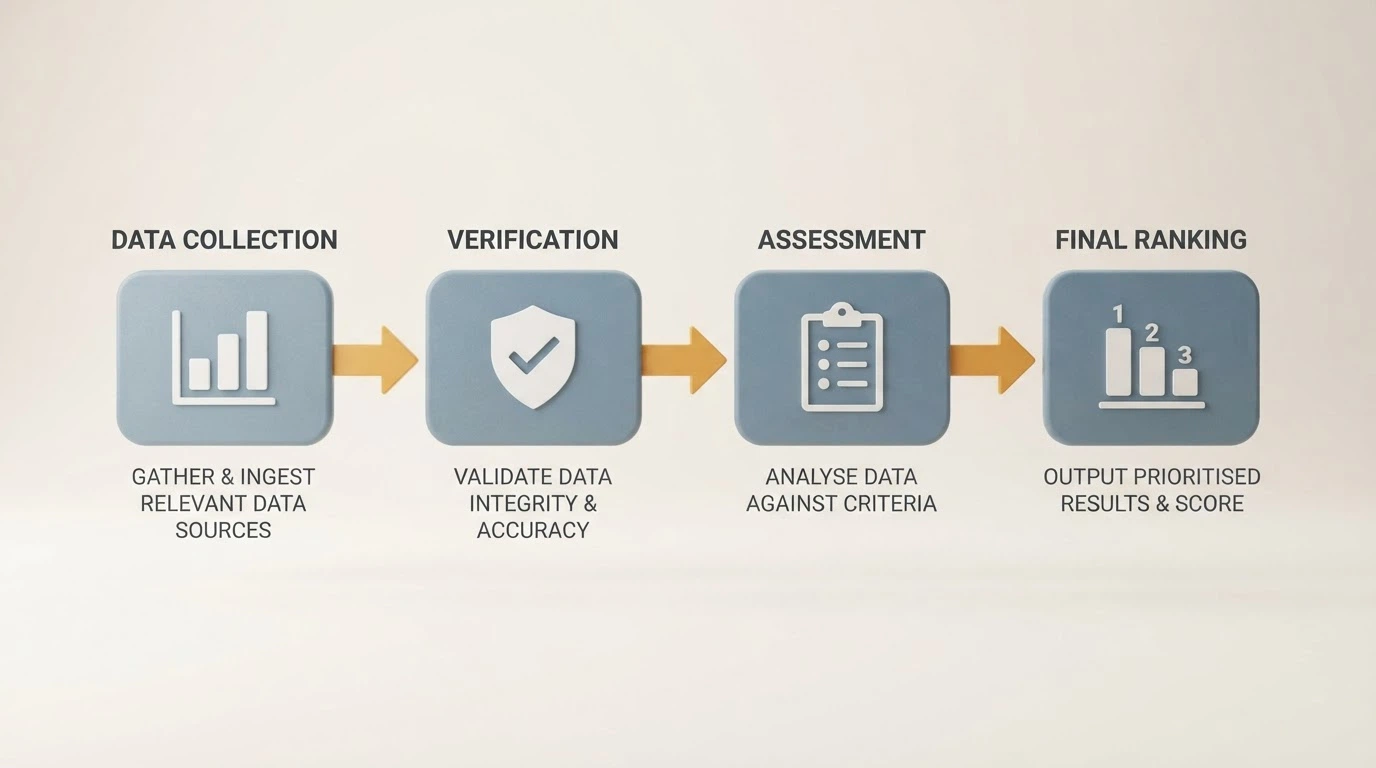
The second filter is a licence check against the ACMA register and the Interactive Gambling Act 2001. No operator in the ranked set holds an Australian online casino licence, because no such licence exists. The licence column in the ranking table reflects that fact for every entry, and the table is a statement about the regulatory position of the market rather than a comparison of licences held. The offshore licences these operators do hold — Curaçao, Kahnawake and other jurisdictions — were not verified individually this round, and a player concerned about a specific offshore licence should check the operator’s own footer for the licence statement.
The third filter is the reload bonus criteria — match percentage, wagering multiple, validity window, max bet, game contribution rates, and maximum cashout. These are the numbers that determine whether a reload bonus is worth claiming, and they are the numbers a player should be looking for on the operator’s own bonus page before depositing. The market-standard ranges the criteria are measured against come from the broader Australian-facing reload market and are benchmarks, not guarantees about any specific operator. Reload bonus terms at every operator in the ranking were not confirmable in this verification round from publicly available material, and that limitation is the reason each operator write-up ends with a direction to check the bonus page directly.
What the ranking does not measure is the player experience. Game library quality, payment speed, customer service responsiveness, dispute resolution — none of these are in the dataset the ranking is built from. A high-share brand with poor customer service ranks above a low-share brand with good customer service in this list, because the list measures share. The player should treat the ranking as a starting point for where Australians are playing, not as a verdict on where to play.
Your Reload Bonus Strategy — What to Do Next
The reload bonus offer is real, the wagering is the cost, and the licence position is the context. An Australian punter’s reload bonus strategy runs four checks: match percentage, wagering multiple, validity window, max bet cap. The match is the headline. The wagering is the price. The validity is the clock. The max bet is the throttle. A reload inside the standard industry parameters — 25% to 75% match, 30x to 40x wagering, three-to-thirty-day validity — is a normal offer. A reload above 40x wagering is harder to clear than the match suggests. A reload with a max bet below A$3 stretches the clearing time without changing the cost. A reload capped at 24 hours is hard to clear at any wagering.

The licence check comes first. Every operator on the ranking is offshore, because no Australian online casino licence exists. The first decision is whether to play at an offshore operator at all. The prohibition under the Interactive Gambling Act 2001 is the legal frame, the offshore position is the consequence, and the Australian player gives up the consumer protections of a licensed product by playing. A punter who decides to play anyway makes that decision with the frame in view, not in ignorance of it. The decision belongs to the player; the consequences belong to the law.
The payment-method check is the second filter. An operator accepting credit cards or cryptocurrency from an Australian is taking a payment method banned for online wagering in Australia since 11 June 2024. That is a compliance signal that the operator is outside Australian law on payment, and the player choosing to deposit by that method is part of the regulatory exposure. PayID, debit card, bank transfer and BPAY are the legal deposit routes; an operator that also takes crypto is not on those rails for the Australian-facing product.
The BetStop check is the third. BetStop does not reach any offshore operator on this page, and that gap is real. A player who has registered with BetStop is gambling without the structural backstop at an offshore casino. Self-imposed deposit caps, session timers and a written commitment to walk away at a defined loss are the only guardrails available, and they are weaker than the operator-enforced limits a licensed product must offer. A player who wants the framework should not be playing at an offshore casino. A player who has decided to play offshore should set the limits the framework would have set for them, and should keep them.
The reload bonus is the carrot the offshore operator uses to draw a returning player back to the cashier. The terms are where the offer is really priced, and the player who reads the terms is the player the offer was not written for. Most reload bonuses at Australian-facing casinos are uncapped — 88% by one count — which is the most favourable feature of the structure, and the high share of uncapped offers is the one bright spot in a market that otherwise asks the player to take most of the risk. The bonus is available. The terms are the protection. The legal frame is the context. The four-number check is the work.
Frequently Asked Questions
What Happens to My Reload Bonus Funds If the Casino Site Gets Blocked by ACMA?
A reload bonus on a blocked site has no Australian recourse. ACMA has directed ISPs to block 1,564 illegal gambling sites since November 2019, and the block is DNS-level — the site stops resolving for Australian users. No Australian consumer protection body has jurisdiction over an offshore operator’s balance sheet. The block ends access; the bonus ends with it.
What Is the Difference Between a Welcome Bonus and a Reload Bonus?
A welcome bonus is a one-time match, typically larger than reloads, designed to convert a first deposit. A reload is the smaller, recurring retention offer — commonly 25% to 75% match versus welcome offers that can reach 200%. Both carry similar wagering bands, though higher loyalty tiers sometimes receive lighter playthroughs on reloads.
How Do Game Contribution Rates Affect Clearing a Reload Bonus Wagering Requirement?
Pokies contribute 100% toward the wagering requirement; table games contribute only 10% to 20%. A A$1,500 turnover cleared on pokies needs A$1,500 in pokie bets; cleared on blackjack at 20% contribution, the same progress requires A$7,500 in blackjack wagers. The reload bonus is, in practical terms, a pokie bonus.
What Are the Typical Maximum Bet Limits When Wagering a Reload Bonus in Australia?
The typical cap is A$3 to A$7.50 per spin while wagering is active. The cap prevents high-stake short-volume clearing, but it stretches clearing time for the player: a A$1,500 turnover at A$5 per spin is 300 spins, or roughly 25 minutes at five seconds per spin. Exceeding the cap can void the bonus and its winnings.
Do Reload Bonuses Contribute to BetStop Self-Exclusion Protection?
BetStop covers Australian-licensed wagering services only — offshore casinos are not connected to the register. A self-excluded player can still register, deposit, claim a reload bonus and play at every operator on this page. The 2027 reform gives banks authority to block transactions to illegal operators, which is a partial backstop. The structural gap remains.
What Wagering Requirements Do Reload Bonuses Typically Have at Australian-Facing Casinos?
30x to 45x is the standard range, with the lower end more common at typical reloads. Wagering above 40x becomes difficult to clear at standard pokie house edges. The deposit-plus-bonus structure is roughly twice as demanding as bonus-only turnover and is the source of most “impossible to clear” complaints. Higher loyalty tiers sometimes offer reduced wagering.
No-Deposit Reload Bonuses — Do They Exist?
Strictly speaking, a reload bonus requires a deposit. That is the mechanic the word “reload” describes. What gets called a “no-deposit reload” in some Australian-facing promotions is usually a free-spin credit, a small cash credit, or a verification bonus credited on signup, not a true reload at all.
The clearest example in the current Australian-facing market is a free-spins offer that credits 20 free spins simply for verifying a phone number and email address on signup. No deposit required, no bonus code, the spins credited automatically once the account is verified. This is functionally a no-deposit bonus, not a reload. The marketing label is loose, and the distinction matters because the cost profile is different from anything you would compare it to in a standard reload table.
No-deposit offers at Australian-facing casinos are scarce because the offshore operators running them are working against the prohibition in the first place. They have limited marketing room and tend to spend what they have on the offers that bring players back for a second and third deposit, not the no-deposit hooks that vanish after one session. If a no-deposit offer reaches an Australian player, treat it as a one-time curiosity rather than the start of a recurring reload cycle.