
High Roller Casino Bonuses for Australian Players — What the 2026 Numbers Actually Say
Online casino play is prohibited in Australia. Every site on this page is offshore, unlicensed under Australian law, and reachable only because the law targets the operator, not the punter. That single fact reframes the ranking. A 450% headline match is not a gift. It is the entry price to a turnover requirement the math, not the marketing, gets to write.

This page ranks ten offshore casinos actively marketing high-roller welcome packages to Australian players in 2026. Each row carries the licence status, the headline offer, the free-spin and wagering terms where research could verify them, and the cashout caps that quietly decide what a punter can actually walk away with. Five of the ten have verified bonus terms. For the remaining five, the bonus details were not published consistently enough to be relied on at review time, and the table reflects that.
The verdict is not flattering. A “high-roller bonus” at an offshore site is a marketing device dressed as a deal. The arithmetic, run honestly, costs the punter more than the bonus pays out — and the punter has no Australian complaints body to turn to if the operator stops replying.
Verified as of 16 October 2026 against the ACMA register, the Interactive Gambling Act 2001, and the operator terms pages at the time of writing.
Table of Contents
- What high roller casino play actually means in Australia
- Top 10 high roller casinos for Australian players in 2026
- Skycrown
- RocketPlay
- WinSpirit
- Fair Go Casino
- Rainbet
- Stake
- Royal Reels
- Bizzo Casino
- Scream Casino
- Rocket Casino
- Why your 2026 high roller welcome bonus is smaller than it looks
- Moving large amounts — payment methods that actually work for Australian high rollers
- The high roller pokies actually worth your stake
- High roller casino on mobile — what you can and cannot do on a phone
- Australia’s casino prohibition — what the IGA means for high rollers
- Responsible gambling — tools, limits and where to get help in Australia
- How we selected and ranked these high roller casinos
- Frequently asked questions about high roller casino bonuses in Australia
- High roller casino play in Australia — is the bonus worth the risk?
What high roller casino play actually means in Australia
“High roller” at an offshore casino is less a status than a deposit bracket. The standard welcome package targets a punter depositing A$20–A$50; the high-roller package opens at A$300–A$500 and climbs into the four-figure band. The shift that matters is not the title. It is the bankroll. A high roller is expected to fund the account with sums the standard welcome bonus was never built around.

What counts as high-roller play — stakes, bankroll and VIP expectations
The deposit threshold that separates a high roller from a standard punter at the offshore sites in this set sits between A$300 and A$1,500. RocketPlay sets its recurring high-roller bonus at a 50% match up to A$2,500 on deposits of A$300 or more. Neospin, which is not on this ranking but is a useful comparator, asks for a A$1,500 minimum before the high-roller tier activates. The implication is mechanical: the headline match percentage on a high-roller tier is often lower — 50% rather than 200% — because the absolute ceiling is bigger. A 50% match up to A$5,000 still pays out more than a 200% match capped at A$200.
Bet sizes follow the same logic. A standard bonus usually caps the maximum bet during wagering at A$5 or A$7.50 per spin. High-roller bonuses raise that ceiling because they expect larger play. The bonus mechanics otherwise mirror standard promotions — wagering multipliers, expiry windows, excluded titles — but the absolute numbers are scaled up.
A typical high-roller welcome package, across the offshore sites that publish consistent terms, matches 50% to 100% up to A$2,000–A$5,000. That is the market pattern. The outliers above and below it are what this ranking measures.
Online vs land-based high-roller casinos — where Australian players actually play
Crown Melbourne and The Star Sydney run land-based high-roller rooms — the salons privatifs and the invitation-only gaming floors — and those operate legally under state casino licences. Online, no Australian licence exists for casino, pokies or in-play betting. Every high-roller casino a punter in Australia accesses is hosted offshore.
The land-based rooms compete on service: a host, a hotel suite, a comped dinner. The offshore sites compete on bonus size, because that is the only differentiator they have. A land-based high-roller room does not hand a new sign-up a 450% match. An offshore site will, and the size of that match is what draws Australian bankrolls across the border the IGA tries to police.
The trade-off is that the offshore offer carries none of the protections the land-based room is required to maintain. Problem-gambling signage, host-level intervention when play escalates, on-site dispute resolution — none of it travels with the punter to the offshore site. A punter who reads a 450% bonus and a 40x turnover requirement as comparable to a land-based comp is comparing two things that are not in the same category. The land-based comp is a service. The offshore bonus is a bet, and the bet is on the punter’s side.
Top 10 high roller casinos for Australian players in 2026
The table below ranks the ten offshore casinos actively marketing high-roller welcome bonuses to Australian players in 2026. Five of the ten — Skycrown, RocketPlay, WinSpirit, Fair Go Casino and Rainbet — have bonus terms verified during this review. The remaining five — Stake, Royal Reels, Bizzo Casino, Scream Casino and Rocket Casino — are confirmed active in the Australian market, but their bonus terms were not published consistently enough at review time to be relied on. Each row carries that distinction, because a comparison without verified terms is the comparison the marketing page made before the punter checked.
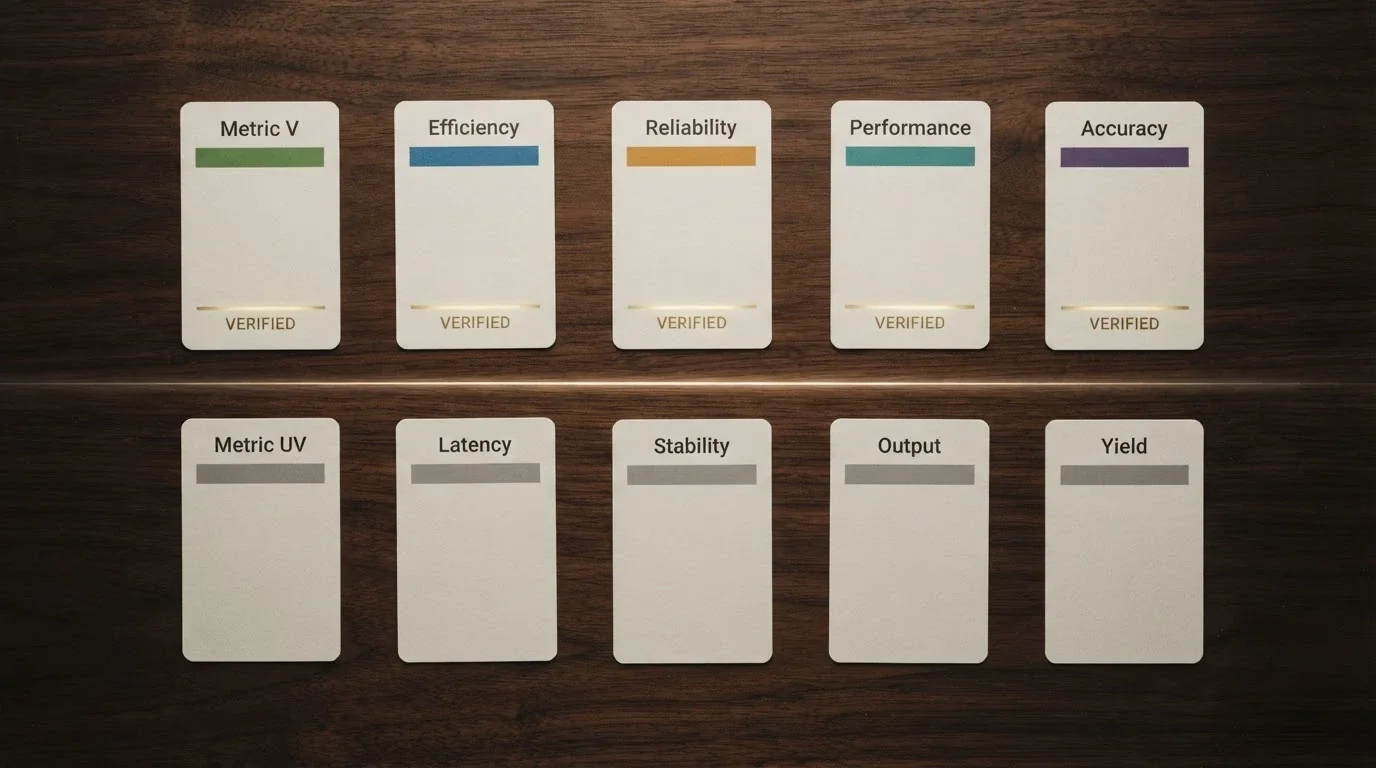
Every site listed is offshore. None holds an Australian licence — none can, as the product is prohibited. The licence column reflects the regulator the operator publishes.
| Operator | Licence | Welcome Bonus | Free Spins | Wagering |
|---|---|---|---|---|
| Skycrown | Curaçao | 450% up to A$8,000 across 4 deposits | 400 FS | 40x bonus / 30x FS winnings |
| RocketPlay | Curaçao | 100% up to A$1,000 (1st deposit) | 100 FS on Aztec Magic | 40x bonus |
| WinSpirit | Curaçao | 100% up to A$300 + A$1,000 (2nd deposit 200%) | 100 FS | 40x bonus |
| Fair Go Casino | Curaçao | 200% up to A$200 | 50 FS | 30x bonus / 40x FS winnings |
| Rainbet | Anjouan | Wager Lock match (A$30–A$700 deposit) | FS on Sweet Bonanza | 40x bonus |
| Stake | Curaçao | Terms not verified | Terms not verified | Terms not verified |
| Royal Reels | Offshore | Terms not verified | Terms not verified | Terms not verified |
| Bizzo Casino | Curaçao | Terms not verified | Terms not verified | Terms not verified |
| Scream Casino | Offshore | Terms not verified | Terms not verified | Terms not verified |
| Rocket Casino | Curaçao | Terms not verified | Terms not verified | Terms not verified |
The split is the story. The five operators with verified terms are the five whose marketing pages can be tested against their own fine print — and the test, in several cases, costs the punter the headline number and then some. The five with unverified terms are still live, still accepting Australian deposits, still running promotions. The offer a punter sees on the landing page is not the offer the punter clears.
How we compare — real-money value vs headline bonus numbers
A 450% match and a 100% match are not comparable on the match alone. The 450% is Skycrown’s four-deposit package, and it carries 40x wagering on the bonus and 30x on the free-spin winnings. The 100% is RocketPlay’s first-deposit offer, with the same 40x. The headline gap of 350 percentage points dissolves the moment the math starts running, because the bonus cap, the free-spin value and the max cashout decide what actually reaches the punter.
WinSpirit sits between them with a stated cap. A punter who clears WinSpirit’s bonus can walk away with up to A$3,000 from the deposit match, A$300 from the free spins, and A$50 from any no-deposit bonus the operator hands out. Skycrown and RocketPlay publish no equivalent cap on the deposit match. That absence is not the same as unlimited, but it is the same as unverifiable. The punter who runs the bonus and asks for a withdrawal finds out the answer.
A high-roller punter choosing between these five is choosing on three axes: the absolute bonus ceiling, the wagering burden, and the cashout cap. The first two appear in the headline and the terms page. The third is what costs a punter the win.
Skycrown
Skycrown runs the highest headline match in the set: 450% up to A$8,000 with 400 free spins spread across the first four deposits. The first deposit alone carries 120% up to A$1,200 plus 125 free spins, which is itself a substantial standard-tier package. The high-roller appeal is in the aggregate.
The wagering requirement is 40x the bonus, and 30x on the free-spin winnings. A punter who deposits enough to claim the full A$8,000 bonus must turn over A$320,000 before any of that bonus becomes withdrawable cash. The free-spin winnings carry a separate 30x playthrough, which adds to the total turnover the punter has to run. The licence is Curaçao.
Skycrown’s verdict is the page’s verdict, because the offer is the largest and the arithmetic is the same. The 40x multiplier is the cost. The A$8,000 ceiling is the upside. The two run in the same direction only on a marketing slide. A punter who clears the bonus costs the operator nothing — the bonus cost is built into the wagering math — and the punter who fails to clear it pays the deposit in full. The headline is generous. The spread is the cost.
RocketPlay
RocketPlay runs a 100% first-deposit match up to A$1,000 plus 100 free spins on Aztec Magic by BGaming. The headline is ordinary for the offshore market. The high-roller value is in the second track. RocketPlay also offers a recurring 50% high-roller bonus up to A$2,500 on deposits of A$300 or more, which a returning punter can claim repeatedly.
The wagering requirement on the welcome bonus is 40x on the bonus, with the free spins earned in batches of 20 per day across five consecutive days. The maximum bet while wagering bonus funds is capped at A$7.50 per spin. The licence is Curaçao.
A punter at RocketPlay is paying a slightly higher wagering burden than the market’s best (Fair Go runs 30x on its bonus) but collecting a higher absolute ceiling and a recurring reload. The two-tier structure makes RocketPlay a better fit for a punter who plans to keep playing after the welcome bonus clears, rather than one who wants to deposit once and walk away. For the latter, the 100% match is enough. For the former, the recurring 50% on A$300+ is the offer.
WinSpirit
WinSpirit markets the most transparent cashout terms in the set. The welcome package is a two-deposit deal: 100% up to A$300 on the first deposit, 200% up to A$1,000 on the second, plus 100 free spins across both deposits. The minimum deposit is A$30 for the first bonus, A$60 for the second. Wagering is 40x on the bonus, with a seven-day validity window.
The cashout caps are stated, which is rare: A$3,000 maximum from the deposit bonus, A$300 from the free spins, A$50 from any no-deposit bonus. The maximum bet during wagering is A$5 per spin. The licence is Curaçao.
The seven-day validity is the constraint the marketing page never leads with. A punter who needs to clear the full A$1,000 welcome bonus has A$40,000 of turnover to run in seven days, which works out to roughly A$5,700 per day of constant play. That is not the offer a casual punter can complete. WinSpirit is honest about its ceiling because the ceiling protects the operator from a punter who would otherwise grind the bonus out. The page’s role is to make sure the punter knows that ceiling is also theirs.
Fair Go Casino
Fair Go runs the lowest wagering in the set at 30x on the bonus. The welcome offer is 200% up to A$200 on the first deposit with a 14-day validity, plus 50 free spins at A$0.20 each on selected RTG pokies. The free-spin winnings carry 40x wagering, separate from the cash bonus. The licence is Curaçao.
The trade is the bonus ceiling. Fair Go’s A$200 cap is small for a high-roller market, but the 30x playthrough is the page’s best, and 14 days is more than twice WinSpirit’s validity window. The punter who values completion over headline size gets a fairer fight here.
For a high-roller punter, Fair Go is the better bonus on the terms and the worse bonus on the ceiling. A A$200 bonus at 30x means A$6,000 of required turnover, not A$320,000. The punter who deposits the maximum and clears the bonus in two weeks walks away with A$200 plus whatever the free spins paid. The math favours the punter at this scale. That is why the cap is low.
Rainbet
Rainbet is the only Anjouan-licensed operator in the set. The rest run Curaçao. The welcome promotion is branded “Wager Lock” and works as a deposit match with a defined qualifying window: minimum A$30, maximum A$700. The wagering requirement is 40x on the first-deposit promotional balance. The first-deposit free spins apply to Sweet Bonanza, which has a default RTP of 96.53%.
A punter who deposits the maximum qualifying A$700 and clears the bonus must turn over A$28,000 at 40x. That is a more compact wagering burden than the A$8,000-bonus operators demand, but it is also a smaller absolute bonus. The trade is mechanical: smaller ceiling, smaller turnover, smaller maximum payout.
Rainbet’s edge is the Sweet Bonanza slot for the free spins — a known, widely-tracked game with a published RTP — and the Anjouan licence, which sits outside the Curaçao cluster. The disadvantage is the absence of any stated max cashout on the bonus, which puts Rainbet in the same category as Skycrown and RocketPlay on that single question.
Stake
Stake runs a Curaçao licence, is confirmed active with Australian traffic, and is the best-known name in this set. Its product is wide: sportsbook, casino, live dealer, and a crypto-native banking stack that the high-roller market in Australia defaults to.
The bonus terms were not available at review time in a form this page could verify. Stake runs promotions — reloads, races, sportsbook offers — but a published high-roller welcome bonus with verifiable wagering requirements was not located during this review. That absence is recorded here as it stands: the operator is live, the welcome terms are not.
For a high-roller punter who values platform breadth over welcome bonus size, Stake is the only operator in the set where the product itself is the offer. This is a sports-and-casino operator with crypto at the core, not a bonus-driven casino with sportsbook attached. The verdict is structural rather than numerical.
Royal Reels
Royal Reels is an offshore operator with Australian-facing branding and confirmation in tracked traffic that the site accepts Australian players. The bonus terms were not available at review time. Like the other four operators in the unverified band, Royal Reels is live and accepting deposits, but the welcome package could not be confirmed during this review.
The site’s AU-facing positioning suggests the operator markets to the Australian market specifically, which puts Royal Reels in the same commercial category as Fair Go Casino — a brand built for the local audience rather than a global offshore brand reaching Australia from outside. That positioning does not change the regulatory status. It changes the marketing tone.
A punter choosing Royal Reels does so on the brand, not on a verifiable bonus. That is a defensible choice for a punter who values the localisation, but it is not a choice this page can compare on numbers it does not have.
Bizzo Casino
Bizzo Casino runs a Curaçao licence, is active with Australian traffic, and is a multi-brand operator within a larger offshore casino group. Bonus terms were not verified during this review.
The structural comparison to make on Bizzo is that it sits inside a portfolio of offshore brands — a category of operator that runs multiple front-end sites against shared back-office infrastructure. A punter playing at Bizzo is playing at one skin of a wider group. Whether the bonus terms match the group standard or are site-specific is the kind of detail a punter has to verify at the cashier.
For a high-roller punter, the absence of verified bonus terms at Bizzo is a reason to deposit small and test withdrawal before scaling up. That advice applies to all five unverified operators in this ranking, not to Bizzo alone.
Scream Casino
Scream Casino is an offshore-licensed operator, active with Australian traffic, with bonus terms not verified at review time. The brand’s positioning is the unremarkable offshore-casino template: a wide game library, standard payment methods, no Australian regulatory standing.
The verdict is the verdict on the unverified band. A punter who deposits at Scream is doing so on the basis of brand recognition rather than published terms. The right test is a small initial deposit, a withdrawal of any winnings, and a check on processing time before committing the bankroll the high-roller tier would expect.
Rocket Casino
Rocket Casino runs a Curaçao licence, is active with Australian traffic, and is the second “Rocket” brand in this ranking — distinct from RocketPlay, which sits at the top of the verified band with full bonus terms. Bonus terms were not verified during this review.
The duplication of name is a marketing pattern in the offshore market, and a punter who arrives at “Rocket Casino” expecting the RocketPlay bonus terms will find a different site, different terms, and likely a different welcome package. The two are not related operators by anything this page could confirm.
A punter comparing the two “Rocket” brands against each other should treat them as separate products and verify the bonus terms independently at the cashier before depositing.
Why your 2026 high roller welcome bonus is smaller than it looks
The headline match is the marketing number. The realised value is what lands in the punter’s account after wagering, validity, game weighting and max cashout have run their course. The two are not the same number, and the gap between them is what the bonus actually costs.
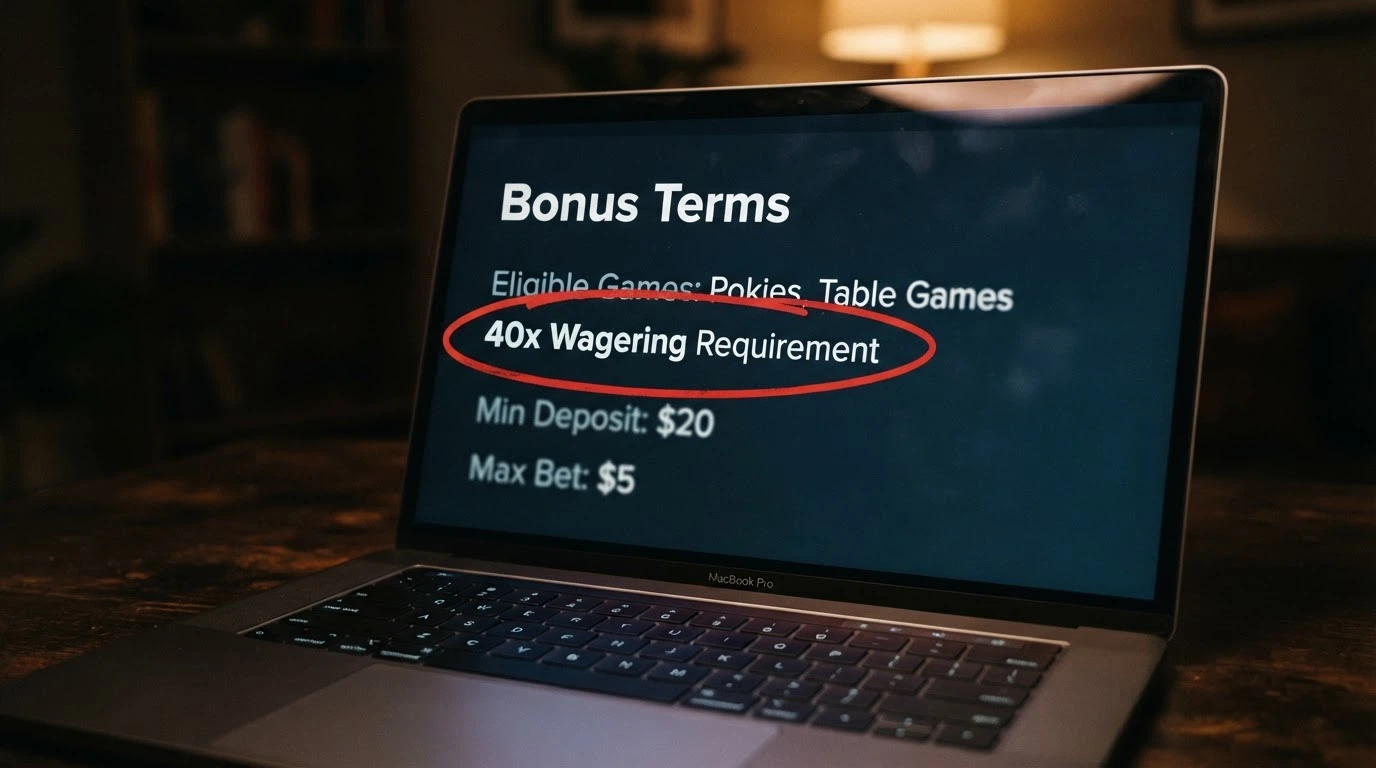
A punter claiming Skycrown’s full A$8,000 bonus at 40x wagering on a 96.50% RTP pokie must turn over A$320,000 before the bonus converts. The expected loss on A$320,000 of turnover at a 3.5% house edge is A$11,200 — more than the bonus itself. The “bonus” is a net negative expected value at any reasonable completion scenario. The arithmetic holds for any bonus in this set: the wagering multiplier is sized so that the house edge over the required turnover exceeds the bonus paid. That is the structural shape of every offshore welcome package this page has verified.
The exception, in this set, is Fair Go Casino’s 200% up to A$200 at 30x. The required turnover is A$6,000, and the expected loss at 96.50% RTP is roughly A$210 — close to the bonus ceiling. That result demonstrates why the cap is low: the operator limits the offer to protect their margins.
Welcome bonus match rates and caps — what the featured operators actually offer
Skycrown’s 450% up to A$8,000 across four deposits is the largest aggregate ceiling in the set. RocketPlay runs 100% up to A$1,000 on the first deposit with a separate recurring 50% up to A$2,500 for high-roller reloads. WinSpirit offers 100% up to A$300 on the first deposit and 200% up to A$1,000 on the second. Fair Go runs 200% up to A$200 with the lowest wagering in the set. Rainbet’s Wager Lock varies the match by deposit, with a A$30–A$700 qualifying window.
The match percentage alone misleads. Skycrown’s 450% looks four-and-a-half times more generous than Fair Go’s 200%, and on paper it is. In practice, the realised value depends on whether the punter can fund the A$8,000 ceiling and complete the A$320,000 turnover requirement. A punter depositing A$200 sees the same headline numbers but the realised value depends entirely on the wagering multiple. The arithmetic is the same; the marketing is louder.
No-deposit bonuses for high rollers — what is actually available in 2026
No-deposit bonuses exist in this market, but they are not high-roller products. RocketPlay offers 20 free spins as a no-deposit bonus with 40x wagering on the winnings and a max cashout in the A$50–A$100 range. WinSpirit publishes a no-deposit max cashout of A$50. The typical no-deposit offer at the offshore sites in this set is A$50 in withdrawable winnings, which is a few hours of low-stakes pokie play.
A high-roller punter looking for no-deposit value at the high-roller tier will not find it. The no-deposit product is built for the standard punter, not the high roller, and the caps confirm it. The scarcity is structural: a no-deposit bonus with no ceiling would let a sharp punter convert free money to real money at volume, and the offshore operator has no reason to expose that surface.
Wagering requirements — the single number that decides whether a bonus is worth taking
Skycrown, RocketPlay, WinSpirit and Rainbet all run 40x on the bonus. Fair Go runs 30x on the bonus, with 40x on free-spin winnings as a separate calculation. Wild Tokyo, which is not in this ranking, runs 50x. The 10x gap between 30x and 40x sounds small. On a A$1,000 bonus it is the difference between A$10,000 and A$40,000 of required turnover.
A punter choosing between 30x and 40x on the same bonus size is choosing between A$30,000 of additional turnover, which at 96.50% RTP carries roughly A$1,050 of expected loss. That single number — the multiplier — does more to determine the realised value of a bonus than the headline match percentage does. A punter who reads only the match is choosing on the wrong axis.
Moving large amounts — payment methods that actually work for Australian high rollers
The payment-method landscape for offshore casino play in Australia is split. Credit cards and crypto are banned as payment for online wagering with an Australian-licensed operator, since 11 June 2024. The offshore sites this page lists are not Australian-licensed operators. The ban shapes the legal status of the payment; it does not shape the technical capability. A punter in Australia can still move AUD and USDT to an offshore casino, and the offshore casino can still accept it. The punter is the one taking the legal exposure.
From 1 January 2027, banks and payment providers gain express authority to block transactions to illegal gambling operators. That authority does not exist yet. For 2026, the practical payment routes are PayID and crypto, with bank transfer as a slower fallback.
Crypto and Bitcoin for high-roller casino transactions
USDT on the TRC-20 network is the practical choice for high-roller transfers. The token carries 1:1 with the US dollar, fees on TRC-20 are near zero, and a single transfer settles in one to three minutes, with total casino processing under thirteen minutes. Bitcoin takes ten to sixty minutes on network confirmation alone, and Ether sits in between.
The structural advantage is the absence of a ceiling. A single USDT TRC-20 transfer carries any amount without triggering the A$10,000 PayID ceiling that constrains fiat transfers to that threshold. For a high-roller punter moving A$20,000 or more in a single session, USDT TRC-20 is the route that does not stall on a bank-side limit.
The Australian ban on crypto for online wagering is a ban on the licensed market. A punter asked to deposit USDT at an offshore casino is being served by someone outside Australian rules — the payment method is itself a tell that the operator is not licensed locally.
PayID — speed and limits for Australian high rollers
PayID is fast at the small end. Skycrown’s median PayID deposit clears in nine minutes; VegasNow’s comes in at twelve. For punter deposits under the A$10,000 ceiling, PayID is faster than crypto. For amounts above it, PayID stops, and the punter has to split the deposit across multiple transfers or move to USDT.
The ceiling is a bank-side limit rather than an operator-side cap, and the punter who hits it does not see a clean error message. The transfer either holds or bounces back. The withdrawal side has the same shape: the typical minimum withdrawal at fast-payout AU-facing casinos is A$20, and the upper end varies by operator and player status.
PayID is the right primary route for punter deposits in the four-figure band. It is the wrong primary route for the high-roller session that moves five figures in a single evening.
The high roller pokies actually worth your stake
Not every high-volatility pokie rewards the bet. RTP, max win ceiling and provider reputation separate the genuine opportunities from the marketing images. The table below lists the researched high-roller pokies across the offshore operators in this set, with RTP, volatility and the maximum a single spin can return.

| Pokie Title | RTP | Provider | Volatility | Max Win |
|---|---|---|---|---|
| Big Bass Bonanza | 96.71% | Pragmatic Play / Reel Kingdom | Medium-high (4/5) | 2,100x |
| Trigger Happy | 96.58% | Big Time Gaming | High | 50,000x |
| Sugar Rush 1000 | 96.53% | Pragmatic Play | High | 25,000x |
| Sweet Bonanza 1000 | 96.53% | Pragmatic Play | High | 25,000x |
| Gates of Olympus 1000 | 96.50% | Pragmatic Play | High | 15,000x |
| Power of Ten | 96.23% | Hacksaw Gaming | High | 10,000x |
| Ragnarok Gold | 96.10% / 94.07% | Slotmill | High | 40,000x |
RTP is the long-run return to player. A 96.71% RTP on Big Bass Bonanza means the game returns A$96.71 for every A$100 wagered over millions of spins. The individual session returns something different. A punter running 200 spins at A$5 sees A$1,000 in wagered money and an expected return of A$967, with a wide variance either way.
Two caveats. First, the operator sets the RTP at the integration level, not at the punter’s session level. Big Bass Bonanza ships with a 96.71% default, but operators can configure lower tiers. A punter who sees the headline number on a review site should check the in-game paytable at the operator, because the version in front of them may not be the version the review cited. Second, Ragnarok Gold ships with two RTP tiers — 96.10% and 94.07% — and the punter sees only one. The 96.10% is the favourable configuration; the 94.07% is the more common one in offshore casino integrations.
Real-money vs free-play pokies — why high rollers never play demo mode
Demo mode teaches the mechanics. It does not teach the high-roller value proposition. The free-play spin on Gates of Olympus 1000 returns the same shape of result as the real-money spin — a tumble, a multiplier, a payout — but the expected return is to a virtual wallet with no AUD attached, no max win cashout to clear, and no BetStop integration either way.
A high-roller punter using demo mode is using it as a research tool: to learn the volatility profile, to feel the bonus frequency, to test a bet-size strategy without paying for the test. That is a defensible use of the demo. The high-roller punter who plays for real plays because the demo does not deliver the cash payout the high-roller session is built around. That objective is exactly what justifies the wagering commitment.
Jackpot pokies and max win ceilings — what a single spin can return
The max win on a pokie is the ceiling, not the expectation. A punter playing Big Bass Bonanza at the 96.71% RTP and 2,100x max win is not realistically expecting to hit 2,100x. The figure is the published limit on a single spin’s payout, set by the game’s mathematics.
The ceiling matters at the high-roller tier because the bet is sized to it. Trigger Happy at 50,000x and Ragnarok Gold at 40,000x set the upper bound of what a single spin can return, and a high-roller bet size multiplies that ceiling in absolute AUD. A A$20 max bet on Trigger Happy has a published ceiling of A$1,000,000 per spin, which is the kind of number a punter chasing variance wants to know. A punter chasing the long-run RTP plays a different game with different sizing, and the ceiling is decoration rather than plan.
The Sugar Rush 1000 and Sweet Bonanza 1000 pair at 25,000x is the middle band — high enough to attract high-roller sizing, low enough that the punter is not banking on a long-tail outcome. Big Bass Bonanza’s 2,100x is the low ceiling and the highest RTP in the table, which is the trade-off a punter valuing completion over single-spin ceiling makes.
High roller casino on mobile — what you can and cannot do on a phone
A high-roller session on a phone is the same game as a high-roller session on a desktop. The pokie library, the bonus terms and the cashout rules do not change with the device. What changes is the access layer: whether the operator runs a downloadable app, an instant-play browser version, or both, and how the deposit and withdrawal workflow fits a smaller screen.
The Australian payment restrictions apply on every device. The PayID ceiling is a bank-side limit. The credit card and crypto ban on the licensed market does not change with the screen. A punter funding an offshore casino account from a phone faces the same rules as a punter funding from a desktop — and the offshore casino, unlicensed in Australia, faces the same absence of consumer protection on either screen.
App, download and mobile login — the practical access layer
The research for this page did not surface per-operator app and download specifics. What it did surface is the underlying access pattern: every offshore operator in this set runs an instant-play mobile browser version, and most run a downloadable app for iOS and Android as well. The choice between the two is usually down to whether the punter values the home-screen icon and push-notification prompts (app) or values the absence of a download and the option to log in on a borrowed device (browser).
The login flow on mobile is standard: email and password, sometimes a two-factor authentication prompt at the operator’s discretion. The deposit flow is identical to the desktop, scaled to the screen. The withdrawal flow has the same bank-side constraints.
A high-roller punter who plans to play across devices should verify the operator’s terms on multi-account and shared-device use before doing so. Some offshore operators restrict concurrent sessions, and the punter who logs in from a phone and a desktop at the same time can find an account flag.
Australia’s casino prohibition — what the IGA means for high rollers
The Interactive Gambling Act 2001 makes it an offence to provide an online casino to a person in Australia. The 2017 amendment closed the loopholes offshore operators had been using and gave the ACMA real enforcement power. There is no Australian licence for online casino anywhere — not federally, not in any state or territory.

The Interactive Gambling Amendment (Gambling Reform) Bill 2026 passed Parliament on 19 August 2026 and its measures commence on 1 January 2027. From that date, hourly wagering-ad caps between 6:00 am and 8:30 pm come into force, a live-sport blackout window applies from 15 minutes before a live event until 5 minutes after it ends, athletes, celebrities and influencers are barred from promoting wagering products, broadcasting sporting odds is banned outright, and direct marketing of inducements is restricted for 14 days after signup, three months after BetStop deregistration, and indefinitely for customers identified as at risk.
The 2026 picture is the law before that commencement. Online casino remains prohibited, offshore sites remain outside the Australian licence framework, and the punter remains the only Australian party the IGA does not prosecute. That last point is not the protection it sounds like. The IGA’s silence on the individual punter does not extend to a complaints body, a withdrawal guarantee, or a regulator who can recover money from an offshore operator that stops replying.
The Interactive Gambling Act, the ACMA and what enforcement actually does
The Australian Communications and Media Authority investigates complaints, issues formal warnings, refers operators for civil penalty proceedings, and directs Australian ISPs to block illegal sites at the DNS level. Since November 2019, the ACMA has blocked 1,564 illegal gambling and affiliate websites, and more than 225 illegal services have withdrawn from the Australian market since 2017. The enforcement is real and ongoing. The block list is not theoretical.
The DNS-level block is not unbeatable. A punter who wants to reach a blocked site has well-known workarounds, and the offshore operator sets up at new domains as fast as the ACMA blocks the old ones. The effectiveness of enforcement is not in the technical block. It is in the friction it creates and the signal it sends about the legal status of the operator. The blocked site is a site the regulator has decided is illegal, and the punter who uses it is doing so with the knowledge that the regulator says so.
What the ACMA cannot do is recover a high-roller punter’s money. The regulator does not arbitrate offshore disputes, and it does not force a Curaçao or Anjouan operator to pay a disputed withdrawal. A blocked site with a balance still on it is a balance the ACMA cannot retrieve. These risks are the unavoidable reality for every Australian punter engaging with unlicensed operators.
Player protection and BetStop — what it actually covers (and what it does not)
BetStop — the National Self-Exclusion Register — went live in August 2023 and had 67,480 registrations as of 31 July 2026, of which 41,290 exclusions were still active. Seventy-eight per cent of registrants were under 40, and thirty-eight per cent chose lifetime exclusion. Self-exclusion is available for a minimum of three months up to a lifetime, and removal cannot be applied for in the first three months.
BetStop binds approximately 150 licensed Australian wagering services. An offshore casino is not connected to the register. The most concrete harm of using an unlicensed site sits on this single point: a punter who has self-excluded via BetStop for problem gambling has excluded from every licensed Australian wagering service, and that exclusion does not extend to a single operator on this page. The punter can still deposit, still play, still lose. The self-exclusion does not travel offshore.
The individual punter is not prosecuted under the IGA. The Act targets the provider. That is the only Australian protection that extends to the punter using an offshore site, and it is not a protection so much as a non-prosecution.
Responsible gambling — tools, limits and where to get help in Australia
High-roller play amplifies both the upside and the risk. The tools and services that exist for the licensed Australian market do not extend to the offshore sites this page lists. The help services that do extend to anyone, regardless of where they play, are listed below.
The National Gambling Helpline — 1800 858 858 — is free, confidential and staffed 24/7, with online chat and counselling through Gambling Help Online. The helpline does not ask where the punter has been playing. About 2.1% of Australian adults (roughly 430,000 people) experience problem gambling, and the Australian Institute of Health and Welfare put high-risk gambling at 1.8% in 2022. The percentage is small in share-of-population terms; the absolute number is not.
For financial difficulties arising from gambling, the National Debt Helpline is 1800 007 007. For crisis support, Lifeline is 13 11 14. These are free, confidential, and available to anyone in Australia.
Deposit limits, take-a-break tools and what offshore operators actually provide
Offshore casinos offer their own limit-setting tools: deposit caps, loss limits, session timers and take-a-break features, accessible through the player account. The tools are real and most operators enforce them. What the tools are not is enforceable by an Australian regulator, because the operator is outside the Australian regulatory net.
The gap is structural. A punter at a licensed Australian wagering operator can complain to the state regulator and have a limit dispute resolved. A punter at an offshore casino has the operator’s own complaint process and the option to escalate to the Curaçao or Anjouan licensing authority — neither of which has a reputation for fast, punter-favourable dispute resolution. The tools exist. The recourse does not.
For a high-roller punter who wants to set a hard cap, the offshore operator’s deposit limit is a useful starting point, but the punter who needs an enforceable ceiling needs the licensed market or the self-control to back the limit with bankroll discipline. Neither is offered by the offshore site.
How we selected and ranked these high roller casinos
This ranking draws on three sources. First, the ACMA licence register and the Interactive Gambling Act 2001: every operator was checked against the Australian register, and none appears on it, because no Australian casino licence exists for any operator. Second, the archived search results and operator terms pages: the bonus, wagering, free-spin, max-cashout, validity and licence figures are taken from the operator’s own terms or from affiliate reviews citing those terms, with cross-reference where possible. Third, the tracked-traffic signal: each operator was confirmed as active in the Australian market on that basis.

The criteria. Bonus value after wagering rather than headline match percentage. Licence status, recorded verbatim from the operator’s footer. Payment-method suitability for large deposits — specifically the A$10,000 PayID ceiling and the USDT TRC-20 uncapped route. AU-facing availability, including whether the operator has actively marketed to Australian players or has withdrawn from the market. Five of the ten operators had bonus terms verified during this review; for the remaining five, the bonus data was not available at review time, and the ranking reflects that gap rather than fabricating a row.
What this ranking does not measure. Payout speed across all payment methods — research surfaced limited data on PayID medians only. Game-by-game RTP settings — the operator can configure lower than the default. Live-dealer quality. VIP programme structure beyond what was disclosed publicly. Per-operator mobile app download requirements — research did not surface per-operator specifics. A punter deciding between operators should treat the verified data as a starting point and the unverified data as a reason to deposit small and test withdrawal before scaling up.
Frequently asked questions about high roller casino bonuses in Australia
Does BetStop cover offshore casino sites if I self-exclude?
No. BetStop binds approximately 150 licensed Australian wagering services. An offshore casino is not connected to the register, and a BetStop self-exclusion does not prevent play at any operator on this page. Self-exclusion runs from three months to lifetime — but only within the licensed market.
Do high roller bonuses have a maximum cashout limit?
Some do. WinSpirit publishes its caps: A$3,000 from the deposit bonus, A$300 from free spins, A$50 from no-deposit. Skycrown, RocketPlay and Fair Go do not publish a bonus cap — not the same as unlimited. The punter who asks for a withdrawal finds the answer at the cashier, not on the marketing page.
What happens if an offshore casino blocks my withdrawal — do I have any recourse in Australia?
None directly. The ACMA cannot recover money from an offshore operator, and there is no Australian complaints body that handles offshore disputes. The escalation routes are the operator’s own complaint process and the licensing authority in Curaçao or Anjouan. Neither has a reputation for fast, punter-favourable resolution.
What is the typical wagering requirement for a high roller welcome bonus?
40x on the bonus is the modal figure in this set. Skycrown, RocketPlay, WinSpirit and Rainbet all run 40x; Fair Go runs 30x; Wild Tokyo (not in the ranking) runs 50x. The free-spin winnings carry a separate playthrough, often 30x or 40x, and that is a second calculation on top of the bonus playthrough.
Can I use PayID or crypto to deposit more than A$10,000 at an online casino?
PayID carries an A$10,000 ceiling per transfer. USDT TRC-20 carries any amount without that ceiling. Crypto is banned for licensed Australian wagering since 11 June 2024; the offshore sites on this page are not licensed operators, which is why they accept USDT. The payment method is itself a tell.
What are the highest-RTP pokies available for high roller play in Australia?
Big Bass Bonanza at 96.71% is the top figure in the set, with Trigger Happy at 96.58% and Sugar Rush 1000 and Sweet Bonanza 1000 both at 96.53%. The operator can configure lower RTP tiers than the published defaults. The punter should check the in-game paytable to confirm the version being played.
High roller casino play in Australia — is the bonus worth the risk?
A high-roller bonus from an offshore casino is a calculated trade-off, and the calculation has to start with what the bonus costs the punter. Skycrown’s full A$8,000 welcome package at 40x wagering requires A$320,000 of turnover before any of the bonus becomes withdrawable. At a 96.50% RTP pokie, the expected loss on that turnover is roughly A$11,200 — more than the headline bonus. The bonus is a marketing device, not a deal. The arithmetic confirms it.
The legal reality sits beside that arithmetic. No Australian licence exists for online casino. The 1,564 sites the ACMA has blocked are evidence that enforcement is real. The five unverified operators in this ranking are sites whose bonus terms this page could not confirm; they are still offshore, still unlicensed, still subject to the same absence of Australian consumer protection. BetStop does not cover them. The ACMA does not arbitrate disputes with them. A punter whose withdrawal is blocked at an offshore casino has no Australian recourse.
The payment route shapes the practical ceiling. PayID is fast and capped at A$10,000 per transfer. USDT TRC-20 is uncapped but banned for licensed Australian wagering since 11 June 2024. The ban does not stop a punter from using USDT at an offshore casino. It confirms that the offshore casino is not within the Australian rules. From 1 January 2027, banks and payment providers gain express authority to block transactions to illegal gambling operators, and that authority will shape the payment landscape after that date.
A punter who proceeds should verify the licence at the operator’s footer, cap deposits at a level that does not damage the bankroll if the balance is unrecoverable, read the cashout terms before claiming a bonus, and use the operator’s RG tools to set deposit and session limits. A punter who decides against it gains the licensed Australian wagering market: BetStop coverage, a complaints body, regulated payment methods, and the inducement restrictions coming into force on 1 January 2027.
The bonus is not the offer. The bonus is the cost. A high-roller punter who reads the wagering requirement, the cashout cap and the licence footer before depositing is the punter the offshore marketing pages do not want.