
A$5 deposit casinos for Australian players: the gap between search results and the cashier
Data current as of 3 November 2026; licence claims verified against the ACMA register and operator terms pages. No brand on this page holds an Australian online casino licence — online casino is prohibited in Australia under the Interactive Gambling Act 2001, and the ACMA has overseen the blocking of 1,564 illegal gambling and affiliate websites by Australian ISPs since November 2019. Every figure below sits inside that frame.

Table of Contents
- The A$5 casino deposit is not what the search results promise
- The offshore casinos Australian players land on for a small deposit
- PayID, Neosurf and cards — what works below A$20 (and what doesn’t)
- The pokies that give a small bankroll the longest run
- Mobile casinos and the small deposit — browser or app?
- New low-deposit casinos for Australian players in 2026
- Why every $5 deposit casino is offshore — and what you lose
- Staying safe with a small bankroll — help that actually works
- How we checked these $5 deposit casinos
- Is a low deposit worth the trade-off? What the numbers say
- Frequently asked questions
The A$5 casino deposit is not what the search results promise
Search “5 deposit casino Australia” in a search engine and the first page is a wall of listicles. Each promises a casino where you can drop five bucks and play real-money pokies. The promises look uniform: a $5 deposit, a welcome bonus, hundreds of free spins, a withdrawal at the end. They line up because the pages are written to attract search traffic, not to reflect the product. Almost none of them mention the Interactive Gambling Act 2001, the ACMA register, or the fact that online casino is prohibited in Australia. They describe a product that does not legally exist as though it were sitting on a shelf.
A sharper look at the cashier page tells a different story. Neosurf’s $5 voucher is sold in Europe, not in Australia — the denomination that actually reaches Australian players starts at A$10. Card processors impose a $10–$20 floor, and PayID casinos typically enforce a $20 minimum because PSP-level anti-fraud systems flag micro-deposits as test transactions or layering activity. The honest assessment, from the most rigorous of the affiliate pages that have actually tested cashier flows, is blunt: there is no honest AU$5 fiat-deposit casino available to Australian players in 2026 — the figure is a search-result artefact, not a product. That is the basis on which the rest of this page is written.
The “$5 deposit” search result — what you are promised vs what exists
The reason “A$5 deposit casino” dominates Australian search results is the term itself, not the offer. Offshore affiliate sites rank for it because the volume of searches is large; the page that ranks is the page that promises what the searcher typed. The promise is the product. The cashier, in nearly every case, is something else.

The first thing the affiliate site sells is the welcome bonus. The second thing it sells is the URL. The bonus is where most of the page lives; the cashier minimum is in the small print, and the small print is sometimes wrong. PayoutVerdict’s 2026 audit of the AU-facing low-deposit set found that eight of fifteen brands surveyed quietly enforce a higher minimum for welcome-bonus eligibility than for plain play — a player deposits $10 expecting a match, then discovers the bonus required $20. The page that ranks you is not the page that refunds you.
The promise, in other words, is structurally not the offer. The brand markets a $5 deposit. The cashier allows it but declines the bonus. Or the cashier does not allow it at all. Or the cashier allows it, the bonus triggers, and the wagering requirement on a $5 bonus is so steep that the math never resolves in the player’s favour. The product is the search result, not the deposit.
Why the real deposit floor sits at A$10–A$30, not A$5
Three structural reasons keep a $5 fiat deposit out of reach for an Australian player. Each is a feature of the payment system, not a marketing choice, and none of them responds to the search term.
Neosurf geography. Neosurf’s $5 voucher is a real product in the European market. In Australia, the lowest denomination sold over the counter is A$10. There is no A$5 Neosurf voucher in an Australian newsagent. A player who is shown a “Neosurf from $5” line on a landing page is being shown an EU product, and they will not find it on the shelf.
Card processor floors. Visa, Mastercard and the major eftpos rails all carry minimum-transaction floors set by the acquiring bank, the card network, and the operator’s PSP. For a low-risk merchant these floors land in the A$10–A$20 band. Below that, the fixed per-transaction cost eats the margin, and the PSP either refuses to clear the transaction or charges a fee that makes it uneconomic.
PayID anti-fraud. PayID is the fastest Australian deposit method in casual use, but PayID casinos enforce a casino-side minimum of typically A$20 because anti-fraud monitoring at the PSP layer flags inbound micro-deposits as test transactions, account-warming patterns or layering activity. The flagging is automatic, and the threshold is set by the PSP, not the casino. A $5 PayID deposit gets bounced, not because the casino refused it, but because the bank did.
The only deposits under A$5 that actually clear at an AU-facing casino are crypto. Stake accepts deposits from approximately A$0.10 BTC-equivalent and BC.Game sits at roughly A$1 USDT — but both are crypto-only operators, neither is open to a player who wants to use a debit card, and neither carries a traditional welcome bonus. The deposit floor for fiat is A$10 via Neosurf, and the floor for fiat that triggers a bonus is higher than that.
The withdrawal trap — depositing A$5 and discovering the cash-out floor
The deposit minimum is the lie a player can see. The withdrawal minimum is the one that catches them.
At most AU-facing offshore casinos, the minimum withdrawal is in the A$25–A$50 range, and at some brands it sits at A$50–A$100. A player who deposits $5, plays for an hour, and lands a $40 balance has a balance that cannot be cashed out. They can keep playing, of course. The operator would prefer that. But the cash-out button does not move. The gap between the deposit floor and the withdrawal floor is the most reliable margin the operator collects, and it is the single most common reason a small-balance player walks away with nothing.
Neosurf makes the trap worse in a particular way: it is a one-way prepaid deposit. You cannot withdraw to a Neosurf account. The money you deposited via a $10 voucher is gone into the cashier, and the cash-out route reverts to bank transfer, card, or crypto. A player who picked Neosurf specifically to keep the bank out of it is about to put the bank in. The trap, in other words, is layered. The deposit method forces the player to the cashier; the cashier’s withdrawal floor forces them to keep playing; the playing runs the bankroll through the house edge until the balance is unrecognisable.
The offshore casinos Australian players land on for a small deposit
The table below is the ten AU-facing offshore brands that show up most often in Australian search results for low-deposit play. None of them holds an Australian online casino licence. Every one of them is licensed somewhere else, and the licence is, for an Australian player, the only consumer protection they will receive. Online casino is prohibited in Australia under the IGA 2001, and the ACMA’s register is the place to confirm what an operator is not.
| Casino | Licence (offshore jurisdiction) | Welcome bonus | Wagering requirement | Game count |
|---|---|---|---|---|
| Rocket Play | Curaçao (Dama N.V.) | 300% up to A$6,000 + 300 FS (multi-deposit) | 30x–40x | 3,000+ |
| SkyCrown | Curaçao | 450% up to A$8,000 + 400 FS (4-tier) | 40x | Multi-provider |
| Royal Reels | Offshore (ACMA-blocked) | 100% up to A$500 + 50 FS, total A$2,500 across 3 deposits | 35x (bonus only) | 5,400+ |
| Stake | Curaçao | No traditional welcome bonus; rakeback/VIP | — | Multi-provider |
| WinSpirit | Curaçao | Up to A$4,500 + 425 FS | — | 6,000+ |
| Fair Go | Curaçao | 100% up to A$200 × 5 deposits (total A$1,000) | 30x–40x (deposit+bonus) | 280 (RTG) |
| Rainbet | Curaçao | 250% up to $2,100 + 60 FS (3-tier) | 40x (7-day window) | Multi-provider |
| Bizzo Casino | Curaçao | Up to A$7,250 + 175 FS + 1 bonus game (4-tier) | 40x | 8,000+ |
| Scream Casino | Licence not confirmed this run | — | — | — |
| HellSpin | Kahnawake | Up to A$1,200 + 150 FS (4-tier) | 40x | 3,000+ |
The brands above are the set a player reaches when they search. The rest of this section is what each of them actually is, and what the bonus on the landing page is worth once the math runs.
Rocket Play
Rocket Play is the largest AU-facing offshore casino in the set by traffic share, sitting at 9.4% of the operators-skill snapshot. The welcome package is a 300% match up to AU$6,000 plus 300 free spins, spread across multiple deposits, with 25 spins a day for four days on the first tier. Wagering is 30x–40x depending on the tier, the minimum deposit is A$25, the bonus is valid for 30 days, and the maximum cashout from bonus funds is A$500. Game count is 3,000+ across multiple providers.
The maths is the part the landing page skips past. A 300% match up to A$6,000 sounds enormous until you divide the maximum cashout (A$500) by the wagering requirement (40x on bonus plus deposit). The bonus is not A$6,000 of withdrawable value; it is a volume of play. For a player on a small bankroll, the relevant question is whether the volume is achievable in 30 days at a $0.20 spin, and whether A$500 is the actual ceiling. The answer to both is yes. Rocket Play is the operator to pick if you want the largest game library in a set that includes 3,000+ titles, the cashout ceiling is acceptable, and the A$25 minimum deposit is within reach. It is the wrong pick for a player whose bankroll is too small to clear 40x within the validity window.
SkyCrown
SkyCrown sits at 8.55% of the AU-facing traffic share, just behind Rocket Play. The welcome package is a 4-tier offer of up to A$8,000 + 400 free spins, with 40x wagering on bonus and free spins, a minimum deposit that starts at A$30 and rises to A$50 for the fourth deposit, a max win from free spins of A$300 per bonus part, and a maximum cashout of A$5,000 per welcome bonus. The library is multi-provider; named studios include IGTech, Booongo, and Voltent.
SkyCrown is the operator for a player who wants the largest headline bonus in the set and a multi-deposit structure that lets them spread the wagering. The relevant caveat is the deposit minimum: A$5 does not qualify for any SkyCrown welcome bonus, and a player who arrives expecting a $5 deposit is going to discover the A$30 floor on the first deposit and the A$50 floor on the fourth. The bonus is real, the cashout ceiling (A$5,000) is high, and the wagering is on the steep side of the market. This is the right choice for a player who wants a structured multi-deposit offer and is comfortable managing 40x wagering across four tiers.
Royal Reels
Royal Reels is the only operator in the featured set whose brand the ACMA has asked Australian ISPs to block. The mirror domains exist precisely because of that block, and the brand still draws 2.51% of the AU-facing traffic — a useful data point on what blocking does and does not do. The welcome pack is 100% up to A$500 plus 50 free spins on the first deposit, A$2,500 total across three deposits, with 35x wagering on bonus only, a A$5 per-spin cap during clear-down, and the free spins fixed at A$0.20. Minimum deposit is A$20. The library is 5,400+ pokies from 40+ providers.
The block is the headline, but the bonus structure is the more interesting detail. Wagering on bonus only — not deposit plus bonus — is the friendlier of the two models, and the 35x is at the low end of the set. The trade-off is the ACMA-blocked status: a player depositing at Royal Reels is depositing at a brand the Australian regulator has determined should not be reachable from Australia, and the protection that status implies is not coming from the Australian side. The right pick for a player who has already accepted the offshore-only reality, wants a wagering model that doesn’t penalise their deposit, and is comfortable with a brand on the block list.
Stake
Stake is the only operator in the featured set with a deposit floor genuinely under A$5 — approximately A$0.10 BTC-equivalent. It is also the only operator in the set with no traditional welcome bonus. What Stake runs instead is a rakeback and VIP model: a percentage of the house edge is returned to active players through a tiered programme. The licence is Curaçao. Traffic share is 1.28%.
For a player with a small bankroll, Stake is a different shape of product. There is no bonus to clear, so the wagering question does not arise. There is also no bonus to clear, which is the same statement written from the other side: a player on a $20 bankroll does not get the 300% match that the other operators are offering, and the value comes from the rakeback, not the welcome. The operator is designed for crypto-only play, where rakeback replaces the traditional welcome bonus as the primary value driver.
WinSpirit
WinSpirit is a Curaçao-licensed offshore casino with up to AU$4,500 + 425 free spins on the welcome package, a 6,000+ pokie library, and crypto withdrawals processed in under 2 hours. Traffic share is 1.55%. Two of the headline terms most relevant to a small-bankroll player — the wagering multiple and the minimum deposit — were not publicly listed at the time of review, and the operator’s terms pages are thinner than the rest of the set.
The under-2-hour crypto withdrawal is a genuinely different proposition for a player who has been waiting three business days on an EFT payout. The 6,000+ pokie count sits in the upper end of the featured set. The missing terms are the issue. A player who values speed and library size and is willing to ask the operator’s support for the wagering and minimum-deposit terms before depositing will find WinSpirit competitive. A player who wants every term on the page before signing up is going to find the silence a reason to pick elsewhere.
Fair Go
Fair Go is the only operator in the set with an RTG-only library — 280 games, single provider, the RealTime Gaming catalogue. The welcome offer is 100% up to A$200 on each of the first five deposits, total A$1,000, with standard RTG wagering of 30x–40x on deposit+bonus. The minimum deposit is advertised at A$5. The bonus-eligibility floor, in practice, is A$20.
The gap is the story. A player who arrives at Fair Go because of the A$5 marketing claim is going to discover, when they claim the welcome, that the bonus requires a deposit above the A$5 floor. The page markets the small deposit; the bonus gates the player above it. The single-provider library is the trade — 280 games is a small number against the 3,000–8,000+ libraries of the rest of the set, but the games are all RTG, and the RTG catalogue is the same catalogue Australian land-based casino players have been playing for years. Worth picking for a player who specifically wants the RTG experience and is comfortable with a small library. The A$5 headline is accurate for play; it is not accurate for the bonus.
Rainbet
Rainbet is a crypto-focused Curaçao-licensed offshore casino with a 250% welcome up to $2,100 + 60 free spins across three deposits, 40x wagering in a 7-day window, a $30 minimum deposit per stage, and a max bet of 2% of the deposited amount. The 7-day window is the headline term: it is the shortest validity in the featured set, and it changes the calculation. Conflicting sources report different maximum-cashout figures from the bonus; both are presented here because the operator’s published terms do not resolve the conflict.
The 7-day window is the trade-off. 40x is steep, and on a 7-day window a player on a small bankroll is going to feel the clock. The alternative Rainbet offers is a No Wager Lock model — the bonus releases gradually as the player wagers, rather than as a single all-or-nothing clear — and that is the model worth understanding before depositing. The conflicting max-cashout figures are a sign that the operator’s terms page has not settled. Worth picking for a crypto player who has read the terms and is comfortable with the 7-day window or the No Wager Lock path.
Bizzo Casino
Bizzo is the largest library in the featured set at 8,000+ titles, with a welcome package of up to A$7,250 + 175 free spins + 1 bonus game across four deposits. Wagering is 40x, validity is 14 days, max bet with active bonus is A$8, and the entry-tier minimum deposit is A$20 (rising to A$250 for the max match). Providers include Pragmatic Play and BGaming. The library is the headline; the 14-day window and the A$8 max bet are the terms that matter for a small-bankroll player.
The library is what makes Bizzo worth the look. 8,000+ titles means the player is not going to run out of games, and the 14-day window is the median for the market — long enough to clear 40x on a $0.20 spin, short enough that the bonus does not drift. The A$75 no-deposit PWA bonus with its own max cashout is a separate product, available without a deposit, and worth knowing about for a player who wants to test the cashier before committing. Worth picking for a player whose priority is library size, who can clear 40x in 14 days, and who wants the 8,000+ catalogue the rest of the set does not match.
Scream Casino
Scream Casino is the operator in the featured set with the least publicly available data. Traffic share is 0.99%. The licence type, the welcome bonus, the wagering requirement, the minimum deposit, and the game providers were all unconfirmed at the time of review. A player who arrives at Scream Casino is arriving at a brand that has not put the basics of its offer on the page.
The absence is the signal. A welcome bonus is the operator’s first pitch; a missing one is not an oversight. A licence is the operator’s first reassurance; a missing one is not a clerical failure. The right way to read Scream Casino is as a brand that has not yet earned the trust a player at a low-deposit casino is being asked to extend, and the right response is to pick an operator in the set that has put its terms on the page. The other nine brands have. Scream Casino is the operator to skip until the operator’s own pages carry the basics.
HellSpin
HellSpin is the only operator in the featured set licensed outside Curaçao — Kahnawake, per the source — and the only one with a slot-specific first-deposit free-spin allocation tied to a named title. The welcome package is a four-deposit offer up to A$1,200 + 150 free spins, structured as 100% + 100 free spins on Aloha King Elvis on the first deposit (max $300, min $25), 50% + 50 free spins on the second (max $900), and 30% / 25% up to $2,000 each on the third and fourth. Game count is 3,000+ from 50+ providers. Wagering is 40x.
The named title is the differentiator. A free-spin allocation tied to Aloha King Elvis is not a generic free-spin offer; the title is specified, the game is specified, and the player can read the pokie’s RTP and volatility before they deposit. That is unusual in the featured set, where free-spin allocations are usually unnamed. Worth picking for a player who has read the Aloha King Elvis pokie page, is comfortable with 40x wagering across a four-deposit structure, and wants a named game on the welcome rather than a generic free-spin credit.
PayID, Neosurf and cards — what works below A$20 (and what doesn’t)
Three payment methods matter for an Australian player trying to deposit under A$20. Each has a different floor, a different trap, and a different legal status after 11 June 2024. The decision is which one to use, and the decision depends on what the player is willing to give up.

PayID and the A$20 anti-fraud floor
PayID is the fastest Australian deposit method in casual use — instant credit to the casino cashier, no card details, no third-party processor. The floor is A$20, and the floor is set by the casino, not the bank. PSP-level anti-fraud systems flag inbound micro-deposits as test transactions or layering activity, and the casino-side minimum exists to keep the merchant account in good standing. A $5 PayID deposit does not clear because the bank-side risk flag fires first.
PayID is also deposit-only. The cash-out route reverts to bank transfer, typically 2–4 hours via PayID withdrawal or 1–3 business days via EFT. A player who picked PayID to keep the bank out of the transaction is about to put the bank in. The convenience of the deposit is paid for by the inconvenience of the withdrawal.
The historical Australian bank-transfer service was POLi, which was shut down in Australia at the end of September 2023 — PayID and Osko functionally replaced it. A player who remembers POLi from a few years ago is going to find PayID faster, less intrusive, and more limited at the small-deposit end.
Neosurf — the A$10 voucher Australians can actually use
Neosurf is the closest thing to a low-deposit fiat method available to an Australian player. The A$10 voucher is the floor in the Australian market; the A$5 voucher is sold in Europe, and the landing page that advertises A$5 is showing a product that does not exist on the Australian shelf. A player who walks into an Australian newsagent looking for a Neosurf voucher will find the A$10 denomination or nothing.
The trap is the one-way nature. Neosurf is deposit-only; there is no Neosurf withdrawal. The money goes in via the voucher; the cash-out route reverts to bank transfer, card, or crypto. A player who picked Neosurf specifically because they did not want to use a bank card is going to find the bank card at the cash-out. The deposit side is the privacy; the withdrawal side is the exposure.
The other side of the Neosurf choice is who accepts it. A$10 via Neosurf is the practical floor for fiat at an AU-facing offshore casino; several of the brands in the featured set will accept it. A$5 is not.
Credit cards, crypto and the 2024 ban
Credit cards, credit-related products and digital currency are banned as payment for online wagering since 11 June 2024, under the Interactive Gambling Amendment (Credit and Other Measures) Act 2023. An operator that fails to enforce the ban faces penalties of up to A$247,500. The ban is binding on AU-licensed operators, which means it binds the operators in the licensed wagering set. The operators in this page’s featured set are not AU-licensed, and the ban does not bind them in the same way — but a brand that accepts credit card or crypto deposits is operating outside Australian law, and that is the kind of fact a player weighs.
The credit-card trap is also a cost trap. Most Australian banks — CommBank, NAB, Westpac — treat casino deposits on Visa or Mastercard as a Cash Advance. A 3% fee applies immediately (often with a $4 minimum), plus roughly 22% interest from day one, with no interest-free period. A $20 credit-card casino deposit is a $20 deposit, a $0.60 fee, and the start of a 22% interest clock. The deposit is the cheapest part of the transaction.
The crypto ban is the harder one. A brand that accepts crypto is outside Australian law. The brand is offshore; the player is Australian; the transaction is illegal on the operator’s side, even if the player’s side is not enforced. A player at a crypto-accepting offshore casino is depositing at a brand whose payment method the Australian regulator has determined should not exist.
The pokies that give a small bankroll the longest run
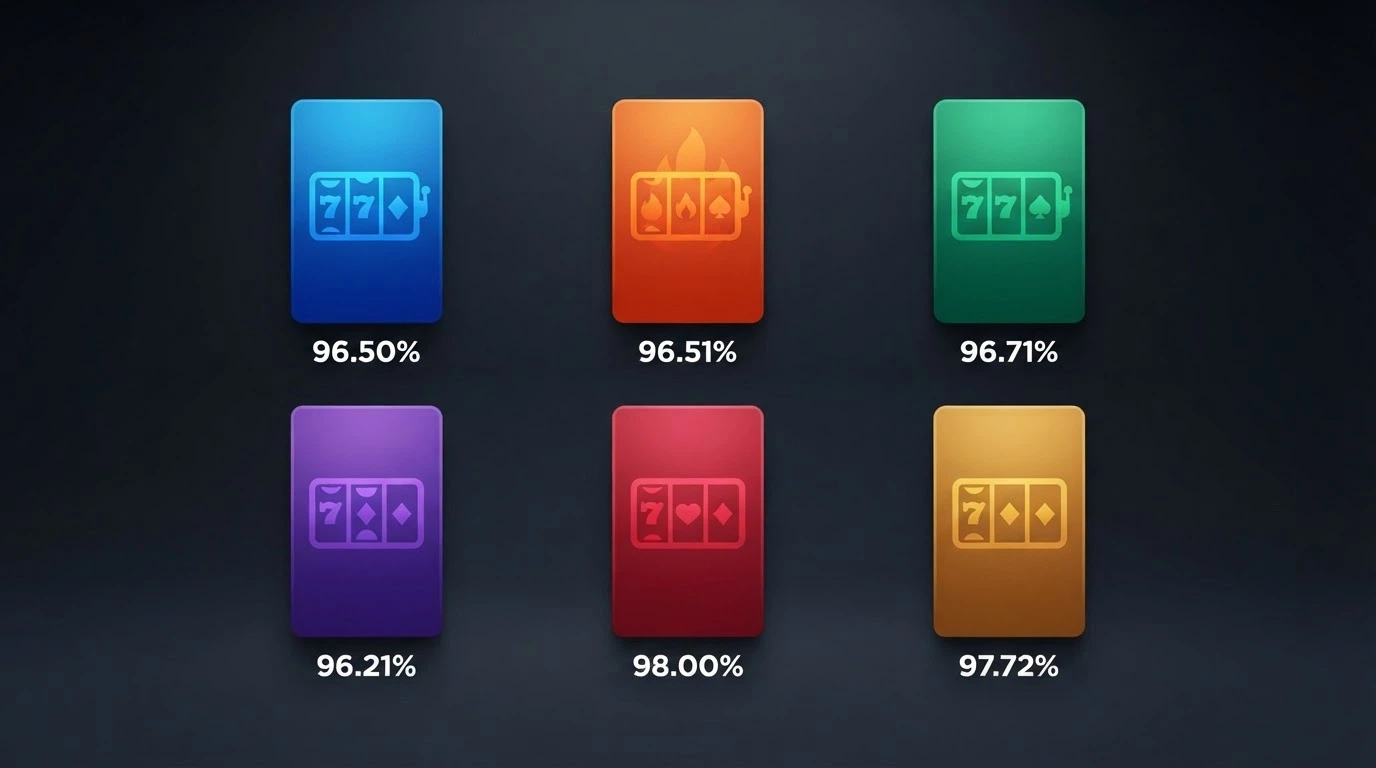
The pokie library is the part of the offer that does the work. A 300% match up to A$6,000 is a volume of play, and the volume is spent on a pokie. The pokie’s RTP — Return to Player — is the long-run percentage of every dollar that comes back to players. The higher the RTP, the longer the same bankroll lasts. The title table below is the set of pokies research has a verified RTP for, at the specific configuration research measured.
| Pokie title | RTP | Volatility | Provider |
|---|---|---|---|
| Gates of Olympus | 96.50% | High | Pragmatic Play |
| Sweet Bonanza | 96.51% | High | Pragmatic Play |
| Big Bass Bonanza | 96.71% | High | Pragmatic Play |
| Book of Dead | 96.21% | High | Play’n GO |
| Wolf Gold | 96.01% | Medium | Pragmatic Play |
| Blood Suckers | 98.00% | Low–Medium | NetEnt |
| Mega Joker | Up to 99.00% (Supermeter mode only) | Medium | NetEnt |
| White Rabbit Megaways | 97.72% | High | Big Time Gaming |
The titles above are the ones a small-bankroll player should look at first. The list is not exhaustive — the libraries at Bizzo, WinSpirit and Royal Reels hold thousands of titles — but it is the list where the published RTP is known. The audit a player should run on any title not on the list is the same: find the RTP and the volatility, and decide.
The pokies available at low-deposit offshore casinos
The library size across the featured set ranges from 280 to 8,000+ titles, and the provider mix explains the gap. Fair Go is RTG-only, single provider, 280 games. Bizzo is multi-provider, with Pragmatic Play and BGaming at the front of the catalogue, and 8,000+ titles behind them. WinSpirit sits at 6,000+ pokies. Royal Reels at 5,400+ from 40+ providers. HellSpin at 3,000+ from 50+. Rocket Play at 3,000+. SkyCrown multi-provider, unnumbered.
The 280-game RTG library at Fair Go is a different product from the 8,000+ library at Bizzo. The RTG catalogue is small, but it is the same catalogue Australian land-based casino players have been playing for years, and the games are tested by the same audience. The 8,000+ multi-provider library at Bizzo is closer to a streaming catalogue: more titles than a player can work through, more providers than a player can read, and a higher likelihood that the player will end up on a game they do not know. Neither is wrong; they are different shapes of product.
The titles that appear most often across the featured set are the Pragmatic Play hits — Gates of Olympus, Sweet Bonanza, Big Bass Bonanza, Wolf Gold — and the Play’n GO Book of Dead. The reason is straightforward: the providers are large, the games are popular, and the games are licensed into dozens of casino libraries. A player at Rocket Play, SkyCrown, Bizzo, HellSpin, Royal Reels, or WinSpirit is going to find the Pragmatic Play catalogue. A player at Fair Go is going to find the RTG catalogue. A player at Stake is going to find the Stake catalogue, which is its own thing.
RTP and volatility — which titles stretch a A$20 bankroll furthest
RTP is the long-run percentage of every dollar that comes back to players. A 96.50% pokie returns, on average, A$0.9650 of every A$1.00 wagered. A 98% pokie returns A$0.98. The 2% difference is the gap between Blood Suckers and the median of the set, and on a A$20 bankroll it is the difference between a session that lasts 20 minutes and one that lasts 28. The math is the same on a A$30 bankroll, scaled up.
Volatility is the other lever. A high-volatility pokie pays out less often, and when it pays out, the wins are larger. A low-volatility pokie pays out more often, and the wins are smaller. A A$20 bankroll on Blood Suckers — 98% RTP, low–medium volatility — will produce a stream of small wins and a longer session. A A$20 bankroll on White Rabbit Megaways — 97.72% RTP, high volatility — will produce a quieter first hour and a chance of a much larger payout if the bonus feature lands. The session length is roughly the same; the shape of the session is not.
The trap is the configurable RTP. Studios ship the same pokie title in multiple selectable RTP configurations — Book of Dead has a 96.21% default and a 94.25% reduced config; Starburst has 96.09% default with ~94.05% and ~92.01% variants. The title on the casino’s lobby is the same; the RTP at the specific casino is the one the player needs to verify. The lobby usually says, in the game’s information panel; if it does not, the player should ask the casino’s support before wagering. A 96.21% Book of Dead and a 94.25% Book of Dead are the same game with materially different bankroll outcomes.
Blood Suckers at 98% RTP and Mega Joker at up to 99% (Supermeter mode only) are the two highest-RTP titles in the set. Blood Suckers is the easier one to recommend — the 98% RTP is the base play, the volatility is low–medium, and the bankroll lasts. Mega Joker’s 99% is Supermeter mode only; base play returns only 76.9–85.1%, and a player who lands in the base game has not found the 99% pokie. The two titles are not equivalent.
Real-money play vs demo mode on a A$5–A$30 deposit
A small deposit makes real-money play worthwhile when the player can clear the wagering requirement within the validity window, withdraw at least one payout, and walk away. The minimum withdrawal at most AU-facing offshore casinos is A$25–A$50, sometimes A$50–A$100. A player on a A$5–A$30 deposit is below the withdrawal floor in most cases; the only path to a withdrawal is to land a win large enough to clear the floor, the wagering, and the bankroll.
That is the calculation. The floor is not the player’s friend. A $5 deposit with a $50 withdrawal floor is, in practical terms, a deposit that requires the player to win ten times their bankroll to cash out. The probability of doing that on any single session is low. The probability across many sessions is what the house edge eats.
Demo mode is the smarter choice for a player who wants to test the lobby, the RTP configuration, and the volatility before depositing. Demo play is available at most of the featured set’s libraries; a player who deposits before testing is spending the bankroll to learn what the demo would have shown. The right pattern is: find the pokie in demo, confirm the RTP and volatility, confirm the wagering contribution (slots are usually 100%; some operators exclude certain titles from bonus wagering), and then deposit. A player who skips the demo is paying for the operator’s catalogue with their own bankroll.
Mobile casinos and the small deposit — browser or app?
Most AU-facing offshore casinos are browser-only on mobile. The reason is straightforward: the App Store and Google Play restrict real-money casino apps by region, and an offshore casino licensed in Curaçao or Kahnawake does not clear the regional licensing requirement for an Australian App Store or Google Play listing. The result is that the mobile experience is a responsive website, not a downloadable app.

A responsive website is not a worse experience. The libraries at the featured set are HTML5; the games run in the mobile browser; the cashier is a touch interface. A player on a phone is going to find PayID, Neosurf, and the deposit button the same way a player on a laptop would. The performance on a modern phone is close to the laptop experience; on an older phone, the game library thins out, and the older Flash-era titles stop working.
The dedicated app that an Australian-facing player occasionally finds is usually a PWA — a Progressive Web App, an installable shortcut to the website, with a subset of the desktop features. The PWA is a different product from the iOS or Android native app, and a PWA bonus (Bizzo’s A$75 no-deposit offer is the most visible) is a different offer from the welcome bonus. A player who values the app experience should check whether the casino offers a PWA before assuming a browser-only lobby is the limit.
New low-deposit casinos for Australian players in 2026
The flow of new AU-facing offshore casinos is constant and largely untracked. Sites rank by traffic, not by launch date, and a brand that opened its doors last month is on the same list as a brand that opened its doors five years ago. The player who specifically wants a brand new in 2026 is going to find very little in the way of a definitive list, and they are going to find a great deal in the way of affiliate sites happy to call any brand “new” if the search traffic demands it.
The questions a player should run on a newly launched brand are the same three that apply to every brand on this page. First, where is it licensed, and is the licence verifiable on the regulator’s register — Curaçao, Kahnawake, Malta, the Isle of Man, the UK Gambling Commission. A brand that does not name its licence is a brand that does not want the question asked. Second, what are the withdrawal terms — minimum, maximum per transaction, processing time, and any fees. The withdrawal floor is the trap; a new brand with a 100x withdrawal minimum is a brand not worth depositing at. Third, what is the welcome-bonus eligibility minimum, and is it higher than the deposit minimum. The eight-of-fifteen finding from the PayoutVerdict audit applies to new brands as much as established ones.
A new brand is not automatically a worse brand. A new brand is a brand whose track record is short, whose terms may not have stabilised, and whose cashier has not been audited by anyone. The right way to treat a new entrant is the way the right way to treat any other brand on this page: read the terms, verify the licence, check the withdrawal floor, and only then deposit.
Why every $5 deposit casino is offshore — and what you lose
Online casino is prohibited in Australia. The Interactive Gambling Act 2001 makes it an offence to provide online casino games, online pokies and in-play sports betting to a person in Australia. There is no licence for online casino anywhere in the country — not federally, not in any state or territory. The Australian Communications and Media Authority is the federal regulator that enforces the prohibition, directs ISPs to block illegal sites, and issues civil penalty proceedings. The brand on this page is offshore because the brand is not allowed to be in Australia.

The enforcement is real. Since its first blocking request in November 2019, the ACMA has had 1,564 illegal gambling and affiliate websites blocked by Australian ISPs (as at March 2026), and more than 225 illegal services have withdrawn from the Australian market since enforcement was strengthened in 2017. The civil penalties are A$2,475,000 per day for an individual provider and A$12,375,000 per day for a corporation. The site that an Australian player reaches today may be on the block list tomorrow.
The Interactive Gambling Act 2001 — what it actually bans
The IGA prohibits the provision of online casino games, online pokies and in-play sports betting to a person in Australia, under section 5 and section 15(2A). The individual player is not prosecuted — the Act targets the provider, not the person who uses the service. The enforcement runs against the operator, not the punter.
What is still legal is wagering on races and sport placed before the event begins, and lotteries and keno, through operators licensed by a state or territory. Licensing for online wagering concentrates in the Northern Territory — the Northern Territory Racing and Wagering Commission (NTRWC), administered through Licensing NT, is the de facto national licensor for online bookmakers. The 2026 reform’s Schedule 4 prohibits online keno and foreign-matched lotteries from 1 January 2027, narrowing the legal set further. A player who wants the licensed-Australian experience is looking at a sports bookmaker, not a casino.
The 2026 reform — what changes on 1 January 2027
The Interactive Gambling Amendment (Gambling Reform) Bill 2026 passed Parliament on 19 August 2026. Its measures commence 1 January 2027. The reforms are the most significant regulatory tightening since the original 2001 Act, and they are aimed at the licensed wagering set, not the offshore casino set — but the offshore casino set is affected at the payment-method layer.
The advertising restrictions are the headline. No more than three wagering ads per hour between 6:00 am and 8:30 pm. A live-sport blackout of wagering advertising from 15 minutes before to 5 minutes after a live sporting event. Athletes, celebrities and influencers are barred from promoting wagering products; wagering ads are banned inside sports venues and on uniforms of players and officials. Direct marketing of inducements is prohibited for 14 days after a customer signs up, for three months after a person deregisters from BetStop, and indefinitely for customers identified as at risk of gambling-related harm.
The payment layer is the part that reaches the offshore casino set. From 1 January 2027, banks and payment providers gain express authority to block transactions to illegal gambling operators. A bank transfer from an Australian account to an offshore casino is, after that date, blockable at the bank’s discretion. The PayID deposit that the player uses today may not clear tomorrow. The brand on this page that is licensed in Curaçao or Kahnawake is, for Australian banks, an illegal operator under the new authority, and the bank is now allowed to act on it.
What you give up playing offshore — no BetStop, no ACMA, no recourse
The honest answer to “what do I lose by depositing at an offshore casino” is the entire Australian consumer-protection stack. The ACMA cannot recover funds from an overseas entity. The Australian Competition and Consumer Commission does not reach a Curaçao licensee. There is no Australian complaints body that can compel a payout. The site can be blocked at any time, and the player can find themselves holding a balance on a brand whose Australian-facing URL no longer resolves.
- No BetStop coverage. BetStop binds Australian-licensed wagering services only. An offshore casino is not licensed in Australia, is not connected to the register, and will keep taking a self-excluded person’s money.
- No ACMA fund recovery. The ACMA can block the site and fine the operator; it cannot compel a Curaçao-licensed entity to return a player’s balance.
- No Australian consumer-law complaints body. The state and territory gambling regulators do not have jurisdiction over an offshore brand.
- No recourse for account closure. A player whose account is closed with a balance on deposit has no path to a complaint body that the operator is bound to recognise.
- The site can be blocked while the player still holds a balance. The 1,564 sites blocked since November 2019 include brands that had paying customers at the time of the block.
The trade-off is the trade-off the rest of the page describes. The bonus is bigger. The library is bigger. The deposit floor is lower. The price is everything the Australian regulatory perimeter would have given the player, paid to an entity the Australian regulatory perimeter cannot reach.
Staying safe with a small bankroll — help that actually works
The Australian responsible-gambling infrastructure is real, and it works at the licensed wagering operators. It does not reach offshore casinos. The distinction matters: a deposit-limit tool set at a licensed bookmaker is enforced; a deposit-limit tool set at an offshore casino is a UI element the operator can move. The infrastructure the player can actually rely on is the one that does not depend on the offshore casino to honour it.
Setting limits the operator cannot override
The first step is the one taken before the first deposit. A player who decides on a bankroll before opening the cashier is a player who has already absorbed the most important number. A player who decides on a bankroll at the cashier is a player deciding under the casino’s marketing.
Deposit limits are the most reliable self-help tool at the licensed operators, and they work because the operator is bound by the licence. At an offshore casino the same UI control exists, but the operator is not bound by an Australian licence to honour it. The right pattern is: set the limit at the cashier before the first deposit, then verify the limit took effect by checking the account statement. A limit that the operator does not enforce is a limit the player has not set.
Session timers and activity statements are the second tier. Session timers log the player out after a configured period; activity statements are downloadable transaction histories. A player who downloads the activity statement after each session and reads it before the next one is a player who knows what the bankroll is. The operator’s responsible-gambling page is the right place to find these tools; the absence of them is the right reason to pick a different operator.
Australia caps the payment method, not the deposit amount. There is no federal deposit, loss or stake ceiling for online gambling because the product those ceilings would govern is banned outright. The cap is on the credit card and the crypto, not on the debit card. The implication for a player setting limits is that the limit is the player’s, not the regulator’s, and the limit is only as enforceable as the operator chooses to make it.
Where to get help — helplines, counselling and what BetStop actually covers
The National Gambling Helpline is 1800 858 858 — free, confidential, staffed 24/7, with online chat and counselling through Gambling Help Online at gamblinghelponline.org.au. The line is the single most reliable resource on this page, and it is the one a player at an offshore casino can still use. The counselling is delivered by Australian clinicians; the help does not depend on the offshore operator to honour it.
The other services worth knowing: Gambler’s Help at gamblershelp.com.au; the National Debt Helpline at 1800 007 007; SHARC (Self Help Addiction Resource Centre) at 1300 660 068; Turning Point for clinical counselling; ReachOut for younger players. Each of these is free, confidential, and Australian. None of them depend on the offshore casino.
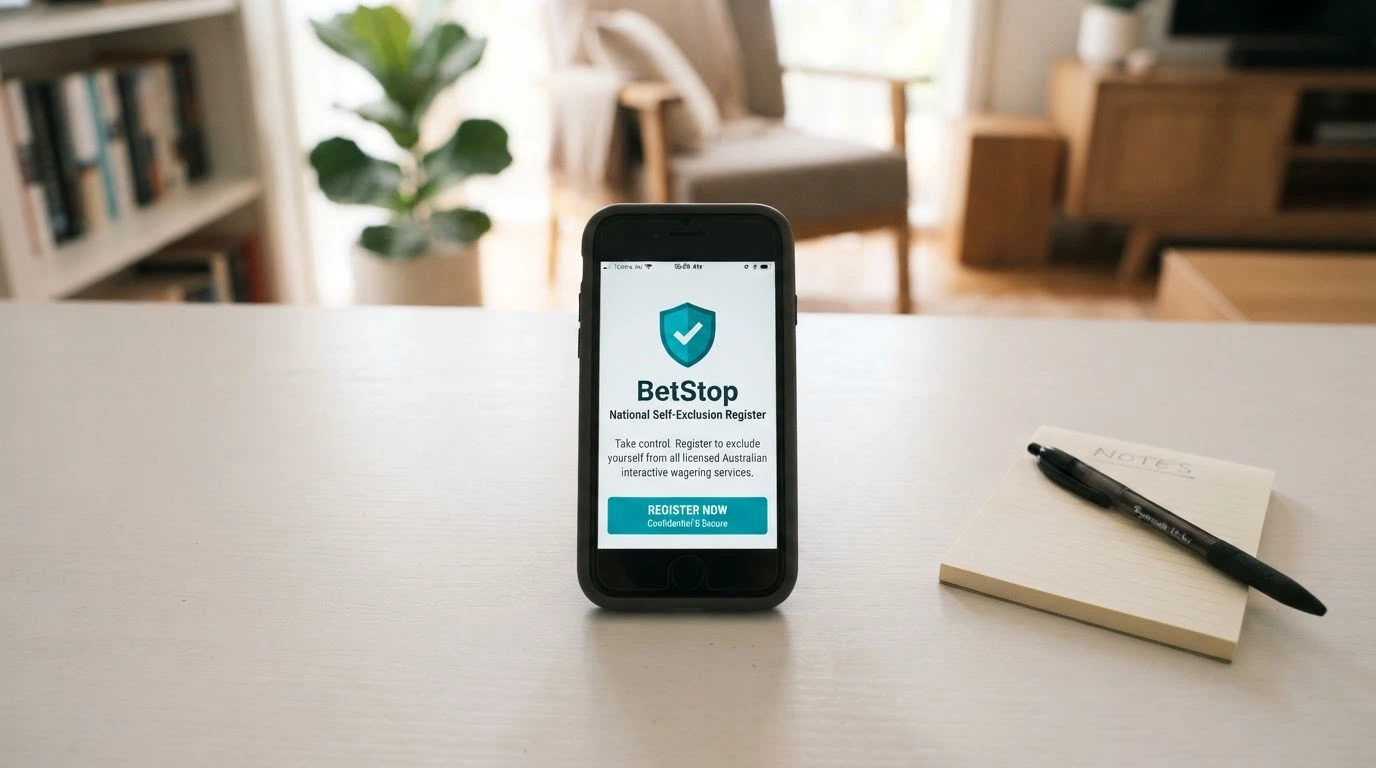
BetStop is the National Self-Exclusion Register, and it covers approximately 150 licensed wagering providers in Australia. A person can self-exclude for a minimum of 3 months and up to a lifetime. By Q2 FY 2025-2026 (to end December 2025), 54,859 people had registered and 35,135 had active exclusions. The register binds Australian-licensed wagering services only. An offshore casino is not connected to the register, and the exclusion does not stop the offshore brand from accepting the player’s deposits. A player who has self-excluded at BetStop and is still playing at an offshore casino has not self-excluded at the offshore casino, and the offshore casino is not going to ask.
The scale of the harm is the reason the rest of this section exists. An estimated 15.1% of the Australian adult population — 3.32 million people — are experiencing some level of gambling harm from their own gambling or that of someone close to them (Roy Morgan, March 2026). As of March 2026, 13.0% of the Australian population (2,857,000 people) were experiencing gambling harm from their own gambling, and 5.4% (1,177,000) from other people’s gambling. Risky gambling among Australian adults increased from 13.7% in 2024 to 19.4% in January 2025 — almost doubling since the COVID-19 lockdowns of 2020-2021. More than half (56.1%) of individuals who gambled mainly participated online in the past 12 months. The minimum age for all commercial gambling in Australia is 18.
How we checked these $5 deposit casinos
The ranking is built on operator terms pages, affiliate test data, and the Australian regulatory perimeter. The terms pages are the source of every bonus figure, wagering multiple, minimum deposit, and game count that the page carries. The affiliate test data — from PayoutVerdict, VegasPokie, AustralianGamblers, BestAustralianCasinoSites, Betsquare, Slotozilla, Casipto, Tech-Insider, BestCryptoCasinoUSA, CasinoBros, Methspin, and PokiesAustralia — is the source of the cashier-floors analysis, the deposit-eligibility audit, and the withdrawal-floor testing. The regulatory perimeter is the ACMA register and the IGA statute, and it is the source of the “no Australian online casino licence exists” finding that applies to every brand on the page.
The licence-status check is the most important single check. The ACMA register was consulted for each operator; none of the ten on the page appears on it. The Curaçao and Kahnawake licence claims are taken from the operators’ own terms pages, not from a regulator’s register; “unconfirmed this run” in the research file means the licence could not be independently verified against the named regulator’s public register. For an Australian player, the relevant fact is the absence of an Australian licence, not the presence of an offshore one.
The ranking criteria, in order, are: published bonus terms, deposit minimum, wagering transparency, game-library size, and licence jurisdiction. No weighting is given to traffic share, market position, or any operator-supplied metric. Where the research file marked a figure as unconfirmed, the page does not invent one. Scream Casino is in the featured set because the operators skill ranked it, and the absence of confirmed specifics is itself a finding.
The limits of the review are the limits of the inputs. The terms pages change; the bonus on the landing page today may not be the bonus the player sees in a week. The licence status is as stated at the time of review. The withdrawal floors are the floors at the time of the test data; they are subject to change without notice. A player who is reading this page to decide where to deposit is reading a snapshot; the cashier is the current state.
Is a low deposit worth the trade-off? What the numbers say
The question the page is built to answer is the one at the top: is there a $5 minimum deposit casino in Australia. The honest answer is no, not in fiat, not at a brand that holds an Australian licence (because no such brand exists), and not at a brand that will let a small balance out at the cash-out button. The closest the fiat floor gets is A$10 via Neosurf; the closest the bonus-eligible floor gets is A$20 at most brands in the featured set; and the only deposits under A$5 that clear are crypto, at brands that do not offer a traditional welcome bonus.
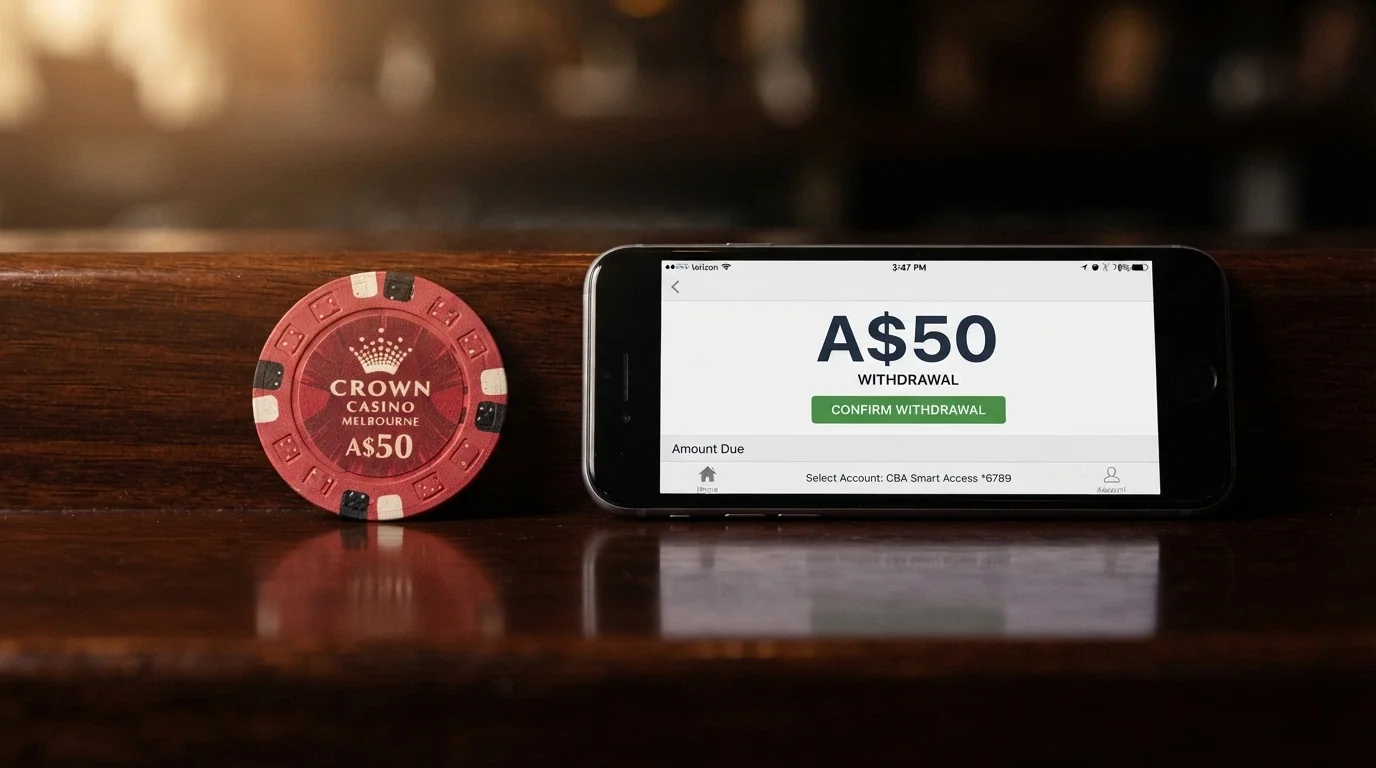
The numbers that matter are not the deposit minimums. The numbers that matter are the ones the page has walked through in order. The withdrawal floor of A$25–A$50, sometimes A$50–A$100, is the trap. The credit-card Cash-Advance treatment, with the 3% fee and the 22% interest from day one, is the cost of paying with the wrong card. The crypto ban since 11 June 2024, and the bank-block authority from 1 January 2027, are the legal frame. The 1,564 sites blocked by ISPs since November 2019, and the 225+ illegal services that have withdrawn from the market since 2017, are the enforcement record. The absence of BetStop coverage offshore, and the absence of an Australian complaints body that can compel a Curaçao licensee to pay out, are the consumer-protection gap. The 15.1% of Australian adults experiencing some level of gambling harm, and the 19.4% risky-gambling rate in January 2025, are the stakes.
A small deposit at an offshore casino is a small deposit at an offshore casino. The marketing around it is the A$5 deposit; the reality around it is the A$50 withdrawal floor, the A$500 bonus cashout ceiling, the ACMA block, the IGA prohibition, the offshore licence, the absence of BetStop, and the absence of any Australian complaints body. The brand wants the deposit; the regulator wants the player to know what the deposit is.
The right thing to do with this page is not to pick a casino. The right thing to do is to read the terms at the brand the player has already chosen, check the withdrawal floor, confirm the licence, and call 1800 858 858 if the bankroll the player is about to deposit is one the player cannot afford to lose. The numbers on this page are the numbers the player needs to do that. The deposit is the player’s; the decision is the player’s; and the rest of the page is what the player should know before making it.
Frequently asked questions
Can I really deposit just A$5 at an online casino in Australia?
No honest fiat option exists. Neosurf’s A$5 voucher is EU-only; in Australia the floor is A$10. Cards impose A$10–A$20, and PayID casinos enforce a A$20 minimum. The only sub-A$5 deposits are crypto at Stake (around A$0.10 BTC-equivalent) and BC.Game (around A$1 USDT) — and neither offers a traditional welcome bonus.
Do A$5 deposits qualify for welcome bonuses?
Rarely. PayoutVerdict’s 2026 audit found eight of fifteen AU-facing brands enforce a higher minimum for bonus eligibility than for plain play. The SkyCrown welcome, for example, requires a A$30 first deposit; a A$5 deposit does not trigger it. Fair Go markets A$5 deposits but gates the bonus at A$20+.
Does BetStop cover offshore casino sites?
No. BetStop binds approximately 150 Australian-licensed wagering providers. An offshore casino is not connected to the register, and a BetStop exclusion will not stop an offshore brand from accepting deposits or marketing to the excluded player. Self-exclusion only works at the operators it covers.
What happens to my money if an offshore casino gets blocked?
The site can be blocked at any time while the player still holds a balance. The ACMA has had 1,564 illegal gambling and affiliate sites blocked since November 2019, and more than 225 illegal services have withdrawn from the Australian market since 2017. The ACMA cannot recover funds from an overseas entity, and the operator’s home regulator (Curaçao, Kahnawake) does not have a player-fund recovery process for Australians.
What is the minimum withdrawal at Australian online casinos?
The minimum withdrawal at most AU-facing offshore casinos is A$25–A$50, sometimes A$50–A$100. A A$5 balance typically cannot be cashed out. The withdrawal floor is the trap behind the deposit floor, and it is the reason a small-balance player walks away with nothing. The Australian minimum is set by the operator, not the regulator.