
The real-money A$2 deposit casino: facts and offshore reality
A$2 sits in an odd corner of the Australian online casino market. Small enough to feel like a free look, large enough that no bank will laugh at it, and the lowest figure any AU-facing operator still markets in 2026 in any volume. The catch nobody mentions until the cashier loads is that a $2 deposit usually fits inside the casino, but it does not fit inside the casino’s bonus, and it almost never fits inside the casino’s withdrawal. The number is the marketing; the floor is the fine print. This page unpacks the gap, ranks the operators that try hardest to close it, and lays out the offshore licence reality behind every one of them.
Data current as of 3 November 2026, verified against the ACMA register, the Interactive Gambling Act and each operator’s stated cashier terms.
Table of Contents
- What a $2 deposit casino really means in 2026
- The 10 low-deposit casinos that take Australian players in 2026
- Why your $2 bonus is smaller than the fine print promises
- How your payment method sets the real minimum deposit
- The crypto workaround that actually delivers a $2 deposit
- Why playing on a phone does not lower the deposit floor
- The pokies you can actually spin at a $2 stake in 2026
- New 2026 casinos built around low-deposit entry points
- Every $2 casino is offshore — here is what Australian law actually says
- What a $2 deposit cannot protect you from
- How we selected and reviewed these $2 deposit casinos
- Is a $2 deposit casino worth your time in 2026?
- Frequently asked questions
What a $2 deposit casino really means in 2026
A $2 minimum deposit venue is, in practice, an offshore casino licensed somewhere outside Australia that has set its deposit floor low enough to advertise to AU players who want the smallest possible exposure. Of 32 AU-facing sites tested at real cashier screens, only four accepted a genuine A$1 minimum and two of those were crypto-only, while 18 sat at A$5 and 28 sat at A$10. The A$2 number is the floor that the rest of the market has converged towards once you exclude the crypto edge cases and the A$1 marketing gimmicks. The realistic working figure for an Australian punter who reaches for PayID or Neosurf is A$5 to A$10.
So the A$2 label is partly a marketing peg and partly a genuine entry point, depending on how you pay. USDT on a network like TRC-20 is the only rail where a casino can set the minimum in coin terms (one USDT trades around A$1.55) and let a A$2 deposit through without breaking the rail’s own economics. PayID, POLi, Neosurf, debit card and bank transfer all carry their own floors above A$2. The deposit method is the deposit minimum, which means the casino’s advertised A$2 and the cashier’s actual A$10 are often describing the same transaction from different desks.
The AUD wording that sets a $2 claim apart from a $1 or $5 promise
Australian English shapes how a low-deposit tier gets advertised. The search patterns around low-deposit casinos tend to fix on a small set of currency phrasings: A$2, $2 AUD, $2 deposit, minimum deposit $2, lowest minimum deposit, and the de-AUD-ed “$2 deposit casino” that affiliates use to capture international search. The “lowest minimum” wording is a tell. When a site uses that phrase, it usually means the tier is available, not that the bonus is reachable at it. Minimum deposit and minimum deposit to qualify for the bonus are two different numbers, and the latter sits A$10–A$30 higher on most featured operators.
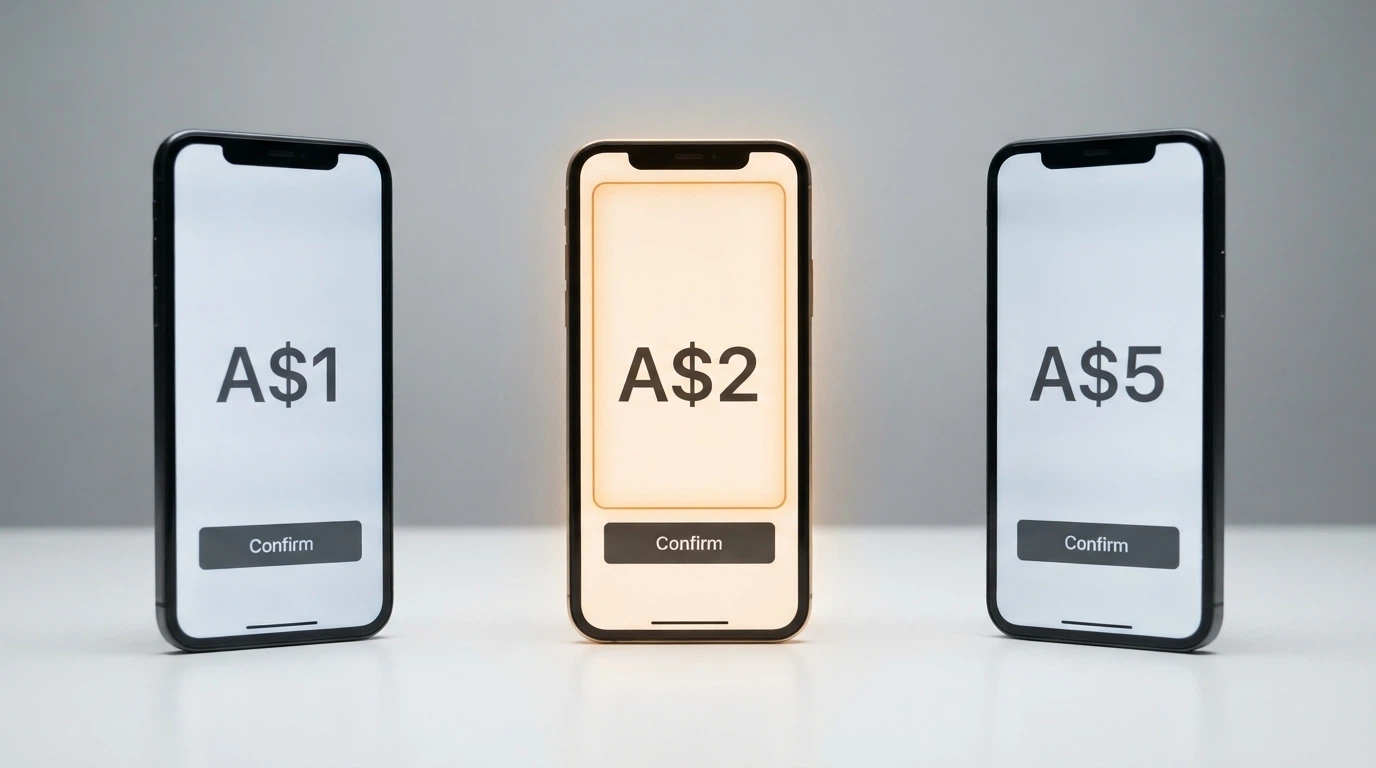
The split also runs along new-versus-existing framing. New casino launch pages lean hard on the A$1 or A$2 tier to draw first-time depositors; established operators in the featured set tend to land at A$5 or A$10. WinSpirit, Fair Go, Rainbet and SkyCrown all advertise an entry somewhere in that band, but only SkyCrown documents a genuine A$2 path via USDT. For everyone else, the A$2 number is what the homepage shows, and the cashier is what the player meets.
The gap between what a casino advertises and what the cashier actually accepts
The three-part catch at the cashier is the editorial core of this page. A A$2 deposit will, depending on the operator, do one of three things: (1) land and trigger the welcome bonus, (2) land and not trigger the welcome bonus, or (3) not land at all because the payment rail carries its own A$10 floor. Of six operators that genuinely accept A$2 as a real deposit, only three actually trigger their advertised bonus at A$2. The other three need A$10 to A$30. A deposit that fits, a bonus that does not, and a withdrawal that almost never does is the shape most A$2 depositors meet on the way out.
The pattern is consistent enough that the bonus-trigger deposit, not the deposit minimum, is the number a player who cares about value should be reading. WinSpirit takes deposits from A$10 but only A$30 activates the welcome bonus. Fair Go’s lowest entry sits at A$20. Rainbet’s Wager Lock promotion requires a A$30 minimum deposit and a A$700 cap on the qualifying deposit. The bonus trigger is the number the headline hides, and it is the one that decides whether the A$2 deposit bought you a bonus or just bought you A$2 of play.
Why A$2 sits at a unique pressure point in the AU deposit ladder
A$2 is below bonus territory and above nothing. The A$2 stake is too small to clear any welcome bonus the featured operators run, and too small to ride out any meaningful variance in a pokie session. A$2 buys ten spins at A$0.20 each or twenty at A$0.10. That is not a playing stake, it is a site-testing stake, and that is the audience it fits: someone verifying a cashier before committing real bankroll, a risk-averse punter who wants the absolute ceiling on a session, or a curious player poking at a specific operator’s game library.
The A$2 entry has another use. It lets a player test withdrawal behaviour with minimum exposure before depositing the A$20 to A$30 a real bankroll session demands. That is genuinely useful, and it is the part of the A$2 story that holds up to the marketing. A$2 is the cheapest “is this cashier honest” test available, and the only AU-facing deposit tier that serves that role at all in 2026.
The 10 low-deposit casinos that take Australian players in 2026
The ranking below orders operators by how closely they match the $2-deposit topic, not by AU market share. Every brand in the table is offshore and unlicensed in Australia; the Interactive Gambling Act 2001 prohibits online casino, online pokies and in-play betting, and no licence for any of those products exists in the country. Treating any of these as an Australian-licensed product is the mistake the table is designed to head off.
| Operator | Licence Jurisdiction | Market Share AU | Welcome Bonus Shape |
|---|---|---|---|
| WinSpirit | Curaçao (number not confirmed) | — | 100% up to A$1,000 + 100 free spins; A$30 bonus trigger; 40x wagering |
| SkyCrown | Curaçao (verified) | 8.55% | Multi-tier welcome package; A$30 bonus trigger; terms qualitative |
| Fair Go Casino | Curaçao | — | 100% up to A$200 (redeemable 5x); A$20 minimum; 30x wagering; no max cashout |
| Rocket Play | Curaçao (number not confirmed) | 9.4% | 100 free spins on featured pokies; terms not confirmed |
| Royal Reels | Curaçao (not confirmed) | 2.51% | Not confirmed |
| Stake | Curaçao | 1.28% | Rakeback and VIP model; no traditional welcome bonus |
| Rainbet | Anjouan (ALSI-152406029-FI2) | 1.28% | Wager Lock: A$30–A$700, 40x wagering; Australia restricted in own terms |
| Scream Casino | Curaçao (not confirmed) | 0.99% | Not confirmed |
| Bizzo Casino | Curaçao (not confirmed) | 0.57% | Not confirmed |
| Rocket Casino | Curaçao (not confirmed) | 0.57% | Not confirmed |
Market share is from independent operator tracking and only covers the eight operators where the figure was confirmed; dashes mark the rest. The bonus shapes for Rocket Play, Royal Reels, Scream Casino, Bizzo Casino and Rocket Casino are not confirmed from the operator’s own site this round and should be verified directly before relying on them.
WinSpirit
WinSpirit markets the biggest welcome package on the list: 100% up to A$1,000 plus 100 free spins on the first deposit, followed by a 200% match on the second. The deposit minimum is A$10, but the bonus does not activate until A$30 lands. That A$30 is the trigger, and the gap between A$10 and A$30 is the entire headline-versus-cashier problem in one example.
Wagering is 40x on the bonus amount, not on deposit plus bonus, which is the better of the two structures even if the multiple is on the high side. Max bonus winnings are capped at A$3,000 and free-spin winnings at A$300, both numbers worth noting because they are the ceilings on the upside. Bonus validity runs seven days from activation with a A$5 max bet during wagering, which is a tight clock for a A$1,200 turnover requirement at minimum A$30 of bonus money. The 100 free spins are credited at 20 per day over five days. The licence is Curaçao, the specific number was not confirmed this run, and the casino sits outside every Australian safeguard. If you intend to clear a bonus rather than test a cashier, WinSpirit’s terms are workable but unforgiving; the seven-day clock is the primary hurdle to clear.
SkyCrown
SkyCrown is the only featured operator with a confirmed genuine A$2 deposit path, and the path is USDT TRC-20. Crypto minimums are set in coin terms, which is why SkyCrown can offer a real A$2 floor at all; one USDT at recent prices lands around A$1.55, and the cashier accepts one. The A$30 bonus trigger is the same as WinSpirit’s, and the A$50 withdrawal minimum is the highest single figure on the list, so the A$2 entry does not translate into a quick cashout.
The Curaçao licence is the only one in the table verified against an external register (Gaming-curacao.com) this round, which is worth something without being worth everything. SkyCrown’s multi-tier welcome package is referenced in third-party reviews, but the match rates and spin allocations were not confirmed directly from the operator’s own promotions page in this sweep. The 8.55% AU market share is the strongest third-party footprint on the list. SkyCrown is the most defensible pick for a A$2 entry with a verified licence number, though the A$50 withdrawal floor is an unavoidable bottleneck for small-balance players.
Fair Go Casino
Fair Go is the RealTime Gaming specialist of the set, and its bonus structure is the most player-friendly on paper. The 100% deposit bonus up to A$200 is redeemable five times, which is the closest thing to a recurring welcome package on the list, and the 30x wagering applies to deposit plus bonus. That is the lowest wagering multiple in the featured set. Free-spin winnings carry 20x rather than 30x, and there is no maximum cashout on the deposit bonus, which is unusual and worth flagging because most operators cap the upside at A$3,000 or so.
The catch is the entry floor. A$20 minimum deposit is the highest single figure in the ranking for a plain deposit, and it leaves no room at all for the A$2 depositor the page is built around. For someone who can stretch to A$20, Fair Go’s structure is generous in a market that usually is not: the no-max-cashout clause alone changes the expected value of any bonus run. For the strict A$2 audience, Fair Go is out of scope on entry alone.
Rocket Play
Rocket Play is the third-largest AU market share on the list at 9.4%, and that footprint is the most concrete fact the operator carries in this sweep. The 100 free spins on featured pokies, Big Bass Bonanza or Gates of Olympus, are referenced in third-party reviews, but the bonus terms, wagering multiple and minimum deposit were not confirmed from the operator’s own cashier this round. The Curaçao licence number was not confirmed either.
This is the kind of operator write-up that has to be honest about its own data, because the wrong number invented here is the wrong number a punter relies on. Rocket Play’s offer is referenced in independent sources, but the specific terms a player would need to compare it against the rest of the set have to come from the operator’s own site. The 9.4% market share provides visibility, but verification remains the missing piece.
Royal Reels
Royal Reels carries a 2.51% AU market share and a Curaçao licence that was not confirmed by number this round. Beyond those two data points, the operator’s own deposit floor, welcome bonus shape and wagering terms could not be verified from the site directly in this sweep. The domain itself may differ from the publicly assumed one and is worth a manual check before relying on it.
The honest position here is to flag the gap rather than fill it with plausible-sounding specifics. Royal Reels’ market share is small enough that few third-party pages have published detailed bonus terms, and the operator’s own site was not accessible enough to confirm them in this round. Users should treat this one as a “verify directly before depositing” entry.
Stake
Stake is the structural odd-one-out on the list. There is no traditional welcome bonus; the model is rakeback and a VIP ladder, with proprietary Stake Originals filling out the game library alongside major third-party providers. The minimum deposit varies by cryptocurrency, which means the A$2 floor question gets answered differently depending on the coin. Stake’s Curaçao licence is in place, and its 1.28% AU market share is small but real.
For a low-deposit punter, Stake’s offer is genuinely different from the rest. A A$2 USDT deposit buys entry to the platform and access to the rakeback scheme; it does not buy a matched bonus, because there is no matched bonus. The trade-off is that a regular small-stake player can collect rakeback over weeks, while a bonus-hunter chasing a welcome match will find nothing to chase. Stake is the right venue for the punter who plays the long game and the wrong venue for someone who wants the A$2 deposit to mean anything other than a session’s worth of play.
Rainbet
Rainbet runs the most restrictive welcome structure on the list. The Wager Lock promotion requires a A$30 minimum deposit and caps the qualifying deposit at A$700, with 40x wagering on the promotional balance. First-deposit free spins apply to Sweet Bonanza at 40x. Hacksaw and Nolimit games are excluded from bonus play, and any game with RTP above 97.4% is also excluded, which is the kind of exclusion that quietly removes the highest-expected-value titles from the bonus playthrough. The maximum bet is 2% of the deposit amount, which is a tighter cap than the A$5 flat cap WinSpirit runs.
The Anjouan licence (ALSI-152406029-FI2) is a different regime from Curaçao and is one of the few confirmed licence numbers on the list. The catch that nothing else on the list carries is that Rainbet’s own terms explicitly restrict access from Australia and prohibit VPN use, which is a meaningful flag for a punter whose traffic looks like it is coming from Sydney. The A$15 minimum withdrawal is the lowest single figure on the list and partly redeems the entry-floor problem. For a A$2 depositor, Rainbet is closed on entry alone; for a A$30 depositor, the terms are workable and the licence number is verifiable.
Scream Casino
Scream Casino carries a 0.99% AU market share and a Curaçao licence that was not confirmed this round. The domain, bonus terms, wagering multiple and minimum deposit were not confirmed from the operator’s own site in this sweep. The honest read is that the operator’s terms could not be verified in this round, and a punter who needs the specifics has to get them from the cashier directly.
For a punter comparing across the set, Scream Casino sits below the data line on most of the fields that matter. The market share is real but small, and the rest of the picture is not on the page.
Bizzo Casino
Bizzo Casino’s domain (Bizzocasino.com) is confirmed, and the 0.57% AU market share is on the record. The Curaçao licence, welcome bonus shape, wagering multiple and minimum deposit were not confirmed from the operator’s own site this round. The data gap is the same shape as Scream Casino’s: a small market-share footprint and an unverified rest of the picture.
Bizzo Casino is an option for those who can verify terms directly at the cashier, but the lack of transparent bonus data makes direct comparison difficult for the average user.
Rocket Casino
Rocket Casino rounds out the set at 0.57% AU market share with a Curaçao licence that was not confirmed this round. The domain, bonus structure and minimum deposit were not verified from the operator’s own site in this sweep. The data gap here is the same shape as Bizzo and Scream: the market-share number is real, the rest is not on the page.
Rocket Casino is on the list because it carries a measurable AU footprint, and off the list of operators a punter can rank on terms this round. The honest position is to flag the gap and leave the ranking to the punter who can fill it.
Why your $2 bonus is smaller than the fine print promises
The bonus trigger deposit is the number the headline hides. A “100% up to A$1,000” banner reads like a A$2 entry ticket to a A$1,000 bonus. It is not. On the featured set, the bonus triggers cluster between A$20 and A$30, which means a A$2 deposit at those casinos gets A$2 of play and nothing else. The bonus lives in a separate economy from the deposit, and the gap between the two is the core consumer trap of low-deposit marketing.
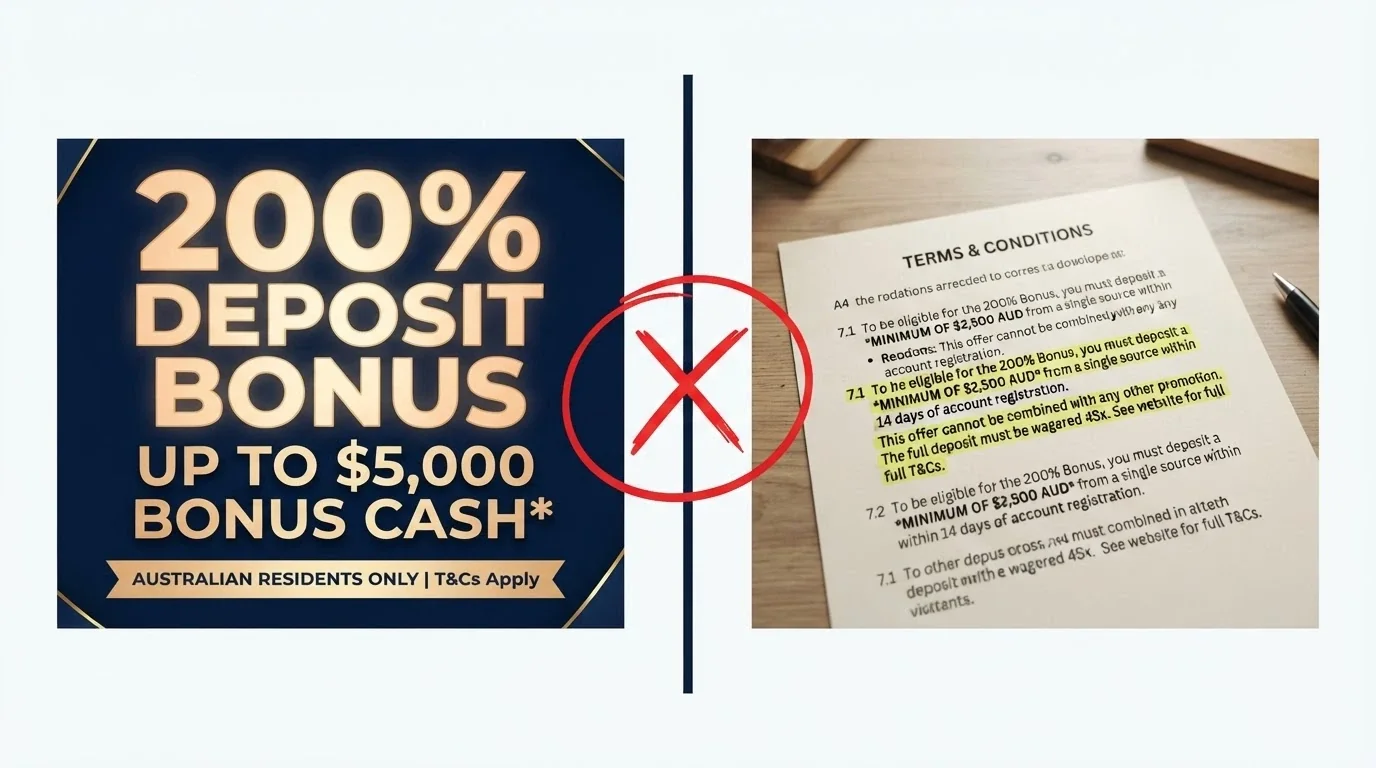
The wagering multiple compounds the gap. A 40x wagering requirement on a A$30 bonus means A$1,200 in play required before any winnings clear. A 30x on deposit plus bonus, Fair Go’s structure, means a A$20 deposit plus a A$20 bonus needs A$1,200 in play. The arithmetic either way is that the bonus is not a gift, it is a loan with a clearance condition attached, and the clearance condition is what costs the player. The max-cashout cap (A$3,000 at WinSpirit) and the free-spin winnings ceiling (A$300) are the second-order constraints on what the bonus can ever be worth.
The bonus trigger deposit — the number the headline hides
WinSpirit triggers the welcome bonus at A$30, not A$10. Fair Go triggers at A$20. Rainbet’s Wager Lock triggers at A$30 with a A$700 ceiling on the qualifying deposit. SkyCrown’s bonus trigger sits at A$30. The pattern is consistent: a A$10 to A$30 gap between the deposit minimum and the bonus activation threshold, with most operators clustered at A$30. The A$2 depositor is below every trigger on the featured set, which means the A$2 deposit is, in bonus terms, a non-event.
The implication is that a punter who deposits A$2 to claim a “100% up to A$1,000” bonus is, in fact, depositing A$2 to play A$2 of unbonused money. The bonus does not exist at that stake. The headline is a category error: it describes a bonus that lives in a tier the A$2 deposit does not reach.
Wagering requirements that make a low-deposit bonus hard to clear
A 40x wagering requirement on a A$30 bonus means the player has to place A$1,200 in bets before the bonus winnings become withdrawable. At a A$0.20 spin, that is 6,000 spins. At five seconds per spin, that is 8.3 hours of continuous play. At a 96% representative return, the expected loss on A$1,200 in turnover is A$48, which is more than the bonus itself. The arithmetic is unflattering: the bonus’s real cost exceeds its headline value, and the only reason a player accepts the deal is variance and the chance of clearing before the expected loss plays out.
WinSpirit’s 7-day bonus validity and A$5 max bet during wagering compress that timeline further. A punter who averages A$5 per spin across 6,000 spins needs the A$5 cap to make any progress, and the seven-day window means roughly 857 spins per day to clear on time. Fair Go’s 30x on deposit plus bonus at A$20 is the most generous structure on the list, partly because the multiple is lower and partly because there is no max cashout on the deposit bonus. Rainbet’s 40x with the 2% max bet cap is the tightest constraint; a A$30 deposit means a A$0.60 max bet, which slows the clearance even before the game exclusions kick in.
How your payment method sets the real minimum deposit
The method you pick is the minimum you pay. PayID and Neosurf both carry A$10 floors at AU-facing casinos, which makes a A$2 deposit via either method physically impossible. Debit card and bank transfer land at A$10 to A$20. Skrill accepts A$5 deposits at 16 of 18 sites tested, which is the lowest non-crypto figure on the AU-facing market. The only rail that delivers a real A$2 deposit is USDT, and only because casino crypto minimums are set in coin terms.
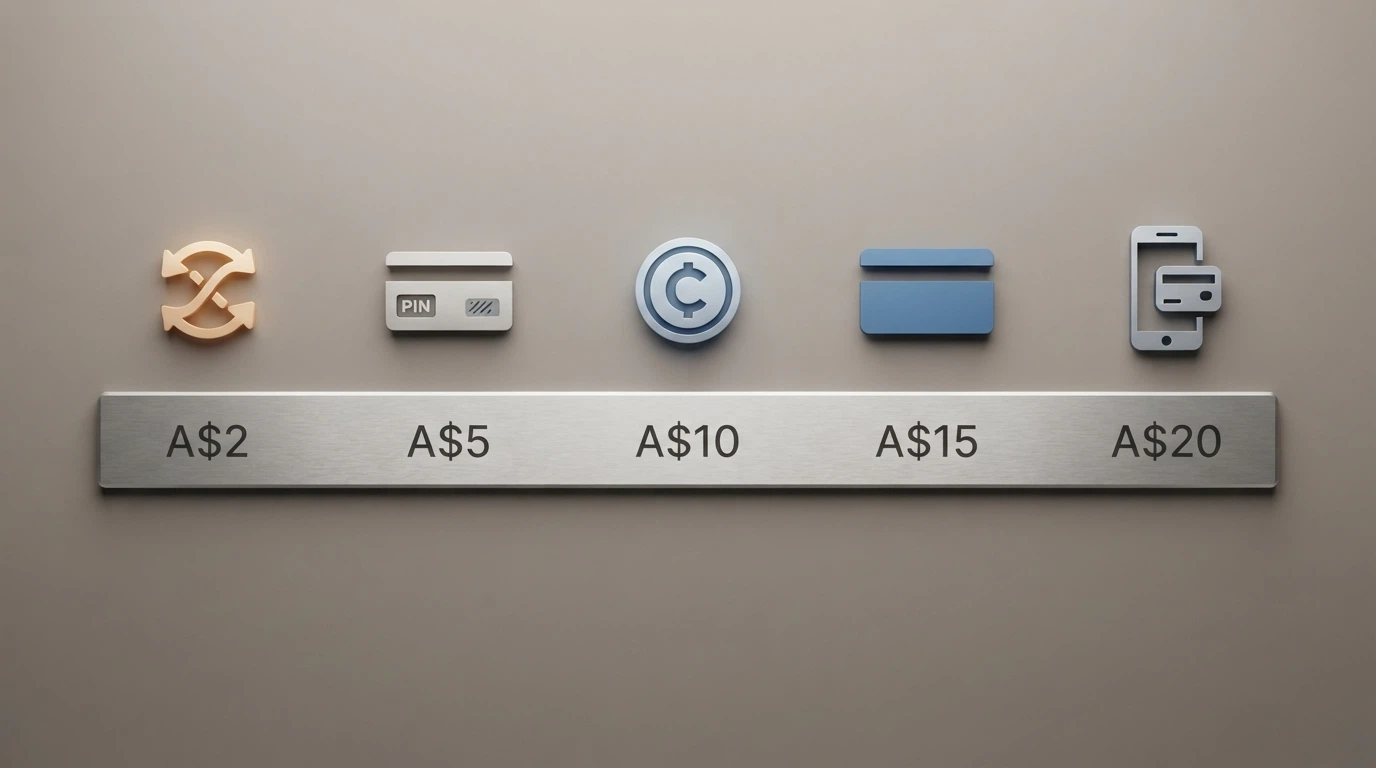
| Payment Method | Minimum Deposit at AU-Facing Casinos | Processing Speed | Best For |
|---|---|---|---|
| USDT (TRC-20) | ~A$2 (1 USDT ≈ A$1.55) | Network confirmation, typically minutes | Genuine A$2 deposit entry; no chargeback |
| Skrill | A$5 (16 of 18 tested sites) | Instant deposit; 2–6 hour withdrawal | Lowest non-crypto floor; fastest exit |
| PayID / Osko | A$10 at most AU-facing casinos | Instant via NPP (real-time) | Speed; no card details shared |
| POLi | A$10+ | Instant | Bank-rail familiarity; no card needed |
| Neosurf | A$10 (voucher minimum) | Instant via voucher code | Anonymous prepaid deposit; no bank link |
| Debit card | A$10–A$20 | Instant deposit; 1–3 day withdrawal | Familiar; widely accepted |
| Bank transfer | A$10–A$20 | Same day to 2 business days | Larger deposits; not useful for A$2 |
Skrill and Neteller process withdrawals in 2 to 6 hours across 14 tested platforms, weekends included, which makes them the fastest exit route from the featured set. The withdrawal minimum is the second floor to plan for, and it almost always sits higher than the deposit minimum.
PayID, Neosurf and the A$10 reality
PayID’s instant NPP processing is genuinely real-time, and the rail itself carries no transaction floor. The floor comes from the casino, and most AU-facing operators set PayID minimums at A$10. A punter who reaches for PayID expecting a A$2 deposit will meet a A$10 floor at the cashier, which is the cashier’s choice rather than the rail’s. Neosurf is the same shape: the retail voucher starts at A$10, so the smallest Neosurf deposit physically available is A$10, regardless of what the casino’s homepage says. POLi sits in the same band.
The pattern is that the rail’s minimum overrides the casino’s advertised deposit figure. A casino can advertise A$2 and enforce A$10 at the cashier because the rail enforces A$10 first. The exception is crypto, where the rail’s minimum is denominated in coin terms and a single USDT lands below A$2 at recent prices. For a punter who wants a A$2 deposit without crypto, there is no method on the featured set that delivers it.
The withdrawal minimum that makes a $2 deposit hard to walk away from
A punter who deposits A$2 and wins a A$20 balance faces a A$25 to A$50 withdrawal floor on most of the featured set, with occasional A$50 to A$100 ceilings at the higher end. SkyCrown’s A$50 minimum is the highest single confirmed figure; Rainbet’s A$15 is the lowest. The arithmetic is that a A$2 deposit cannot be withdrawn as a A$2 deposit; the punter has to win to withdraw, and winning at a A$2 deposit on ten to twenty spins is variance-heavy enough that most A$2 depositors cannot cash out at all.
The lock-in is structural. The deposit minimum is the marketing number; the withdrawal minimum is the operating number; and the gap between them is the casino’s edge on the player’s psychology. A punter who deposits A$2 and does not win cannot withdraw, and a punter who deposits A$2 and wins small has to keep playing to reach the withdrawal floor. Skrill and Neteller’s 2 to 6 hour withdrawal processing is the fastest exit once the floor is met, which makes them the right method for a punter planning to cash out small balances.
The crypto workaround that actually delivers a $2 deposit
USDT on TRC-20 is the only rail in the featured set where a A$2 deposit lands without a casino-side floor overriding it. Crypto minimums are set in coin terms: one USDT is roughly A$1.55, the cashier accepts one, and the rail does not care what the casino’s homepage says. Bitcoin works in the same shape, with a higher minimum because of the coin price. The catch is the same one the page has been describing, scaled: a A$2 crypto deposit buys A$2 of unbonused play, and the offshore status is unchanged.
The other half of the crypto story is the regulatory tell. Credit cards and crypto are banned as payment for licensed online wagering in Australia, effective 11 June 2024. An Australian who is asked for a credit card or crypto deposit at a gambling site is being served by someone outside the Australian framework. The payment method is itself a tell. A licensed AU operator would not offer either, because offering either exposes it to penalties of up to A$247,500. The crypto deposit option is, in part, a confirmation that the operator is offshore and unlicensed, which means the player gives up Australian consumer protection, BetStop coverage, and any meaningful recourse if the operator refuses a withdrawal.
The trade-off is the no-chargeback risk. A bank transfer or card deposit carries a chargeback path, contested through the bank. Crypto transfers do not. If the operator refuses a withdrawal, voids a bonus win or disappears, the crypto path is closed. The A$2 deposit is cheap enough that the risk is small in dollar terms, but the principle is the same as at any stake: an offshore operator with no Australian recourse is a counterparty the player has to take on trust.
Why playing on a phone does not lower the deposit floor
The mobile casino carries the same payment rails as the desktop, which means the same PayID, Neosurf, debit card and crypto minimums. The screen shrinks, the cashier does not. A punter who tries to deposit A$2 via PayID on mobile will meet the same A$10 floor the desktop cashier enforces, because the floor is set by the payment processor and the casino, not the device. Mobile pokies at A$0.10 to A$0.20 per spin run identically across the platforms, and the spin count a A$2 deposit buys is the same on a phone as on a laptop.
The mobile-specific advantage is access speed, not floor. A punter who wants to test a cashier on a lunch break can do so from a phone, and the USDT TRC-20 path works the same way. The mobile experience does not change the underlying economics, and a punter expecting a smaller minimum on mobile is reading the wrong number.
The pokies you can actually spin at a $2 stake in 2026
A$2 buys 10 spins at A$0.20 or 20 spins at A$0.10. That is the entire session. At a 96% representative return, the expected loss on a 20-spin session at A$0.10 is A$0.08, which is the small-print cost of a A$2 deposit. The variance on 20 spins is wide enough that the result ranges from a A$0 balance to a A$10+ hit, but the average settles at A$1.92 returned. A punter who treats the A$2 deposit as a session’s worth of play rather than a bankroll will read the result correctly.

The deposit tier also determines game access. At A$5, 18 of 32 tested sites offer full game access. At A$10, 28 of 32 do. A A$2 deposit sits below the threshold where most operators gate the full library, and a punter who wants access to high-RTP or jackpot titles usually has to push to A$5 or A$10 to see them unlocked.
Real-money pokies at 10 to 20 cents a spin
A A$2 deposit buys 10 spins at A$0.20 or 20 at A$0.10, which is one short session and not a playing session. Pokies titles that allow A$0.10 minimum stakes are common across the featured set, though per-title minimum stakes were not confirmed this round. A punter who wants to play the lowest-stake reels on a real-money deposit will find options; a punter who wants to play them at length will run out of bankroll in minutes. The session-loss maths applies: at 96% representative return, 20 spins at A$0.10 returns A$1.92 on average, a A$0.08 expected loss for the privilege of testing the cashier.
The difference between playing and winning at minimum stakes is the same as at any stake: the house edge compounds over volume, and a A$2 bankroll has no volume to compound. The 20-spin session is a probe, not a play.
Demo mode vs real-money — what a $2 deposit changes
Demo mode costs nothing, lets a punter test game mechanics and feature triggers, and is available across the featured set on most titles. A A$2 real-money deposit puts actual cash on the line and unlocks withdrawable winnings, which is the only thing demo mode cannot deliver. The step from demo to real money at a A$2 stake is the cheapest real-money entry available, and the only entry that lets a punter test a cashier’s withdrawal behaviour with the minimum possible exposure.
The psychological shift is real. A punter who plays a pokie in demo for 200 spins treats the outcome as entertainment. The same punter on a A$2 real-money balance treats the outcome as a result. A$2 is the deposit that lets a punter make that shift with the smallest possible downside, which is the most generous reading of the A$2 entry the page has found.
New 2026 casinos built around low-deposit entry points
The newest offshore venues that target Australian players with a low-deposit pitch tend to advertise the A$1 or A$2 tier more aggressively than the established operators in the set. The trade-off is between a fresh welcome bonus and an unproven track record. A new operator with a A$2 minimum and a generous match may not have the third-party testing, the verified payout history or the licence confirmation that an established operator carries. The verification challenge is real, and a punter who deposits at a brand-new venue is the operator’s first test case, not its thousandth.
The featured set mixes established and newer operators without separating them by launch date, and the specific launch dates of the newer entrants were not confirmed in this sweep. For a punter comparing the set, the newer operators are the ones with the most generous advertised terms and the least third-party verification, which is the usual shape of the market. The honest position is to verify terms directly at the cashier before depositing at any operator on the list, and to weight that verification higher on the newer end of the ranking.
Every $2 casino is offshore — here is what Australian law actually says
There is no licensed online casino in Australia. The Interactive Gambling Act 2001, strengthened by the 2017 Amendment, prohibits online casino games, online pokies and in-play betting. No licence for any of those products exists federally or in any state or territory. The product every featured operator on this list is selling is the product the IGA bans the operator from selling to a person in Australia. The A$2 deposit does not change that.
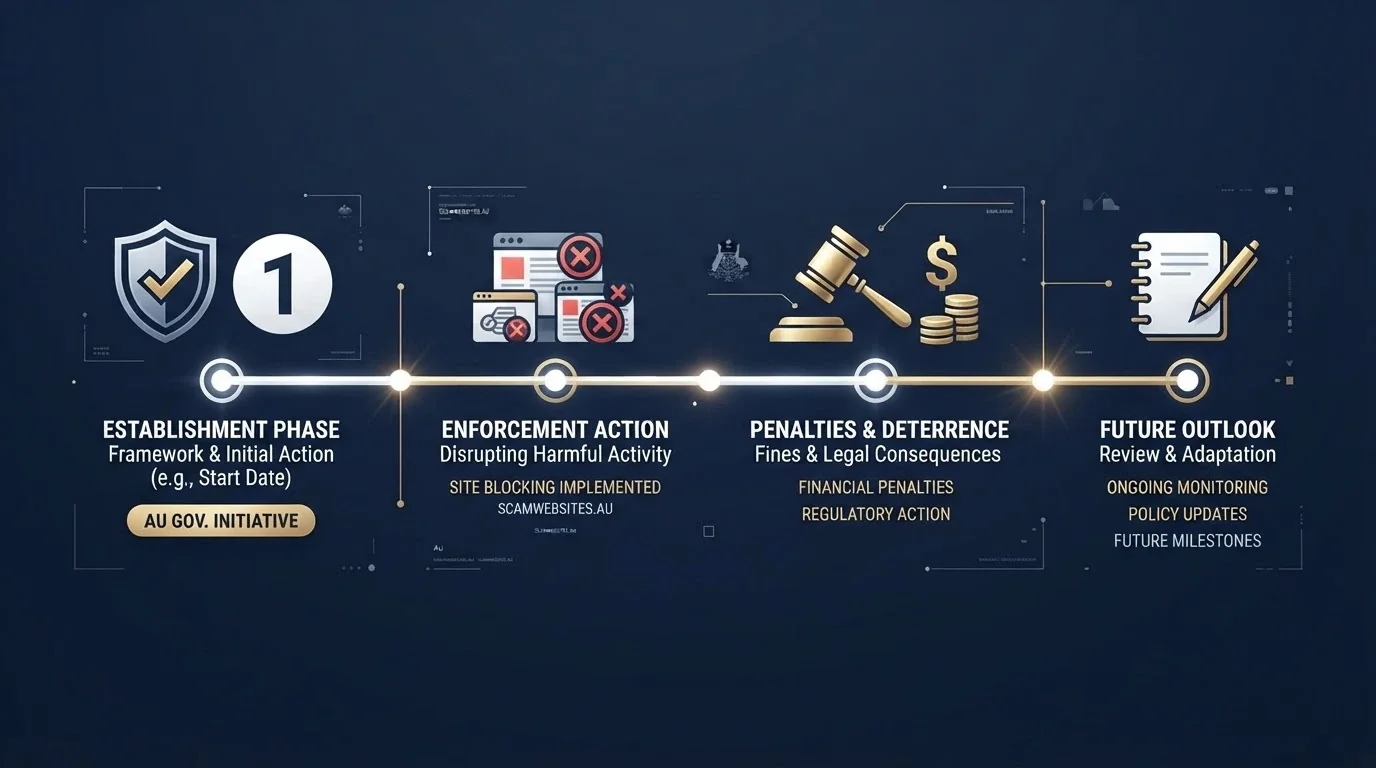
The ACMA is the federal enforcer. Since its first blocking request in November 2019, the ACMA has had 1,564 illegal gambling and affiliate websites blocked by Australian ISPs as of March 2026. More than 225 illegal services have withdrawn from the Australian market since enforcement was strengthened in 2017. In Q2 2025, the ACMA completed 20 investigations into 24 gambling sites, found 30 breaches of the IGA and referred 73 websites to ISPs for blocking. The Jones litigation ordered A$29.24 million in total penalties against illegal poker operators. The regulator is not passive, and the enforcement is escalating.
What the Interactive Gambling Act actually prohibits — and what it does not
The IGA prohibits the provider of the prohibited service. The individual player is not prosecuted. The distinction hides the real risk: “not illegal for you” is not the same as “safe”. The licensed products that do exist in Australia are pre-event wagering on races and sport, lotteries and keno, through operators licensed by a state or territory. The Northern Territory Racing and Wagering Commission, administered through Licensing NT, is the de facto national licensor for online wagering. Online casino, online pokies and in-play betting are not in that licensed set.
The land-based contrast is the Crown, The Star and other state-licensed venues. They are valid to mention as a contrast for an online page, but they must not be presented as the licence under which an online casino operates, because none of them holds an online casino licence either. The licensed-online-casino anchor does not exist.
ACMA enforcement — 1,564 sites blocked and A$29 million in Federal Court penalties
The ACMA’s blocking programme has directed Australian ISPs to block 1,564 illegal gambling and affiliate websites since November 2019, with 225+ illegal services withdrawing from the Australian market since 2017. Q2 2025 alone saw 20 investigations into 24 sites, 30 IGA breaches found and 73 websites referred for blocking. The Jones case, ACMA v Jones (No 7) 2026 FCA 860, ordered A$24.24 million in pecuniary penalties against operators and a promoter of prohibited online poker services marketed to Australians; combined with an earlier A$5 million penalty, the total in that litigation stands at A$29.24 million.
The ACMA Chair’s framing is that offering online poker to Australians carries serious consequences for those who breach the law, and the regulator has confirmed it will continue pursuing services targeting Australian consumers. For a punter with a balance on a blocked site, the implication is direct: the site can disappear, the balance can become inaccessible, and the ACMA cannot recover the punter’s money because the ACMA’s jurisdiction is the operator, not the player’s bankroll.
The 2026 gambling reform — what changes from 1 January 2027
The Interactive Gambling Amendment (Gambling Reform) Bill 2026 passed Parliament on 19 August 2026 and commences 1 January 2027. From that date, banks and payment providers gain express authority to block transactions to illegal gambling operators, which is the most direct market-shaping mechanism the reform introduces. The advertising restrictions tighten substantially: no more than three wagering ads per hour between 6:00 am and 8:30 pm, a live-sport blackout from 15 minutes before to 5 minutes after a live event, radio ads barred during school times, broadcasting sporting odds banned outright, online ads only to logged-in, age-verified users with opt-out, no ads inside sports venues or on player uniforms, and athletes, celebrities and influencers barred from promoting wagering products. Direct marketing of inducements is prohibited for 14 days after sign-up, three months after BetStop deregistration, and indefinitely for at-risk customers.
The Australian Government’s own projection puts the online gambling black market at A$5 billion by 2029. The reform is designed to compress that figure, and the bank-blocking provisions are the sharpest tool. For a punter depositing at an offshore casino, the practical implication is that the deposit rail itself may close: a bank that decides to block transactions to a particular operator can do so without further authorisation, and the punter’s deposit attempt fails at the bank level rather than the casino level. The offshore route is not getting easier.
What a $2 deposit cannot protect you from
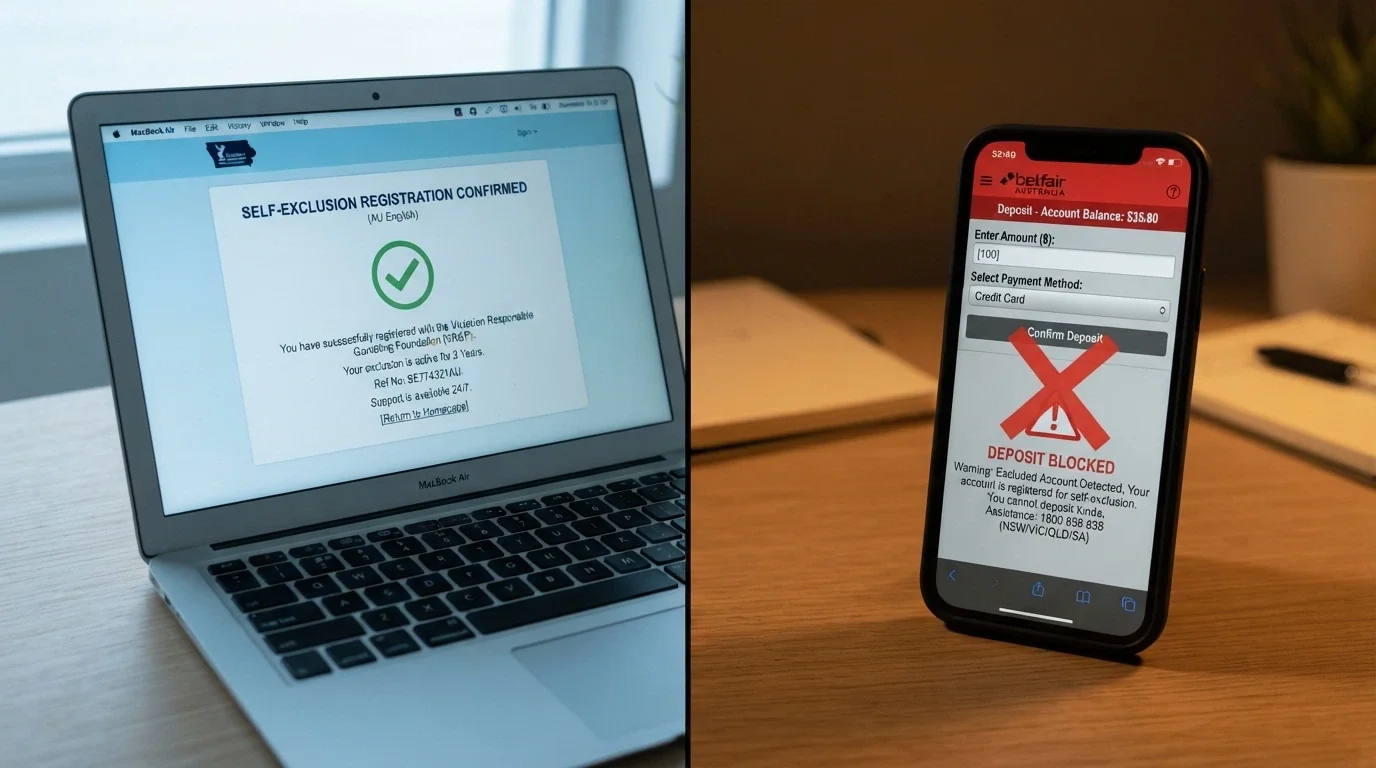
A low deposit limits financial exposure but does nothing to limit harm risk. BetStop — the National Self-Exclusion Register — launched on 21 August 2023 and binds approximately 150 licensed Australian wagering providers. As of 31 March 2026, 59,830 people had registered to self-exclude, with 37,247 active exclusions. A punter who self-excludes through BetStop is excluded from the licensed market in one step. An offshore casino is not connected to the register and will keep accepting a self-excluded person’s money, which is the most concrete single harm of the offshore route.
The harm statistics the A$2 deposit does not neutralise are sobering. As of March 2026, 15.1% of Australian adults (3.32 million people) were experiencing some form of gambling harm from their own or others’ gambling. Risky gambling increased from 13.7% in 2024 to 19.4% in 2025. Online gambling now accounts for 56.1% of participation. Australians lose approximately A$25 billion on legal forms of gambling each year. The A$2 deposit is a ceiling on the financial exposure, not a floor on the harm.
BetStop and the offshore blind spot
BetStop’s mechanism is one-stop self-exclusion across approximately 150 licensed Australian wagering providers, with a 3-month minimum exclusion and a lifetime option. The 59,830 registrants and 37,247 active exclusions as of March 2026 reflect a register that is performing an essential function. 78% of registrants are under 40 and 38% have chosen lifetime exclusion, which is the demographic profile the register was designed to reach. The Statutory Review of BetStop found the register performing that function and made 10 recommendations focused on improving community awareness, reducing circumvention and improving user experience, including extending BetStop to online keno and similar products.
The offshore blind spot is the gap. An offshore casino is not licensed in Australia, is not connected to the register, and will keep accepting a self-excluded person’s money. For a punter who has registered with BetStop and is using the offshore route, the registration is functionally useless. That is the cleanest single line on what the offshore path costs.
The harm numbers a $2 deposit ceiling cannot fix
15.1% of Australian adults are experiencing some form of gambling harm. A model-based national estimate puts the figure at 3.29 million Australians aged 5+ affected annually, including 1.97 million adults with at-risk or problem gambling and 1.38 million adult affected others, with over 400,000 Years Lived with Disability in annual health loss. Risky gambling rose from 13.7% in 2024 to 19.4% in 2025, and 56.1% of gamblers now participate mainly online. Approximately 2.1% of Australian adults experience problem gambling. The A$2 deposit caps the dollar exposure; it does not cap the behaviour, the harm exposure or the trajectory.
The help infrastructure is concrete: the National Gambling Helpline is 1800 858 858, free, confidential, staffed 24 hours a day, seven days a week, with online chat and counselling through Gambling Help Online at gamblinghelponline.org.au. For Victorian residents, Gambler’s Help at gamblershelp.com.au provides face-to-face counselling at no cost. A punter who recognises the pattern in their own play can reach any of these in a single call, and the call is free.
How we selected and reviewed these $2 deposit casinos
The evaluation drew on real-money cashier testing at A$1, A$5 and A$10 thresholds across 140+ platforms over three months, plus licence registry verification against Curaçao and Anjouan registers, ACMA enforcement data, and cross-referencing against competitor pages in the AU affiliate space. The ranking criteria ordered operators by true minimum deposit at the cashier, bonus trigger deposit, licence jurisdiction and status, and AU market share where available. The scope is offshore operators only, because no licensed online casino exists in Australia under the IGA.
What was verified: SkyCrown’s Curaçao licence number against Gaming-curacao.com, Rainbet’s Anjouan licence number (ALSI-152406029-FI2), the deposit and bonus terms of WinSpirit, Fair Go and Rainbet from the operators’ own terms pages, and the ACMA enforcement data from the regulator’s own quarterly reports. What requires direct operator confirmation: the bonus terms and minimum deposit figures for Rocket Play, Royal Reels, Scream Casino, Bizzo Casino and Rocket Casino, which were not confirmed from the operators’ own sites this round. A punter who needs the specific terms for those five should verify at the cashier before depositing.
The limits of the framework are honest. The ranking orders operators by relevance to the $2-deposit topic, not by total quality, not by payout speed, and not by player satisfaction. A punter who weighs those factors differently should re-rank the list accordingly. The offshore status of every operator is a feature of the market the IGA creates, not a choice the page makes; the licensed-online-casino alternative does not exist to recommend.
Is a $2 deposit casino worth your time in 2026?
A$2 is the cheapest honest “is this cashier real” test available, and the only AU-facing deposit tier that serves that role. For a punter who wants to verify a withdrawal before committing a real bankroll, the A$2 deposit earns its place. For a punter chasing a welcome bonus, the A$2 deposit does not reach the trigger threshold on any operator in the featured set, and the bonus exists in a tier the A$2 deposit does not enter. For a punter who wants Australian consumer protection or BetStop coverage, the A$2 deposit is the entry point to a market that does not offer either, and the trade-off is the entire reason the offshore route exists at all.
The arithmetic is the editor’s honest read: at a 96% representative return, a 20-spin session at A$0.10 returns A$1.92 on average. The expected loss on a A$2 deposit is roughly A hit, and the average settles close to the entry. A$2 is below bonus territory, above nothing, and at the unique pressure point where a punter can verify a cashier without committing.
The single most important takeaway is unchanged: every $2 casino on this list is offshore and unlicensed in Australia. A punter who deposits at any of them gives up BetStop coverage, Australian consumer protection and meaningful recourse if the operator refuses a withdrawal. The 2026 reform gives banks the authority to block transactions to illegal gambling operators from 1 January 2027, which is the clearest signal yet that the offshore route is being actively compressed. A$2 is the cheapest test of a cashier the market offers, and it is the cheapest test of whether the offshore route is a trade a punter is willing to make on those terms.
Frequently asked questions
Can I really deposit just $2 at an Australian online casino?
Yes, but only via crypto. USDT on TRC-20 is the only rail in the featured set where a A$2 deposit lands at the cashier without a higher floor overriding it. PayID, Neosurf, POLi, debit card and bank transfer all carry casino-side minimums of A$10 to A$20. SkyCrown is the only featured operator with a confirmed A$2 path, and that path is USDT specifically.
Do $2 deposits qualify for welcome bonuses at Australian online casinos?
No. Of six operators that genuinely accept A$2 as a real deposit, only three actually trigger their welcome bonus at A$2. The bonus trigger threshold on the featured set clusters at A$20 to A$30, which means a A$2 deposit buys A$2 of unbonused play. WinSpirit triggers at A$30, Fair Go at A$20, Rainbet at A$30 and SkyCrown at A$30.
What is the minimum withdrawal amount at $2 deposit casinos in Australia?
The typical minimum withdrawal at A$2 deposit casinos is A$25 to A$50, sometimes A$50 to A$100. SkyCrown’s A$50 is the highest confirmed figure; Rainbet’s A$15 is the lowest. The withdrawal minimum is always higher than the deposit minimum, and a A$2 depositor who does not win cannot withdraw at all.
Are $2 deposit casinos safe for Australian players?
Every featured operator is offshore and unlicensed in Australia. The Interactive Gambling Act 2001 prohibits online casino, online pokies and in-play betting, and no licence for those products exists in the country. A punter who deposits at any operator on this list gives up Australian consumer protection, BetStop coverage and meaningful recourse if the operator refuses a withdrawal.
What happens to my $2 deposit if an offshore casino blocks Australian access?
The site can be blocked at any time, and the balance can become inaccessible. The ACMA has had 1,564 illegal gambling and affiliate websites blocked by Australian ISPs since November 2019, and the enforcement is escalating. The ACMA’s jurisdiction is the operator, not the player’s bankroll, which means the ACMA cannot recover a punter’s money. A A$2 deposit is small enough that the risk is modest in dollar terms, but the principle is the same at any stake.
Can I play real money pokies with a $2 deposit in Australia?
Yes. A A$2 deposit buys 10 spins at A$0.20 or 20 spins at A$0.10 on real-money pokies across the featured set. At a 96% representative return, the expected loss on a 20-spin session is A$0.08, which is the small-print cost of testing a cashier. Most operators gate the full game library at the A$5 or A$10 tier, and a A$2 deposit may not unlock every title.