
How 10 Offshore Solana Casinos Stack Up for Australians in 2026
A Solana casino accepts deposits in SOL, settles transactions on the Solana blockchain, and connects to a player through a Web3 wallet rather than a bank card. For Australians, every one of them is offshore: the Interactive Gambling Act 2001 makes online casino provision an offence, and the credit and crypto payment ban of June 2024 reinforced it. This page compares ten of them on bonus, wagering, SOL withdrawal speed and licence — and frames the choice against the regulatory reality no operator on this list escapes.
Data current as of 29 October 2026 · Licence claims verified against the Anjouan, Curaçao, Tobique and Curaçao GCB registers.
Table of Contents
- What a Solana Casino Actually Is (and Why Australians Are Using Them in 2026)
- Australia’s Best Solana Casinos in 2026: 10 Offshore Operators Ranked by What They Actually Deliver
- Why Solana Changes the Casino Experience: Speed, Privacy and What You Actually Get
- The Games: What You Can Actually Play With SOL at These Casinos
- Australian Law and Solana Casinos: Where the Line Is Drawn in 2026
- Staying Safe: Responsible Gambling When the Register Doesn’t Reach Offshore
- How We Picked and Ranked These Solana Casinos
- What Australian Players Should Actually Do About Offshore Solana Casinos in 2026
- Frequently Asked Questions
What a Solana Casino Actually Is (and Why Australians Are Using Them in 2026)
A Solana casino is a gambling site where the deposit and withdrawal rails run on the Solana blockchain. SOL is the native token; SPL tokens — any token issued on the Solana network, from USDC and USDT through to a long tail of memecoins — extend the list of what a player can fund an account with. The deposit flow bypasses the banking system entirely: a player connects a wallet like Phantom, Solflare or Backpack, signs a transaction, and the funds appear within seconds. No card processor. No bank intermediary. No chargeback risk for the operator.
That is the speed pitch. The rest is context.
How a Solana Casino Works: Wallets, Deposits and Blockchain Settlement
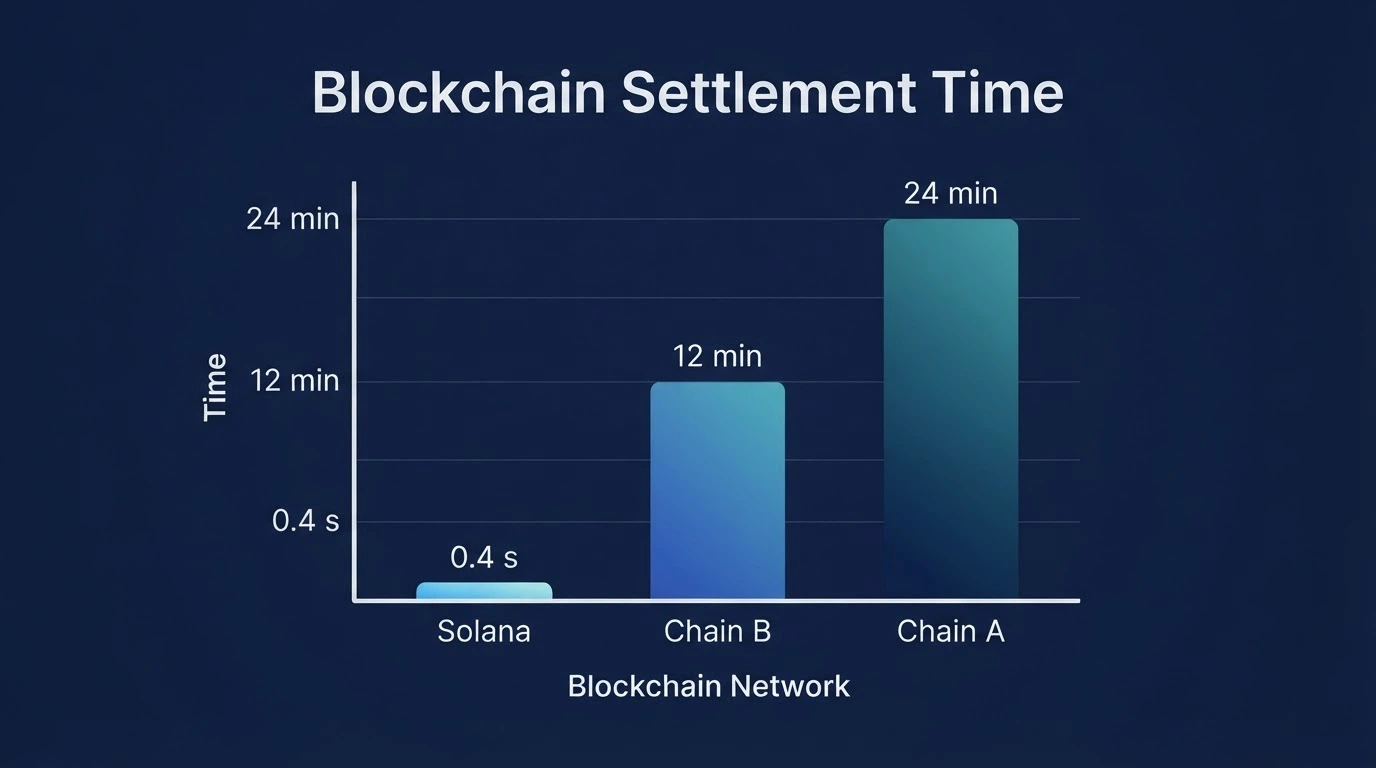
The technical layer settles in under a second. That figure is the network — the time it takes the Solana blockchain to confirm a transfer. It is not the time it takes the casino to credit an account or release a withdrawal. Once a deposit hits the casino’s wallet, the operator’s own processing queue takes over, and that queue is what varies from site to site. VIP-Grinders’ July 2026 testing put the queue at under one minute at Shuffle, 1–3 minutes at CoinCasino, and 2–10 minutes at BC.Game and Rainbet. The network itself is the constant. The casino is the variable.
For a player, the practical difference between 45 seconds and 5 minutes is small. The practical difference between 5 minutes and 24 hours is enormous. SOL had two brief outages in 2025, averaging 4 hours with recovery under an hour — so the network is not perfectly stable, but the casino queue dwarfs the network risk in everyday use. Solana also clears roughly 32 times faster than Bitcoin for live in-play use, 45 seconds versus 24 minutes for a single deposit cycle. That gap matters when a market moves and a player wants to fund a position mid-event.
The Australian Context: Why SOL Casinos Appeal to Local Players
Australia’s federal framework prohibits online casino provision outright. The Interactive Gambling Act 2001 makes it an offence to supply online casino games, online pokies or in-play sports betting to anyone in Australia, and no licence for those products exists anywhere in the country — not federally, not in any state or territory. The Interactive Gambling Amendment (Credit and Other Measures) Act 2023 added a second layer from 11 June 2024: credit cards, credit-related products and digital currency are banned as payment for any form of licensed wagering. Penalties for non-compliance reach $247,500. Offering crypto gambling to Australian residents is a criminal offence under the act.
A site that asks for SOL is, by definition, outside that framework. Every operator on this page is unlicensed in Australia for the simple reason that no Australian casino licence can exist. Players are not prosecuted — the IGA targets the provider — but they also have no Australian consumer protection, no Australian complaints body, and no recourse if the operator refuses a withdrawal. The appeal of SOL speed and wallet-based access is real. The regulatory cost of using it is just as real, and rarely described in the marketing.
Solana Casinos vs Traditional Online Casinos: The Key Differences
- Settlement: under one second on the network, plus a casino-side queue of 1–10 minutes at most operators; fiat casinos take 1–5 business days for withdrawals after KYC review.
- Payment rails: SOL and SPL tokens versus debit cards, bank transfers and PayID; crypto rails mean no chargeback rights and no bank intermediary.
- KYC at sign-up: usually none — a wallet address is the identifier at most operators; fiat casinos require photo ID, proof of address and source-of-funds documents before the first withdrawal.
- Provably fair: a handful of Solana-native casinos (Zeebit, Dicey) verify every bet and payout on-chain; fiat casinos rely on closed RNG audits that the player cannot independently check.
- Game speed: SOL is roughly 32 times faster than Bitcoin for live in-play use — 45 seconds versus 24 minutes for a single deposit cycle — which matters when a market moves and a player wants to fund a position mid-event.
Australia’s Best Solana Casinos in 2026: 10 Offshore Operators Ranked by What They Actually Deliver
The ranking below uses five criteria: SOL withdrawal queue time (the variable that defines the SOL experience), licence jurisdiction and operator history, welcome bonus value and wagering fairness, game-provider depth, and KYC burden. The table is a snapshot. Each operator is examined in detail below it.
| Operator | Licence | Welcome Bonus | Wagering | SOL Withdrawal Speed | Game Count |
|---|---|---|---|---|---|
| BC.Game | Anjouan | 380% up to $4,000 + 400 FS | Varies by VIP tier | 2–10 min | — |
| Stake | Curaçao | Region-dependent | — | 0–2 days | 6,000 |
| Rainbet | Anjouan | 250% up to $2,100 + 60 FS | Per-deposit | 2–10 min | — |
| CoinCasino | Anjouan | 200% up to $30,000 + 50 FS | 60x (10% blocks) | 1–3 min | — |
| Shuffle | Curaçao | 200% up to $2,000 | 35x | <1 min | — |
| Jack.com | Curaçao | 100 wager-free spins | 1x | 1–5 min | 9,200 |
| Solcasino.io | Tobique | 1080% package | — | <3 min (98% within 10 min) | — |
| Winshark | Curaçao GCB | 240% up to €650 + 250 FS | 45x bonus only | 24–48 hours | — |
| LuckyAnon | Anjouan AOFA | 420% + $4,200 | 35x deposit + bonus | — | — |
| Thrill | Anjouan | 20% daily cashback up to $100 | — | Instant | 16,500 |
Every operator in the table is offshore. None holds an Australian casino licence because no such licence exists. The licence column states the regulator the operator does hold. It is not an endorsement.
BC.Game: The High-Roller’s Solana Casino With a 380% Welcome Package
BC.Game leads on welcome bonus size among the featured set: 380% up to $4,000 plus 400 free spins, with wagering that varies by VIP tier rather than sitting on a fixed multiple. The licence is Anjouan (Anjouan Gaming Board, Comoros), which sits at the lighter end of the offshore regulatory tier. SOL withdrawals queue for 2 to 10 minutes on the operator side, with a minimum of about 0.1 SOL. The platform accepts 25 or more cryptocurrencies, and SPL token support is built in, so USDC and other Solana-native tokens fund the same account.
The 380% match is the page’s largest by percentage and one of three packages here topping 250%. The wagering model is what sets BC.Game apart from fixed-multiple offers: a player who climbs the VIP ladder sees the requirement drop, while a new account takes the full version. A high-roller who will reach VIP anyway treats this as a long-term deal. A casual player with a small bankroll will clear the wagering before the VIP bonus kicks in and absorb the cost of the full requirement. That is the trade, and it shapes who this offer suits.
Stake: The Veteran Platform With 6,000 Games and a Curaçao Pedigree
Stake launched in 2017, holds a Curaçao licence (Curaçao Gaming Authority), and carries roughly 6,000 games across its catalogue. The payout window is 0 to 2 days — slower than the SOL-native operators on this page, but well within the range a fiat casino quotes. The welcome bonus structure is region-dependent, which matters for an Australian player: the headline package shown to a UK visitor is not necessarily the headline shown to an Australian IP. Stake runs a sportsbook alongside its casino, which broadens what a single account can do.
The case for Stake is institutional weight. It is the longest-running brand on this page and one of the few that publishes public provably-fair toolkits across its in-house games. The case against is the payout window: 0 to 2 days is an order of magnitude slower than SOL-native operators, and the bonus structure forces an Australian player to confirm what’s on the table before depositing. The Curaçao licence is a real regulator, but it is not an Australian regulator. The gap matters at withdrawal time.
Rainbet: Rakeback and a Three-Deposit Structure That Rewards Regular Play
Rainbet offers 250% up to $2,100 plus 60 free spins, split across three deposits rather than landing as a single match. Wagering tracks each deposit independently, and the platform layers a per-wager rakeback — a percentage of every bet returned to the player, regardless of outcome — on top of the bonus. The licence is Anjouan. SOL withdrawals queue for 2 to 10 minutes.
The rakeback mechanic is what makes Rainbet’s three-deposit structure work for a regular player. A flat bonus favours a player who deposits once, plays through, and leaves; rakeback favours a player who keeps wagering, because every spin generates a return. Over a few hundred dollars of wagering, the rakeback often covers the cost of the bonus. Over a thousand, it can pay for the deposit itself. A casual player with one deposit to spend will see less value here than at a flat-match operator. A regular player will see more.
CoinCasino: The $30,000 Welcome Bonus and the Lowest SOL Withdrawal Minimum
CoinCasino carries the page’s largest maximum bonus by dollar value: 200% up to $30,000 plus 50 free spins, with 60x wagering released in 10% blocks. The Anjouan licence sits beside a SOL withdrawal queue of 1 to 3 minutes, a minimum of about 0.05 SOL — the lowest tested on this page — and no withdrawal fee.
The calculation behind the headline is the point. Assuming only the bonus amount is wagered at a standard $1-per-spin stake with a 5-second interval between spins, the required turnover on the maximum $30,000 bonus comes to $1.8 million. That is roughly 1.8 million spins, or about 2,500 hours of play — roughly 104 days running nonstop. That is the play time the bonus requires to clear. The “real cost” framing in any marketing copy collapses once that figure sits beside the headline: 60x on a $30,000 bonus is not a number a small bankroll can absorb.
For a player who plans to deposit a fraction of the $15,000 needed to max the match, the requirement scales down linearly — the percentage is the same, but the absolute play time drops. A $1,500 deposit producing a $3,000 bonus asks for $180,000 of turnover and 500 hours at the same stake. The “up to” matters. CoinCasino’s cleanest feature is the SOL side: 1–3 minute queue, no fee, and the lowest minimum on the page. The 60x wagering is the cost of that.
Shuffle: The Fastest SOL Withdrawals We Tested (But You Pay a Flat Fee)
Shuffle is the fastest operator in VIP-Grinders’ July 2026 testing, releasing SOL withdrawals in under a minute from the time the request hits the queue. The minimum is roughly $20 equivalent. The cost is structural: Shuffle charges a $1.25 flat fee per SOL cashout — the only operator on this page charging one — and the welcome bonus is 200% up to $2,000 at 35x wagering. The licence is Curaçao.
The fee is small in dollar terms. It is large in principle. On a network where the actual transaction cost rounds to a fraction of a cent, a $1.25 flat charge is a premium for speed, and it shows up every time a player cashes out. For someone making a single withdrawal a week, that is a few dollars a month — a rounding error against any reasonable session. For someone making five withdrawals a week at $20 each, the fee becomes a meaningful drag on a small bankroll. Worth $1.25 if time matters more than cost.
Jack.com: 9,200 Games and Wager-Free Spins With a 1x Playthrough
Jack.com launched in 2022, holds a Curaçao licence, and carries 9,200 games — the largest catalogue in the featured set before Thrill’s 16,500. The welcome offer is unusual: 100 wager-free spins with a 1x playthrough on whatever those spins win. SOL withdrawals queue for 1 to 5 minutes with a minimum of about 0.1 SOL. SPL token support unlocks after a 3x wager turnover.
The wager-free structure is the cleanest offer on this page. A standard 35x or 60x bonus asks a player to grind through a multiplier of the bonus amount; Jack.com asks the player to wager the winnings from 100 free spins once and walk away. The catch is that 100 free spins produce small wins, and a small win carried through a 1x playthrough is still a small withdrawal. The offer is honest about what it is: a low-risk taste of the catalogue, not a headline-grabbing percentage. The 9,200-game catalogue is what a returning player actually uses.
Solcasino.io: The Solana-Native Casino With a 1080% Package and 25+ Cryptos
Solcasino.io has been operating since December 2021 and describes itself as one of the top licensed casinos built on the Solana blockchain. The licence is from the Tobique Gaming Commission. The platform supports 25 or more cryptocurrencies, including SOL, BTC, ETH, USDC, USDT, BNB, DOGE, XRP, AVAX, MATIC and a range of Solana memecoins — a broader crypto rail than any other operator on this page. Withdrawal limits sit at $10,000 per day per currency, and the operator claims 98% of withdrawals process automatically within 10 minutes.
The KYC model is “soft”: Solcasino.io reserves the right to request verification for withdrawals over €2,000, suspected fraud, or enhanced due diligence triggers. That gives an Australian player anonymity at sign-up and small-withdrawal levels, but the right to verify is reserved, not waived. The terms also enforce a VPN ban: VPN use without written permission can result in account freeze and fund confiscation. A 10% recovery fee (or $100 minimum) applies to funds sent directly to the casino’s hot wallet instead of the proper deposit method. These are operational costs to read before sending SOL. The KYC threshold and the VPN clause are the dark side of soft compliance.
Winshark: 125+ Providers and a 240% Bonus Where Wagering Hits the Bonus Only
Winshark carries 125 or more game providers — the widest provider mix in the featured set — under a Curaçao GCB licence. The welcome package is 240% up to €650 plus 250 free spins, spread across three deposits, with 45x wagering applied to the bonus amount only. SOL deposits credit instantly; withdrawals process within 24 to 48 hours.
The wagering structure is the standout feature. “Bonus only” means the requirement is calculated on the bonus amount, not on deposit plus bonus together — at most operators on this page, wagering hits both, which roughly doubles the volume a player has to grind through. A €650 bonus at 45x bonus-only asks for €29,250 of turnover; the same bonus at 45x deposit-plus-bonus on a €325 deposit would ask for €44,850. Winshark’s structure is materially lighter than the latter. The 24–48 hour withdrawal window is the offset: Winshark loses the SOL speed race to CoinCasino and Shuffle, and the player trades speed for catalogue depth.
LuckyAnon: The No-KYC Option With a 420% Match and 35x Wagering
LuckyAnon is the only operator in the featured set that requires no KYC at any stage. The licence is Anjouan AOFA. The welcome bonus is 420% plus $4,200 with 35x wagering on deposit plus bonus, and the catalogue runs across 17 providers — a thin mix relative to Winshark’s 125 or more.
The trade is sharp. No-KYC access is real here in a way it is not at most competitors: BC.Game and Stake reserve the right to verify under standard terms; Solcasino.io triggers verification at €2,000. LuckyAnon does neither. The cost is the catalogue — 17 providers limits game variety to whatever those studios produce, and a player looking for a specific slot may find it absent. The 35x on deposit plus bonus is also at the steeper end of the featured set. The no-KYC label is the differentiator. Everything else is the cost of it.
Thrill: Daily Cashback Instead of a Welcome Bonus, and 16,500 Games
Thrill launched in 2025 under an Anjouan licence and runs the largest game catalogue in the featured set at 16,500 titles. The minimum deposit is $20; the minimum withdrawal is $5. The headline offer is not a welcome bonus at all — it is a 20% daily cashback up to $100, returned against net losses each day.
The cashback structure rewards players who plan to play across multiple sessions rather than clear a single bonus. A $500 loss on day one returns $100; a $50 loss returns $10. The total depends on volume. There is no wagering requirement on the cashback itself in most configurations, which means what comes back is withdrawable on its own terms. The trade is the absence of a front-loaded match: a player with a single deposit to spend will see less value here than at BC.Game or CoinCasino. A player who plans to play for weeks will see a different offer shape altogether.
Bonus Terms Compared: What Each Welcome Package Actually Costs
The table below compares the welcome packages across the featured set. The “Max Bonus” column is the ceiling the bonus percentage can reach at full deposit; the “Wagering” column states what the requirement applies to and at what multiple. Special conditions are the structural features that change the calculation — VIP-tier variation, per-deposit splits, wager-free mechanics, cashback instead of a bonus.
| Operator | Bonus % | Max Bonus | Wagering | Free Spins | Special Condition |
|---|---|---|---|---|---|
| BC.Game | 380% | $4,000 | Varies by VIP tier | 400 | VIP-tier weighted |
| Stake | — | — | — | — | Region-dependent |
| Rainbet | 250% | $2,100 | Per-deposit | 60 | 3 deposits; per-wager rakeback |
| CoinCasino | 200% | $30,000 | 60x (10% blocks) | 50 | Largest max on page |
| Shuffle | 200% | $2,000 | 35x | — | Fastest SOL withdrawal |
| Jack.com | — | — | 1x | 100 | Wager-free spins |
| Solcasino.io | 1080% (package) | — | — | — | Multi-deposit package |
| Winshark | 240% | €650 | 45x bonus only | 250 | Across 3 deposits; 125+ providers |
| LuckyAnon | 420% | $4,200 | 35x deposit + bonus | — | No KYC; 17 providers |
| Thrill | — | $100 (cashback) | — | — | 20% daily cashback instead of bonus |
The most expensive offers on this page, by absolute volume of turnover required, sit at the top of the bonus percentage list. The cheapest offers, by absolute volume, are the wager-free and bonus-only structures — Jack.com’s 1x playthrough on free-spin winnings and Winshark’s 45x on the bonus only. A player who plans to clear a welcome bonus should read this table alongside the operator write-ups above. The headline percentage is the smallest part of the calculation.
Why Solana Changes the Casino Experience: Speed, Privacy and What You Actually Get
The difference between a Solana casino and a fiat casino is not the games — most operators on this page run the same Pragmatic Play, Evolution and NetEnt catalogues as their bank-rail competitors. The difference is the rail itself. SOL settles in under a second on the network, costs a fraction of a cent per transaction, and bypasses the bank intermediary that fiat casinos cannot avoid. That changes what a casino can offer, and what it can charge for.
Crypto-Only vs Hybrid: What Solana Brings That Fiat Casinos Cannot
A crypto-only Solana casino runs entirely on wallet deposits and crypto withdrawals. A hybrid casino accepts both — a fiat option for players who want to deposit in AUD, a crypto option for those who don’t. The structural difference shows up in three places. First, deposit speed: hybrid operators queue crypto deposits through the same processing pipeline as fiat withdrawals, which can wipe out the SOL speed advantage. Second, withdrawal fees: CoinCasino charges no fee on SOL withdrawals; Shuffle charges $1.25 flat per cashout — both are offshore crypto-only operators, and the fee difference is a choice, not a network cost. Third, chargeback risk: a fiat deposit can be reversed through the bank, which is why fiat casinos insist on KYC; a crypto deposit cannot, which is why crypto-only casinos can offer anonymous play.
The hybrid option is the more conservative choice. It usually costs the player the speed advantage they came for.
The No-KYC Promise: What It Actually Means and Where It Falls Short
“No KYC” is the marketing line that travels furthest in this niche, and it is the one most often overstated. LuckyAnon is the only operator in the featured set that requires no KYC at any stage. Solcasino.io keeps KYC off the sign-up flow but reserves the right to request verification for withdrawals over €2,000, suspected fraud, or enhanced due diligence triggers. BC.Game and Stake keep similar rights under their standard terms. Dicey.com, an off-page benchmark, sets its minimum withdrawal at $1 and requires no KYC at all — but the operator is small, and the catalogue is correspondingly thin.
The practical gap is this: anonymity at sign-up is real at most operators on this page. Anonymity at withdrawal, on a five-figure win, is not. A player who plans to deposit $100, play through, and withdraw $200 will never see a KYC request at any operator here. A player who plans to deposit $5,000 and withdraw $50,000 will see one almost everywhere except LuckyAnon. The label tells you what the front door looks like. The terms tell you what the back door requires.
NFTs, Tokens and SPL Assets: The Solana Casino Features You Won’t Find Elsewhere
SPL token support is the structural feature that distinguishes a true Solana-native casino from a crypto-only casino that happens to accept SOL. BC.Game supports SPL tokens broadly. Jack.com supports SPL tokens after a 3x wager turnover — the operator holds the token conversion back until the player has shown intent to play. Solcasino.io accepts 25 or more cryptocurrencies including Solana memecoins like BONK and WIF, which most operators will not list at all.
Token-based rakeback is a separate layer. Rainbet returns a percentage of every wager to the player regardless of outcome, which is structurally similar to cashback but applied per bet rather than per day. The economic effect on a high-volume session is large: a 1% rakeback over 10,000 spins at $1 each returns $100 on top of whatever the spins win or lose. NFT-based perks — collections that unlock bonuses, free spins or VIP tier at casinos that issue them — exist in concept, but no operator on this page publishes a specific NFT programme. The token layer is real. The NFT layer is more aspirational than operational.
Provably Fair and On-Chain Gaming: Zeebit, Dicey and the Verifiable Casino
Most Solana casinos on this page do not offer provably fair mechanics — the cryptographic verification that lets a player check, after each bet, that the outcome was not manipulated by the house. Two operators do. Zeebit is described as Solana’s first fully on-chain non-custodial casino — players connect a Web3 wallet and play directly with USDC, USDT or SOL, with every bet, outcome and payout verified on the blockchain. There is no deposit to a house account; the casino holds no custody of the funds. Dicey.com supports BTC, ETH, SOL, USDC on Solana, and the ME token, with no KYC and a $1 minimum withdrawal. Both are off-page references — neither appears in the ranking above — but they define what a verifiable Solana casino looks like, and they set the standard the operators above do not yet meet.
The Games: What You Can Actually Play With SOL at These Casinos
The game catalogue at a Solana casino ranges from 17 providers at LuckyAnon to 125 or more at Winshark. The headline number — total games — is what most players search for, but it is the provider count that determines how broad a catalogue really is. Jack.com’s 9,200 games and Thrill’s 16,500 games sit on top of multi-provider foundations; LuckyAnon’s catalogue runs narrower, with 17 studios supplying whatever titles they have.
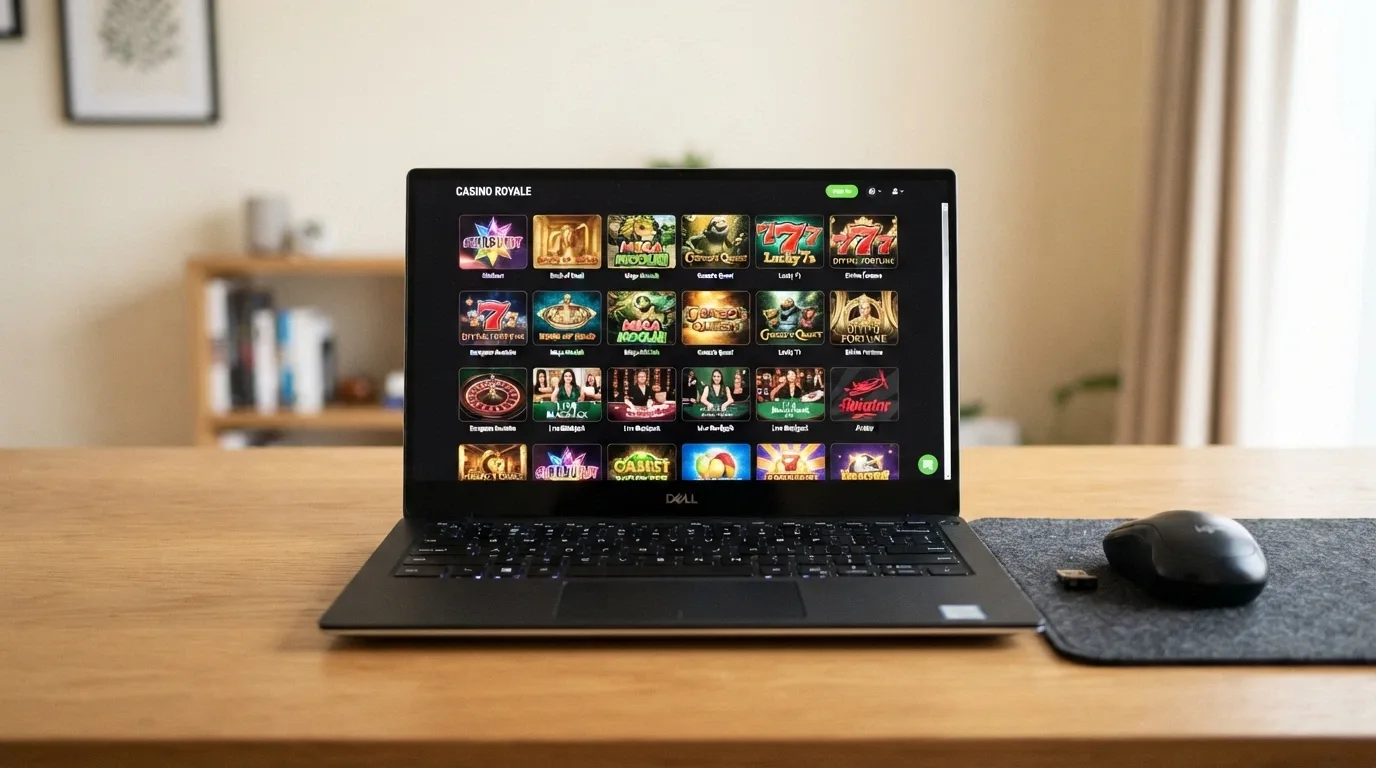
The Slot Catalogue: What You Can Spin With SOL
Slots are the bulk of every catalogue on this page. Research did not return per-title RTP (return-to-player — the percentage a slot pays back over time) or volatility data for any specific title at any operator, which is the gap most comparison sites fill and this one cannot. The provider count is what a player has to work with: 125 or more providers at Winshark offers more breadth than the rest of the featured set combined, while 17 at LuckyAnon limits the catalogue to whatever those studios produce.
Evaluating a slot catalogue without per-title data is a matter of studio reputation rather than title reputation. Pragmatic Play, Hacksaw Gaming, Nolimit City and Evolution are the names that appear most often across the multi-provider operators here; smaller studios appear at LuckyAnon and on the thin end of the catalogue elsewhere. The trade-off is consistent: more providers means more titles and more variety, but also more duds mixed in with the good ones.
Dice Games and Crash: The Crypto-Native Titles
Dice games are the original crypto casino title — simple, fast, and well-suited to on-chain verification. Crash games, where a multiplier climbs until it “crashes” and the player must cash out before it does, sit in the same crypto-native space. Both are staples at most operators on this page, and both are the categories most likely to carry provably fair mechanics.
The fully on-chain alternatives — Zeebit and Dicey.com — make the cryptographic verification visible to the player rather than burying it behind an “RNG certified” footer. The mainstream Solana casinos on this page have not followed that path yet. A player who cares about provably fair should look at the off-page references. A player who cares about catalogue breadth will find dice and crash at most of the operators above.
The Provider Mix: How Many Studios Actually Supply These Casinos
Provider counts at the featured set range from 17 at LuckyAnon to 125 or more at Winshark. The 17-end sits at the boundary of what can be called a multi-provider casino; the 125-end sits well beyond it. The difference shows up in the catalogue: more providers means more titles, more mechanics, and a broader spread of volatility profiles. Fewer providers means fewer titles but often a tighter curation — every studio is one the operator chose to integrate.
Slota, an off-page benchmark, runs 120 providers under a Curaçao GCB licence — a useful comparison point against Winshark’s 125 or more. The numbers suggest a soft ceiling around the 120–125 mark for the multi-provider tier; below that, the catalogue starts narrowing sharply. LuckyAnon’s 17 is the floor of what a player should expect from any operator calling itself a casino rather than a single-studio skin.
Australian Law and Solana Casinos: Where the Line Is Drawn in 2026
The legal position has three layers. The IGA prohibition, the crypto payment ban, and the 2026 reform that adds a third pressure point from 1 January 2027. Each is a separate piece of legislation with a separate mechanism. Together they describe the full picture for an Australian player considering a Solana casino in 2026.
The IGA and the Crypto Ban: Why Every Solana Casino Is Offshore
The Interactive Gambling Act 2001 makes it an offence to provide an online casino, online pokies or in-play sports betting to a person in Australia. There is no licence for online casino anywhere in the country — not federally, not in any state or territory. The Interactive Gambling Amendment (Credit and Other Measures) Act 2023 added a second layer from 11 June 2024, banning credit cards, credit-related products and digital currency as payment for any form of licensed wagering. Penalties for non-compliance reach $247,500. Offering crypto gambling to Australian residents is a criminal offence under the act.
A site that asks for SOL is, by definition, operating outside this framework. That does not make it illegal for an Australian to play — the IGA targets the provider, and the player is not prosecuted. It does mean the site has no Australian regulator watching its withdrawal queue, its bonus terms, or its KYC policy. The crypto payment ban is the structural tell: any site accepting SOL from an Australian IP is not licensed in Australia, because no licensed Australian wagering operator can accept crypto.
The 2026 Reform: What Changes on 1 January 2027
The Interactive Gambling Amendment (Gambling Reform) Bill 2026 passed Parliament on 19 August 2026. Its measures commence on 1 January 2027. The reform adds three new pressure points for offshore operators and their Australian players.
Banks and payment providers gain express authority to block transactions to illegal gambling operators — that closes the AUD-to-fiat-to-crypto workaround that some offshore sites use. Direct marketing of wagering inducements is prohibited for 14 days after a customer signs up, for three months after a BetStop deregistration, and indefinitely for customers identified as at risk of gambling-related harm. Broadcasting of sporting odds is banned outright; athletes, celebrities and influencers are barred from promoting wagering products; the advertising cap drops to three wagering ads per hour between 6:00 am and 8:30 pm, with a live-sport blackout from 15 minutes before until 5 minutes after each event.
For an Australian playing at an offshore Solana casino, the practical impact is the bank-blocking provision. Once banks can refuse transactions to illegal operators, a card-funded path to an offshore site becomes harder to walk. The crypto path remains open — and is, if anything, the path the bank-blocking provision is designed to close off as enforcement matures.
ACMA Enforcement: ISP Blocks, Fines and What Happens to Your Balance
The ACMA — the Australian Communications and Media Authority — investigates complaints, issues formal warnings, and directs Australian ISPs to block illegal gambling sites. Since its first blocking request in November 2019, 1,564 illegal gambling and affiliate websites have been blocked as at March 2026. More than 225 illegal services have withdrawn from the Australian market since 2017, either through ACMA pressure or by their own choice.
The ACMA cannot recover player funds from offshore operators. There is no Australian complaints body that can compel a Curaçao- or Anjouan-licensed casino to release a contested withdrawal. A blocked site can take an account offline overnight, and any balance left on it sits at the operator’s discretion. The ACMA’s enforcement is real; the player’s recourse under Australian law is not.
Staying Safe: Responsible Gambling When the Register Doesn’t Reach Offshore
BetStop is the Australian National Self-Exclusion Register. It went live in August 2023 and, as at 31 July 2026, had 67,480 registrations with 41,290 active exclusions. 78% of registrants were under 40, and 38% chose lifetime exclusion. A single BetStop registration excludes a person from every Australian-licensed online and phone wagering service. The register is the country’s main structural defence against problem gambling for online play.
It does not reach offshore Solana casinos.
Why BetStop Cannot Protect You at an Offshore Solana Casino
BetStop binds Australian-licensed wagering services only. An offshore casino is not connected to the register and will keep taking deposits from a self-excluded person if that person signs up. The 2026 reform, from 1 January 2027, adds an indefinite marketing ban for customers identified as at risk of gambling-related harm — but the ban targets licensed operators’ marketing, not the offshore casino’s intake.
For a person who has registered with BetStop, the practical gap is this: every AU-licensed bookmaker and TAB must refuse their bets. An offshore Solana casino will not. Self-exclusion under BetStop is a statement of intent. An offshore site treats it as irrelevant. The register is built for the licensed market, and the licensed market excludes every operator on this page.
The Harm Numbers: 430,000 Australians and a Register That Does Not Reach
About 2.1% of Australian adults — roughly 430,000 people — experience problem gambling. The Australian Institute of Health and Welfare put high-risk gambling at 1.8% in 2022. Both numbers are produced from population surveys, and both describe a population that includes people who gamble on licensed wagering, on offshore sites, and on poker machines in clubs and pubs. The offshore share is not separately measured, which is part of the gap: BetStop tracks the licensed market; the harm from offshore play sits in a darker corner.
The structural problem is the alignment of incentives. Licensed operators face state and territory conditions on responsible-gambling tools — deposit limits, activity statements, take-a-break features — because their licence requires it. Offshore operators have no Australian regulator enforcing RG. The toolset a player needs is the same either way. The operator’s incentive to provide it is not.
Practical Tools: Deposit Limits, Session Timers and the National Gambling Helpline
The tools below work regardless of where the casino is licensed. They are not a substitute for self-exclusion. They are a layer that any player can apply themselves.
- The National Gambling Helpline (1800 858 858) is free, confidential, and staffed 24 hours a day, 7 days a week, with online chat and counselling through Gambling Help Online at gamblinghelponline.org.au.
- Self-imposed deposit limits, set low enough that a single bad day cannot exhaust a bankroll, are the most effective single tool a player has. Most operators on this page offer them in account settings; if the operator does not, the limit has to come from a separate bank or wallet.
- Session timers — either the casino’s built-in reminder or an external phone alarm — stop the slow erosion of “just one more spin” sessions. The longer a session runs, the worse the decisions get.
- A take-a-break period of 24 hours to 7 days is a useful middle step between continuing play and full self-exclusion. Most operators offer it in the responsible-gambling section of account settings.
For an Australian considering an offshore Solana casino, the strongest defence is the same as it is on the licensed market: a hard deposit ceiling, a session timer, and the helpline number saved in the phone.
How We Picked and Ranked These Solana Casinos
The ranking uses five criteria, in this order: SOL withdrawal queue time, licence jurisdiction and operator history, welcome bonus value and wagering fairness, game-provider depth, and KYC burden. The numbers come from VIP-Grinders’ July 2026 testing, which measured SOL withdrawal queues and minimums across this set; CasinoVAGuide and CryptoSlate, which supplied operator profiles and game counts; and each operator’s own terms pages, which supplied bonus structures, wagering mechanics and licence jurisdictions.
The ACMA register was checked to confirm that no Australian online casino licence exists for any operator on this page. None does. None can. The licence column states the offshore regulator each operator does hold, and it is not a recommendation.
What the ranking does not measure: per-slot RTP or volatility, live dealer quality, customer support response time, or the experience of a contested withdrawal. Those data points are absent from research and absent from this page. A player who needs them must test them personally, starting with a small deposit.
What Australian Players Should Actually Do About Offshore Solana Casinos in 2026
The honest position sits in three pieces. The Interactive Gambling Act 2001 makes every online casino operating in or towards Australia unlawful by the act itself; the credit and crypto payment ban of 11 June 2024 reinforced that position; the 2026 reform, commencing 1 January 2027, adds bank-blocking authority on top. None of these provisions target the player — the IGA’s enforcement is against the provider. None of them offer the player any protection either. No Australian consumer body can compel a Curaçao- or Anjouan-licensed casino to release a contested withdrawal. BetStop cannot stop a self-excluded person from depositing at an offshore site. The ACMA can block a site at the ISP level and leave a player’s balance on it.
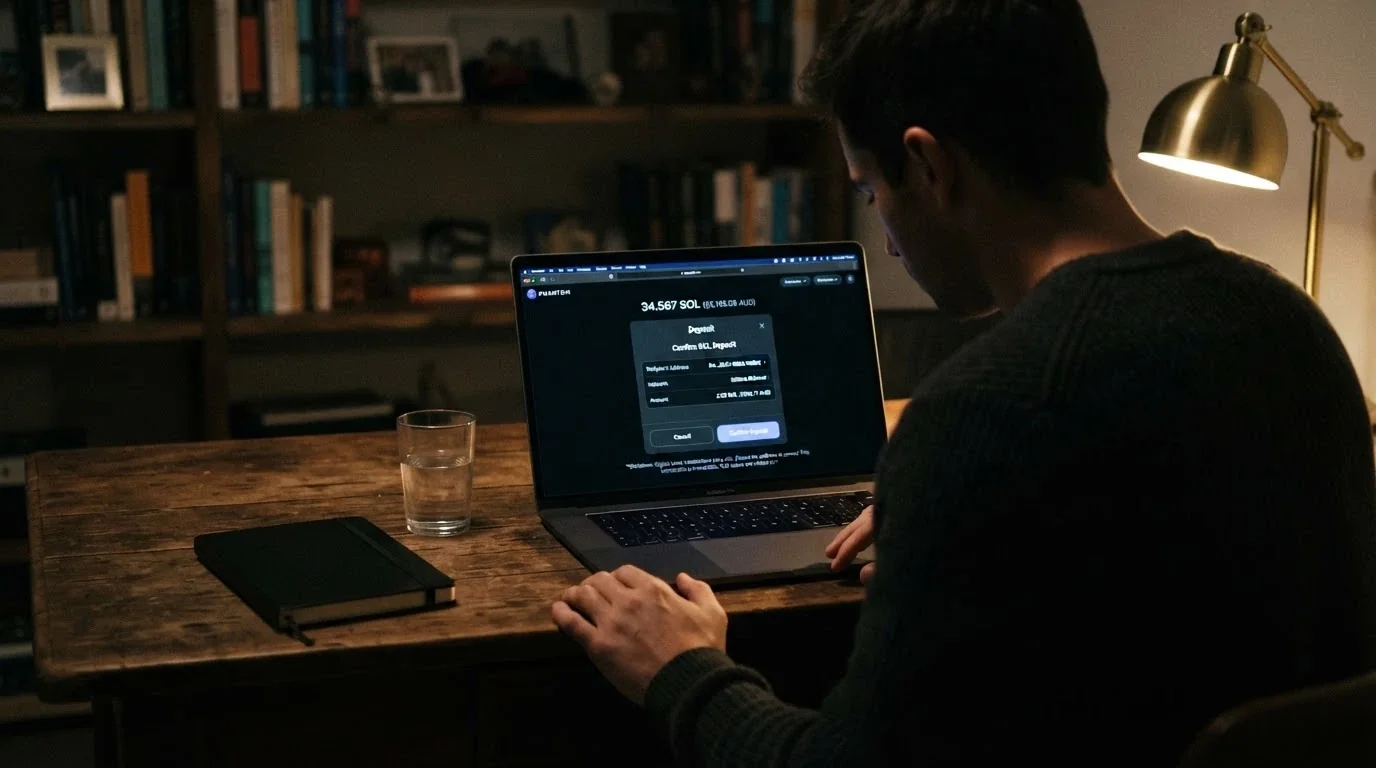
Against that, the offshore offer is real. SOL speed is the genuine technical advantage, and the bonuses on this page — from Jack.com’s wager-free spins to LuckyAnon’s no-KYC access — are larger than anything available on the licensed Australian wagering market. That market does not offer online casino at all. The choice is not between a good licensed casino and a bad offshore one. It is between no online casino and an offshore one with no Australian protection. A player who decides to proceed is choosing the second option with full knowledge of what it costs.
For a player who chooses to proceed, the practical steps are the same as for any offshore gambling: set a hard deposit ceiling before the first deposit; pick an operator whose bonus terms and KYC policy are understood, not skimmed; keep session times short; save the National Gambling Helpline number (1800 858 858) in the phone. The licensed Australian wagering framework, with its pre-event sports and racing only, remains the only market in which BetStop, the ACMA complaints process, and Australian consumer law apply. Everything else sits outside that net.
Frequently Asked Questions
Do Solana casinos require KYC verification before you can withdraw?
LuckyAnon is the only true no-KYC operator in the featured set. Solcasino.io reserves the right to request ID for withdrawals over €2,000, suspected fraud, or enhanced due diligence triggers. BC.Game and Stake keep similar rights under their standard terms. The “no KYC” promise is real at sign-up; it rarely holds at withdrawal.
How fast are Solana (SOL) deposits and withdrawals compared to Bitcoin?
Solana settles in under a second. Bitcoin takes roughly 24 minutes for a single deposit cycle, making Solana around 32 times faster for live in-play use. The casino queue is the actual wait — anywhere from under one minute at Shuffle to two days at Stake.
What welcome bonuses do Solana casinos offer to Australian players?
Welcome packages on this page range from 100 wager-free spins at Jack.com to CoinCasino’s 200% up to $30,000 plus 50 free spins. LuckyAnon tops the match percentage at 420% plus $4,200. Bonus structure varies sharply — some count wagering on the bonus only, others on deposit and bonus together.
Are Solana casino winnings taxable in Australia?
Gambling winnings are not assessable income under section 6-5 of the ITAA 1997, and losses are not deductible under section 8-1 — unless the person is running a betting business. Converting AUD to SOL and back may itself trigger a capital gains event, separate from the gambling result.
What happens if an offshore Solana casino blocks Australian users — do I lose my balance?
Possibly. The ACMA has had 1,564 illegal gambling sites blocked by Australian ISPs since November 2019. A blocked site can take an account offline overnight. ACMA cannot recover player funds from offshore operators, and no Australian complaints body covers them. The balance sits at the operator’s discretion.
Live Dealer Tables: Can You Play With SOL?
Live dealer tables — streamed from a studio with a real dealer — require a deposit to fund the buy-in. Solana deposits work for live play at every operator on this page: SOL converts to the operator’s internal currency at deposit and back at withdrawal, so the rail does not change the game. The SOL speed advantage does not apply during a hand; once a player is at the table, the speed of the underlying blockchain is irrelevant. What it does apply to is funding a session between hands, where a fiat player waits seconds for a card processor and a SOL player waits nothing.
Live table counts at the larger operators on this page run into the hundreds. Research did not return specific live table figures for any featured operator, so the count stays qualitative rather than comparative. Casinova, an off-page benchmark, runs 564 live tables; the featured set sits in the same order of magnitude but is not specifically quantified here.