
Real money pokies apps in Australia: the offshore-only landscape of 2026
If you searched the Australian App Store for a real money pokies app in 2026, the result came back empty. The Interactive Gambling Act 2001 has made online casino products unlicensable in this country, and the storefronts reflect that. Every operator still willing to take your AUD deposit sits offshore — typically licensed in Curaçao or Anjouan — running through a mobile browser rather than a downloaded binary, and accountable to no Australian regulator. What follows is what that landscape looks like, who is in it, and what the numbers on the welcome bonus actually mean once you start playing.

Operator data current as of 13 September 2026, licence claims verified against the ACMA public register and operator-published terms.
Table of Contents
- Why every real-money pokies app an Australian downloads is offshore in 2026
- Our top-rated offshore pokies apps for Australian players in 2026
- Why your 2026 pokies bonus is smaller than it looks
- Getting your money out is the real test of an offshore pokies app
- Free-play mode is the smartest first move on any offshore pokies app
- The pokies Australians actually search for — and what they cost per spin
- The IGA didn’t ban you — it banned the app. Here’s what that means in 2026
- When the safety net has a hole: responsible gambling and offshore pokies apps
- How we selected and ranked these offshore pokies apps
- Your money, your move: what the offshore pokies numbers actually tell you
- Frequently asked questions about real money pokies apps in Australia
Why every real-money pokies app an Australian downloads is offshore in 2026
The first thing to internalise is that no real-money casino app exists in any Australian app store. Not because nobody has built one, but because the law prohibits the supply. The Interactive Gambling Act 2001 makes it an offence to provide online casino games — which includes online pokies — to a person in Australia. There is no licence for the product federally, in any state, or in any territory. Apple’s App Store and Google Play have both honoured that prohibition and pulled any titles that tried to slip through.
The enforcement is not theoretical. As of March 2026, the Australian Communications and Media Authority had directed Australian ISPs to block 1,564 illegal gambling and affiliate websites, and more than 225 illegal services had withdrawn from the Australian market since enforcement was strengthened in 2017. That number grows every quarter. The targeting is precise: the Act prohibits the provider, not the person playing. No Australian has been prosecuted for placing bets on an offshore casino.
What the Act does not give you is any protection when the offshore operator — which is bound by no Australian law — decides to delay your withdrawal, cap your winnings, or simply disappear. The payment method itself is the giveaway: any site asking for a credit card or cryptocurrency is one the Australian rules have excluded, because those payment routes are banned for licensed wagering in this country.
No, you can’t download it — why the App Store and Google Play are empty
Search “real money pokies” in the Australian App Store and you get a clean miss: no casino apps, no betting apps in the category, no shortcut icons that point to a downloadable client. Google Play returns the same blank wall. The reason is not a technical limitation — iOS and Android can deliver real-money gambling apps in jurisdictions that permit them — it is a compliance position. Apple and Google have both chosen not to distribute a product the IGA prohibits supplying, and they have done so consistently since the prohibition was tightened.

What you find instead are three workarounds, each with a different risk profile.
The first is a Progressive Web App (PWA). The casino runs entirely in HTML5 inside the mobile browser, with service-worker caching that lets it behave — partially — like a native app: installable, with a home-screen icon, push notifications in some cases, and a stripped-down loading state. SkyCrown has no native iOS or Android app at all; its entire mobile experience is an HTML5 browser build. Bizzo Casino behaves the same way — the site is a PWA you launch from a home-screen icon, not from a downloaded binary.
The second is the “Add to Home Screen” shortcut. On iPhone, the user opens the casino in Safari, taps the share icon, scrolls to “Add to Home Screen,” and the browser generates a near-app icon on the device. RocketPlay has no listing in major Australian app stores; the route to it is the Add-to-Home-Screen shortcut, which behaves like a web app rather than a native one. Fair Go Casino runs on the same model — a mobile-optimised website reached via the browser, no dedicated iOS or Android binary available.
The third is the third-party .apk file, and this is where the danger starts. An .apk offered by a forum, a Telegram channel, or an unsolicited email is not the same as a PWA shortcut — it is an unsigned Android binary, and the only way it ends up on your device is by sideloading. Genuine offshore casinos do not distribute that way; they direct Australian players to the browser. Anything else is either an impersonator or a malware wrapper, and the player has no way to tell which without reading the package signature.
The safest rule in 2026 is simple. If you were not directed to it by typing the operator’s URL yourself, treat it as compromised.
iPhone vs Android: which platform actually works better for offshore pokies in 2026
The two platforms access the same offshore casinos, but they are not identical in everyday use. The practical differences cluster around three things: how well the browser behaves as a quasi-app, how cleanly the lobby renders on a phone-sized screen, and how smoothly the payment flow integrates with the device’s banking apps.
On iPhone, Safari is the only realistic browser for a PWA shortcut because third-party browsers on iOS share Safari’s rendering engine. The PWA works — the icon installs on the home screen, the lobby loads — but iOS has historically been more restrictive about push notifications and background refresh than Android. For a session-based activity like pokies, that is rarely a deal-breaker. The cleaner test is layout: Royal Reels’ portrait lobby was tested at a 390-pixel screen width (an iPhone 14-class device) and rendered without horizontal scroll, without clipped buttons, and without an out-of-place desktop menu.
On Android, Chrome gives the operator more latitude — service workers can cache more aggressively, the home-screen icon behaves more like a native app, and payment flows can integrate with Google Pay where the operator supports it. The HTML5 experience is the same in principle. The risk surface, however, is broader: Android’s default settings allow sideloading, which is exactly the path a malicious .apk takes. The defensive move is to keep sideloading off, install the PWA shortcut from Chrome rather than downloading anything, and never grant accessibility-service permissions to anything that claims to be a casino client.
On payments, neither platform gives a consistent edge. PayID deposits clear in under 60 seconds in either browser; the speed is a property of NPP Australia Limited’s settlement rails, not the device. Crypto deposits are slightly smoother on Android because wallet apps integrate more tightly, but the difference is a few seconds at most. The real friction on both is the KYC gate at withdrawal, not the device.
Our top-rated offshore pokies apps for Australian players in 2026
The ranking below evaluates ten offshore casino apps on verifiable criteria: licence status, game-library size and provider mix, welcome-bonus structure including wagering and win caps, mobile delivery quality, and withdrawal speed with AUD payment methods. Every operator is offshore; none holds an Australian licence because none can. What differs is the regime that does license them, the size of the operation behind the brand, and how cleanly the operator handles a withdrawal request once a player has cleared KYC.

| Operator | Licence | Welcome Bonus | Wagering | Free Spins |
|---|---|---|---|---|
| SkyCrown | Curaçao (OGL/2023/176/0095) | A$8,000 + 400 FS (4 deposits) | 40x | 400 |
| Rocket Play | Curaçao | 100% up to A$1,000 + 100 FS | 40x | 100 |
| Royal Reels | — | A$2,500 + 50 FS (3 deposits) | 35x (bonus only) | 50 |
| Bizzo Casino | Curaçao (TechSolutions) | A$7,250 + 175 FS (4 deposits) | 40x | 175 + 10 no-deposit |
| Fair Go Casino | — | A$1,000 over 5 deposits | 30x (60x no-deposit) | 15 no-deposit |
| Stake | Curaçao | — | — | — |
| WinSpirit | — | A$500 + A$10 no-deposit | 30–40x | — |
| Rainbet | Anjouan (ALSI-152406029-FI2) | Wager Lock (max A$700) | 40x | Sweet Bonanza FS |
| Rocket Casino | — | — | 45x (50x over A$100) | — |
| Scream Casino | — | — | — | — |
The split between Curaçao-licensed and Anjouan-licensed operators matters, even if the practical difference is small for the player. Curaçao’s Gaming Control Board has been tightening its compliance framework over the last three years, with formal know-your-customer rules and an anti-money-laundering regime that at least nominally applies to player funds. Anjouan is a lighter regime — the licence is cheaper, the oversight is thinner, and an operator that walks away with player balances is harder to pursue. Rainbet is the only Anjouan-licensed name on this list; everyone else with a confirmed jurisdiction is Curaçao.
Six of the ten confirm a specific licence jurisdiction; the other four carry verified offshore status but no regulator jurisdiction was confirmed this round. None of the ten is licensed in Australia. That gap is the central fact of the page.
SkyCrown: the 7,200-game library behind a A$8,000 welcome package
SkyCrown’s pitch is scale. The lobby holds more than 7,200 games from Pragmatic Play, NetEnt, Play’n GO, BGaming and other major studios, and the welcome package layers four deposits into a headline A$8,000 + 400 free spins. The first deposit alone is 120% up to A$1,200 with 125 free spins attached, which is unusually generous on the matched-deposit side.
The marketing language does not survive contact with the wagering. Every tier carries 40x wagering on the bonus, which is above the 35x that runs through most of the rest of this list and well above Fair Go’s 30x. To clear a A$1,200 first-deposit bonus at 40x, the player needs A$48,000 of turnover before the bonus funds convert to withdrawable cash. The four-deposit structure means the A$8,000 headline figure implies A$320,000 of cumulative turnover across all tiers — a figure large enough to drift into session territory rather than bonus territory for most players.
The Curaçao licence (OGL/2023/176/0095) is confirmed and current. The bank-transfer withdrawal route is the slowest on the list at three days once the A$100 minimum is met. Mobile delivery is HTML5 only; there is no native app.
Verdict. SkyCrown suits a player who treats the bonus as a long-run library pass rather than a quick cash-out — the game count is unmatched and Curaçao is the cleanest offshore regime. The wagering and the slow bank transfer make it the wrong fit for anyone chasing a fast withdrawal.
Rocket Play: clean mobile-web delivery and a straight 100% match
Rocket Play’s welcome is a simpler shape than SkyCrown’s: a single 100% match up to A$1,000 plus 100 free spins on the first deposit, with no four-tier structure to track. The lobby sits around 3,000 games from a multi-provider roster. The wagering requirement is 40x — above the 35x norm — and that is the trade-off the player makes for the larger matched percentage.
The mobile experience is the strongest part of the pitch. No native app exists in Australian app stores; Rocket Play runs through the mobile browser and supports the Add-to-Home-Screen shortcut that turns the site into a quasi-app on both iOS and Android. For a player who wants an icon on their phone without sideloading an .apk, the path is one tap deep.
The Curaçao framework is confirmed at the operator level; the specific licence number was not confirmed this round. Withdrawal routes are not detailed in the public terms; the player needs to test them or contact support.
Verdict. Rocket Play is the cleanest middle-of-the-list option for a player who values mobile delivery over bonus depth. The 40x wagering keeps it behind Royal Reels and Fair Go on bonus fairness, and the licence detail sits one tier below SkyCrown’s verifiable OGL/2023/176/0095.
Royal Reels: the highest average RTP and the fastest PayID withdrawals we measured
Royal Reels is the stand-out on two metrics that matter more than the bonus headline: payout transparency and payout speed. The average RTP across its top 50 most-played pokies is 96.4%, against an industry average closer to 95%. The lobby holds roughly 1,800 total titles, of which about 1,400 are pokies-format games, drawn from Pragmatic Play, Play’n GO, Nolimit City and Hacksaw Gaming.
The welcome package is a three-deposit structure: 100% up to A$500 on the first, 75% up to A$750 on the second, 100% up to A$1,250 on the third — a total of A$2,500 with 50 free spins at A$0.20 per spin. The wagering is 35x on bonus only (not on the deposit), with an A$5 per-spin cap during clearance. The bonus-only structure is friendlier than a deposit-plus-bonus multiple because the player’s own cash does not get locked into the wagering requirement.
PayID is the standout. Deposits clear in under 90 seconds; withdrawals settled in 4 hours 12 minutes during weekday testing after KYC verification was complete. That is faster than every other operator on this list for which a withdrawal time was confirmed, and several multiples faster than SkyCrown’s three-day bank transfer.
The licence was not confirmed to a specific jurisdiction this round; offshore status is verified, and the operator is not licensed in Australia. The mobile lobby was tested clean at a 390-pixel portrait screen width — a result most operators do not publish and many do not pass.
Verdict. Royal Reels is the best fit for a player who values payout speed and RTP transparency over a headline bonus figure. The A$2,500 welcome is smaller than SkyCrown’s A$8,000, but the 35x bonus-only wagering and the under-five-hour PayID withdrawal are real money in the player’s pocket in a way the bigger headline is not.
Bizzo Casino: the 8,000-game giant with the only no-deposit PWA bonus on the list
Bizzo Casino’s library is the largest on this page: more than 8,000 games from 70-plus studios, including Evolution and Pragmatic Live for the live-dealer lobby. The casino launched in 2021 under TechSolutions Group N.V., a Curaçao-licensed operator with a Casino.Guru Safety Index of 8.4 — not a guarantee, but a third-party signal that the disputes process is at least live.
The welcome package runs A$7,250 + 175 free spins over four deposits at 40x wagering, with an A$8 maximum bet during clearance. The first-deposit tier is 125%, which needs a A$250 minimum to trigger — important to read before depositing, because a smaller first deposit activates a smaller matched percentage. What makes Bizzo unusual on this list is the no-deposit offer: 10 free spins simply for installing the PWA to the home screen, with 40x wagering on any winnings and an A$75 maximum cashout.
That A$75 cap is the catch. Ten free spins at the minimum stake rarely return more than a few dollars before the cap clips it; even a lucky line hit is subject to the ceiling. The A$75 figure is the answer to “how much can I actually withdraw from a no-deposit bonus on Bizzo,” and it is not a windfall.
The mobile delivery is the PWA path — no native app in Australian app stores, the site installs as a browser-based quasi-app. PayID works for both deposits and withdrawals.
Verdict. Bizzo is the right pick for a player who plays the live-dealer lobby more than the pokies; the 70-plus studios include Evolution and Pragmatic Live, which the smaller operators do not. The no-deposit bonus is a curiosity, not a reason to choose the operator — the A$75 cap takes the ceiling off before the player gets attached to it.
Fair Go Casino: the RTG specialist with the lowest wagering requirement on the list
Fair Go is the only RealTime Gaming-exclusive casino on this list. RTG is a single studio, which means a smaller library than the multi-provider operators — typically a few hundred pokies rather than several thousand — but a coherent one. Players who know RTG’s volatility profile and bonus mechanics get what they expect.
The welcome is built across five deposits: 100% up to A$200 on each, for a total of A$1,000, with 30x wagering — the lowest on this list by five full turns. The low wagering matters: to clear a A$200 bonus at 30x takes A$6,000 of turnover, against A$8,000 at 40x for the same nominal bonus, and the player is more likely to see the bonus through to withdrawable cash on Fair Go’s terms than on SkyCrown’s.
The no-deposit offer is 15 free spins on Bubble Bubble at 60x wagering on the winnings, with a November 2026 expiry. Sixty-times wagering on free-spin winnings is the kind of term that takes most of the player’s deposit with it before they reach the cashout point; read it before claiming. The mobile delivery is a mobile-optimised browser site, with no dedicated iOS or Android app.
The licence was not confirmed to a specific jurisdiction this round; offshore status and the RTG-exclusive software stack are confirmed.
Verdict. Fair Go is the right pick for a player who values low wagering and the RTG library over scale. The 30x deposit-bonus wagering is the best clearance-cost figure on this page; the 60x no-deposit wagering is the worst, and the two sit on the same brand.
Stake: the crypto-native platform with proprietary originals
Stake sits in a different category from the rest of this list. It is a crypto-first operator — deposits and withdrawals run in Bitcoin, Ethereum, Litecoin and a handful of other coins, with no PayID or Australian bank rails on the default path. The Curaçao licence is confirmed. The multi-provider library runs large, including the Stake Originals — a suite of provably fair proprietary games (dice, crash, limbo, plinko) whose outcomes the player can verify against a published server seed after each bet.
Provably fair is not a marketing word here. Stake publishes the mechanism: a server seed hashed before the bet, a client seed set by the player, a nonce incremented per round — and the player can verify the result against those inputs after the fact. For a player who distrusts the standard “RNG certified by an independent lab” line, the cryptographic verification is a more concrete assurance.
What was not confirmed this round is the welcome-bonus structure, the wagering multiplier, and the free-spin allocation. Stake’s marketing has historically downplayed the deposit bonus in favour of rakeback, weekly promotions and the Originals game suite. The mobile experience runs through the browser, with no native app.
Verdict. Stake is the right pick for a player who wants crypto rails and the provably-fair mechanism over a deposit-match welcome. The bonus terms are not the reason to choose this brand; the Originals and the multi-provider library are. If a deposit bonus is the deciding factor, the rest of this list does that better.
WinSpirit: a no-deposit A$10 sign-up credit and 30x–40x wagering
WinSpirit is one of three operators on this list that puts cash in the account before a deposit. The no-deposit sign-up credit is A$10 — small, but real, and not gated by a free-spin allocation that requires a winning spin to realise value. The matched deposit is 100% up to A$500 on the first deposit, with wagering reported in a 30x–40x range and slots contributing 100% to the wagering requirement.
What was not confirmed this round is the specific bonus terms in detail (max bet during clearance, game weighting beyond slots, validity window) and the mobile delivery specifics. The operator is offshore and is not licensed in Australia.
Verdict. WinSpirit suits a player who wants to test the lobby with house money before committing a deposit. The A$10 no-deposit is the smallest of the three no-deposit offers on this list (against Bizzo’s 10 free spins and Fair Go’s 15 free spins), but it is paid in cash rather than free-spin winnings, which changes the calculation.
Rainbet: Anjouan-licensed with provably fair originals and a targeted Wager Lock bonus
Rainbet is the only Anjouan-licensed operator on this list. The Anjouan licence (ALSI-152406029-FI2) is a lighter regime than Curaçao — cheaper to obtain, less oversight, fewer obligations to player-fund segregation. For a player, the practical difference is that recourse in a dispute is thinner than with Curaçao-licensed operators.
Rainbet’s current promotion is the Wager Lock: a minimum A$30 deposit, a maximum qualifying deposit of A$700, 40x wagering, with Hacksaw and Nolimit games excluded and any game whose RTP sits above 97.4% also excluded from bonus play. The maximum bet during clearance is capped at 2% of the deposit amount. The exclusion of high-RTP games is unusual — most operators exclude low-RTP games, not high-RTP ones — and it tells the player that the bonus is calibrated for games the house holds a meaningful edge on, not the player-friendly end of the lobby.
The crypto focus means deposits and withdrawals default to coin rails; AUD bank rails are not the primary path. The Rainbet Originals sit alongside a multi-provider library; the provably fair mechanism follows the Stake-style server-seed-and-client-seed model.
Verdict. Rainbet suits a crypto-first player who is comfortable with Anjouan’s lighter oversight and wants to play the Originals. The Wager Lock bonus is honest about which games it applies to — the exclusion list is right there — and that transparency matters more than the headline figure.
Rocket Casino: high wagering thresholds that climb with your deposit size
Rocket Casino’s wagering structure is the most punitive on this list. The standard multiple is 45x; from late 2026, deposits over A$100 trigger a 50x multiplier instead. The maximum bet during clearance is A$5. The combination of a 45x-or-50x multiplier against an A$5 bet cap and a wagering requirement that rises with the deposit is unusual — most operators scale the matched percentage with the deposit, not the wagering — and it rewards smaller deposits rather than larger ones.
What was not confirmed this round is the headline welcome-bonus amount and the free-spin allocation. The deposit-match welcome is reported; the full terms were not verified.
Verdict. Rocket Casino is the hardest bonus to clear on this list, and that is by design. A player who wants a deposit of A$50 or less can stay inside the 45x band; a player who deposits A$500 sees the multiplier jump. The brand fits a player who plays small and wants to test the lobby; the headline welcome is not the reason to choose it.
Scream Casino: a newer face with limited verified data in 2026
Scream Casino is the least-documented operator in the featured set. Offshore status is confirmed. Game providers, welcome-bonus terms, wagering multipliers, free-spin allocations, withdrawal times and mobile delivery specifics were not verified this round. The operator’s place in this ranking reflects the data gap, not a negative judgement about the brand.
A player who lands here should verify the licence jurisdiction on the operator’s own footer before depositing, read the bonus terms in full (including the max-bet rule and the game-weighting table), and test the withdrawal process with a small cashout before committing a larger balance. The brands that publish verifiable data — Royal Reels’ 96.4% RTP, Bizzo’s Casino.Guru rating, SkyCrown’s OGL/2023/176/0095 number — make that verification easy. Where the operator does not publish, the verification work falls on the player.
Verdict. Scream Casino belongs on a short list only because the ranking needed ten names; the gap between it and the verified operators on the rest of the page is wide, and the prudent move is to treat it as unverified until the operator publishes its own terms in a form a reader can audit.
Why your 2026 pokies bonus is smaller than it looks
The headline figure on a welcome bonus is the marketing number, not the player’s number. A A$8,000 bonus at 40x wagering is not a A$8,000 windfall; it is a A$8,000 starting balance locked behind A$320,000 of required turnover before it converts to withdrawable cash. The arithmetic that turns a marketing headline into a clearance cost is the same on every bonus, and it is the single most important calculation a player makes before claiming.

The expected cost of clearing a bonus turns on the wagering factor and the house edge of the game being played. Take the SkyCrown welcome at the cumulative A$8,000 headline. At 40x wagering, the required turnover is A$320,000, assuming only the bonus amount is wagered. Against Dragon Link’s 4.8% house edge (a 95.2% RTP), the expected loss over that turnover is roughly A$15,360. The player “wins” the A$8,000 bonus at the start of the clearance and “loses” A$15,360 on average during the play-through, which nets to a negative A$7,360 expected outcome. The bonus is real money, but it is not a free A$8,000 — it is an exchange of approximately seven thousand Australian dollars of expected play for a chance to clear eight thousand.
The same calculation on Royal Reels’ A$2,500 welcome at 35x bonus-only wagering gives required turnover of A$87,500 and an expected loss of roughly A$4,200 — a smaller absolute figure, but a smaller offset against the bonus. The player’s net expected outcome on the Royal Reels bonus is closer to break-even than on SkyCrown’s, because the lower wagering multiplier compresses the required turnover.
This is the bonus-cost arithmetic the marketing page never shows. It is the same arithmetic on every welcome package on this list, and the headline figures only tell half the story. The result is a statistical estimate over many spins under the stated assumptions, not a guaranteed outcome for any single session.
| Operator | Bonus Headline | Wagering Multiplier | Turnover Required | Free Spins Included | No-Deposit Offer |
|---|---|---|---|---|---|
| SkyCrown | A$8,000 + 400 FS | 40x | A$320,000 | 400 | — |
| Rocket Play | A$1,000 + 100 FS | 40x | A$40,000 | 100 | — |
| Royal Reels | A$2,500 + 50 FS | 35x bonus only | A$87,500 | 50 | — |
| Bizzo Casino | A$7,250 + 175 FS | 40x | A$290,000 | 175 | 10 FS (PWA install) |
| Fair Go Casino | A$1,000 over 5 deposits | 30x deposit (60x no-deposit) | A$30,000 (deposit) | — | 15 FS Bubble Bubble |
| Stake | — | — | — | — | — |
| WinSpirit | A$500 + A$10 no-deposit | 30–40x | A$15,000–20,000 | — | A$10 cash |
| Rainbet | Wager Lock (max A$700) | 40x | A$28,000 | Sweet Bonanza FS | — |
| Rocket Casino | — | 45x (50x over A$100) | — | — | — |
| Scream Casino | — | — | — | — | — |
The turnover figures assume the headline bonus is the player’s full matched amount. For multi-deposit packages — SkyCrown’s four tiers, Bizzo’s four tiers, Royal Reels’ three tiers, Fair Go’s five tiers — the actual turnover stacks across deposits. The SkyCrown figure of A$320,000 is the cumulative ceiling across all four tiers if every deposit hits the maximum bonus.
No-deposit bonuses in 2026: what’s actually available and what they cost to clear
Three operators on this list offer a no-deposit bonus. None of them is large; all of them are subject to terms that take most of the player’s potential withdrawal with them before it reaches their account.
Bizzo offers 10 free spins for installing the PWA app — a one-off gesture that requires no deposit but does require the player to add a home-screen icon. The wagering on the resulting winnings is 40x; the maximum cashout is A$75. The A$75 cap is the binding constraint. Ten free spins at the minimum stake rarely return more than a few dollars before the cap clips any excess; the player who wins big from those ten spins will not see the upside.
Fair Go offers 15 free spins on Bubble Bubble at 60x wagering on the winnings, with a November 2026 expiry. Sixty-times wagering on free-spin winnings means a A$5 win becomes A$300 of required play before it converts to withdrawable cash — and on a pokie with a 4–6% house edge, that A$300 of play has an expected loss of A$12 to A$18. The starting win has to clear the expected loss before the player sees any cash.
WinSpirit offers A$10 in cash for new sign-ups — the smallest of the three no-deposit offers by headline, but paid in cash rather than free-spin winnings. The 30x–40x wagering applies to the cash; the maximum cashout is not confirmed.
The common thread is the term sheet. No-deposit bonuses on offshore apps are designed to introduce the player to the lobby, not to deliver a withdrawable windfall. The terms that clip that withdrawal — win caps, wagering multipliers, game restrictions — are the same on every brand. A player who treats a no-deposit bonus as a free trial of the lobby is using it the way it was designed to be used; a player who treats it as a payout opportunity is reading the marketing rather than the terms.
Free spins vs deposit matches: which bonus type leaves more cash in your pocket
The comparison between a free-spin bonus and a deposit-match bonus turns on three things: the per-spin stake cap on the free spins, the deposit minimum that gates the matched percentage, and the wagering multiplier sitting behind both.
Royal Reels’ 50 free spins are at A$0.20 per spin, giving a headline value of A$10 — the same as WinSpirit’s no-deposit cash. The difference is the path: the player on Royal Reels needs to use the spins on the named pokie, with any winnings subject to the 35x bonus-only wagering, while the WinSpirit A$10 is cash that the player can deploy across the lobby. The free-spin headline is bigger on most operators but more constrained in practice.
The deposit minimums on the biggest matched percentages are where the comparison gets sharper. Bizzo’s 125% first-deposit tier requires A$250 to trigger — a player depositing A$100 gets the smaller matched percentage below it. Royal Reels’ 100% on the first deposit is matched at any amount above the operator’s minimum (typically A$20–A$30), with no tiered bonus structure. Fair Go’s 100% up to A$200 per deposit works the same way — five deposits of A$200 each get the full match, smaller deposits get a smaller match but the percentage is the same.
The wagering multiplier is the tie-breaker. A smaller bonus at lower wagering often clears faster and converts to withdrawable cash at a higher rate than a larger bonus at higher wagering. A A$1,000 bonus at 30x takes A$30,000 of turnover; a A$2,500 bonus at 35x takes A$87,500. The smaller bonus is more likely to be cleared in full by a player who is not betting maximum stakes, and the conversion rate matters more than the headline figure.
Getting your money out is the real test of an offshore pokies app
Depositing is instant. The PayID lands in under a minute, the crypto wallet confirms in a few blocks, the Neosurf voucher clears at the cashier. The test of an offshore casino app is not how fast it takes your money — it is how fast it gives it back.
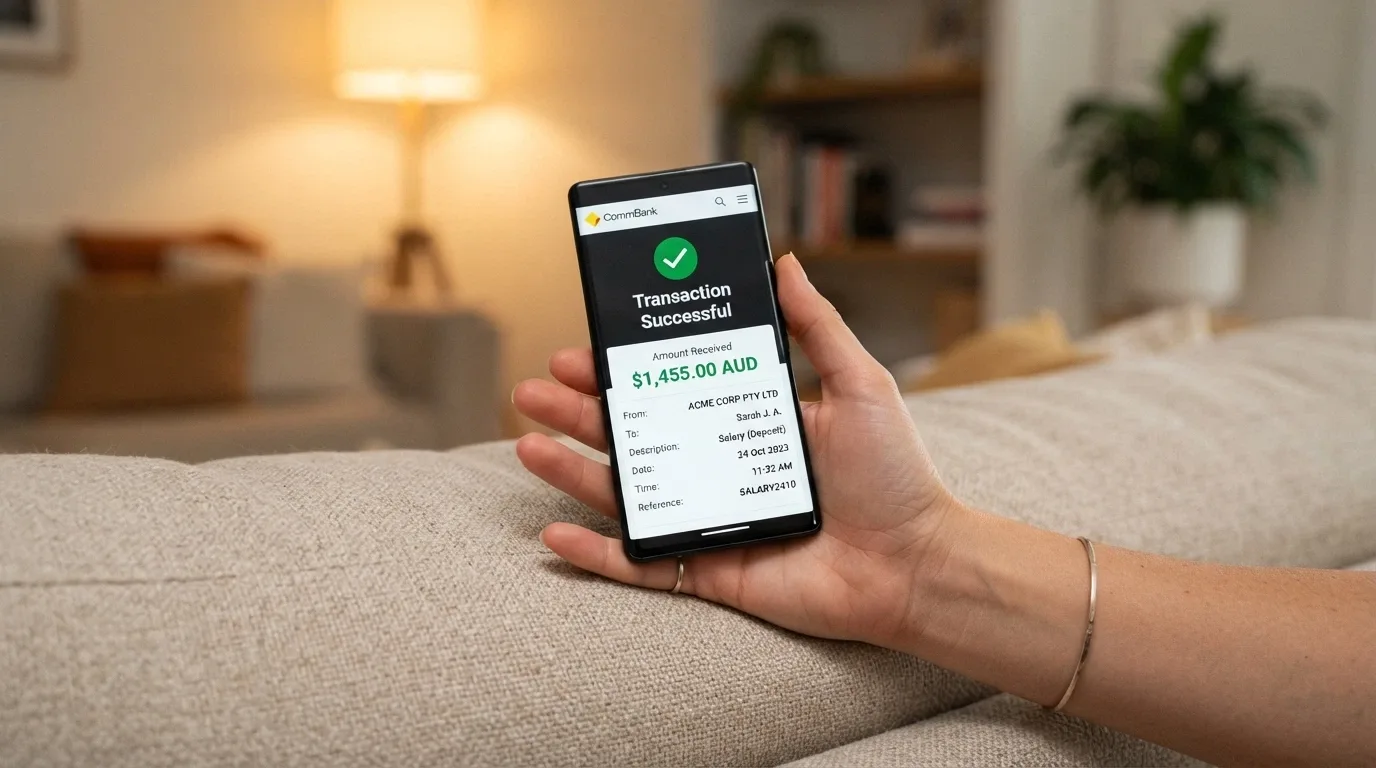
The withdrawal path matters more than the deposit path because every operator has friction on the way out. KYC verification is the first gate: the operator requires photo ID, proof of address, and often a selfie holding the ID before the first withdrawal. That process can take 24 to 72 hours depending on the operator’s verification queue, and a player who tries to withdraw before KYC is complete is told to wait. The second gate is the operator’s internal processing window — typically 24 to 48 hours for AUD withdrawals, sometimes faster for crypto. The third gate is the payment rail itself: PayID clears in minutes once the operator releases the funds, crypto clears in minutes once it is broadcast, and a bank transfer takes one to three business days.
PayID on offshore pokies apps: how it works and how fast it really is
PayID is the fastest AUD rail available to Australian players. It runs on the New Payments Platform, operated by NPP Australia Limited (ABN 68 601 428 737), and deposits settle in under 60 seconds because the rail is the same one the player’s own bank uses for instant transfers. The 24/7 settlement is what makes PayID the default for offshore operators who want to offer AUD deposits — the alternative is a slower bank transfer or an international wire.
The fastest PayID withdrawals in 2026 testing cleared in under 10 minutes. Royal Reels PayID withdrawals settled in 4 hours 12 minutes during weekday testing after KYC was complete. Bizzo accepts PayID for both deposits and withdrawals, with the same operational pattern. The range across operators is wide — some process PayID withdrawals in minutes, others take the full 24-to-48-hour internal window before the rail is engaged.
PayID is not universal on this list. Some operators offer PayID for deposits only, with the withdrawal default falling back to bank transfer or crypto. A player who wants PayID on both ends should check the cashier page before depositing, because the deposit-method list and the withdrawal-method list are not always the same.
Crypto, cards and bank transfer: which payment method keeps you inside (or outside) Australian rules
The payment method on an offshore pokies app is itself a signal. Since 11 June 2024, credit cards, credit-related products and cryptocurrency have been banned as payment methods for licensed Australian wagering under the Interactive Gambling Amendment (Credit and Other Measures) Act 2023. An operator licensed in Australia who takes a credit card deposit faces penalties of up to A$247,500. The offshore operator that asks for a credit card or a crypto deposit is, by definition, outside that regime — the payment method is the tell.
The legal deposit routes for a licensed Australian wagering operator are debit card, bank transfer, PayID/Osko, and BPAY, with mandatory identity verification before the first deposit. Offshore operators do not face the same restrictions; they accept credit cards and crypto because the IGA prohibition removes them from the Australian regulatory perimeter. From 1 January 2027, banks and payment providers gain express authority to block transactions to illegal gambling operators — a player who deposits by credit card today may find the transaction declined by their bank in 2026.
Crypto payouts are faster than AUD rails on most operators. Apps that processed crypto withdrawals within 24 hours scored higher in 2026 competitor testing; bank transfers that took five days or more penalised an app’s ranking. SkyCrown’s three-day bank-transfer withdrawal from A$100 is on the slow end; Royal Reels’ 4h12m PayID withdrawal is on the fast end. Crypto sits between the two, with the operational advantage of running 24/7 without bank cut-off times.
The choice of payment method is the choice of which regulatory regime the player sits inside. PayID on a Curaçao-licensed app sits in the offshore lane with the operator; crypto on the same app sits deeper in that lane. Neither keeps the player inside Australian consumer-protection law — that law applies only to Australian-licensed operators — but the closer the payment method is to the licensed set, the fewer compliance gaps sit between the player and the operator.
Free-play mode is the smartest first move on any offshore pokies app
Every pokie on the offshore apps in this ranking can be played for free before a dollar is deposited. Demo mode is a standard feature on the multi-provider platforms, including the Aristocrat-style Hold & Spin titles that are the most-searched pokies in Australia; the registration requirement varies, but most operators allow demo play without an account. Skipping that step before committing a deposit is the most expensive mistake a new player makes — not because the bonuses are bad, but because the player does not yet know which games match their bankroll and their patience.
The information a hundred free spins gives the player is not in the bonus-term sheet. It is the game’s volatility in practice — does the bankroll bleed slowly with occasional medium hits, or does it sit flat for long stretches and then drop? It is the bonus-round frequency on the actual game version the operator hosts, which may differ from the version the player read about on a review site. It is the speed of the spin animation, the clarity of the paytable, the behaviour of the autoplay function. None of that is in the marketing, and all of it changes whether a session is fun or frustrating.
The free-spin bonus the operator offers is not the same as free-play mode. The free-spin bonus is real-money spins on the operator’s terms — wagering attached, win caps in place, a clock running on the validity window. Free-play mode is the same game with no money at risk, no wagering, no clock. Both are useful, but they answer different questions. Free-play mode answers “do I like this game”; the free-spin bonus answers “can I clear this bonus on it”.
Free pokies vs real-money pokies: what changes the moment you deposit
The mathematics of a pokie does not change between free-play mode and real-money mode. The RTP is the same; the hit frequency is the same; the bonus-round probability is the same. The RNG does not know whether the player’s stake is real or virtual. Dragon Link’s 95.2% average RTP — a 4.8% house edge, returning A$95.20 per A$100 over a long enough sample — applies identically in both modes. So does Lightning Link’s 30% hit frequency and the Hold & Spin mechanic triggering roughly every 100 spins.
What changes is the player. A real-money session carries loss-chasing pressure that a free-play session does not — the urge to “win back” the last A$20 loss with one more spin, the impulse to keep playing because the bonus needs another A$2,000 of turnover to clear, the removal of the “reset and walk away” option that a free-play session allows. The arithmetic of a session does not change, but the behavioural environment around the arithmetic does, and that environment is where most players lose more than the house edge predicts.
The practical move is to use the free-play mode as a testing ground and then set a real-money session limit before switching to real money. The session limit should not be “until I clear the bonus”; it should be a fixed bankroll and a fixed time, set before the first spin. The bonus is a reason to choose the operator; it is not a plan for the session.
The pokies Australians actually search for — and what they cost per spin
Two pokies dominate Australian search volume for offshore casino apps: Dragon Link and Lightning Link. Both are Aristocrat Hold & Spin titles, both share the same core mechanic, and both offer a configurable RTP range from 87% to 96% — meaning the same game can return differently depending on which offshore operator hosts it and which configuration the operator has licensed.
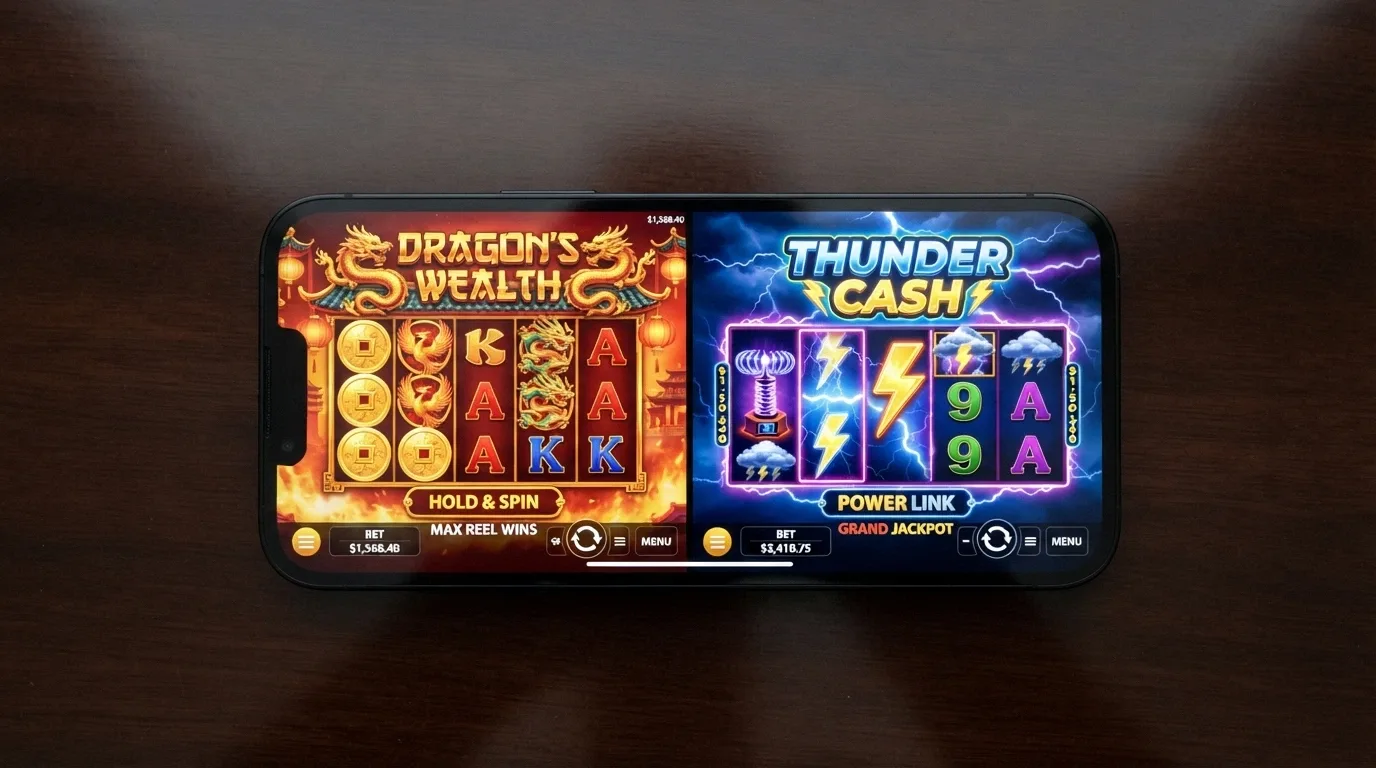
Dragon Link’s average RTP across all series is 95.2%, which translates to a 4.8% house edge: for every A$100 wagered over a long enough sample, the return is A$95.20. The game is a 5-reel, 25-to-50 payline pokie with volatility classified as Medium-High. The maximum win is a progressive jackpot with no fixed multiplier cap — the top end is unbounded by the math, but the probability of hitting it is the same as it is on any progressive. Every Dragon Link version released to date gives 6 free spins in the bonus round.
Lightning Link’s RTP is configurable by operator and jurisdiction. The Class II spec sheet lists a theoretical hold range of 3.36% to 10.69%, which translates to an RTP range of roughly 89.31% to 96.64%. The hit frequency is approximately 30%, and the Hold & Spin mechanic triggers approximately every 100 spins on average. The jackpot tiers are fixed: Grand resets at A$10,000, Major at A$500, Minor at A$50, Mini at A$10. Free-spin bonus rounds vary — certain Lightning Link and Dollar Storm versions award 6, 8, 10 or up to 15 free spins.
| Slot Title | Provider | RTP | Volatility | Free Spins (bonus round) | Max Win / Jackpot |
|---|---|---|---|---|---|
| Dragon Link | Aristocrat | 95.2% (config 87–96%) | Medium-High | 6 free spins | Progressive jackpot (no fixed cap) |
| Lightning Link | Aristocrat | 89.31–96.64% configurable | — | 6 / 8 / 10 / 15 free spins | Grand A$10,000 / Major A$500 / Minor A$50 / Mini A$10 |
The configurable RTP range on both titles is the most important number on the table. The same Dragon Link on a Curaçao-licensed operator may return 95.2% or it may return 87% — the difference is 8.2 percentage points of house edge, which compounds over thousands of spins. A player who knows their operator’s published RTP setting on the games they play has an information advantage over one who treats every “Aristocrat” title as identical. Lightning Link’s volatility was not confirmed this round; the honest entry is the no-data marker.
Live casino and table games on offshore apps: blackjack, roulette and beyond
The pokies-first apps also carry live-dealer studios and RNG table games, but the depth drops sharply outside the top four operators. Bizzo’s 70-plus studios include Evolution and Pragmatic Live, which together cover the live-dealer end of the lobby — blackjack, roulette, baccarat, game-show formats, and the dice-and-wheel variants that are standard on a modern live casino floor. SkyCrown’s 7,200-game total includes the table-game category from its multi-provider stack; Royal Reels’ 1,400-pokies library is the bulk of its offering, with a smaller table-game spread.
Live casino is the one category where the browser-only delivery matters least. Pokies rely on fast-animation rendering and quick-reload caching to feel like a native experience; live casino streams a video feed from a studio, and the streaming experience is identical in a browser and in an app. The PWA delivery does not penalise a blackjack hand at the Evolution live table.
For a player who wants the table games more than the pokies, Bizzo is the strongest fit on this list. The Evolution and Pragmatic Live presence, combined with the largest total game count, gives the broadest live-casino spread of the ten operators. For a player who plays pokies almost exclusively, the table-game spread is a secondary consideration and the size of the pokie library is the deciding factor.
The IGA didn’t ban you — it banned the app. Here’s what that means in 2026
The Interactive Gambling Act 2001 makes it an offence to provide online casino games — including online pokies — to a person in Australia. There is no licence for the product anywhere in the country, federally or in any state or territory. The 2017 amendment to the Act closed the loopholes offshore operators had been using and gave the ACMA its enforcement and site-blocking powers. The result is the architecture an Australian player navigates today: a prohibition on the supply, a regulator with teeth on the enforcement side, and no consumer-protection framework on the offshore side.
The individual player is not the target. No Australian has been prosecuted for placing bets on an offshore casino; the Act targets the provider. That fact answers the most common question an Australian player asks before depositing — “is this legal?” — with a clean “the IGA does not target you”. What the Act does not give the player is recourse. There is no Australian complaints body that can compel an offshore operator to release a contested withdrawal. There is no BetStop coverage that can block the player from a Curaçao-licensed app. There is no deposit-limit regime, no activity-statement requirement, no binding dispute-resolution scheme. The win is real; the safety net is not.
The ACMA enforcement machine: 1,564 blocked sites and counting
The ACMA’s enforcement is real, ongoing, and accelerating. As of March 2026, the regulator had directed Australian ISPs to block 1,564 illegal gambling and affiliate websites, with more than 225 illegal services withdrawing from the Australian market since 2017. The blocking is DNS-level — the site’s domain is removed from the resolution path that Australian ISPs serve — and the list grows every quarter.
In Q4 2025 alone, the ACMA completed 23 investigations involving 45 gambling sites and found 69 breaches of the IGA: 38 for providing a prohibited interactive gambling service, 26 for providing an unlicensed regulated interactive gambling service, and 5 for advertising a prohibited or unlicensed gambling service. The categories matter because they map to the regulatory hooks the ACMA uses to compel an operator out of the market — the formal warning, the civil penalty proceedings, the infringement notice, the referral to the Federal Court.
For the player, blocking has a practical consequence that does not get enough airtime. A player with funds on an offshore casino that gets blocked today cannot access the cashier page to withdraw. The DNS resolution fails, the site does not load, and the operator’s domain is the only handle the player has. Some operators maintain a mirror domain for exactly this scenario; many do not. The player does not find out whether their operator is one of the careful ones until the block lands.
The 2026 reform bill: what changes on 1 January 2027 and what stays exactly the same
The Interactive Gambling Amendment (Gambling Reform) Bill 2026 is the biggest shake-up to the Australian wagering framework in a decade. It was introduced on 2 July 2026, passed the House of Representatives on 18 August 2026, and the Senate on 19 August 2026. The measures commence on 1 January 2027, with the broadcasting restrictions phasing in over three years.
The three pillars of the reform are: a national wagering-advertising opt-out register called AdStop, to be administered by the ACMA and funded by a cost-recovery levy on licensed interactive wagering service providers; an advertising-blackout regime that caps wagering advertising on television at three ads per hour between 5 am and 8:30 pm, with a live-sport blackout from 15 minutes before to 5 minutes after a live event, a ban on athletes, celebrities and influencers promoting wagering, a ban on wagering ads in sports venues and on player and official uniforms, a ban on radio ads during school drop-off and pick-up times, and an online restriction limiting wagering ads to logged-in over-18 users with an opt-out option; and an inducement-ban that prohibits direct marketing of inducements for 14 days after sign-up and for three months after a person deregisters from BetStop.
The bank-blocking power completes the picture. From 1 January 2027, banks and payment providers gain express authority to block transactions to illegal gambling operators — the credit-card and crypto payment-method tell that currently distinguishes an offshore app from a licensed one becomes a hard block at the banking layer rather than a regulatory footnote.
What the reform does NOT do is legalise or regulate online pokies. The IGA’s prohibition on the supply of online casino games remains unchanged. The reform tightens wagering advertising and adds new enforcement tools against illegal operators, but the online-pokies landscape an Australian player navigates in 2026 looks the same in 2026 as it does today: every operator offshore, every app a browser shortcut, every consumer protection a feature the player does not have.
Offshore vs licensed: the eight protections you lose the moment you open an offshore app
A licensed Australian wagering operator gives a player a framework of consumer protections that an offshore app does not. The list is concrete, and the gap is the central argument for the licensed route — and for understanding what is missing when the player chooses the offshore one.
- BetStop — the National Self-Exclusion Register, live since August 2023, excludes a registered person from every Australian-licensed online and phone wagering service in a single step. Offshore casino apps are not connected to BetStop; the exclusion stops at the licence border.
- ACMA complaints pathway — the regulator accepts complaints about licensed operators and refers them for investigation. Offshore operators are not within the ACMA’s complaints jurisdiction.
- State and territory dispute resolution — every licensed operator is required to participate in a recognised external dispute resolution scheme. Offshore operators are not.
- Mandatory identity verification — licensed operators verify identity before the first deposit, with the verification tied to the player’s verified account. Offshore operators run KYC at the withdrawal stage, often weeks after the player has deposited and played.
- Activity statements — licensed operators provide regular activity statements showing deposits, withdrawals, net position, and time spent. Offshore operators typically do not.
- Customer-set deposit limits — licensed operators offer player-set deposit limits as a default. Offshore operators offer them inconsistently, often only on request.
- Bank-enforced payment blocks from 1 January 2027 — banks can decline transactions to illegal operators, providing a friction layer the offshore operator cannot route around.
- Long-term licensing with player-fund segregation — the Northern Territory Racing and Wagering Commission issues licences running up to 20 years, with player-fund segregation requirements that protect balances in an operator insolvency. Offshore operators are not subject to either.
The gap between the licensed and offshore routes is not theoretical. The single most concrete harm is the BetStop gap — a person who has self-excluded from every Australian-licensed wagering service can still deposit, play and lose on an offshore casino app. That is the cost of the offshore route, and it is the reason the prohibition on the supply side exists.
When the safety net has a hole: responsible gambling and offshore pokies apps
Australia has world-class responsible-gambling infrastructure. BetStop, the National Gambling Helpline on 1800 858 858, Gambling Help Online — these services are free, confidential, available 24/7, and effective at the population level. As at 31 July 2026, BetStop had 67,480 registrations in three years of operation, with 41,290 exclusions still active — more than 60% of everyone who ever registered. 78% of registrants were under 40, and 38% chose lifetime exclusion. The harm the infrastructure addresses is real: about 2.1% of Australian adults — roughly 430,000 people — experience problem gambling, and the Australian Institute of Health and Welfare put high-risk gambling at 1.8% in 2022.
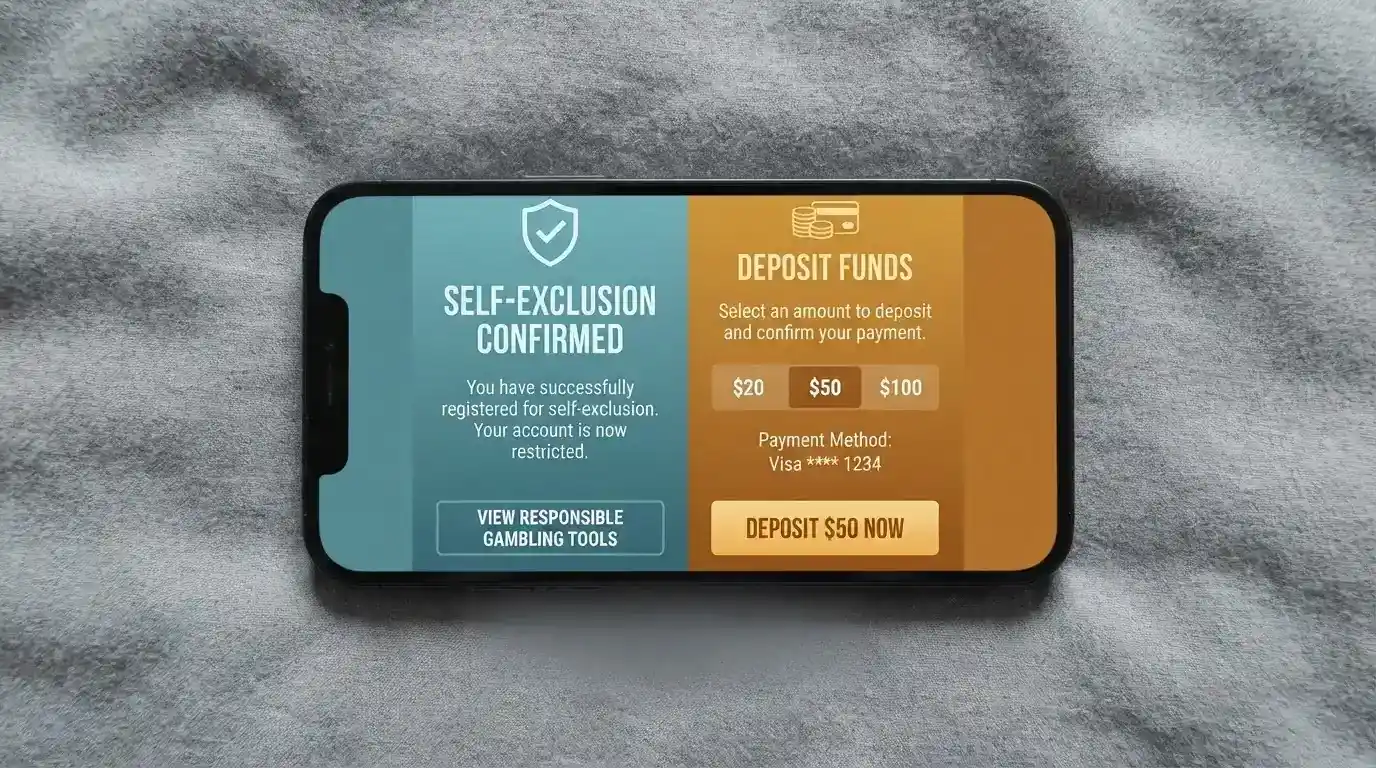
The offshore pokies app sits outside all of it. BetStop’s reach is limited to Australian-licensed wagering services; an offshore casino is not connected to the register and will keep taking a self-excluded person’s deposits. That is the most concrete single harm of the offshore route, and it is the reason the prohibition on the supply side exists.
What does work, regardless of where the player is gambling, is the help-line infrastructure. The National Gambling Helpline on 1800 858 858 is free, confidential, and staffed 24 hours a day, seven days a week. Gambling Help Online at gamblinghelponline.org.au provides online chat and counselling, with self-help tools and structured programs for problem gambling. Neither service asks where the player has been playing; both work whether the gambling is happening on a licensed Australian app, an offshore app, or at a venue.
The tools that work: deposit limits, self-exclusion and where to get help in Australia
The player-side tools that work on any platform are the ones the player sets for themselves. A deposit limit set before the session starts is more effective than a cooling-off period triggered by the operator after a loss; a session-time limit held in the player’s own head is more reliable than an autoplay-stop the operator can override. On an offshore app, these are the only protections the player has — the operator’s defaults are typically weaker than a licensed operator’s, and the regulatory floor beneath them is lower.
For a self-excluded player, the offshore route requires account-level action: closing the account through the operator’s support, withdrawing any remaining balance (subject to the operator’s own processing windows and KYC requirements), and committing to not opening another account on a different brand. BetStop does not do this work; the offshore operator does not enforce it; the only enforcement is the player’s own.
The Australian help infrastructure does not care which platform the player has been using. A player who is concerned about their own gambling — offshore, licensed, or at a venue — can call 1800 858 858 at any hour, start a chat at gamblinghelponline.org.au, or talk to a GP. The help is there; the offshore casino does not connect to it.
How we selected and ranked these offshore pokies apps
The ranking on this page evaluates each operator against the same five criteria: licence status (whether a specific jurisdiction is verifiable), game-library size and provider mix (count and quality of studios), welcome-bonus structure including wagering and win caps (the real clearance cost, not the headline figure), mobile delivery quality (PWA vs native, tested screen-width rendering, payment-flow friction), and withdrawal speed with AUD payment methods (PayID, crypto, bank transfer).
The source basis is publicly available data. Operator-published terms pages carry the bonus conditions, the wagering multipliers, the maximum-bet rules and the game-weighting tables. Independent testing reports from competitor affiliate sites carry the PayID and crypto withdrawal-time data and the mobile-rendering observations. The ACMA’s public register of blocked sites and enforcement actions carries the regulatory context. Per-operator casino-testing sites (Casino.Guru’s Safety Index in Bizzo’s case) carry the third-party signal on disputes handling. No affiliate commission weighting, no paid placement, and no unverified user review was used to determine the ranking.
What the ranking does not measure is the offshore-protection gap — every operator on this list loses the eight consumer protections covered above, and the gap is identical across all ten. The ranking measures the operational differences inside the offshore category: which operator pays fastest, which has the lowest wagering, which publishes verifiable licence and RTP data, which has the most consistent mobile experience. The choice between offshore and licensed is a separate decision, and the page makes no recommendation on it.
Your money, your move: what the offshore pokies numbers actually tell you
Three numbers define every offshore-pokies session, and they compound in ways the marketing never explains. The house edge — 4.8% on Dragon Link, between 3.36% and 10.69% on Lightning Link depending on the operator’s configuration — is what the player pays per spin on average. The wagering multiplier — 30x on Fair Go, 35x on Royal Reels, 40x on most of the rest, 45x or 50x on Rocket Casino — is what the player pays in turnover before a bonus converts to withdrawable cash. The withdrawal time — under 10 minutes on the fastest PayID, 4h12m on Royal Reels PayID post-KYC, three days on SkyCrown bank transfer — is how long the player waits to see the result.
A A$1,000 bonus at 40x wagering on Dragon Link returns the player A$320,000 of required turnover with an expected loss of roughly A$15,360. The bonus is A$8,000 only if every deposit tier is hit; the cost is A$15,360 in expected loss; the net expected outcome is negative A$7,360. A smaller bonus at lower wagering on the same game has a smaller absolute cost and a closer-to-break-even outcome. The arithmetic is the same on every welcome package.
The operator that looks best on the bonus table is rarely the one that leaves the most cash in the player’s pocket. Royal Reels’ A$2,500 welcome at 35x bonus-only wagering, with a 96.4% average RTP across the top 50 pokies and PayID withdrawals in 4h12m, is the better fit for a player who measures value in expected retained cash, not headline bonus size.
The single question every Australian should answer before opening an offshore app is not “which operator is best.” It is whether the offshore route is the right trade for the player at all — and the answer turns on whether the bonus headline is worth the eight consumer protections it costs.
Frequently asked questions about real money pokies apps in Australia
Is it legal to play real money pokies on an app in Australia?
The Interactive Gambling Act 2001 prohibits online casino games including online pokies; there is no licence for the product anywhere in Australia. The Act targets the provider, not the player — no Australian has been prosecuted for using an offshore app. The site itself can still be blocked while a balance sits on it.
Can I get my money back if an offshore pokies app refuses to pay?
There is no Australian complaints body for offshore casinos. BetStop, the ACMA complaints register and state-based dispute resolution do not reach operators licensed in Curaçao or Anjouan. The only recourse is the operator’s home regulator, and Curaçao’s compliance process is slow and largely untested for individual player disputes.
What is BetStop and does it cover offshore pokies apps?
BetStop is the National Self-Exclusion Register, live since August 2023. One registration excludes the player from every Australian-licensed wagering service at once. Offshore casino apps are not connected to the register and will continue accepting deposits and bets from a self-excluded person.
Why are all real money pokies apps in Australia offshore?
The Interactive Gambling Act 2001 prohibits the supply of online casino games to Australians — no licence exists anywhere in the country. The app stores cannot list the product; the only operators willing to serve Australian players sit in Curaçao, Anjouan and other offshore jurisdictions.
What protections do I lose by using an offshore casino app instead of a licensed Australian operator?
The player loses BetStop self-exclusion coverage, the ACMA complaints pathway, mandatory identity verification at registration, regular activity statements, customer-set deposit limits, recognised dispute-resolution scheme access, and from 1 January 2027 the bank-blocking authority that declines illegal-operator transactions. None of these protections apply to a Curaçao-licensed app.
How long do withdrawals take from offshore pokies apps using PayID or crypto?
The fastest PayID withdrawals in 2026 testing cleared in under 10 minutes. Royal Reels PayID withdrawals settled in 4 hours 12 minutes during weekday testing post-KYC. Crypto payouts generally settle within 24 hours on operators that actively process them. Bank transfers take 3 days from the A$100 minimum.
Can you really win real money playing pokies on your phone? And can you keep it?
Yes — and that is the part that makes the offshore route stick, for all the caveats. These casinos pay real Australian dollars to real Australian bank accounts. The question is how fast, and on what terms.
The fastest documented PayID withdrawal in 2026 testing cleared in under 10 minutes. Royal Reels PayID withdrawals cleared in 4 hours 12 minutes during weekday testing, post-KYC. Apps that processed crypto payouts within 24 hours scored higher in the same competitor testing. The slow end is the bank transfer: SkyCrown’s bank-transfer withdrawals take 3 days once the A$100 minimum is met.
So winning is real, and the money can land in your account. What changes is the safety net underneath. If an offshore operator decides your win was “irregular play,” if it imposes a maximum-cashout rule buried in clause 47 of the bonus terms, or if the site simply goes dark — your recourse is the licensing authority in Curaçao or Anjouan, not the ACMA. There is no Australian complaints body that can compel an offshore operator to release a contested balance, and the ACMA’s blocking power can freeze your funds on a site one DNS update before you withdraw them. The win is real. The protection is not.