
What the Best Casino Apps in Australia Actually Cost You in 2026
No Australian licence exists for online casino. None. That is the single fact that decides everything a person reads on this page, because it means every casino app an Australian player can install, sideload or open in a browser is run from somewhere offshore — almost always Curaçao — and operates outside every protection Australian law was built to give a gambler. This page ranks the ten offshore casino apps Australian players actually reach in 2026, walks through what each welcome offer really costs once the wagering terms are applied, and lays out what the player gives up the moment the deposit button gets pressed. The arithmetic is unflattering. So is the law.

Current as of 13 September 2026 · Verified against the Curaçao Gaming Control Board register and ACMA public records
Table of Contents
- Why Australia’s Casino App Market Looks Nothing Like Europe’s
- The 10 Offshore Casino Apps Australians Actually Use in 2026
- Real-Money Casino Apps: The Gap Between What You Risk and What You Keep
- Why Your 2026 Casino Bonus Is Almost Certainly Smaller Than It Looks
- Casino Apps by Device: Android, iPhone and iPad
- How to Tell a Safe Casino App from a Risky One
- Are Casino Apps Legal in Australia? The Short Answer and the Long One
- Responsible Gambling: The Tools That Protect You — and the Gap Offshore Casinos Exploit
- How We Evaluated and Ranked These Casino Apps
- What Australian Players Should Actually Do With This Information
- Frequently Asked Questions About Casino Apps in Australia
Why Australia’s Casino App Market Looks Nothing Like Europe’s
A European reader scanning an Australian casino-apps page will scan past one word they have never seen in their own market: “offshore.” In the United Kingdom, the Gambling Commission hands out remote operating licences, and a casino app on the App Store is regulated, complaint-handled and financially ring-fenced by law. In Malta, the Malta Gaming Authority does the same. In Australia, there is no equivalent licence to issue, because the Interactive Gambling Act 2001 makes it an offence to provide online casino games, online pokies and in-play betting to a person physically in the country. The Australian Communications and Media Authority can block sites. It cannot licence them.
The market consequence is that every casino app a punter in Sydney, Melbourne or Perth reaches is run by a company that holds a gambling licence in a small Caribbean jurisdiction, accepts Australian dollars, and answers to no Australian regulator. The Australian player is not committing an offence by using one — the Act targets the provider, not the punter — but the player is also not protected by anything the Act would have given them if a domestic regime existed. BetStop cannot reach the site. The ACMA cannot recover a disputed withdrawal. Australian Consumer Law does not apply. The site can be blocked at any moment, with whatever balance sits in the account at that moment.
That is the structural reality behind every bonus figure, every “100% match” headline and every “free spins on install” pitch on this page. The marketing has the same shape it has everywhere else; the law it sits inside does not.
What a Casino App Actually Is — and What It Is Not in Australia
In strict technical terms, a casino app is a piece of native software a player downloads from an app store, opens, and uses to play real-money games against the house. In Australia in 2026, that description covers almost nothing. Apple and Google restrict real-money gambling apps in Australian stores, which means no operator licensed for casino play has a downloadable iOS or Android binary sitting next to a search for “pokies” in the App Store or Google Play. The word “app” in an Australian context almost always means one of two things: a mobile-optimised website that a player opens in Safari or Chrome and pins to the home screen, behaving like an app without being one; or, for Android users, a downloadable APK file the player fetches from the casino’s own domain and sideloads with a security toggle flipped in settings.
That distinction is not cosmetic. A real native app gets reviewed by Apple or Google before it reaches a store, ships inside a sandbox the operating system controls, and updates itself. A mobile-optimised website is just a website — the same site a desktop player visits, scaled for a phone, with the same security profile and the same data flows. An Android APK from an offshore operator is a piece of code the player has personally chosen to trust, because nobody between the operator and the phone checked it. That is the app market an Australian player is actually navigating.
Free Play and Demo Mode: The Smart Way to Test Before You Deposit
The cheapest, lowest-risk move available to anyone thinking about a real-money casino app in Australia is also the one that requires the least commitment: open the demo mode, and spin the games for pretend. Most offshore casino apps available to Australian players offer free-play versions of their pokies and table games without registration, sometimes even before the player has handed over an email address. The credits are not real, the wins cannot be withdrawn, and the experience is otherwise indistinguishable from the real-money version for the first hour or two of play.
That hour or two is worth more than any welcome bonus. A player who spends it learns the game’s volatility, its bonus-round frequency, the size of its average hit and the feel of its paytable before a cent has been committed. They also see whether the mobile interface is smooth, whether the lobby loads quickly on their network, and whether the cashier looks professional or amateurish. Demo mode costs nothing. It also tests something the marketing never will: whether the operator’s site actually works on the device the reader uses.
The line between demo mode and real-money play is sharp, and the section on what changes when money enters the equation explores it. Until that line is crossed, the player has spent nothing, risked nothing and lost nothing.
New and Trending Casino Apps in 2026
The “new” label on a casino app in an unregulated offshore market means almost nothing. A new brand is not harder to vet than an established one; if anything, an established brand with a Curaçao licence number, a populated Trustpilot page and a couple of years of dispute history is easier to read than a glossy newcomer with no track record at all. The pace at which new offshore brands appear targeting Australian players has not slowed, and the marketing has adjusted accordingly — bigger welcome numbers, more free spins, louder claims of being the “new top-rated” option.
The pattern is consistent enough to be predictable. A new entrant offers a headline bonus well above the established operators’. The wagering requirement is in the same 40× band as everyone else. The game library is smaller. The licence number is recent. Within a year or two, either the brand establishes a track record or it quietly disappears, sometimes with player balances in tow. “New” in this market is rarely a positive signal; it is most often a sign that the operator has not yet built a reputation the market can judge.
That said, novelty is not nothing. A new brand sometimes arrives with a cleaner mobile interface, a tighter game selection, or a payment-method mix that suits a particular reader. It should be read as one data point among several, not as a quality badge.
The 10 Offshore Casino Apps Australians Actually Use in 2026
This is not a list of licensed Australian online casinos. Such a thing does not exist. Every operator below holds an offshore licence — almost always Curaçao — and offers an unlicensed product to Australian players. The ranking reflects bonus value, game library, term transparency and track record, not regulatory approval, because regulatory approval is not an option that any of them has.

| Operator | Licence | Welcome Bonus | Wagering | Free Spins |
|---|---|---|---|---|
| SkyCrown | Curaçao OGL/2023/176/0095 (Hollycorn N.V.) | Up to A$8,000 + 400 FS across four deposits | 40× bonus + deposit, 14-day validity | 400 |
| RocketPlay | Curaçao OGL/2024/1307/0748 (Scores55 Tech B.V.) | 100% up to A$1,000 + 100 FS (1st); 200% up to A$1,000 (2nd) | 30×–40× | 100 |
| Neospin | Curaçao | 300% up to A$11,000 + 300 FS | 40× | 300 |
| WinSpirit | Curaçao | 100% up to A$500 + 50 FS (1st deposit) | 30× bonus + deposit | 50 (plus 20 no-deposit FS on install) |
| Royal Reels | Curaçao | 100% up to A$500 + A$10 no-deposit bonus | 30–40× | — |
| Stake | Curaçao | 200% up to A$1,000 | 40× bonus + deposit | — |
| Fair Go | Curaçao | 100% up to A$200 on each of first five deposits (A$1,000 total) | 30–40× | — |
| Rainbet | Curaçao | 250% up to A$2,100 + 60 FS across three deposits | 40× (or No Wager Lock) | 60 |
| Golden Crown | Curaçao | 225% up to A$15,000 + 300 FS | 40× | 300 |
| Ignition Casino | Curaçao | Welcome deposit match + free spins (specific amounts not confirmed) | — | — |
Three things stand out from the table before any operator write-up begins. The first is that the welcome numbers above A$10,000 belong to Neospin (A$11,000) and Golden Crown (A$15,000), and that the wagering multiplier attached to both is 40× — a figure whose true cost the next section of this page unpacks. The second is that only two of the ten operators offer anything for nothing: WinSpirit’s 20 free spins on app install, and Royal Reels’ A$10 cash bonus for signing up. The third is that every licence line in that column reads Curaçao, with one operator — Ignition — declining to publish a specific licence number publicly.
SkyCrown
SkyCrown’s headline is the most decorated in the set: up to A$8,000 plus 400 free spins, spread across four deposits, with a first-deposit trigger of 120% up to A$1,200 plus 125 free spins on a minimum A$30 deposit. That is the marketing number. The terms attached to it are what the bonus actually costs.
Winnings from the SkyCrown welcome offer must be wagered 40 times before they become withdrawable, and the entire package expires 14 days after it is claimed. Daily withdrawals are capped at A$5,000, with a A$30 floor on both deposits and withdrawals. The operator is Hollycorn N.V., licensed in Curaçao under number OGL/2023/176/0095. The maths of clearing the A$8,000 ceiling at A$1 a spin runs to roughly 444 hours of continuous play — which, as the next section shows, is already longer than the 14-day validity window.
SkyCrown suits a punter who plans to claim one deposit’s worth of bonus, not the whole A$8,000 ladder, and who reads the 14-day window as the binding constraint. As a multi-thousand-dollar play-through machine, it is a trap.
RocketPlay
RocketPlay operates under a Curaçao Gaming Control Board licence — OGL/2024/1307/0748, issued to Scores55 Tech B.V. — which dates to 2024 and is among the newer ones in the set. Its welcome package is more modest than SkyCrown’s: a 100% match up to A$1,000 plus 100 free spins on the first deposit, followed by a 200% match up to A$1,000 on the second, taking the total headline to A$2,000 across two deposits. Wagering sits in the 30×–40× range, depending on the offer.
Where RocketPlay earns its place is the game library: 3,000-plus slots from leading studios, drawn from a roster of providers most readers will recognise from licensed European casinos. That scale gives it more pokies than every operator in the set except Neospin, and more than Royal Reels’ 2,000-strong catalogue.
RocketPlay is a sensible pick for a player who wants breadth of game choice over the size of the welcome number, and who is comfortable with a Curaçao licence less than two years old.
Neospin
Neospin offers the second-largest headline in the set — 300% up to A$11,000 plus 300 free spins — and pairs it with the standard 40× wagering requirement and a A$30 minimum deposit. The headline percentage is the highest in the table; the matched ceiling is the second-highest; the game library, at over 6,000 games with more than 5,000 pokies, is the largest. Neospin is built for volume.
The honest read is that the A$11,000 ceiling rewards a punter willing to deposit the maximum across however many tiers the operator runs, and the 40× multiplier then asks that punter to wager roughly A$440,000 before the bonus becomes cashable. At A$1 a spin and a five-second interval, that is around 611 hours of play — well over 25 days of continuous spinning.
Neospin suits a high-volume punter with the bankroll to fund the deposit ladder and the time to play through the multiplier. For anyone else, the headline is a marketing number.
WinSpirit
WinSpirit is the only operator in the set offering a no-deposit incentive to players who install the app — 20 free spins, with 40× wagering on the winnings, before a cent has been deposited. The first-deposit welcome is a 100% match up to A$500 plus 50 free spins, with the lowest wagering multiplier on the list at 30× on bonus plus deposit. Some sources reference a 200% match plus 25 free spins variant on the same brand, with 40× on promotional play; the two should be read as different promotional offers, not as a contradiction.
Trustpilot rates WinSpirit at 4.6 out of 5, which is the highest public score in the set and a meaningful signal of operator reputation, even on a platform whose reviews skew positive. The licence is Curaçao, with the specific number not publicly listed. Minimum deposits start at A$30 across cards, crypto and e-wallets.
WinSpirit is the strongest low-deposit option for a player who wants the lowest wagering burden and a chance to test the site before committing, and the no-deposit spins are the only such offer across the ten.
Royal Reels
Royal Reels stands out for two reasons. The first is the only cash no-deposit bonus in the set — A$10 credited to a new account on sign-up, before any deposit. The second is the game-provider roster: Pragmatic Play, Evolution Gaming, Yggdrasil and Hacksaw Gaming sit alongside 30-plus other studios in a catalogue of over 2,000 games, the strongest provider mix in the table. The welcome package is more modest — 100% up to A$500 — and wagering sits in the 30–40× range, with a A$30 minimum deposit and a Curaçao licence whose specific number is not on the operator’s public-facing pages.
Royal Reels suits a punter who cares more about game quality than welcome size, and who values a small cash buffer for testing the cashier before committing real bankroll. The A$10 no-deposit is the cleanest low-risk entry on this page.
Stake
Stake is the only operator in the ranking that runs a casino and a sportsbook on the same platform, and the welcome offer reflects that simpler model: a straightforward 200% first-deposit match up to A$1,000, with 40× wagering on bonus and deposit combined. There is no free-spin bundle attached to the headline. The minimum deposit, at A$10, is the lowest in the table — useful for readers who want to test an account before funding it properly.
Stake’s identity is built around crypto payments and a streamlined interface. Australian players reach it through the mobile-optimised site, not a native app, and the experience is closer to a sportsbook that happens to run a casino than a casino that has added a sportsbook. The Curaçao licence is not publicly numbered on the operator’s pages.
Stake is the pick for a punter who wants casino and sports in one wallet and is comfortable with crypto rails. As a pure casino-app recommendation, the smaller welcome and absence of free spins make it less competitive.
Fair Go
Fair Go is the smallest casino in the set by game count — 280 titles, all powered by RealTime Gaming — and the oldest operator by brand positioning, having targeted Australian players for years. The welcome package is correspondingly modest: a 100% match up to A$200 on each of the first five deposits, totalling up to A$1,000. Wagering on RTG bonuses typically sits in the 30–40× band.
The 280-game library is the constraint. A punter used to a 3,000-slot lobby will find Fair Go thin within an afternoon. What it offers in return is consistency, a familiar RTG catalogue and a brand whose longevity suggests it has not disappeared with player balances.
Fair Go suits a punter who already knows and likes RTG pokies and values brand continuity over novelty. As a recommendation, it is the most defensive pick on the page.
Rainbet
Rainbet’s offer is the most unusual in the ranking, because it lets the player choose between two bonus structures. The standard option — Wager Lock — is a 40× multiplier on the welcome package, which totals 250% up to A$2,100 plus 60 free spins across three deposits (100% to A$700 plus 20 free spins on the first, 50% to A$700 plus 20 on the second, 100% to A$700 plus 20 on the third). The alternative — No Wager Lock — releases the bonus funds gradually as the player wagers, with no playthrough multiplier, but at the cost of slower fund release.
The other distinctive term is a quiet one: while a bonus is active, Rainbet restricts games with an RTP above 97.4%. That excludes the highest-paying pokies in the lobby from bonus play, which shrinks the expected value of the bonus without telling the player in the headline.
Rainbet suits a punter who prefers the No Wager Lock structure and accepts the slower release. As a recommendation, the RTP restriction is the clause worth reading before claiming.
Golden Crown
Golden Crown carries the highest absolute welcome cap in the set — A$15,000 — paired with a 225% match and 300 free spins, on a 40× wagering requirement. The catch is the A$45 minimum deposit, which is the highest deposit floor in the table by a wide margin, and which excludes players who would otherwise test an account with a A$20 or A$30 deposit.
A punter who clears the full A$15,000 ceiling and meets the 40× multiplier is being asked to wager A$600,000 in bonus play. At A$1 a spin and a five-second interval, that is over 833 hours — almost 35 days of continuous spinning. The maths is structurally similar to SkyCrown’s, scaled up.
Golden Crown suits a punter with a bankroll that justifies the A$45 floor and the volume to chew through the multiplier. For everyone else, the headline is a ceiling most players will never approach.
Ignition Casino
Ignition is the hybrid of the ranking — a poker-and-casino brand with a long international track record — and the operator whose specific welcome terms were not confirmed this round. Research surfaces a welcome deposit match plus free spins, but the exact match percentage, dollar ceiling and free-spin count are not pinned down in the public sources reviewed. The honest move is to state that, and to direct the reader to the operator’s own terms page for current numbers.
What is known: Ignition holds a Curaçao licence, runs a poker room alongside its casino, and has been accessible for years from Australian IP addresses. The Australian-player story is similar to every other brand on this page — no domestic licence, no domestic protection, no Australian recourse.
Ignition suits a punter who already plays there and values the poker product. As a recommendation on bonus value, it is the operator to check directly before committing.
Real-Money Casino Apps: The Gap Between What You Risk and What You Keep
The moment a real deposit lands at an offshore casino app, the terms activate. Wagering requirements attach. Withdrawal caps apply. Game contribution rates start to matter. The IGA’s protection of the player evaporates. The mechanism that has been true since the first slot machine is also true here: the house always has an edge, and that edge compounds over every spin the player does not win.
The Interactive Gambling Act 2001 makes it illegal for providers to offer online casino games, online pokies and in-play betting to people in Australia. The Act does not, however, prosecute the player. The individual Australian punter commits no offence under the IGA by depositing at an offshore casino app. The cost is not legal. The cost is what the player loses in recourse when something goes wrong.
What goes wrong is not exotic. It is a withdrawal that takes longer than the operator’s marketing suggested. It is a bonus term that voids winnings because a game the player thought was eligible was not. It is an account closed with a balance inside, on a clause the player never read. None of these problems has a domestic complaints body the player can reach. The ACMA can investigate the operator and refer it for enforcement, but it cannot recover money for an individual. The Australian Financial Complaints Authority has no jurisdiction. The only avenue is the operator’s own dispute process — run by the operator.
That is the gap between what a player risks and what they keep.
Real-Money Play vs Free-Play: What Changes When You Deposit
Demo mode has no consequences. A player can spin a pokie for ten hours in demo, lose every credit, and walk away without owing anyone anything. The real-money threshold changes that completely. Once a deposit clears, every clause in the welcome terms becomes binding — including the clauses the player never read, which is most of them.
The most consequential of those clauses is the wagering requirement. A 40× multiplier on a bonus does not mean “spin 40 times.” It means wager 40 times the bonus amount before winnings become withdrawable. A A$1,000 bonus at 40× is a A$40,000 turnover obligation. The player’s own deposited funds count toward that turnover only where the operator says they do; some offers count bonus + deposit, others count bonus only. Either way, the player is paying for the bonus with their own play.
What changes is also what the player loses. Free-play wins are imaginary. Real-money wins can be withheld, capped or voided. The bonus terms give the operator the legal framework to do all three.
How Fast Casino Apps Actually Pay Out — and What Can Go Wrong
Payout speed on offshore casino apps varies by method. Crypto withdrawals are typically the fastest — same-day in many cases, occasionally within an hour for established wallets. E-wallet withdrawals (Skrill, Neteller, MiFinity, where supported) sit in the one-to-three-day band. Bank transfers are slower — three to seven business days is common, longer when the operator’s payments team is manual.
The real risk is not the delay. It is the operator’s right to refuse a withdrawal in the first place. A bonus violation, a “duplicate account” flag, an unfished wagering requirement, a payment-method mismatch — any of these can sit behind a withdrawal that never arrives. The SkyCrown daily cap of A$5,000 is a concrete example: even where the operator pays willingly, a large win may take several days to clear in instalments. There is no Australian complaints body with the power to compel faster payment or to overturn a refusal.
The corollary is that any site accepting deposits from Australian players can also be blocked at any time, with whatever balance the player has not yet withdrawn sitting on the operator’s server. The ACMA’s site-blocking programme has removed 1,564 illegal gambling and affiliate websites since November 2019. None of those removals came with a refund.
Why Your 2026 Casino Bonus Is Almost Certainly Smaller Than It Looks
A welcome bonus is sold on three numbers — the match percentage, the dollar ceiling, and the free-spin count. The player who reads only those three numbers almost always overestimates the offer’s value, because the terms that determine what the bonus is actually worth are not on the marketing page. They are in the fine print: the wagering multiplier, the validity window, the game contribution rates, the maximum cashout cap, and the list of excluded games.

The arithmetic is straightforward once the terms are read. A 300% match up to A$11,000 with 40× wagering on a A$30 deposit is not “free A$11,000.” It is “spin through roughly A$440,000 of play before the winnings become cashable, in a window the operator controls.” The free spins are similarly conditional — most free-spin winnings carry their own wagering requirement, often 40×, on games the operator picks.
Three terms do most of the work in shrinking a bonus from headline value to real value: the wagering multiple, the validity window, and the game-eligibility list. The next subsections take each in turn.
Welcome Bonuses Unpacked: The Headline Number vs the Real Cost
Take three of the largest headline figures on the table and run them through the same formula. SkyCrown’s A$8,000 at 40× requires A$320,000 of turnover — assuming only the bonus amount is wagered, at A$1 a spin, that is 320,000 spins. At five seconds per spin, the play time is 1,600,000 seconds, which works out to roughly 444 hours. Neospin’s A$11,000 at 40× requires A$440,000 of turnover — 440,000 spins, around 611 hours. Golden Crown’s A$15,000 at 40× requires A$600,000 of turnover — 600,000 spins, around 833 hours.
These numbers are not rhetorical. They are the play time required to clear each offer at the most efficient stake the operator will accept, assuming every spin counts. None of them is achievable inside the validity window the operator sets. SkyCrown’s 14-day window, even at 24 hours a day of continuous spinning, fits 336 hours of play — comfortably short of the 444 the bonus demands. Neospin and Golden Crown do not publish a stated window, but the play-time magnitudes make a 30-day window impossible and a 90-day window tight.
Against those three, Royal Reels’ 100% up to A$500 at 30–40× requires A$15,000–A$20,000 of turnover — 15,000 to 20,000 spins, or 21 to 28 hours. RocketPlay’s A$2,000 at 30–40× requires A$60,000–A$80,000 of turnover — 60,000 to 80,000 spins, or 83 to 111 hours. The smaller offers are achievable in a long weekend. The largest offers are not achievable at all, on the terms the operator writes.
Free Spins and No-Deposit Offers: What They Are Actually Worth
Free spins are sold by the count — 300, 400, 500 — and the count tells the reader almost nothing about the offer’s value. What matters is the per-spin stake (typically A$0.10 to A$0.20), the game the spins are issued on, and the wagering requirement on the winnings. A 300-free-spin bundle at A$0.10 a spin is worth A$30 in raw stake, before any win; at A$0.20 a spin, A$60. The realised return is whatever the chosen game’s RTP delivers — usually well below 100% over a small sample. A 40× wagering requirement on the resulting winnings can then require a further A$1,200–A$2,400 of turnover to clear, depending on the outcome.
Two genuine no-deposit offers exist in the set. WinSpirit’s 20 free spins on app install carry a 40× multiplier on winnings, with no deposit required to claim — the cleanest low-risk entry to the set. Royal Reels’ A$10 no-deposit cash bonus does the same in cash rather than spins, and is the only such cash offer on the page. Both are worth claiming for what they are — a way to test the cashier and the mobile interface — and not worth claiming as a real-money strategy. The wagering multipliers attached to no-deposit winnings are deliberately steep, because the operator is taking the risk on a player who has staked nothing.
The Fine Print: Wagering, Caps, and Game Restrictions
Three clauses do most of the work in any bonus’s fine print. The first is the wagering multiple — 30×, 40×, or higher — applied to the bonus, the deposit, or both. WinSpirit’s 30× on bonus plus deposit is the lowest in the set; the 40× standard applies to most others. Each step up in the multiplier scales the play-time obligation proportionally, because turnover scales with it.
The second is the validity window. SkyCrown’s 14 days is the only one pinned to a specific number in research, and it is short enough to be the binding constraint on the bonus. A punter who cannot commit several hours a day for two weeks should treat 14-day offers as effectively unclaimable.
The third is the game-contribution list. Pokies almost always contribute 100% of stake to wagering; table games often contribute 5–10%, sometimes nothing at all. A punter who tries to clear a bonus on blackjack at 5% contribution has effectively multiplied their wagering obligation by twenty. Rainbet’s 97.4% RTP cap is the same idea applied from the other direction — high-paying pokies are excluded from bonus play, which lowers the expected return on the wagering obligation without lowering the obligation itself.
Maximum cashout caps, where operators publish them, are the fourth clause worth reading. None of the ten operators in the ranking publishes a maximum cashout on the welcome offer in the public sources reviewed — a gap in the data, not necessarily a gap in the terms.
Casino Apps by Device: Android, iPhone and iPad
The device an Australian player carries determines how they reach an offshore casino app, and which compromises they accept on the way. Android users sideload APKs from operator domains. iPhone users rely on mobile-optimised websites and pin them to the home screen. iPad users see a stretched-out version of the same mobile site. No platform offers a real-money casino app through its official store in Australia, and that constraint shapes the experience.

The reason is platform policy. Apple’s App Store guidelines and Google’s Play Store policies both restrict real-money gambling apps by region. In Australia, the restrictions are tight enough that no operator licensed for casino play has a presence in either store. The workarounds — sideloading on Android, home-screen bookmarks on iOS — are not platform-approved, but they are not blocked either, and they are how the market reaches Australian players.
Android Casino Apps: APKs, Mobile Sites, and What to Watch For
Android users have more flexibility than iPhone users, because Google’s policies permit operators to distribute APKs directly from their own domains. A punter who downloads an APK from the operator’s official site, with the “install from unknown sources” toggle enabled for that specific source, ends up with a piece of native software on their phone. The app icon sits in the launcher; the app opens like any other; the experience is closer to a true native app than a mobile website can deliver.
The flexibility has a cost: the APK is not reviewed by Google. The punter is trusting the operator’s domain, the integrity of the download, and the absence of malware in the install package. The safer pattern is to download only from the operator’s own site, over HTTPS, and to verify the domain before flipping the security toggle. Third-party APK sites — particularly those that aggregate “free casino app” downloads — are the highest-risk vector for tampered software.
Mobile sites are the fallback. A punter who does not want to sideload anything opens the operator’s mobile site in Chrome, pins it to the home screen, and uses it as an app-shaped bookmark. The experience is functional, the security profile is the standard browser profile, and the site does not have access to anything the browser does not already have access to.
iPhone and iOS Casino Apps: What Is Actually Available
iPhone users in Australia will not find a real-money casino app in the App Store. The workaround is the same as the Android fallback, executed through Safari: open the operator’s mobile site, tap the share button, choose “Add to Home Screen,” and accept the icon that drops onto the home screen. The resulting “app” is a Safari bookmark with a custom icon, not a piece of native software — there is no sandbox, no App Store review, and no offline functionality. The site updates itself every time it loads.
The iOS mobile-web experience is, in fairness to the operators, often better than the term “website” suggests. Modern HTML5 casino games run smoothly in Safari on recent iPhones, the touch controls are well-tuned, and the cashier flows are usually mobile-first rather than desktop-scaled. The experience is constrained by what a browser can do — no push notifications in the same form as a native app, no Face ID for login unless the operator has implemented WebAuthn, no deep integration with iOS — but for a one-hour session on the pokies, the gap is smaller than it once was.
iPad users see the same mobile site in a larger window. Some operators serve a tablet-optimised layout; most do not. The pragmatic approach is to use the iPhone-mode site.
How to Tell a Safe Casino App from a Risky One
Safety on an offshore casino app is not about an Australian licence, because no Australian licence exists. It is about the signals that distinguish an operator with a real business and a real dispute history from one that simply takes deposits. Three signals matter: the Curaçao licence and what it actually means, the payment methods the operator accepts, and the track record the operator has with players who have already tried to withdraw.
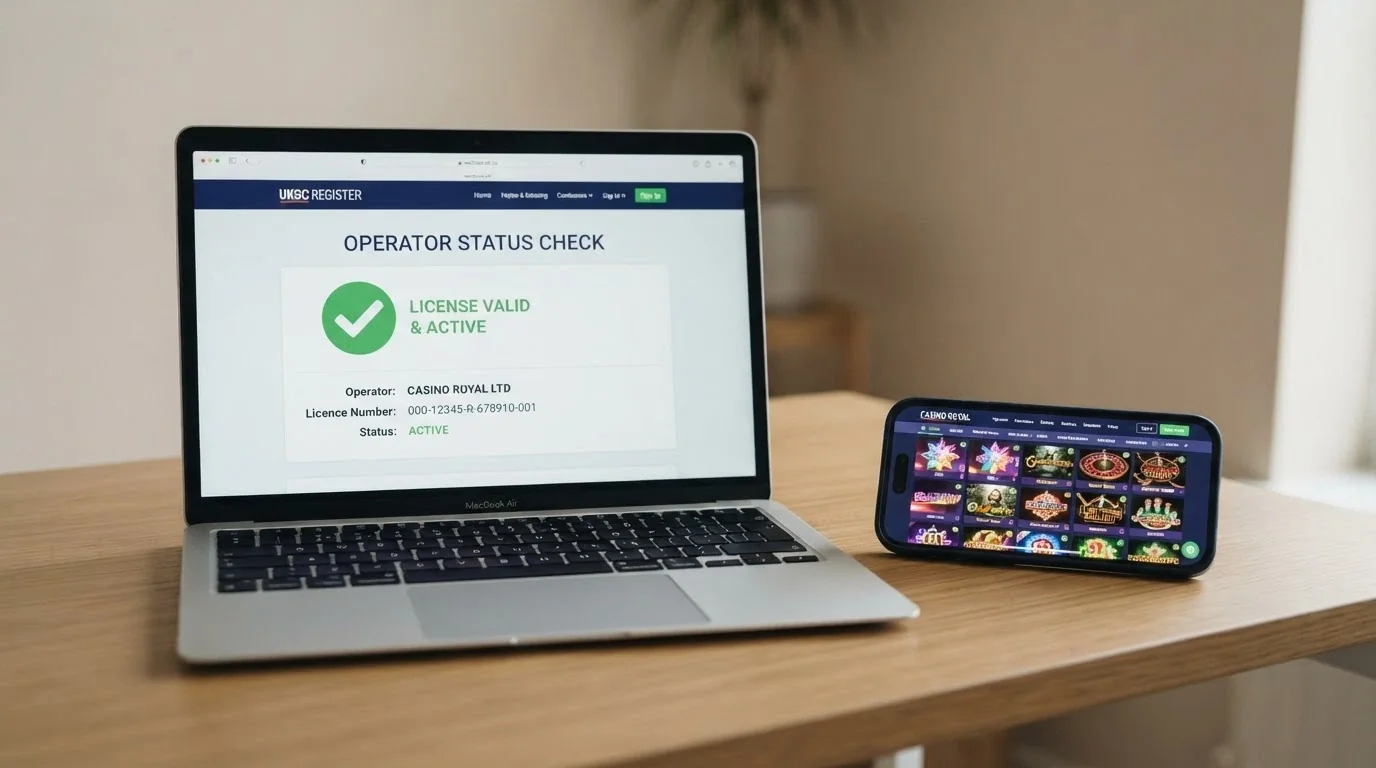
The absence of these signals is itself a signal. An operator that hides its licence number, refuses credit card payments while accepting only crypto, and has no Trustpilot presence is harder to read than one that publishes all three.
Licence Checks and What a Curaçao Licence Actually Means
Every operator in the top ten holds a Curaçao licence. SkyCrown’s is OGL/2023/176/0095 (Hollycorn N.V.); RocketPlay’s is OGL/2024/1307/0748 (Scores55 Tech B.V.); Royal Reels, Neospin, WinSpirit, Stake, Fair Go, Rainbet, Golden Crown and Ignition all hold Curaçao credentials, with the specific numbers not always publicly listed on the operator’s own pages.
A Curaçao licence confirms two things: the company exists, and it holds a gambling permit from the Curaçao Gaming Control Board. It does not confirm player-fund segregation, dispute resolution timelines, advertising standards or any of the protections an Australian or UK licence would impose. The Curaçao regime has tightened since 2023, and the new licensing framework gives the regulator more teeth than the old one had — but it is not equivalent to an Australian licence, and the gap between the two is the gap between a foreign regulator and a domestic one.
The verification step is mechanical. Look up the licence number on the Curaçao Gaming Control Board’s public register. Confirm the operator name matches. Note the licence date. A licence issued in 2024 is younger than a licence issued in 2023; younger licences have shorter track records by definition. None of this turns an offshore casino into a safe one, but it removes the operators that have no licence at all.
Crypto Payments on Casino Apps: Convenience at a Cost
Crypto deposits are fast and pseudonymous, and the very fact that an Australian-facing casino app accepts them is itself evidence the operator sits outside Australian law. Credit cards, credit-related products and digital currency have been banned as payment for online wagering since 11 June 2024 under the Interactive Gambling Amendment (Credit and Other Measures) Act 2023. An operator that processes credit card or crypto deposits from Australian customers is not operating inside the Australian rules — the payment method is the tell.
The penalty for an Australian-licensed operator that processes a credit card or crypto payment is up to A$247,500 per breach. Offshore operators do not face that penalty, because the Act does not reach them — but the absence of penalty is the absence of accountability. Crypto payouts are typically same-day; crypto deposits bypass the bank rails entirely; and the punter’s identity is tied to a wallet address rather than a name. That pseudonymity cuts both ways: it speeds up the deposit, and it makes a dispute harder to escalate because no payment intermediary holds the player’s funds.
From 1 January 2027, Australian banks and payment providers gain express authority to block transactions to illegal gambling operators. That does not apply retrospectively, does not apply to offshore wallets the bank has not flagged, and does not change what crypto rails an offshore casino accepts today. It does mean the legal ground shifts under the punters who were using bank rails to reach the same operators.
Are Casino Apps Legal in Australia? The Short Answer and the Long One
The short answer is no. No online casino app is licensed in Australia. The Interactive Gambling Act 2001 prohibits providers from offering online casino games, online pokies and in-play sports betting to people in Australia. The long answer is more interesting: the prohibition targets the operator, not the punter, but the cost of operating outside the prohibition falls on the player, in the protections the player loses.

The 2026 Interactive Gambling Amendment (Gambling Reform) Bill, which passed Parliament on 19 August 2026 and commences on 1 January 2027, brings in advertising caps, an opt-out register and inducement restrictions. None of those provisions apply offshore. The licensed wagering market — pre-event sports, lotteries, keno — is regulated at state and territory level, with the Northern Territory Racing and Wagering Commission holding the licences for most of the major online bookmakers. Online casino is not part of that licensed market and will not be after the 2027 reforms.
The detailed read on each piece of this picture is below.
The Interactive Gambling Act 2001: What It Actually Bans
The IGA prohibits the supply of three interactive gambling services to people in Australia: online casino games, online pokies (slots), and in-play sports betting. The prohibition runs against the provider, not the customer — using an offshore casino app is not an offence for an Australian resident. The ACMA enforces the prohibition by investigating complaints, issuing formal warnings, commencing civil penalty proceedings, referring operators to the police where appropriate, and directing Australian internet service providers to block illegal sites.
The enforcement record is substantial. The ACMA has had 1,564 illegal gambling and affiliate websites blocked since November 2019, and more than 225 illegal services have withdrawn from the Australian market since enforcement was strengthened in 2017. None of that enforcement has touched the individual player.
What the IGA does not prohibit is pre-event wagering, lotteries and keno, all of which operate under state and territory licences concentrated in the Northern Territory. The licensed bookmakers — Sportsbet, bet365, Ladbrokes and others — hold NT licences and offer sports betting products that the offshore casino apps do not. The two markets are not interchangeable, and a punter looking for an online casino is not in the licensed wagering market at all.
The 2026 Gambling Reform: What Changes on 1 January 2027
The Interactive Gambling Amendment (Gambling Reform) Bill 2026 passed the House of Representatives on 18 August 2026 and the Senate on 19 August 2026. Its measures commence on 1 January 2027. The Bill introduces a national wagering advertising opt-out register — AdStop, administered by the ACMA — through which individuals can opt out of wagering advertising across online platforms. It caps wagering advertising at no more than three ads per hour between 6:00 am and 8:30 pm, extends the live-sport blackout to begin at least 15 minutes before an event, bars radio wagering ads during school drop-off and pick-up times, and bans the broadcasting of sporting odds outright. Athletes, celebrities and influencers are barred from promoting wagering products. Direct-marketing inducements are prohibited for 14 days after a customer signs up, for three months after a person deregisters from BetStop, and indefinitely for customers identified as at risk of gambling-related harm. Wagering staff are prohibited from earning commissions referable to a customer’s gambling activity, and operators are required to implement a red flag system for tagging and ceasing marketing to customers showing signs of problem gambling.
A statutory review is scheduled after three years. None of these provisions apply to offshore operators. The ad caps, the AdStop register, the inducement bans — they are levers the ACMA can pull on licensed wagering providers, not on Curaçao-licensed casino apps. The reform changes what licensed wagering looks like in Australia; it does not change what offshore casino apps look like from Australia.
What Australian Players Lose by Going Offshore
The single line under the table below is the cleanest summary of the gap: an offshore casino app offers the product a licensed Australian wagering app cannot, and in exchange the player gives up every protection Australian law would have provided.
| Restriction | Licensed Wagering Apps | Offshore Casino Apps |
|---|---|---|
| ACMA licence required | Yes — state/territory licence required (concentrated in NT) | No — Curaçao licence, no Australian oversight |
| BetStop self-exclusion | Covered — one registration excludes from ~150 licensed providers | Not covered — offshore casino keeps accepting self-excluded players |
| ACMA complaints and dispute recovery | Available — ACMA can investigate and refer for enforcement | Unavailable — ACMA cannot recover money for individuals |
| Australian Consumer Law | Applies | Does not apply |
| Credit card and crypto deposits | Banned since 11 June 2024 (penalty up to A$247,500) | Accepted — payment method is itself evidence of offshore status |
| Direct marketing inducements | Restricted from 1 January 2027 | Unrestricted |
| Site blocking by ISPs | Not applicable | ACMA has blocked 1,564 illegal sites since November 2019 — balance may be unrecoverable |
| Player winnings tax | Not assessable income under section 6-5 ITAA 1997 | Not assessable income under section 6-5 ITAA 1997 |
The line that matters most for a player worried about their own behaviour is the BetStop line. BetStop — the National Self-Exclusion Register — went live in August 2023 and allows one registration to exclude a person from every Australian-licensed online and phone wagering service in a single step. As at 31 July 2026, BetStop had 67,480 registrations, with 41,290 exclusions still active. 78% of registrants were under 40, and 38% chose lifetime exclusion. None of those exclusions reach an offshore casino. A self-excluded Australian can open an offshore casino app the same hour their BetStop registration is confirmed.
Responsible Gambling: The Tools That Protect You — and the Gap Offshore Casinos Exploit
Australia runs one of the world’s most comprehensive responsible-gambling infrastructures for licensed wagering. The National Gambling Helpline (1800 858 858) is free, confidential and staffed 24 hours a day, seven days a week. Gambling Help Online (gamblinghelponline.org.au) provides free chat and email counselling. BetStop offers a single registration that excludes a registered person from every Australian-licensed wagering provider. The Australian Institute of Health and Welfare’s most recent prevalence data puts problem gambling at around 2.1% of Australian adults — roughly 430,000 people — with high-risk gambling at 1.8% as of 2022. The numbers are not small.
The numbers behind the tools are not encouraging either. Only around 39% of online wagering participants reported that they had monitored how much money they spent betting, and 34% that they had set limits for how much they could spend each week. Usage of temporary self-exclusion sat at 4.2% and permanent self-exclusion at 4.7%. The tools exist. The tools are not being used at the rate the data would suggest they should be.
Every one of those tools stops at the border of the licensed wagering system. The offshore casino app sits on the other side of that line.
BetStop, the National Gambling Helpline, and the Prevalence Reality
BetStop works in one step. A person registers once at betstop.gov.au, sets a self-exclusion period of between three months and a lifetime, and is excluded from every Australian-licensed online and phone wagering service for the duration. The exclusion cannot be removed in the first three months of the period. Approximately 150 licensed wagering providers are covered. The cost is paid for by the licensed operators themselves, and the administrative backbone is the ACMA.
The numbers behind BetStop are the clearest evidence the system is reaching the people it is designed for. As at 31 July 2026, 67,480 registrations in three years, 41,290 still active — more than 60% of everyone who ever registered. 78% of registrants were under 40, and 38% chose lifetime exclusion. Those are not numbers for a tool the market has shrugged off; those are numbers for a tool the people who need it are using.
The gap is the offshore casino. A self-excluded Australian can register at BetStop on a Monday morning and open an account at an offshore casino app on the Monday afternoon. The exclusion has no effect, because the offshore casino is not connected to the register. The National Gambling Helpline (1800 858 858) and Gambling Help Online will still take the call — they are generalist services for anyone affected by gambling harm, regardless of where the gambling happens — but they cannot exclude the punter from an offshore casino. Only the punter can do that, by closing the account.
The 2.1% prevalence figure — roughly 430,000 Australian adults experiencing problem gambling — is the population BetStop is built to serve. The offshore casino app is the leak in that population’s protection.
How We Evaluated and Ranked These Casino Apps
The ten operators on this page were drawn from research on which offshore casino apps Australian players actually reach. Sources include operator sites, affiliate-published rankings, and ACMA public records. Each operator’s terms — welcome bonus, wagering requirement, free-spin count, minimum deposit, Curaçao licence number where published — were verified against the operator’s own public-facing pages or against two independent affiliate sources where the operator’s pages did not publish them.
The ranking criteria, in order of weight, are these: bonus value adjusted for wagering, so that a 100% match at 30× is weighted above a 300% match at 40× once the play-time cost is included; game library and provider quality, with the count and the studio roster both considered; term transparency, where operators that publish complete wagering terms above those that publish partial terms; licence verifiability, with operators that publish a verifiable Curaçao licence number weighted above those that do not; and Australian player accessibility, including payment methods (PayID where supported, crypto as a baseline), mobile experience, and minimum deposits suited to test play.
Two limitations are worth stating. First, no operator on this page is licensed in Australia, because no such licence exists. The ranking is not a ranking of licensed casinos. It is a ranking of the offshore options Australian players actually use, weighted by the criteria above. Second, no operator paid for placement in this ranking, and no operator was given advance notice of the criteria or the ranking position.
What Australian Players Should Actually Do With This Information
Three findings hold together at the bottom of this page, and they are the ones worth taking into a phone browser.

The first is that no Australian licence exists for any casino app on this page. Every operator is offshore, almost always Curaçao-licensed, and offers an unlicensed product to Australian players. The IGA does not prosecute the player, but it also gives the player nothing when something goes wrong. BetStop cannot exclude the player from these sites. The ACMA cannot recover money from these operators on the player’s behalf. Australian Consumer Law does not apply. The site can be blocked with a balance on it.
The second is that every welcome bonus on this page carries a wagering requirement that makes the headline figure misleading. SkyCrown’s A$8,000 at 40× requires roughly 444 hours of continuous play to clear. Neospin’s A$11,000 at 40× requires roughly 611 hours. Golden Crown’s A$15,000 at 40× requires roughly 833 hours. None of those play times fits inside the validity windows most operators set, even at 24-hour-per-day play. The smaller offers on the page — Royal Reels’ A$500 at 30–40×, RocketPlay’s A$2,000 at 30–40× — clear in a long weekend. The marketing numbers sit between the two extremes, and the arithmetic does not move.
The third is that the rational move depends on what the player is actually trying to do. A punter who has decided to use an offshore casino app anyway should pick an operator with the smallest wagering burden, the most complete terms, the strongest reputation and the cleanest no-deposit test option — that combination is WinSpirit’s 30× on bonus plus deposit, with 20 no-deposit spins on install, and Royal Reels’ A$10 no-deposit cash bonus with the strongest provider roster in the set. A punter who has not yet decided should read the legal section above once more, then read BetStop’s coverage of offshore casinos once more, then call the National Gambling Helpline on 1800 858 858 before depositing anything. That call is free and confidential, and it is available 24 hours a day.
This page is built on arithmetic the operators themselves publish. The arithmetic does not favour the marketing. The arithmetic favours the reader who reads the terms.
Frequently Asked Questions About Casino Apps in Australia
Can I play real money pokies on my phone in Australia?
Yes — offshore casino apps reachable from Australia offer real-money pokies, and the mobile experience on Android and iOS is comparable to a desktop browser. The legal caveat is that no operator offering those pokies is licensed in Australia, so the Interactive Gambling Act 2001’s prohibition on the provider is engaged. The player is not prosecuted for using one, but every Australian consumer protection is also not engaged — BetStop, ACMA complaints and Australian Consumer Law do not apply offshore.
Do Australian casino apps accept PayID and crypto?
PayID is the standard instant-payment rail for licensed Australian wagering, but it is rarely accepted by offshore casino apps. Crypto is the standard rail for offshore casino apps targeting Australian players, and the very fact an operator accepts it is itself evidence of offshore status — credit cards, credit-related products and digital currency have been banned as payment for online wagering since 11 June 2024. An operator accepting crypto from Australian customers is operating outside the Australian rules by definition.
How do I know if a casino app is safe to use from Australia?
Verify three things. The operator’s Curaçao licence number on the Gaming Control Board’s public register — a missing or unverifiable number is a red flag. The payment methods accepted — crypto and credit card acceptance confirms offshore status. The dispute history on independent review sites such as Trustpilot, weighted toward recent reviews. None of these turn an offshore casino into a licensed one, but together they distinguish an operator with a track record from one without one.
Can I use BetStop to exclude from offshore casino apps?
No. BetStop covers around 150 Australian-licensed wagering providers only and does not reach offshore casino apps. A self-excluded person can open an offshore casino account immediately after registering with BetStop, and the exclusion has no effect on the offshore site. The only mechanism that excludes from an offshore casino is closing the account directly with the operator. The National Gambling Helpline (1800 858 858) and Gambling Help Online (gamblinghelponline.org.au) provide free, confidential 24/7 support regardless of where the gambling happens.
What is the difference between a licensed wagering app and an offshore casino app?
A licensed wagering app — Sportsbet, bet365, Ladbrokes and others — holds an Australian state or territory licence (most are NT), offers pre-event sports betting, lotteries and keno, accepts PayID and debit cards, applies BetStop exclusions, and is subject to the Australian Consumer Law and ACMA oversight. An offshore casino app holds a Curaçao licence, offers online pokies and casino games that are prohibited in Australia, accepts crypto and credit cards, does not connect to BetStop, and is not subject to any Australian regulator. The two are not interchangeable, and a punter who wants casino games cannot get them from a licensed wagering app.
How fast do casino apps pay out winnings in Australia?
Crypto withdrawals are typically the fastest — same-day on most offshore casino apps, occasionally within an hour. E-wallet withdrawals sit in the one-to-three-day band where supported. Bank transfers are slower — three to seven business days is common, longer when the operator’s payments team is manual. The real risk is not the delay but the operator’s right to refuse a withdrawal entirely. Daily withdrawal caps (SkyCrown caps at A$5,000) can stretch a large win over several days, and there is no Australian complaints body with the power to compel faster payment or to overturn a refusal.