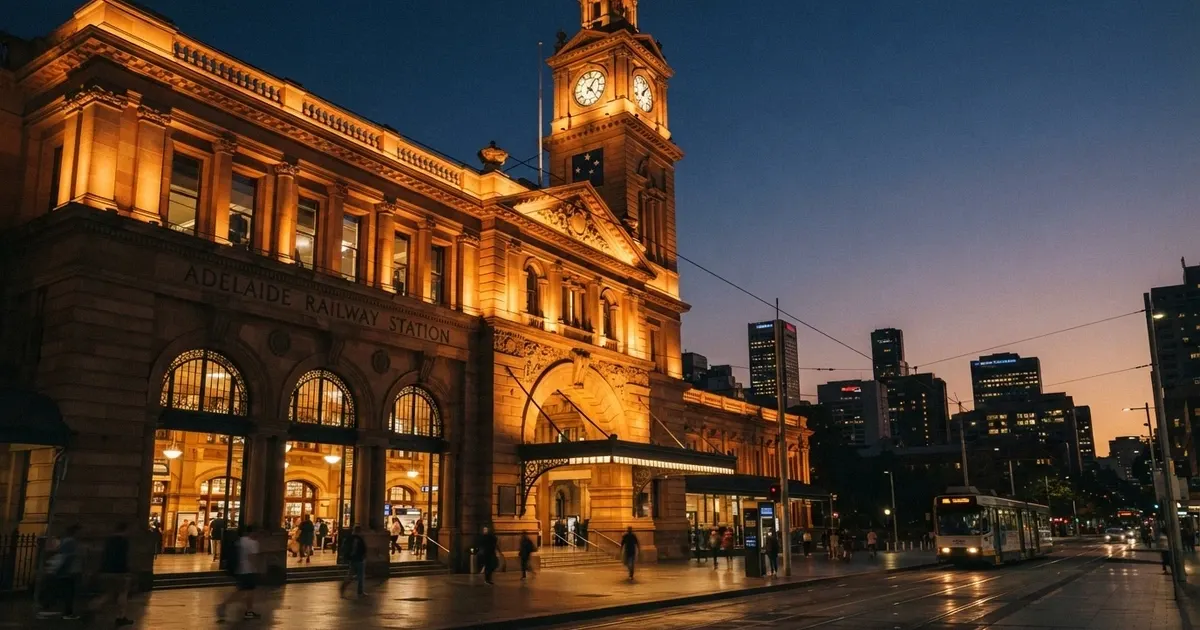
Casino Canberra: The One Table-Game Venue a Punter Can Walk Into in Civic
 Available in AU
“Located in the heart of Canberra’s central business district, Casino Canberra mixes style, elegance and entertainment in a unique and complete package.” That line from VisitCanberra does the work most casino intros struggle with: it tells a reader where the venue sits and what kind of experience it offers before they have spent a sentence wondering. Casino Canberra is the only licensed casino in the Australian Capital Territory. There is no second venue, no rival across town, and no licensed online casino anywhere in Australia to round out the list. The “best” in the question this page is built around is therefore a single-venue answer — and the work of the next several thousand words is to tell you exactly what that venue does well, where it stops, and what the rules around it cost a player.

Current as of 18 October 2026. Licence and offering details verified against the ACT Gambling and Racing Commission register and Casino Canberra’s own published material.
Table of Contents
- Casino Canberra at a Glance — Canberra’s Only Licensed Casino
- Every Game on the Casino Floor — Blackjack, Roulette, Baccarat & More
- Blackjack Limits — Minimums, Maximums & What to Expect at Each Table
- Poker at Casino Canberra — Cash Games, Tournaments & Canberra Poker
- The Multi-Terminal Gaming Stadium — Electronic Tables Explained
- The Pokies Gap — What Casino Canberra Offers Instead
- Natural Nine — Pop Chinese Dining by Head Chef Sean Xing
- Bars & Lounges — Onyx Lounge, Chandelier Bar & the Onyx Sports Lounge
- Events, Functions & the Lotus Room — Hosting at Casino Canberra
- Opening Hours — When Casino Canberra Is Open & the Best Times to Visit
- ID, Dress Code & Entry — What You Need to Walk Through the Door
- Getting There — Parking, Public Transport & the Binara Street Address
- Earning While You Play — How Infinity Rewards Works
- The Ownership Story — Aquis, Iris Capital & the A$63M Acquisition
- The A$14 Million Refurbishment — What Changed & What’s Still Planned
- Contact & Customer Service — Phone, Email & How to Get in Touch
- Licensed Gambling Operators Available in Canberra — Ranked & Compared
- Is Casino Canberra Legally Licensed? — ACT Gambling Laws Explained
- Responsible Gambling in Canberra — Where to Get Help & What Protections Exist
- How We Reviewed Casino Canberra — Our Criteria & Sources
- Should You Visit Casino Canberra? — Our Verdict
- Frequently Asked Questions
Casino Canberra at a Glance — Canberra’s Only Licensed Casino
The doors at 21 Binara Street, Civic, open at noon and close at 4 am, every day of the week. Between those hours, Casino Canberra is the only building in the ACT where a punter can sit down at a real casino table. The licence was issued on 23 December 2014 to Aquis Canberra Pty Ltd under section 22 of the Casino Control Act 2006 and has stayed in force through two changes of ownership. From July 2022 to December 2022, the licence passed into the hands of Iris CC Holdings Pty Ltd in a deal worth roughly A$63 million, with a probity assessment completed under the same Casino Control Act before regulatory approval. Aquis Entertainment was delisted from the ASX on 16 October 2023, and Casino Canberra now operates as “proudly part of the Iris Capital family.”
Three things mark this venue apart before a single chip is bought. It is the only licensed casino in the ACT. It is the only casino in Australia not licensed to operate poker machines. And it runs on a boutique scale — a 39-table floor inside a building excised from Glebe Park under a 99-year lease, in the middle of Civic rather than at the edge of it. That is the headline of any visit. Whether the rest of the page lands as useful depends on whether a reader wants a table-game night out, a meal at a serious restaurant, a function venue, or all three.
Every Game on the Casino Floor — Blackjack, Roulette, Baccarat & More
Walk the floor and a count gets you most of the way there. Casino Canberra runs 39 gaming tables, of which the main floor alone hosts more than 30. The published inventory, drawn from VisitCanberra and the venue’s own listing, is straightforward: Blackjack, Roulette, Baccarat, Poker, Pai Gow, Money Wheel, Pontoon, and a house-dealt variant called Canberra Poker. Layered over the live tables is a set of electronic table games and the new Multi Terminal stadium — the digital counterpoint that lets the venue answer a question pokies would otherwise answer elsewhere.
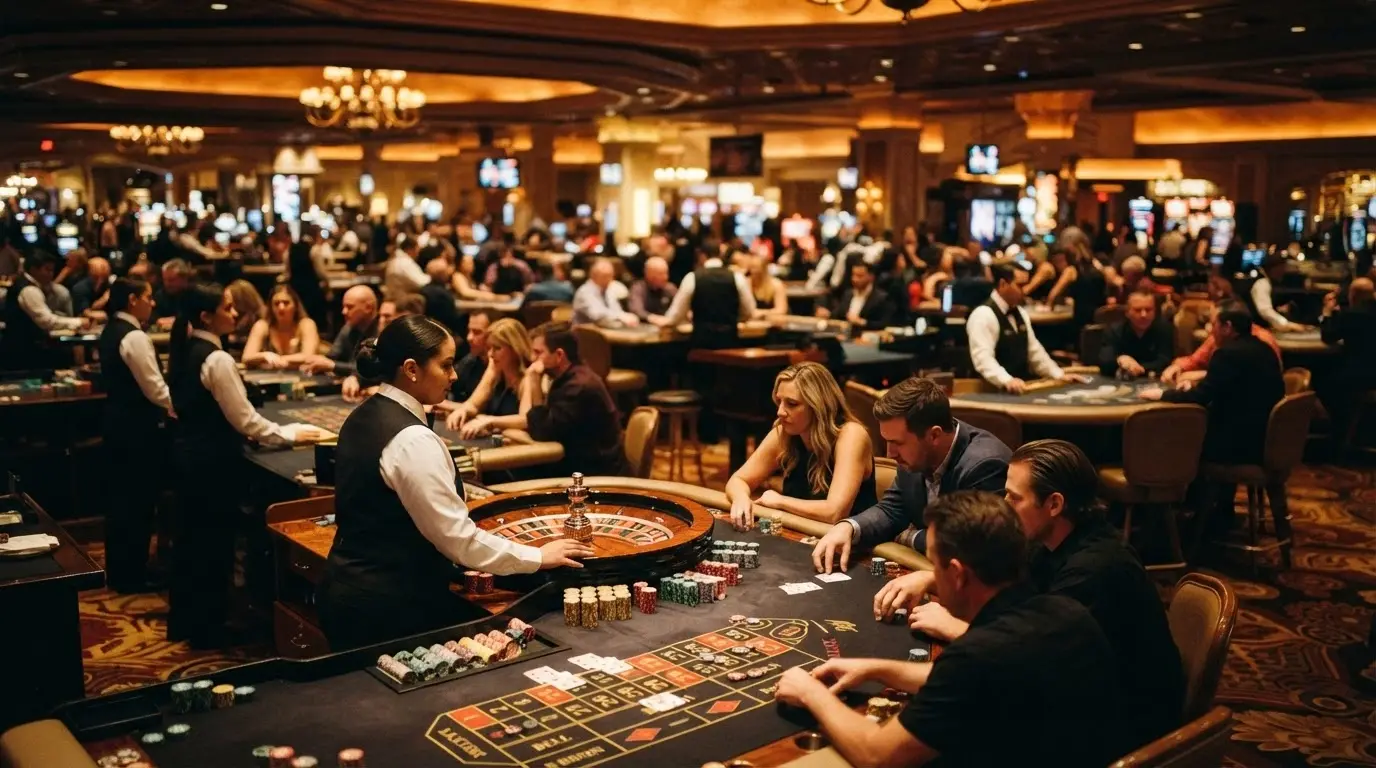
What is missing matters as much as what is there. There are no poker machines on this floor. No slots of any description, no EGMs, no bank of video reels under low ceilings. Every bet the venue accepts comes off a felt table or off a digital terminal that simulates one. For a reader used to Crown Melbourne or The Star Sydney, that absence reshapes the visit. For a reader who walked in specifically to play pontoon at a $5 minimum, it leaves the layout uncluttered and the staff surprisingly reachable.
Blackjack Limits — Minimums, Maximums & What to Expect at Each Table
The blackjack pit is the easiest part of the floor to plan a bankroll against. Casino Canberra runs four stake tiers, and the spread between them is wide enough that a $5 player and a $50 player will not end up at the same table.
| Minimum Bet | Maximum Bet | Tables Available |
|---|---|---|
| $5 | $500 | 6 |
| $10 | $500 | 7 |
| $25 | $1,000 | 2 |
| $50 | $2,000 | 2 |
What the spread tells a player: the venue is built around low-stakes play. Thirteen of the seventeen blackjack tables take a $10 minimum or below, and six of those take a $5 minimum with a $500 ceiling. That is a flat ceiling for the lower two tiers, not a sliding one — a player who likes to press their bet on a hot hand runs out of headroom well before they run out of stack at the bottom of the pit. Two tables at $25 to $1,000 and two at $50 to $2,000 cover the higher-stakes action, but availability is thin. A high-limit player who turns up on a busy Friday night may end up waiting, or stepping down.
Compared with the bigger Australian casino blackjack pits, the table count is light. Crown Melbourne’s main floor runs into the hundreds. Casino Canberra’s 17 blackjack tables across four tiers is closer to what’s on offer at a regional casino than a capital-city resort. A punter looking for a $5 hand with a quiet cocktail wait service is well served; a limit player who wants a dedicated high-roller room is not.
Poker at Casino Canberra — Cash Games, Tournaments & Canberra Poker
The poker offering on the main floor is part of the 39-table inventory and lives alongside the Blackjack and Roulette pits rather than behind its own partition. The house-dealt variant, Canberra Poker, runs on the felt along with conventional poker. Cash-game availability — what stakes, what hours, what spread — is the kind of detail a poker player wants at the door rather than from a guide, and Casino Canberra’s own communications do not publish a current cash-game schedule the way a dedicated poker room would.
The same applies to tournament poker. There is no public tournament calendar carried on the main venue listings, which is not the same as saying no tournaments run — it is saying the venue treats them as a programming decision rather than as a fixed weekly fixture. A reader planning a poker-first visit should treat the floor as a supplementary poker room rather than as a destination card room. Cash play is there; the calendar, the rake structure and the dedicated tournament schedule a serious tournament player asks about are not published in a form this run could verify.
The Multi-Terminal Gaming Stadium — Electronic Tables Explained
The A$14 million refurbishment of the gaming floor delivered the headline physical asset that did not exist before — a 50-seat digital stadium called the Multi Terminal. Each seat is a terminal. Each terminal lets a player move between games and place bets on more than one game at a time, without leaving the chair. The stadium gives Casino Canberra its first real electronic answer to the gambling demand that, in any other Australian venue, pokies would be soaking up.
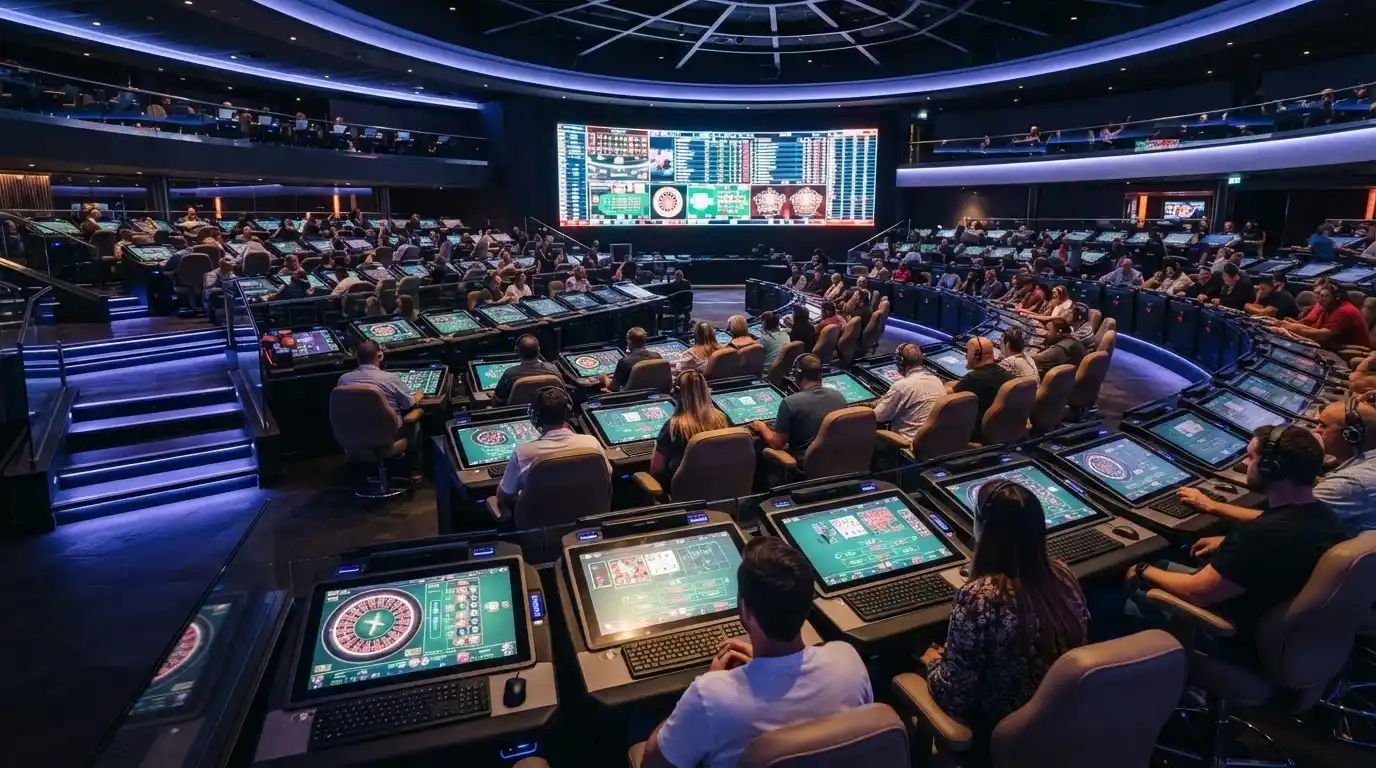
The mechanic is the part worth understanding. A player sits down, picks a game (Roulette, Baccarat, Blackjack variants and the broader table-game catalogue all appear in the menu), and plays at their own pace. Unlike a live dealer, no one is waiting on a shoe to be shuffled or on a wheel spin to resolve. The terminal handles it. The same terminal lets a player run two games side by side — a slow Roulette spin on one half of the screen while quick Blackjack hands resolve on the other. For a visitor who wants constant action without swapping seats, it is the closest thing on this floor to a multi-table online lobby, except it is fifty seats of it in a single roped-off arena.
The stadium is also where Casino Canberra quietly answers the pokies question. Players who would otherwise walk past a bank of EGMs have somewhere in the venue to sit down, place a bet, and get a result in seconds. It is not a pokie. It does not pretend to be. The rules under which it operates are the same table-game rules, and that distinction holds inside the venue as much as it does outside it.
The Pokies Gap — What Casino Canberra Offers Instead
There are 4,549 poker machines spread across clubs and pubs in the ACT — and Casino Canberra does not run a single one of them. Per capita, the ACT has more EGMs than any other Australian jurisdiction, three times as many as Victoria and fifteen times as many as Western Australia. Walk into any Canberra club on a Saturday evening and the hum of machines will follow you out to the car park. Walk into Casino Canberra and the soundtrack is felt tables and the rustle of cards.
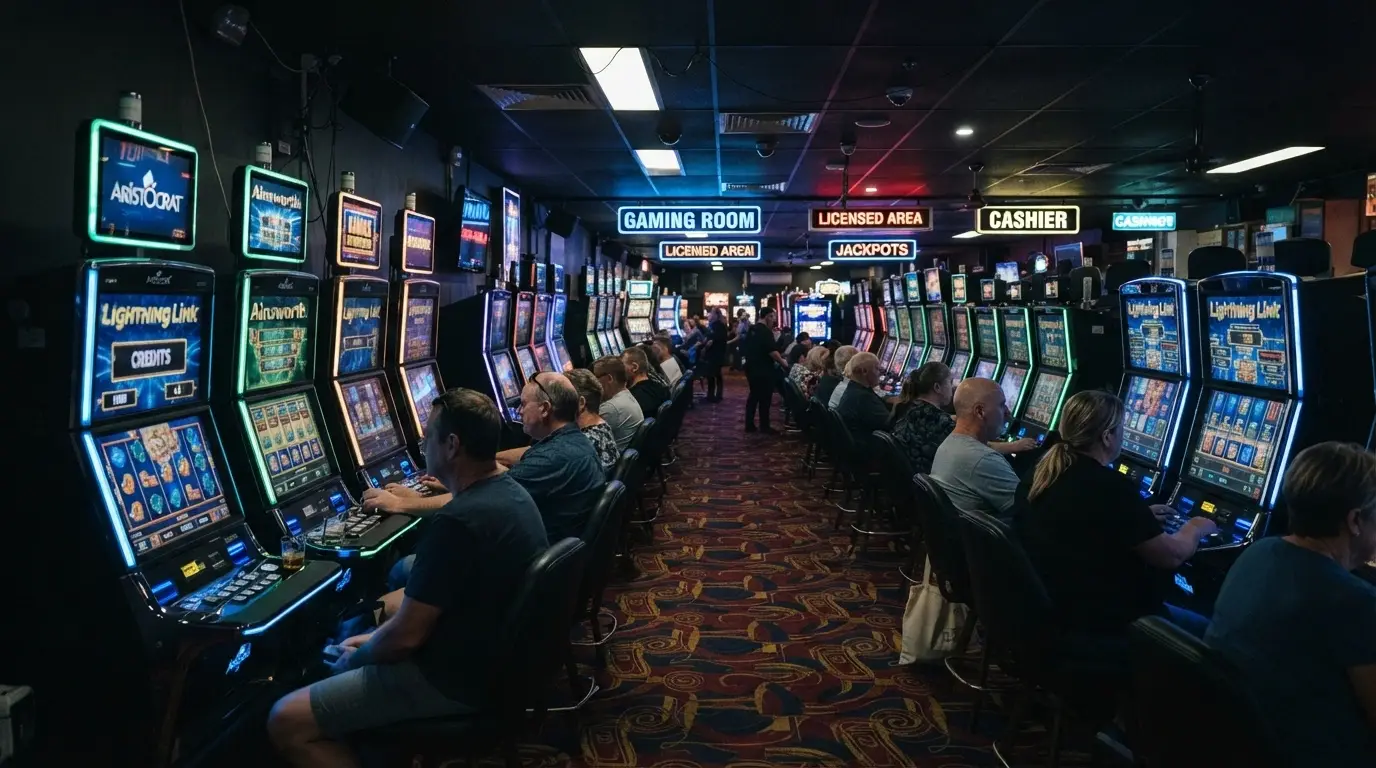
The reason is statutory, not commercial. Casino (Electronic Gaming) Act 2017, commencing on 13 May 2018, opened the door to up to 200 poker machines and 60 fully automated table games (FATGs) at Casino Canberra — but only subject to redevelopment of the site and a Social Impact Assessment. Years on, the redevelopment condition has not been met, the machines have not been installed, and Casino Canberra remains the only casino in Australia without an EGM licence in active operation. The Casino Canberra of today is a table-only venue by legal history and by the unresolved status of a plan that has sat on the table since 2017.
A reader’s reasonable question is what the venue has instead. The answer is the inventory already on the floor: live Blackjack, Roulette, Baccarat, Poker and the house variants; the electronic table games running a faster version of the same catalogue; and the new 50-seat Multi Terminal stadium as the seat where a player who wants electronic action finds it. None of it is a substitute for a pokie session. All of it is what this venue lawfully offers in the pokies’ absence.
Natural Nine — Pop Chinese Dining by Head Chef Sean Xing
The flagship restaurant at Casino Canberra is Natural Nine, and the cuisine it serves has a name that does a lot of work. “Pop Chinese” — the venue’s own description — is Cantonese-influenced Chinese cooking with a Shanghainese accent, run by Head Chef Sean Xing. The menu is not labelled “traditional”, and it is not labelled “modern”: it is labelled the way Shanghainese-leaning Chinese food with a Western audience in mind tends to get labelled. The style holds whether you order from the à la carte dinner service or sit down for Yum Cha on a Friday or Saturday.
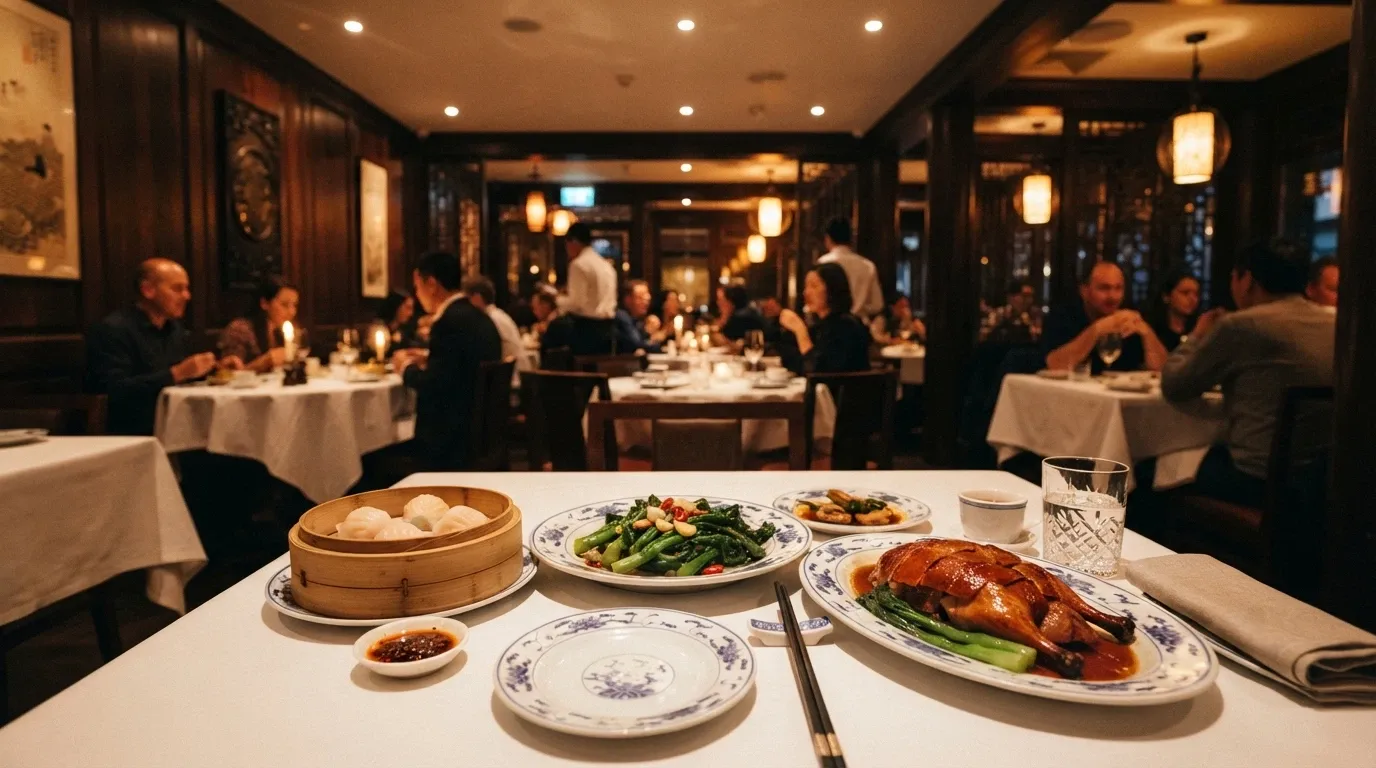
Service hours are tight and worth knowing before booking. Dinner runs from 6 pm to 9 pm, seven nights. Lunch runs from 12 pm to 2 pm, Saturday through Thursday. Yum Cha runs from 12 pm to 3 pm on Fridays and Saturdays only. The private dining room seats six to eight guests and is the route in for a small celebration or a working dinner that you do not want held at a neighbouring table. Natural Nine also functions as a full restaurant venue for larger bookings — the published event capacity is two to 80 guests, which makes it the most flexible sit-down space in the building short of the Lotus Room.
For a Canberra reader, the practical note is that Natural Nine’s quality is the most common reason cited in independent reviews for a non-gaming visit to Casino Canberra. The food stands on its own; the dining room is open to anyone who walks into the venue and clears the 18-plus, ID-required gate, with no obligation to play.
Bars & Lounges — Onyx Lounge, Chandelier Bar & the Onyx Sports Lounge
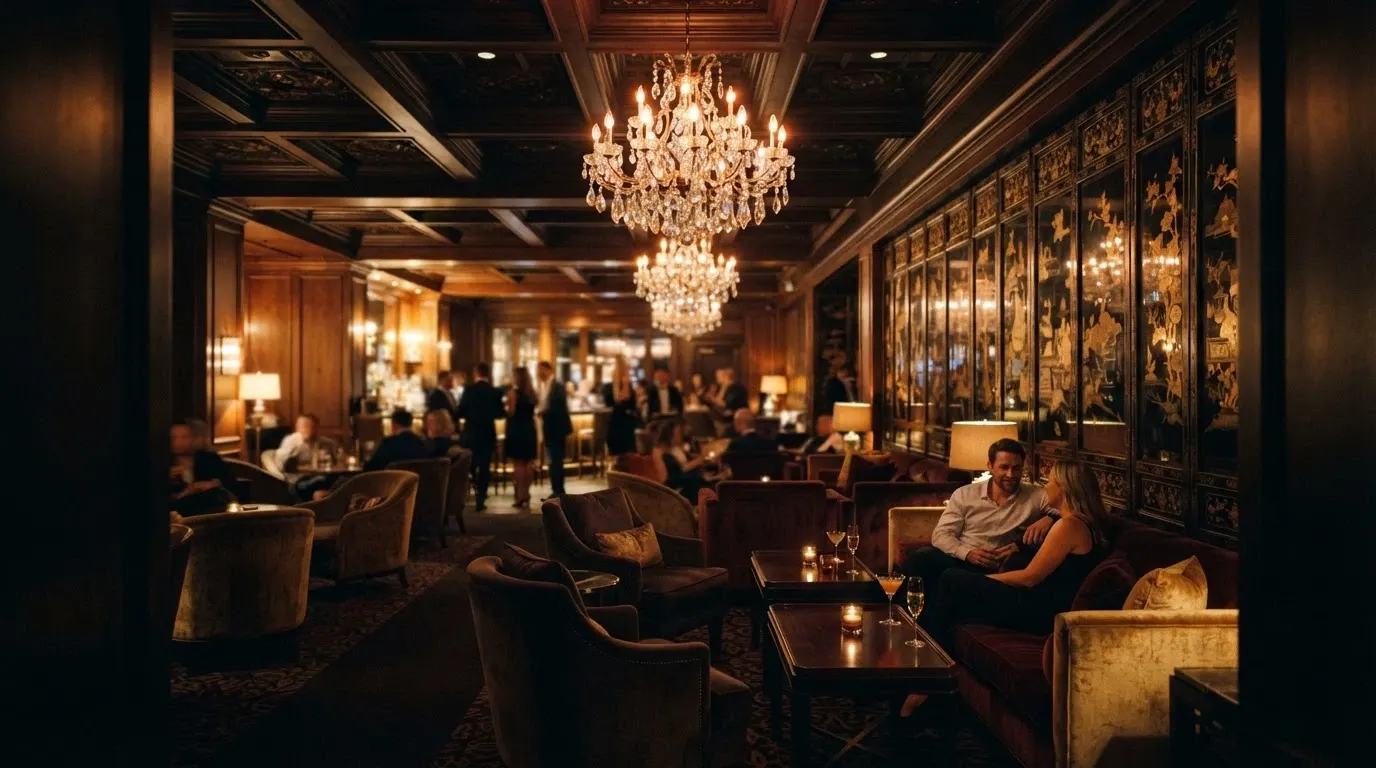
The drinking and social spaces inside Casino Canberra sit on a spectrum from quiet to loud. On the quiet end, the Onyx Lounge accommodates between 20 and 65 guests depending on configuration, with glittering chandeliers and intricate gold screens setting the visual tone and direct access to the gaming tables letting a player take a drink break without straying from the floor. It is the room for a pre-dinner drink, a quiet meeting, or a low-key function that wants atmosphere without a stage. The private dining-style private events slot in this space, with an upper capacity of 65 — comfortably ahead of what a typical restaurant function room holds.
Chandelier Bar runs alongside the Onyx Lounge and the casino floor, leaning into the visual language the Onyx established. It is the cocktail stop between the gaming tables and Natural Nine, and the surface where many of the venue’s individual bookings meet for a pre-meal drink.
On the loud end of the spectrum is the Onyx Sports Lounge — the venue’s dedicated sports-screen space, for punters who want the live sport on while they sit with their TAB orcasino bar ticket. A reader who is at Casino Canberra for the racing or sports screens, rather than the felt tables, will end up in this room; a reader who wants quiet will not. The three spaces share a client and a building but split their use cleanly.
Events, Functions & the Lotus Room — Hosting at Casino Canberra
Casino Canberra’s function capacity is wider than most visitors expect from a single-venue casino. The Lottery Room — the Lotus Room — is the largest space and the headline event venue: 50 to 310 guests, configurable for team presentations, conferences, banquets, Christmas parties, or product launches. It is the room a corporate booker asks about and the room a wedding planner books around.
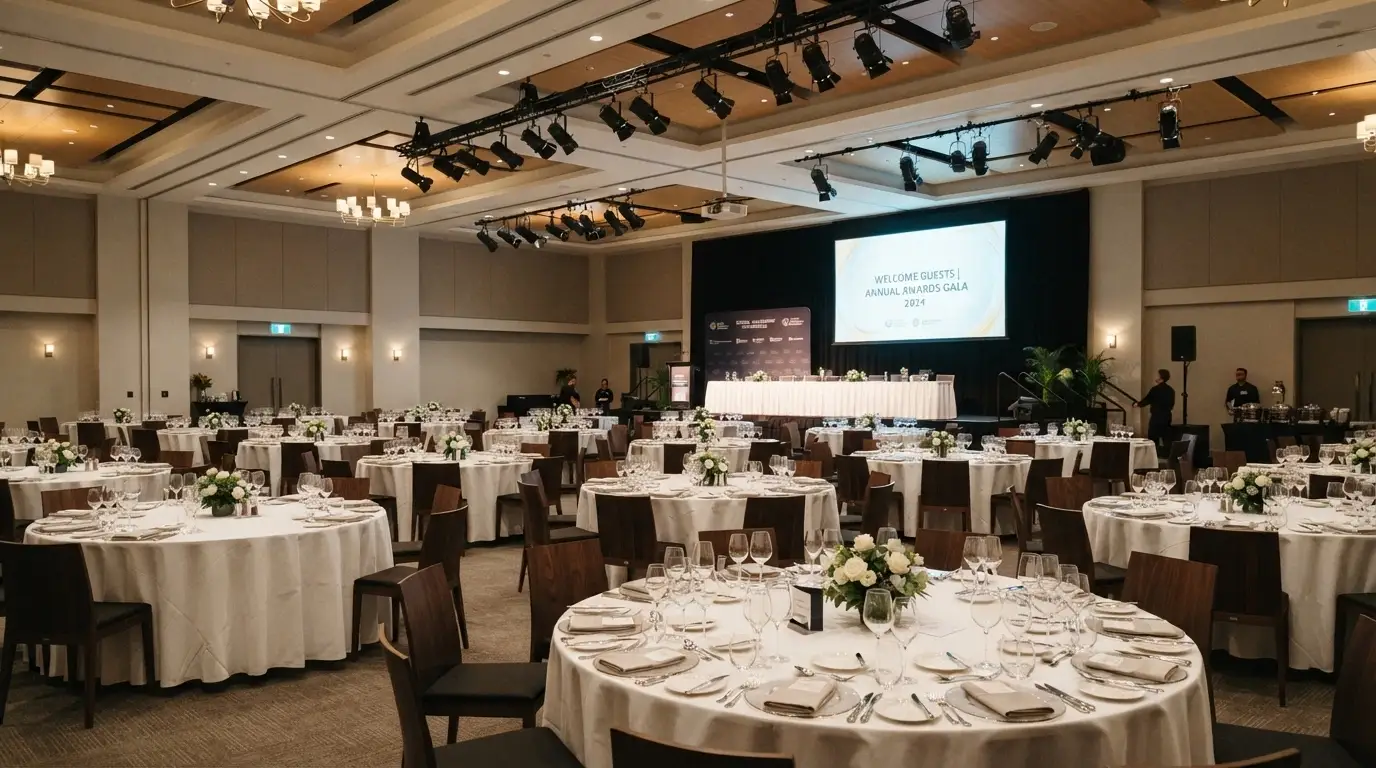
Underneath that, the Onyx Lounge doubles as a function space at 20 to 65 guests, Natural Nine hosts 2 to 80 for sit-down dining events, and the Natural Nine private dining room takes 6 to 8 guests for smaller gatherings. The total range covers almost anything a Canberra event organiser asks of a venue — from a board meeting for eight to a 310-guest end-of-year function. The mix of spaces also means a multi-part event (cocktails in Onyx, dinner in Natural Nine, awards in the Lotus Room) stays in one building.
Booking the venue runs through the casino’s own events team. Phone enquiries are the practical front door; the published communications do not carry a dedicated booking form or email address the way a hotel chain would, and a reader planning a function rings or visits in person rather than filling out an online form.
Opening Hours — When Casino Canberra Is Open & the Best Times to Visit
The doors open at 12 pm and close at 4 am, every day of the year. That is Casino Canberra’s published daily schedule, and the rhythm it sets is the rhythm of a Civic night out: arrive in the early afternoon, eat, play, and leave before the venue shuts — or play the late shift and stay until the small hours.
Two structural rules shape the use of those hours. First, every venue in Canberra is required to close for at least five consecutive hours every 24 hours — a territory-wide rule that, applied to Casino Canberra, gives the building its overnight shutdown rather than a 24-hour operation. Second, the venue’s dining rooms, bars and lounge spaces run their own sub-schedules on top of the gaming floor hours. Natural Nine’s 6 pm to 9 pm dinner service is the most published of these; a reader who wants dinner before gaming plans around it.
The peak periods, qualitatively, are Friday and Saturday evenings for the dining rooms, and the late-evening window around 9 pm to 1 am for the gaming floor. Weekday afternoons are quieter — easier table availability, shorter bar waits, and the best shot at a blackjack seat at the table of your choice.
ID, Dress Code & Entry — What You Need to Walk Through the Door
The gate is 18-plus, photo-ID required. Casino Canberra publishes this as a hard rule, framed as a “No ID, No Entry” policy under its responsible-entertainment mandate. Every guest is screened on the way in: valid photo ID — an Australian driver licence, a passport, a proof-of-age card — is the minimum, and the ID check is the same for everyone regardless of whether they came to play, eat, or attend a function in the Lotus Room.
A published dress code is not something the venue carries on its public communications the way a Melbourne or Sydney high-roller room would. The standing convention across Australian casinos, Casino Canberra included, is smart-casual — collared shirt or neat top, closed shoes, no active sportswear, no thongs. The convention is what you should expect to find at the door, and what the door has historically asked a guest to amend when it falls short.
Guest registration is handled at the entrance, and that registration is the entry point for the Infinity Rewards loyalty programme. There is no charge, no application fee, and no waiting period; membership card is issued on the first sign-up.
Getting There — Parking, Public Transport & the Binara Street Address
Casino Canberra sits at 21 Binara Street, Civic, ACT 2601. The address is also the description: Binara Street runs along the edge of Glebe Park, which is where the casino land was originally carved out under a 99-year lease between the licensee and the ACT government. A reader walking from CBD hotels will find the venue within a short stroll of most Civic accommodation.
Driving in, the casino does not publish a dedicated on-site car park as a feature. The Civic commercial car parks (the ones around the Canberra Centre, the Mercure and the surrounding commercial blocks) cover most of the demand; street parking on the surrounding avenues is also available with the usual restrictions. Public transport is the route many visitors use — Civic is the hub of Canberra’s light rail and the central bus interchange, and a reader landing at the Jolimont Centre or the Canberra Centre interchange is within a short walk of the venue.
Earning While You Play — How Infinity Rewards Works
Infinity Rewards is the venue’s free loyalty programme. Membership is open to guests 18 and over who are not on the casino’s exclusion list, and the card a member carries carries three things: their name, their member number, and their photo. It is the venue’s identity-linked way of tracking play, awarding complimentary benefits, and operating a tier system a player moves through as their play grows.
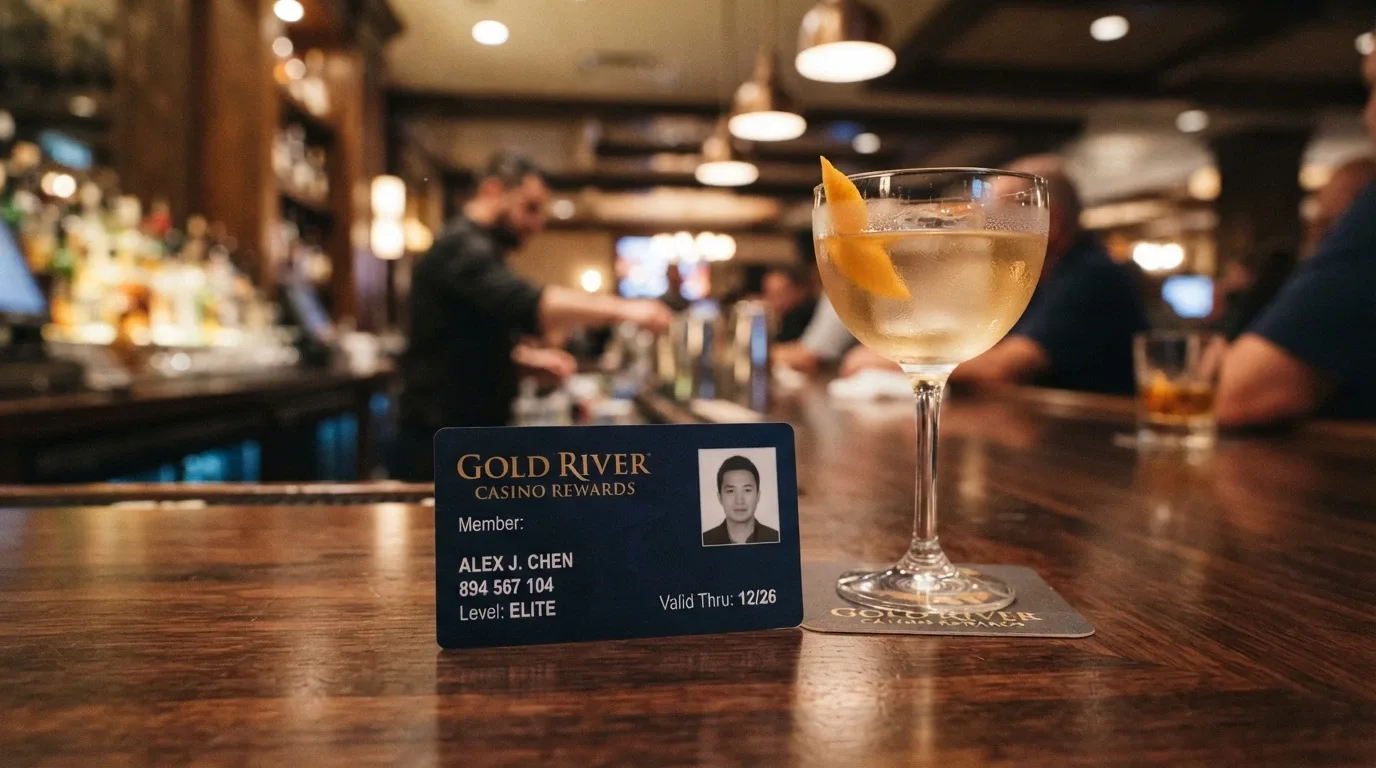
What the card delivers, in practical terms: complimentary drinks and meals on qualifying play, tournament invitations, special offers, discounts on food and beverage, and personalised bonuses that reflect a member’s history with the venue. The terms of the programme live in a PDF on the Casino Canberra site rather than in a public-facing page, which is the standard casino loyalty pattern — the benefits are described in marketing copy, the eligibility sits in terms.
The sign-up path is in-venue, not online. A reader who wants a card presents ID at the casino entrance, completes the registration at the desk, and walks out with their card on the same visit. The whole process takes the time it takes to verify the ID and print the card, and there is no cost or commitment on the member side.
The Ownership Story — Aquis, Iris Capital & the A$63M Acquisition
Casino Canberra has changed hands twice since it opened in 1994. The original operator was Casinos Austria International, which opened the venue in the mid-1990s and ran it through two decades of operation. Aquis Entertainment acquired it during the 2010s, completed the A$14 million gaming-floor refurbishment that delivered the Multi Terminal stadium, and operated the venue through the pandemic. The current ownership change begins with a share purchase agreement dated 22 July 2022, in which Iris CC Holdings Pty Ltd agreed to acquire 100% of Aquis Canberra Pty Ltd — the entity that held the casino licence — for a total consideration of approximately A$63 million.
Regulatory approval did not arrive automatically. Under the Casino Control Act 2006, a change of control of a casino licensee triggers a probity assessment of the new owner. That assessment, carried out by the ACT Gambling and Racing Commission, completed in December 2022, and regulatory approval followed. From that point, the venue has operated under Iris Capital ownership, with the corporate vehicle renamed Casino Canberra Limited. Aquis Entertainment was delisted from the ASX on 16 October 2023, closing that chapter of the venue’s history. Today, the venue markets itself as “proudly part of the Iris Capital family.”
The operational meaning for a reader is limited but worth noting. Iris Capital is a private investment group; the venue does not share an owner with Crown Resorts, The Star, or SkyCity. Decisions about redevelopment, hospitality programming and the future of the Multi Terminal stadium sit with the new owner, not with the listed Aquis entity that previously ran them.
The A$14 Million Refurbishment — What Changed & What’s Still Planned
The headline capital project of the last decade at Casino Canberra was the A$14 million gaming-floor refurbishment, completed under Aquis and inherited by Iris. Its delivered pieces are the revamped gaming floor and the 50-seat digital Multi Terminal stadium. Both are visible to a first-time visitor: a re-laid-out main floor with the live tables modernised, and the stadium arena where the electronic tables run side by side.
What has not been delivered is the larger redevelopment. The Casino (Electronic Gaming) Act 2017, commencing 13 May 2018, permitted Casino Canberra up to 200 poker machines and 60 fully automated table games (FATGs), conditional on a site redevelopment and a Social Impact Assessment. Previous Aquis redevelopment proposals went further: 100 five-star hotel rooms and 12 six-star luxury villas on the surrounding casino land. None of it was built. Years on, there is no hotel on the casino site, no villas, no poker machines, and no public timeline that confirms when — or whether — any of it will be built under Iris Capital.
That is the part a reader should hear plainly. The gaming floor is refreshed. The hotel, the villas and the poker machines have not arrived. There is no public commitment from the current owner that they will imminently. A reader booking a function, planning a visit, or sizing the venue against the capital-city competition should price in the absence of an on-site hotel and the continued no-pokies status, not the plans.
Contact & Customer Service — Phone, Email & How to Get in Touch
The published front door is a phone line: +61 2 6243 3700. It is also the line Casino Canberra lists on its main page, and the line a visitor uses to book a function, ask about ticket prices, confirm opening hours on a holiday, or check on an Infinity Rewards issue. The address — 21 Binara Street, Canberra ACT 2601 — is the venue’s other public-facing contact point and shows up on every official communication.
For anything beyond a phone enquiry, the venue’s own website is the place to find the latest contact details. A standing contact form or a publicly listed email address is not something this run turned up, which means the practical path for a reader who needs to reach a specific function coordinator, a specific manager or a specific member of the Infinity Rewards team is to ring first, ask for the right desk, and follow up by email with the address that enquiry yields. For most readers — those wanting to know dining hours, table availability, or how to find the venue — the published phone number and the published address answer the question on their own.
Licensed Gambling Operators Available in Canberra — Ranked & Compared
The notion that there is a range of casinos in Canberra to compare is worth clarifying early. Canberra has no licensed online casino, and no onshore casino other than Casino Canberra. Local readers who want to bet with a regulated operator have wagering, racing and lottery products to choose from — and the table below lays those out ordered by Australian market share. These are not casinos. None of them offers an online casino product. They appear here because the licensed landscape a Canberra reader actually has access to runs through them.
| Operator | Product Type | Licence Jurisdiction | AU Market Share |
|---|---|---|---|
| SportsBet | Sports wagering | NT (NTRWC) | 19.57% |
| Tab (Tabcorp) | Wagering / Racing | State-based | 11.54% |
| Bet365 | Sports wagering | NT (NTRWC) | 6.56% |
| Ladbrokes | Sports wagering | NT (NTRWC) | 4.53% |
| TABtouch | Wagering | WA / NT | 4.28% |
| PointsBet | Sports wagering | NT (NTRWC) | 2.66% |
| Neds | Sports wagering | NT (NTRWC) | 2.25% |
| Betr | Sports wagering | NT (NTRWC) | 0.94% |
| Picklebet | Esports / Sports wagering | NT (NTRWC) | 0.79% |
| Betfair | Betting exchange / Sports wagering | NT (NTRWC) | 0.62% |
The dominance of NT licensing across the table is the de facto national pattern for online wagering in Australia: most operators hold their Australian wagering licence through the Northern Territory Racing and Wagering Commission rather than through state-based regimes, and that NT licence is what makes the product legally available to Canberra residents. Tabcorp, by contrast, runs through a state-based licence and also operates physical TAB outlets across the ACT — a different model from the digital-first brands above it. The combined top-three market share (37.67% between SportsBet, Tab and Bet365) accounts for more than a third of Australian wagering; the bottom of the table — Betr, Picklebet and Betfair — together sits below 2.5%.
SportsBet — Australia’s Largest Wagering Brand
SportsBet is the largest wagering brand in Australia by national market share, at 19.57%. It runs as a sports-wagering product under an NT licence (the NTRWC), and that licence is what makes it legally available to Canberra punters over the phone, online and through the app. The scale is the headline: more dollars flow through SportsBet than through any other single operator in the country, which means the most liquidity, the deepest market on big events, and the most aggressive promotional cycle during major racing carnivals.
Tab (Tabcorp) — Racing & Wagering With ACT TAB Outlets
TAB, owned by Tabcorp, is Australia’s second-largest wagering brand at 11.54% national market share. It is the only brand on this list with a physical presence the Canberra reader can walk into — TAB outlets operate across the ACT, and a punt-and-collect model for racing and sports is still part of how a meaningful slice of Australian wagering gets done. TAB’s licence is state-based rather than NT-based, which routes its oversight through Tabcorp’s home-state regulators.
Bet365 — Global Bookmaker With an Australian NT Licence
Bet365 is the international bookmaker most Australian readers will already recognise without being told the parent company. The Australian operation runs on an NT licence (NTRWC), and it sits at 6.56% of the national wagering market — well behind SportsBet, well ahead of the brands below it. The product is sports-wagering focused and the depth of market on international football, cricket and tennis is the reason many Australian punters hold a Bet365 account alongside a domestic one.
Ladbrokes — Entain-Owned Wagering at 4.53% Market Share
Ladbrokes Australia is the local operation of the Entain group’s heritage Ladbrokes brand, licensed in the NT and sitting at 4.53% national market share. The Entain group also owns Neds, listed separately below, which means the Entain footprint runs across two of the ten brands on this table. Ladbrokes is the older of the two and the more established in the Australian market.
TABtouch — WA-Rooted Wagering at 4.28% Market Share
TABtouch holds 4.28% of the Australian wagering market and is rooted in the Western Australian racing culture, with NT licensing supporting its national reach. It is one of the smaller operators that has maintained a meaningful national share without a Tabcorp-style retail footprint or a SportsBet-scale marketing budget.
PointsBet — Australian Spread-Betting Brand at 2.66%
PointsBet is the Australian-founded spread-betting and sports-wagering operator, holding 2.66% of the national market under its NT licence. The product mix is the differentiator — PointsBet is one of the few operators in Australia offering a fully-fledged spread-betting product aimed at the North American-style line-betting market.
Neds — Entain’s Second Australian Wagering Brand
Neds is Entain’s second Australian wagering brand and sits at 2.25% national market share, NT-licensed. It runs a sports-wagering product pitched to a slightly different customer segment than Ladbrokes: a younger skew, a heavier promotional cycle, and a stronger focus on racing exotics than the heritage Entain brand.
Betr — News Corp-Backed Wagering Entrant
Betr is the newer entrant to the Australian wagering market, with News Corp backing, and holds 0.94% of the national market under its NT licence. The product is sports-wagering and the brand profile leans into the media parent’s audience — a younger, more digitally-engaged punter than the established brands at the top of this table.
Picklebet — Esports & Sports Wagering
Picklebet is Australia’s esports-focused wagering brand, running an esports and sports-wagering product on an NT licence, with 0.79% national market share. It is the operator on this table with the narrowest product focus, and the destination for a Canberra punter whose interest runs to esports tournaments rather than traditional racing and sports.
Betfair — Peer-to-Peer Betting Exchange
Betfair is the only peer-to-peer betting exchange in the Australian market, holding 0.62% national market share under its NT licence. The exchange model is the differentiator: punters back and lay against each other rather than against a bookmaker, and the pricing on a Betfair market tends to be sharper than at a traditional sportsbook for that reason. For a serious racing or sports punter, it is a price-discovery tool as much as a place to bet.
Is Casino Canberra Legally Licensed? — ACT Gambling Laws Explained
Casino Canberra’s licence is real, current, and traceable to a section of an ACT statute. That sentence is the answer to the “best casino” question for any reader who wants legal certainty before they walk into a venue. It also opens a much bigger story about how Australia regulates gambling — one where land-based casinos sit inside state and territory oversight, online casino is banned outright, and the federal government has just pushed through the most significant reform of the online wagering advertising and payment environment in over a decade.
Casino Canberra’s Licence — The Casino Control Act 2006 Explained
The licence that authorises Casino Canberra to operate was issued on 23 December 2014 to Aquis Canberra Pty Ltd, pursuant to section 22 of the Casino Control Act 2006 (ACT). The regulator behind it is the ACT Gambling and Racing Commission, whose annual reports and licence register are the public record. The section number matters because it identifies the statutory basis — section 22 is the issue-of-casino-licence provision, not a section buried in subordinate legislation or a regulatory instrument. This is a primary statute, signed by an ACT legislator, governing the issuance of a casino licence.
The licence holder on the public record remains Casino Canberra Limited. The entity became a wholly owned subsidiary of Aquis Canberra Pty Ltd, and after the 2022 share purchase that entity became a wholly owned subsidiary of Iris CC Holdings Pty Ltd — the Australian arm of Iris Capital. The December 2022 probity assessment under the Casino Control Act 2006 confirmed Iris CC Holdings as a fit and proper owner of a casino licence in the ACT, and regulatory approval followed. From that point, Casino Canberra has operated under Iris Capital ownership with no fresh licence issuance required: the existing licence moved with the share purchase, the way section 22 contemplates.
For a reader, what the licence allows is operation of a land-based casino at 21 Binara Street, Civic — opening, conduct of table games, conduct of electronic table games, and any of the activities the statute and licence conditions authorise. What it does not allow is online casino; what it does not yet unlock is the 200 poker machines permitted under the Casino (Electronic Gaming) Act 2017.
The 18-Plus Rule — Legal Gambling Age in the ACT
Eighteen is the minimum age for every form of commercial gambling in Australia, and Casino Canberra enforces it on entry. Guests must present valid photo ID at the door — an Australian driver licence, a passport, or a proof-of-age card are the standard accepted forms. The “No ID, No Entry” framing the venue uses for this rule is a deliberate positioning of the age gate as part of its responsible-entertainment mandate, and it is enforced regardless of whether the guest is there to play on the gaming floor, eat at Natural Nine, attend a function in the Lotus Room, or simply have a drink at the Chandelier Bar.
The enforcement model is consistent with the rest of the country’s high-roller-grade venues: ID scanned at the door for every entry, age kept on the venue’s records for compliance purposes, and the responsibility for verifying age resting with the operator. For a reader planning to bring a younger family member to the bars or restaurants — they cannot. Age 18 is the threshold for the entire building, not just the gaming floor.
Online Casino in Australia — Why It’s Completely Prohibited
The Interactive Gambling Act 2001 makes it an offence to provide online casino games, online pokies, or in-play sports betting to a person in Australia. No licence for online casino exists anywhere in the country — not federally, not in any state or territory. The Australian Communications and Media Authority (ACMA) enforces the prohibition, and the enforcement has produced real numbers: since November 2019, 1,564 illegal gambling and affiliate websites have been blocked by Australian ISPs (as of March 2026), and more than 225 illegal services have withdrawn from the Australian market since the ACMA’s enforcement powers were strengthened in 2017.
What this means for the reader is that any website describing itself as a “licensed Australian online casino” is selling something that does not exist. The licensed online products in Australia are pre-event sports and racing wagering, lotteries, and keno. Land-based casinos operate under state and territory licences — Casino Canberra’s is the Casino Control Act 2006, and there is no Australian counterpart piece of legislation that authorises the issuance of an online casino licence.
The ACMA’s enforcement reach goes further than blocking. Banks and payment providers, from 1 January 2027, gain express authority to block transactions to illegal gambling operators under the 2026 reform package, which means the financial route to offshore casinos is closing even as the legal route was never open in the first place. The closure runs alongside a separate ban that has already been in force since 11 June 2024: credit cards, credit-related products and cryptocurrency cannot be used to fund online wagering in Australia, with penalties of up to $247,500 per breach for an operator that fails to enforce.
The individual player is not the target of the IGA. The Act prosecutes providers, not customers — a fact that does not change the risk calculus for a player using an offshore site (see the offshore section below), but does mean no Australian has been prosecuted for placing an online bet that an unlawful service took from them. The closure mechanism is upstream: at the licence, at the ISP block, and now at the bank.
What the ACT Caps — Gaming Machine Limits & Venue Rules
The ACT imposes a set of caps on the gaming-machine market that interact directly with Casino Canberra’s no-pokies situation. The maximum bet on a gaming machine in the ACT is $10. Machines accept only $5, $10 and $20 notes. Winnings over $1,200 are paid by cheque — a deliberate de-cashification step designed to reduce the ease of laundering winnings. The minimum RTP on gaming machines is 87%, which means a player at a $1.50 stake per spin pays back roughly $1.30 in the long run before any bonus features and the operator’s hold.
On top of the machine-level caps sits a venue-level rule every ACT operator is bound by: all venues in Canberra must close for at least a five-hour period every 24 hours. Casino Canberra arrives at its 12 pm to 4 am daily schedule partly by choice and partly because the territory-wide rule removes 24-hour operation as an available business model. The result is a city-wide rhythm of licensed gambling that opens, runs for 19 hours, and shuts — and a reader planning a late visit needs to know which hours the building is actually open.
The numbers that frame Casino Canberra’s pokies absence in context: there are 4,549 EGMs operating across clubs and pubs in the ACT — more per capita than any other Australian jurisdiction, three times as many as Victoria, fifteen times as many as Western Australia. The 4,549 sit in clubs and pubs. None of them sit inside Casino Canberra. That is what makes the no-pokies status of the venue genuinely unusual in the Australian market, and what makes the rules above relevant to readers who would otherwise associate the venue with the surrounding ACT machine footprint rather than the statutory exception it represents.
The 2026 Federal Gambling Reforms — What’s Changing for Gamblers
The Interactive Gambling Amendment (Gambling Reform) Bill 2026 passed Parliament on 19 August 2026, and its measures commence on 1 January 2027. It is the most consequential reform of Australia’s wagering environment in over a decade, and it changes how operators can advertise, market and process payments — including the financial routes into illegal offshore services.
The advertising caps are the visible part. From 1 January 2027, no more than three wagering ads per hour can run on television between 6 am and 8:30 pm, with a live-sport blackout running from 15 minutes before a live event until five minutes after it ends. Radio ads are barred during school hours. Broadcasting sporting odds is banned. Online wagering ads can only be served to logged-in, age-verified users who have not opted out of them, and no wagering ads may appear in sports venues or on player uniforms. The promotional voice of the major operators is, by design, about to become much harder to hear.
The marketing prohibitions run beyond the ads. Direct marketing of inducements to customers is prohibited for 14 days after a customer signs up, for three months after a person deregisters from BetStop, and indefinitely for customers identified as at-risk of gambling-related harm. Celebrity endorsements and influencer promotion of wagering operators are out, both online and in broadcast. The reforms also ban online keno — the “pocket pokies” product — and foreign-matched lottery products that have used the loophole of running offshore to Australian customers.
The payment change is the most quietly consequential piece. From 1 January 2027, banks and payment providers gain express authority to block transactions to illegal gambling operators. Combined with the credit-card and cryptocurrency ban that has been in force since 11 June 2024, the legal routes into Australian-licensed wagering narrow to debit cards, bank transfers, PayID/Osko and BPAY; the legal routes into offshore and illegal services close even harder.
For Canberra readers, the practical read is that the reforms reshape the wagering and online-gambling environment, not the land-based casino experience. Casino Canberra’s table games are unaffected by the advertising caps and the inducement rules; the venue does not run an online product. The changes that touch a Canberra reader directly are the ones affecting how they place a bet with a wagering operator, and how an offshore service might be cut off mid-session by a transaction block. The IGA has been in force since 2001 and the existing bans since 2024; the 2026 reforms fill in the operational machinery that was missing.
Offshore Casinos & Australian Players — The Risks You Can’t See
Offshore casinos reach Australian traffic. They spend real money on search ads and affiliate marketing pushing Australian players towards signup pages, run promotional campaigns designed to look like the regulated product, and quote no Australian licence because they hold none. The Interactive Gambling Act 2001 makes that offering to Australians illegal, but the IGA targets the provider — meaning the offshore operator and its payment processors carry the criminal exposure, while the Australian player carries the full risk profile of having used an unlicensed site.
The risk profile is the part that pages marketing offshore casinos work hardest to leave out. There is no BetStop coverage: a player who has self-excluded through the National Self-Exclusion Register has cleared themselves from every Australian-licensed wagering service, but the offshore site does not see the register and does not stop accepting the excluded player’s deposits. A self-excluded Australian who believes they have removed their access to gambling and then plays at an offshore casino has not, in fact, removed their access. The exclusion stopped at the Australian-licensed border.
The same absence runs through consumer protection. There is no Australian regulator to escalate a complaint to. There is no Australian dispute-resolution body the offshore site is bound by. There is no Australian legal recourse if the offshore operator refuses to pay out a withdrawal, closes the account, voids winnings on a disputed terms-of-service clause, or simply stops replying to support emails. The terms of service the player agreed to are the only contract that exists, and the operator that drafted those terms is the only party that interprets them. When the ACMA blocks an offshore site, the player with a balance on it has no Australian court to apply to retrieve the funds.
The marketing around offshore sites also distorts the regulatory geography. A site describing itself as “licensed in a Caribbean or European jurisdiction” may genuinely hold a licence there — but the licence is not Australian, the regulator is not ACMA, and the protections the player is told to expect are the protections of the licensing jurisdiction rather than Australia’s. The ACMA’s blocking register, currently at 1,564 blocked sites, is the operational measure of the gap between the marketing claim and the legal reality.
It is worth saying this plainly once more: the Australian player is not prosecuted for using an offshore site. The Act targets the provider. What the player is exposed to is the absence of every protection that an Australian licence would carry.
Responsible Gambling in Canberra — Where to Get Help & What Protections Exist
A page about a casino venue has a section that, in editorial practice, is sometimes treated as a footer. That treatment is wrong for Casino Canberra, because the venue is the only licensed table-game site in the ACT and the gambling-harm infrastructure that surrounds it is genuinely good. BetStop, the National Gambling Helpline, and the ACT Gambling Counselling and Support Service are all working, available, and free. Casino Canberra’s own responsible-entertainment framing sits on top of that infrastructure rather than as a substitute for it. The sections below describe what each of those pieces does and how a Canberra reader reaches it.
Self-Exclusion in Australia — How BetStop Works
BetStop is the National Self-Exclusion Register, run by the ACMA, live since August 2023. As at 31 July 2026, it had recorded 67,480 registrations, of which 41,290 exclusions were still active. The demographic profile of those registrations tells its own story: 78% of registrants were under 40 at the time of registration, and 38% chose to register for life rather than a fixed exclusion period. Both numbers underline that self-exclusion is a step taken by younger Australians, often before the harm has compounded over decades, and that a substantial minority of those who take the step decide the permanent cut is the right one.
The mechanism is straightforward: one BetStop registration excludes a person from every Australian-licensed online and phone wagering service. Sign up, the system pushes the exclusion to every licensed operator with an Australian customer, and the operator’s onboarding and deposit systems refuse that person’s attempts to play. The exclusion runs for the period the person signs up for (a minimum exclusion of three months up to a permanent lifetime exclusion, or anywhere in between), and BetStop enforces it at the licensee side, not the customer side.
The critical gap is the offshore one. BetStop binds Australian-licensed wagering services — meaning every operator named in the licensed operators table above, plus the state-based TAB outlets, plus every sportsbook and lotteries operator that holds an Australian licence. It does not bind offshore casinos, which hold no Australian licence and therefore have no connection to the register. A self-excluded Australian can still deposit at, play at, and lose money at an offshore casino. That is the seam in the protection model, and offshore casinos are the open end of it.
Registration is through betstop.gov.au. The National Consumer Protection Framework for Online Wagering — the broader policy package BetStop sits inside — runs ten measures total: no line of credit for gamblers, strong identity and age verification, restricted incentives and sign-up offers, easy closing of accounts, offer of deposit limits, monthly gambling activity statements, consistent risk messaging, trained staff, and the National Self-Exclusion Register itself. The framework is the policy floor; BetStop is the single most concrete tool a person in immediate trouble can use today.
Free Support, 24/7 — Helplines & Services Across Canberra
The number to remember is 1800 858 858. The National Gambling Helpline, on that number, is free, confidential and staffed 24 hours a day, seven days a week, by counsellors trained to talk through what is happening and to connect the caller to local services. The same number is the ACT Gambling Counselling and Support Service, referenced on Casino Canberra’s own site, meaning a Canberra caller gets through to a service that understands the territory context. There is no charge, no requirement to identify yourself beyond a first name if you want to, and no obligation to follow up on the call.
The online counterpart is Gambling Help Online (gamblinghelponline.org.au), carrying live chat, web counselling, email support, and self-help modules. The chat function operates on the same hours as the phone line and serves readers who would rather type than call. Both services sit underneath the National Consumer Protection Framework that BetStop is part of, and both are available to any Australian regardless of which state or territory they are calling from.
The ACT Government also funds a local counselling stream alongside the federal helpline, and Casino Canberra’s own responsible-entertainment communications link out to the same number rather than running a parallel service. The practical read for a Canberra reader is that there is one number to call, one website to visit, and the rest of the system built underneath them. If gambling is causing harm — to a player, to a partner, to a family member — the front door is the same front door whether the harm comes from Casino Canberra’s blackjack tables, a club’s poker machines, an offshore online casino, or a sports betting app.
Problem Gambling in Canberra — The Numbers Behind the Risk
The base rate is that roughly 2.1% of Australian adults — about 430,000 people — experience problem gambling, with the Australian Institute of Health and Welfare putting high-risk gambling at 1.8% in 2022. A reader reading those numbers will, fairly, ask why they should matter if they are not in the 2.1%. The honest answer is that the 2.1% is an average across jurisdictions with very different machine-density profiles — and the ACT is one of the highest-density jurisdictions in the country.
The ACT has 4,549 EGMs operating in clubs and pubs. Per capita, that puts the territory three times ahead of Victoria and fifteen times ahead of Western Australia. A high machine density means the absolute number of ACT residents in contact with EGMs is high even when the percentage prevalence is the national average — there are more machines per adult, more opportunity per adult, more chances for harm to show up somewhere in the population. The Pokies Gap section earlier in this page described the same numbers from the Casino Canberra angle; the responsible-gambling lens reads them as a community-harm indicator for the territory, regardless of the venue.
The funding ecosystem that responds to those numbers sits in plain sight. The ACT’s Gambling Harm Prevention and Mitigation Fund received A$1.511 million in 2021–22, paid in by gaming-machine licensees via levy, plus voluntary contributions from Tabcorp ACT and Casino Canberra. The same year, total gambling revenue collected by the ACT Gambling and Racing Commission came to A$59.066 million, of which A$28.374 million (48.1%) came from gaming-machine taxation. Roughly half a cent of every dollar of territory gambling revenue from machines flows back into harm prevention; the other roughly 48 cents funds government operations. The math is what it is, and the ACT publishes it.
How We Reviewed Casino Canberra — Our Criteria & Sources
A venue review without a method is a marketing piece, and this page sets out the method it used. Casino Canberra is unique among reviews in that there is no second casino in the ACT to compare against — the ranking this page performs is, by necessity, a ranking of one. The job is therefore to describe and assess rather than to slot the venue into a competitive table.
The primary sources drawn on for the venue specifics were the official Casino Canberra website (Casinocanberra.com.au) for current hours, dining, contact details, loyalty programme framing, and entry policy; the ACT Gambling and Racing Commission for licence verification (the register and the annual reports for 2021–22 and 2022–23, both of which carry distinct documentary weight on the licence history and the Iris Capital probity assessment); VisitCanberra for the official tourism-side venue description; and meetings.m.events for the function-room capacities. Specific gaming limits were cross-referenced against Blackjack.com.au, and the ownership history against ACT Gambling and Racing Commission records and trade coverage (AGB, businessnews.com.au). The 39-table inventory and game list were cross-referenced against VisitCanberra and Truebluepunter.com for the count, and against the Infinity Rewards terms for the loyalty programme framing.
Regulatory information was sourced from the Australian government directly, where stated positions exist. The Interactive Gambling Act 2001 prohibition, the ACMA enforcement record (1,564 sites blocked, 225+ services withdrawn), the Interactive Gambling Amendment (Credit and Other Measures) Act 2023 (credit card and cryptocurrency ban, penalties of up to $247,500 per breach), and the Interactive Gambling Amendment (Gambling Reform) Bill 2026 (passed 19 August 2026, measures commence 1 January 2027) all sit on the public regulatory record. The Casino Control Act 2006 (ACT) is the source for Casino Canberra’s licensing statute, the licence date, the licence holder’s identity, and the probity framework that the Iris Capital acquisition was approved under.
The limitation that bears stating upfront: because there is only one licensed casino in the ACT and no licensed online casino, this page cannot compare Casino Canberra to rival venues. What it does is verify Casino Canberra against its own licence conditions, the ACT regulator’s records, the venue’s published communications, and the federal framework that governs Australian gambling more broadly. A reader looking for a comparative ranking of multiple legal Australian casinos should look at a multi-jurisdiction guide rather than a single-ACT review.
Should You Visit Casino Canberra? — Our Verdict
The venue is what it is: a table-game-only casino in Civic, with serious dining, decent function capacity, and a no-pokies status that protects it from the saturation around it. Whether that is the right venue for a particular reader depends on what they want from a casino visit — and the answer is yes for some readers, no for others, in very specific ways.
The case for visiting starts at the entry gate. Casino Canberra holds a real ACT licence, with a regulator that publicly recorded the Iris Capital probity assessment in December 2022. The 39-table floor offers Blackjack, Roulette, Baccarat, Poker, Pai Gow, Money Wheel, Pontoon and the house-dealt Canberra Poker variant. Blackjack minimums start at $5 on six tables, the lowest tier of a four-tier stack that runs to $2,000 maximum on two tables. Natural Nine runs a Pop Chinese kitchen with real take. The Onyx Lounge, Chandelier Bar and Onyx Sports Lounge handle a night out that runs dinner and gaming in one building. The Lotus Room handles a 310-guest function a corporate booker would otherwise need to host at a hotel ballroom. The Civic address is walkable from CBD hotels. The 12 pm to 4 am daily hours are long enough to fit a dinner, a few hours of gaming, and a late drink before the doors close.
The limitations that should narrow a reader’s expectations are equally concrete. There is no on-site hotel. The published redevelopment plans for a five-star hotel and six-star villas under the previous owner were not built, and there is no public Iris Capital redevelopment timeline that confirms when or whether they will be revived. The venue closes at 4 am, well short of the 24-hour operation offered by the larger Australian casino resorts. The 200 poker machines permitted under the Casino (Electronic Gaming) Act 2017 have not been installed, and the redevelopment condition that gates their installation is also still unmet. There is no pool, no spa, no theatre, no high-roller gaming room. Casino Canberra is not a Crown or Star mega-resort, and modelling expectations on those venues will produce disappointment.
A reader who comes specifically for table games, a serious meal at Natural Nine, a function event in the Lotus Room, or a night out in Civic that combines dining and gaming without leaving the building will find a competent, well-run licensed venue. A reader who wants poker machines, an on-site hotel, the late-night scale of Melbourne or Sydney, or the freedom to play online casino (which is prohibited in Australia regardless) will not find that here. Casino Canberra’s slot in the market is not the largest by count, but it is the only one sitting at 21 Binara Street under the Casino Control Act 2006.
The honest verdict, after the figures on the page: Casino Canberra is the best casino in Canberra by default — there is no second casino. On its own terms, it is a competent, licensed, table-game-focused venue that does what it says on the tin. For the right reader, it is a genuinely good night out. For the wrong reader, “the only one” is not the same thing as “the best one.”
Frequently Asked Questions
What table games can you play at Casino Canberra?
Casino Canberra offers 39 gaming tables on its main floor, including Blackjack, Roulette, Baccarat, Poker, Pai Gow, Money Wheel, Pontoon and the house-dealt Canberra Poker variant, alongside electronic table games and a 50-seat Multi Terminal gaming stadium where players can switch between games or bet on more than one at a time. Poker machines are not operated.
Does Casino Canberra have poker machines (pokies)?
No. Casino Canberra is the only casino in Australia not licensed to operate poker machines. The Casino (Electronic Gaming) Act 2017 permits up to 200 EGMs and 60 fully automated table games at the venue, but their installation is conditional on a site redevelopment and Social Impact Assessment that has not been completed.
How old do you have to be to enter Casino Canberra?
Eighteen. Every guest must present valid photo ID at the entrance — an Australian driver licence, passport or proof-of-age card — and Casino Canberra enforces its “No ID, No Entry” policy as part of its responsible-entertainment mandate. The age gate applies to the entire venue, including dining rooms and bars, not only the gaming floor.
Does Casino Canberra have a hotel or accommodation?
No. The current casino building has no on-site hotel rooms. The previous Aquis-era redevelopment proposals included 100 five-star hotel rooms and 12 six-star luxury villas on the surrounding site, but those were not built and there is no public Iris Capital redevelopment timeline that confirms they will be revived.
What is the Infinity Rewards loyalty programme at Casino Canberra?
Infinity Rewards is Casino Canberra’s free loyalty programme, open to guests aged 18 and over who are not on the venue’s exclusion list. Members receive a card displaying their name, member number and photo, and benefits include complimentary drinks and meals, tournament invitations, special offers, discounts on food and beverage, and personalised bonuses reflecting the member’s play history. Sign-up is in-venue, at the entrance desk.
Is online casino legal in the Australian Capital Territory?
No. Online casino games, online pokies and in-play sports betting are prohibited under the Interactive Gambling Act 2001, and no licence for online casino exists in any Australian state or territory. Canberra residents can only access licensed wagering, racing and lottery products online; a website describing itself as a “licensed Australian online casino” is selling something that does not exist legally, and the ACMA actively blocks such sites.
Where can I get help for gambling problems in Canberra?
The National Gambling Helpline is 1800 858 858 — free, confidential, 24 hours a day, seven days a week — and the same number is the ACT Gambling Counselling and Support Service. Online chat and counselling are available through Gambling Help Online at gamblinghelponline.org.au, and self-exclusion is available through BetStop at betstop.gov.au, which excludes a person from every Australian-licensed online and phone wagering service.
Written by the editors at Trusted Casinos Australia.