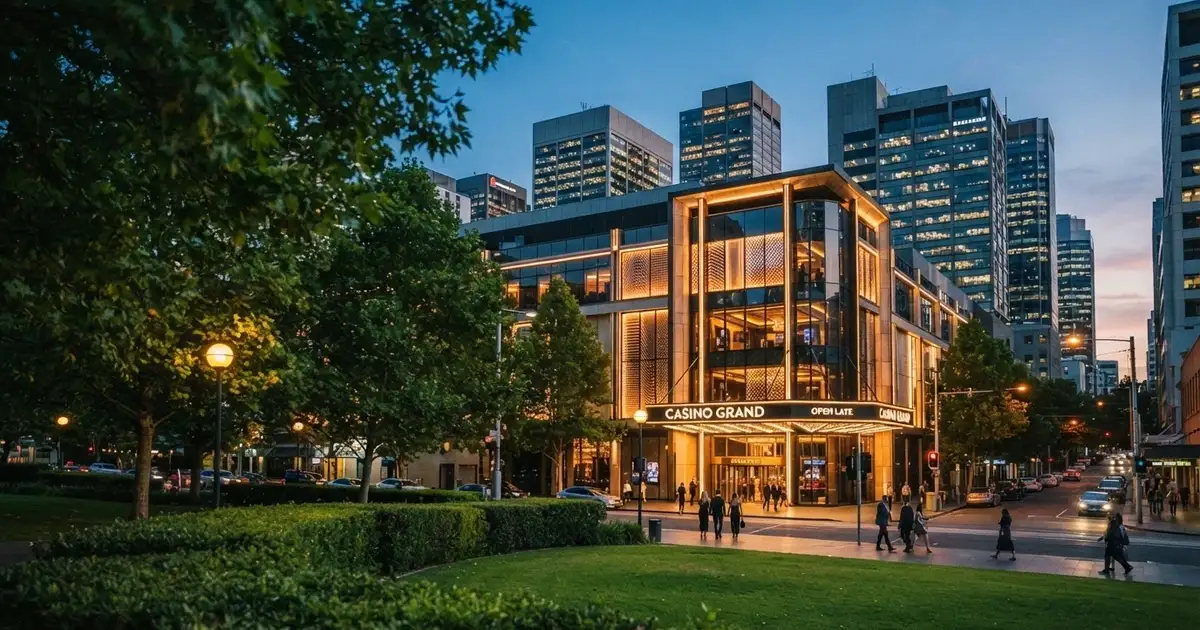
Brisbane’s Casino in 2026: What the Word Actually Covers — and What It Doesn’t
 Available in AU
Priced and operational details current as of 18 October 2026, verified against the Queensland Office of Liquor and Gaming Regulation licence register and The Star Brisbane’s official site.
There is one licensed casino in Brisbane, and the rest of the venues that carry the word “casino” in their name hold a different kind of licence and operate under different rules. That distinction is the spine of this page: what The Star Brisbane actually delivers, what the heritage building at 130 William Street contributes now that it sits inside the same precinct, where the nearest alternative full casino sits, and how each gaming room that borrows the word measures up against the real thing. The casino opened in August 2024. The framing has not loosened since.
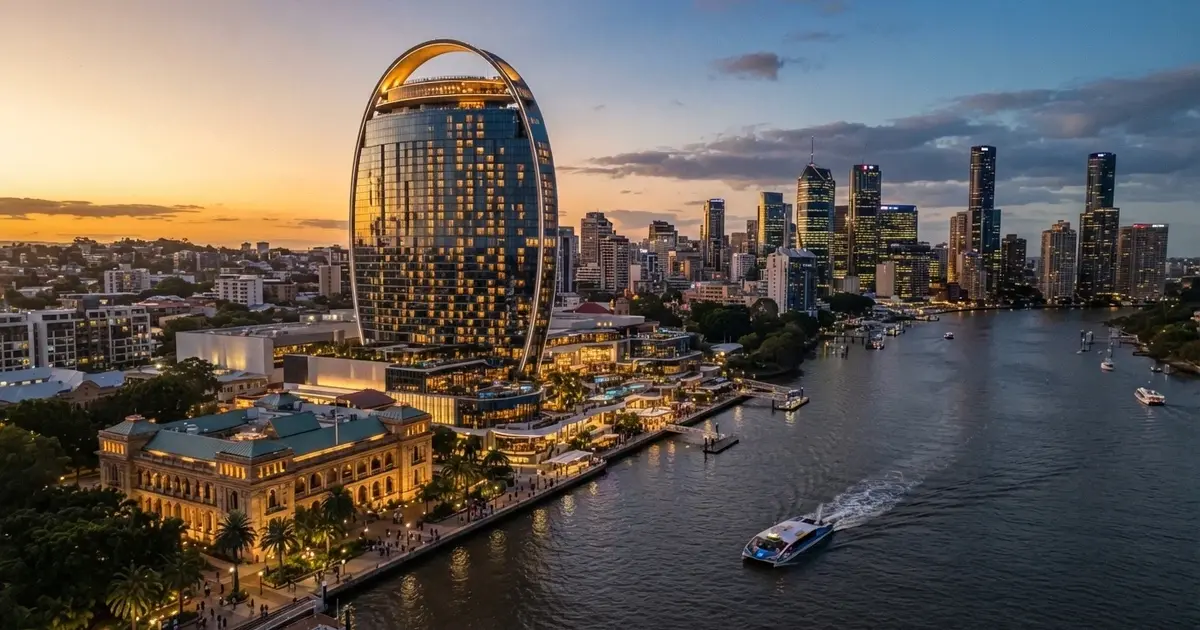
Table of Contents
- Brisbane’s Casino in 2026: One Tower, a Heritage Building, and a Lot of Pokies
- Brisbane’s Casino and Gaming Rooms: How They Actually Compare
- The Law Behind Brisbane’s Casino Floor: What It Protects and What It Bans
- Playing It Safe: What Brisbane’s Casino Does (and Doesn’t) Offer
- Getting to Brisbane’s Casino: Parking, Contact and Every Practical Detail
- Inside Brisbane’s Casino Floor: Every Game Worth a Seat
- Beyond the Tables: Where Brisbane’s Casino Eats, Drinks and Comes Alive
- Why Staying at Queen’s Wharf Changes a Casino Visit
- How We Evaluated Brisbane’s Casino and Gaming Venues
- Is Brisbane’s Casino Worth the Trip? What the Verdict Turns On
- Frequently Asked Questions About Brisbane’s Casino
Brisbane’s Casino in 2026: One Tower, a Heritage Building, and a Lot of Pokies
Brisbane’s casino is a single licensed venue inside a single integrated precinct. The Star Brisbane opened on 29 August 2024 at the heart of the A$3.6–3.8 billion Queen’s Wharf development on the Brisbane River, and Destination Brisbane Consortium holds a 99-year licence to operate it — with a 25-year exclusivity period within 60 kilometres of the Brisbane CBD. No second casino licence has been granted. The exclusivity term means none will open within that radius until at least 2049.
The legacy venue, Treasury Brisbane, is folded into the precinct rather than competing with it. The heritage-listed building at 130 William Street no longer runs its own gaming floor — those 100 tables and 1,300 machines sit on the historical record — but the building itself now operates as part of the broader Queen’s Wharf destination. A punter who walked into the old Treasury in 2023 is now walking into the new Star.
The remaining “casinos” in the greater Brisbane area are gaming rooms inside pubs and hotels. Embassy Hotel in the CBD, Regatta Hotel in Toowong, and the two Fitzy’s venues in Waterford and Loganholme all hold a Gaming Machine Act 1991 licence, not a Casino Control Act licence. They carry the word “casino” in marketing copy or trading names, and they are not casinos. They run pokies, Keno or TAB, sometimes with a small lounge and complimentary tea and coffee. None of them run roulette, blackjack or baccarat.
Online casino, online pokies and in-play betting sit on the other side of the law entirely. The Interactive Gambling Act 2001 makes it an offence to provide those services to a person in Australia. The pages of search results that promise “online casino Brisbane” describe offshore operations that have no Australian licence and offer no Australian consumer protection. The carded-play-and-staffed-floor experience this page describes is a physical one.
The Star Brisbane at a Glance: What Queen’s Wharf Actually Holds
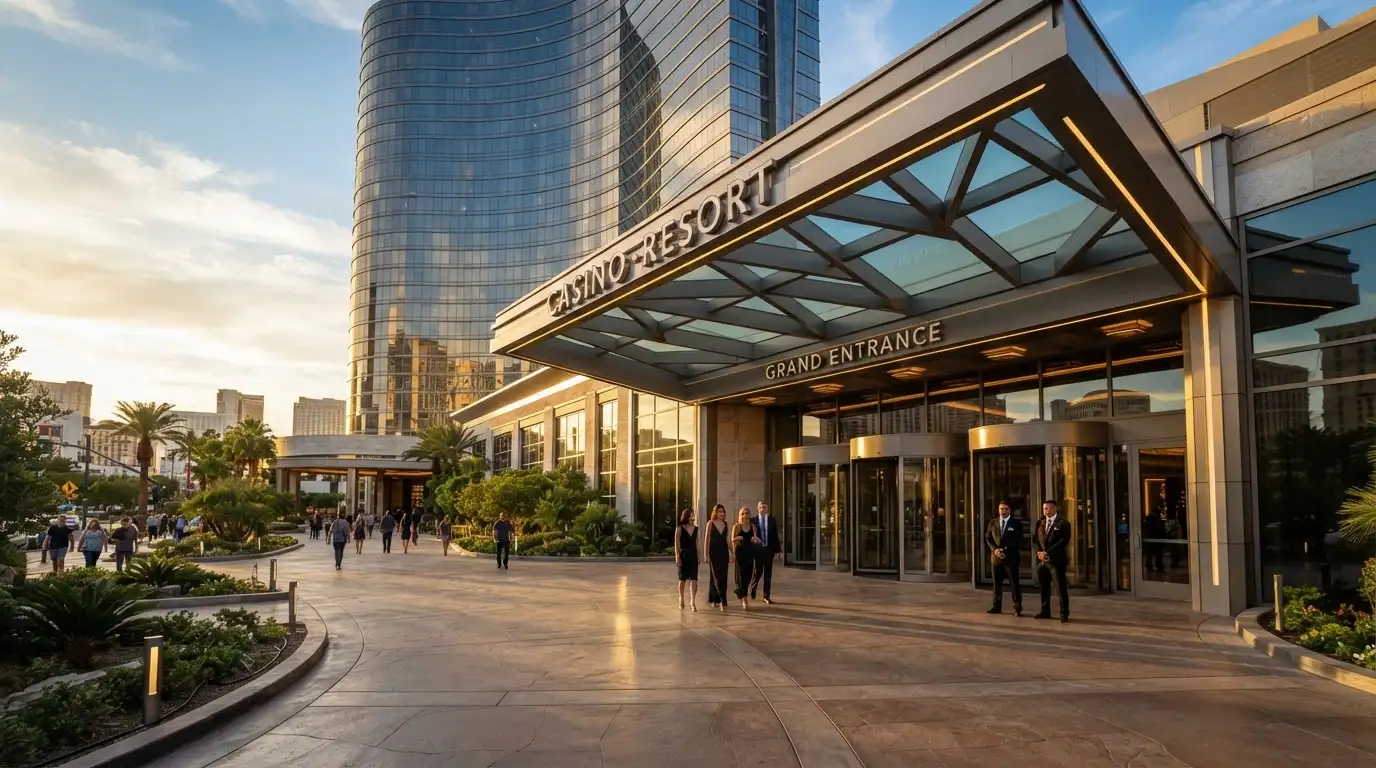
The Star Brisbane sits at 33 William Street, Brisbane City QLD 4000, and the address sits inside a precinct rather than beside one. Queen’s Wharf adds 12,000 square metres of open-air leisure space 35 metres above street level, more than 6,000 square metres of retail and dining, and a 340-room hotel. The casino floor itself holds around 1,600 electronic gaming machines in the initial phase — with an entitlement for 2,500 — and 180 tables. The venue operates 24 hours a day, seven days a week. Free entry is the rule for anyone who meets the age and ID requirements at the door.
The headline figure that keeps coming up in coverage is the casino’s share of the precinct: five per cent. The other ninety-five sits in the hotel, the dining rooms, the bars, the entertainment venues, the retail and the public space. That number is not marketing spin. It is the literal floor-area ratio, and it sets the tone for the precinct. The casino is the licence. The precinct is the destination.
Land-Based Only: Why “Online Casino Brisbane” Is a Dead End
Search engines return plenty of results for “online casino Brisbane.” None of them describe an Australian-licensed operation, because none exist. The Interactive Gambling Act 2001 makes it an offence to provide online casino games, online pokies or in-play betting to a person physically in Australia. The federal regulator, the Australian Communications and Media Authority, has blocked 1,564 illegal gambling and affiliate websites since November 2019, and more than 225 services have withdrawn from the Australian market since enforcement strengthened in 2017. Credit cards, credit-related products and crypto have been banned as a payment method for online wagering since 11 June 2024.
The individual player is not the target of the law. The IGA goes after the provider. A punter who signs up with an offshore site will not be charged with an offence. What that punter gives up is the protection a Queensland licence provides: no BetStop connection, no recourse to the Office of Liquor and Gaming Regulation if the operator refuses a withdrawal, no guarantee the site will exist next week. The payment-method signal is the easiest tell — if the cashier asks for a credit card or crypto, the operator is sitting outside Australian rules.
The reform package that passed Parliament on 19 August 2026 adds a sharper tool. From 1 January 2027, banks can block transactions to illegal operators, wagering ads are capped at three per hour between 6am and 8:30pm, live-sport ad blackouts apply, and the broadcasting of odds during play is banned. None of that creates a legal online casino in Brisbane. It tightens the screws on the offshore market.
What a First-Time Visitor Needs to Know Before Walking In
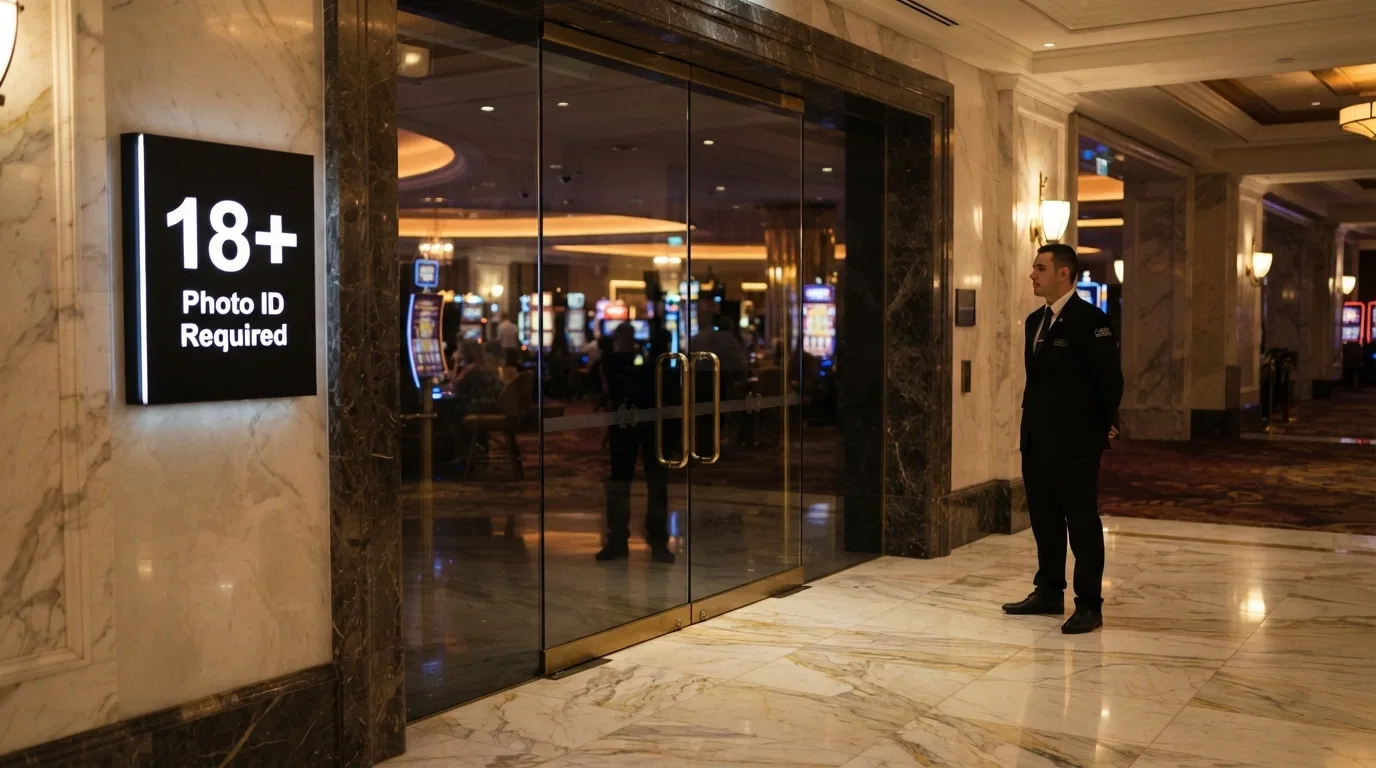
The door policy is tighter than a hotel lobby and looser than a courthouse. Minimum age is 18, with proof of age — a driver’s licence, a passport, a Medicare card — required at the discretion of staff. Entry to the gaming floor itself is free. There is no cover charge, no membership fee, no dress-coded VIP threshold for the main floor. The precinct opened to the public at 2pm on 29 August 2024 and has not closed since.
Dress code is “neat and tidy,” which in practice means no swimwear, no workwear caked in dust, and nothing that reads as a deliberate attempt to obscure identity. The venue’s terms of entry name the prohibited items plainly: face-concealing headwear, steel-cap footwear, disguises, face paint, swimwear, backpacks, and luggage. Religious and medical exemptions apply to the headwear rule. The dress code is enforced at the door — entry can be refused, no negotiation — so the practical move is to dress as if going to a decent CBD restaurant rather than a beach or a worksite.
The hours are 24/7. The car park is 24/7. Three entrances — William Street, Queens Wharf Road and Margaret Street — handle vehicles around the clock. The casino floor does not empty on a Sunday morning or pause for a public holiday. A first-timer who turns up at 3am on a Wednesday will find the same pokies and tables they would at 8pm on a Saturday.
Brisbane’s Casino and Gaming Rooms: How They Actually Compare
Eight venues make up the practical shortlist for a Brisbane punter. One is the licensed casino in the city. One is a heritage building now folded into the same precinct. One is the nearest alternative full casino, an hour down the M1. The rest are gaming rooms inside pubs and hotels, scattered across the inner city and the southern suburbs, that hold a Gaming Machine Act licence rather than a Casino Control Act licence. The table below sets the licence type, machine count and address side by side. The operator write-ups that follow describe what each one delivers.
| Venue | Type | Licence | Gaming Machines | Location |
|---|---|---|---|---|
| The Star Brisbane | Casino | Casino Control Act 1982 (Qld) | ~1,600 (2,500 entitlement) | 33 William St, Brisbane City |
| Treasury Brisbane | Casino (heritage, now part of precinct) | Casino Control Act 1982 (Qld) | 1,300 (historical) | 130 William St, Brisbane City |
| The Star Gold Coast | Casino | Casino Control Act 1982 (Qld) | 1,600+ | Broadbeach, Gold Coast (~80 km south) |
| Embassy Hotel | Pub gaming room | Gaming Machine Act 1991 (Qld) | 40 Keno | 214 Elizabeth St, Brisbane City |
| Regatta Hotel | Pub gaming room | Gaming Machine Act 1991 (Qld) | 35 | 543 Coronation Dr, Toowong |
| Fitzy’s Casino Waterford | Pub gaming room (trades as casino) | Gaming Machine Act 1991 (Qld) | 45 | Waterford (~31 miles from Brisbane CBD) |
| Fitzy’s Casino Loganholme | Pub gaming room (trades as casino) | Gaming Machine Act 1991 (Qld) | 45 | Loganholme (~28 miles from Brisbane CBD) |
| Waterford gaming venues | Pub and club gaming network | Gaming Machine Act 1991 (Qld) | varies | Waterford area, south of Brisbane |
The licence column is the one that matters most. A Casino Control Act licence grants a venue the right to run banked table games — blackjack, roulette, baccarat, craps, poker, the games where the house holds the bank and the punter plays against the dealer. A Gaming Machine Act licence covers electronic gaming machines, Keno, and TAB-style wagering, but no table games and no live dealer. That is the line that separates the casino from the gaming room, no matter what the trading name says.
The Star Brisbane
The Star Brisbane is the only casino in Brisbane in 2026, and that is not a marketing line. It is the only venue in the city that holds a Casino Control Act 1982 licence and operates the full spread of banked table games, electronic gaming machines, poker tournaments and a members-only high-limit floor. The licence is held by Destination Brisbane Consortium under a 99-year term, with a 25-year exclusivity window within 60 kilometres of the Brisbane CBD — a term that runs until 2049.
Star Entertainment Group ran the venue from opening until March 2026, when it sold its 50 per cent stake in DBC to Chow Tai Fook Enterprises and Far East Consortium for A$53 million. CTFE and FEC now hold equal 50 per cent stakes in the consortium, and Star continues to operate the casino under a management agreement. The change is on the corporate register rather than on the floor: the same staff, the same rooms, the same licensing terms.
The scale is what the licensing arrangement actually buys. The initial phase holds 1,600 pokies against an entitlement of 2,500, and 180 tables dealing blackjack, roulette, baccarat, craps, Caribbean Stud Poker, Sic Bo, Money Wheel, Rapid Roulette and Mini-Baccarat. The high-limit floor — The Club — sits reserved for Gold Members and above, and the Sovereign Room sits further up the tier for platinum members. Minimum bet on the main floor starts from A$15 at the tables.
For any punter who wants a full casino experience in Brisbane, this is the only option — and the exclusivity term means it will stay that way for a generation.
Treasury Brisbane
Treasury Brisbane was Brisbane’s casino from the mid-1990s until August 2024, when the licence moved to Queen’s Wharf and the venue on 130 William Street stopped operating as a standalone casino. The heritage building is now part of the broader Queen’s Wharf precinct rather than a competing venue, and its 100 tables and 1,300 machines sit on the historical record rather than the current operating schedule. A punter who visits 130 William Street today walks into a venue that contributes heritage space, dining and bars to the precinct rather than its own gaming floor.
The Treasury name persists in some industry reporting and in older promotional material. The reality is that Treasury Brisbane and The Star Brisbane now operate as one integrated precinct under a single licence. The buildings are different, the floorspace is different, the corporate history is different. The gambling licence is one.
For a punter weighing options in 2026, the practical conclusion is short: Treasury Brisbane no longer competes with The Star Brisbane because Treasury Brisbane is part of The Star Brisbane.
The Star Gold Coast
The Star Gold Coast is the nearest full casino to Brisbane outside the CBD. The drive from the city runs about 80 kilometres south down the M1, roughly an hour without traffic and longer on a Friday afternoon. The venue sits in Broadbeach, holds a Casino Control Act 1982 licence, and runs 1,600-plus pokies and 70-plus live tables dealing blackjack, Sic Bo, craps, roulette, baccarat and poker. Minimum table bets start from A$15, the same as the Brisbane venue.
The Gold Coast floor is older than the Brisbane one and smaller by table count, but it carries the same games, the same minimums, and the same Star Entertainment brand under its operation. A punter who wants a casino floor without the Brisbane drive gets one here, with the trade-off being a weekend trip to the coast rather than an evening in the CBD.
The verdict: the closest comparable alternative, and the right answer for a punter who wants variety beyond the single Brisbane licence.
Embassy Hotel
Embassy Hotel sits at 214 Elizabeth Street in the Brisbane CBD, established in 1928, and it trades as a heritage pub rather than a casino. The venue holds a Gaming Machine Act 1991 licence, which means 40 Keno machines, a TAB facility, and a small VIP gaming lounge — not table games, not roulette, not blackjack. The complimentary tea, coffee and snacks are a pub-room touch, not a casino-floor service.
The “casino” framing that some marketing pages apply to Embassy Hotel is a stretch. The pub runs Keno, the TAB takes bets, and the gaming lounge is a quiet room with machines and a bar. There is no dealer, no banked table, no baccarat pit. A punter who walks in expecting The Star Brisbane’s gaming floor walks into the wrong kind of venue.
For a reader who wants a CBD option without the Star’s scale, Embassy is a heritage pub with Keno, a TAB and 40 machines. This makes it a heritage pub, not a casino.
Regatta Hotel
Regatta Hotel sits at 543 Coronation Drive in Toowong, a short drive west of the Brisbane CBD, and the gaming room inside carries a Vegas-styled theme that the venue itself describes as a “Vegas-style gaming room.” The actual gaming offer is 35 electronic gaming machines — Lightning Cash, Dragon Cash and Dollar Storm titles — and a TAB by the fireplace. The licensing is Gaming Machine Act 1991, not Casino Control Act, so the room runs pokies and a wagering terminal rather than banked table games. Complimentary tea, coffee and snacks come with the room.
The Regatta is a pub with a themed gaming area, not a casino. The machine titles are mainstream pub pokies rather than a curated high-denomination floor, and the TAB terminal takes bets on races and sport rather than hosting a roulette wheel. The 35-machine count is small by pub standards but competitive for an inner-western venue, and the Coronation Drive address puts it closer than the CBD for punter residents in Toowong, Taringa or Indooroopilly.
For a western-suburbs punter who wants the closest pub pokies room, Regatta is the local answer. The drive into the CBD buys a different kind of venue.
Fitzy’s Casino Waterford
Fitzy’s Casino in Waterford trades under a name that borrows the word “casino.” The venue holds a Gaming Machine Act 1991 licence, sits about 31 miles south of the Brisbane CBD, and runs 45 pokie machines with 12 new titles and 6 hyperlink systems. The hyperlink systems are a feature of Australian pub gaming — multiple machines linked to a shared jackpot pool — and they sit at the heart of how the venue competes for trade.
A punter driving out to Waterford expecting a Star Brisbane-style gaming floor will find a pub gaming room with 45 pokies and a bar. There is no roulette wheel, no baccarat pit, no dealer. The name is the product, in the same way a fish-and-chip shop can call itself a “restaurant.” The regulatory classification is pub gaming, the experience is pub gaming, and the marketing wraps the word “casino” around it because the word sells.
The verdict for a Brisbane punter weighing the drive: it is not a casino, and 45 pokies do not become 45 pokies plus table games by changing the signage.
Fitzy’s Casino Loganholme
Fitzy’s Casino Loganholme is the sibling venue to the Waterford location, about 28 miles south of the Brisbane CBD and licensed under the same Gaming Machine Act 1991 framework. The machine count matches Waterford at 45, the title mix runs the latest pokies releases, and the operating model is identical — a pub gaming room trading as a casino in name.
The Loganholme venue sits closer to Brisbane than Waterford by a small margin, but the practical difference between the two Fitzy’s locations is geography rather than gambling. The licence class is the same, the scale is the same, and the experience is the same. A punter who chooses between them chooses the closer one.
For a punter scoping out southside pokies options, Loganholme is a 45-machine pub room. That is the headline.
Waterford Gaming Venues
The broader Waterford area south of Brisbane carries multiple licensed gaming venues operating under the Gaming Machine Act 1991 framework. They sit inside the Queensland gaming landscape of approximately 50,000 active electronic gaming machines across the state, with about 8,500 of those machines spread across 187 venues in the Brisbane region. Of those Brisbane-area machines, more than 3,200 sit in casino venues and roughly 5,200 sit in pubs, clubs and hotels. The Waterford cluster is part of that pub-and-club network.
The numbers matter because they describe where the bulk of Brisbane’s pokies actually live. The licensed casino at Queen’s Wharf holds the headline single-venue figure — 1,600 machines, an entitlement for 2,500 — but the cumulative pub and club count outpaces the casino count across the Brisbane region. The pub-and-club side of the network is what a Brisbane punter meets outside the Queen’s Wharf postcode.
For a Brisbane punter, the Waterford area is part of the larger pub-and-club gaming network rather than a separate casino market. The 5,200 non-casino machines in the Brisbane region’s pubs and clubs outnumber the 3,200 in its casinos, and that is the practical picture.
The Law Behind Brisbane’s Casino Floor: What It Protects and What It Bans
The Casino Control Act 1982 is the statute that governs every table game and every pokie on The Star Brisbane’s floor, and the reforms attached to it sit on top of that base law rather than replacing it. The Office of Liquor and Gaming Regulation, part of the Queensland Department of Justice, administers the licence and enforces the conditions. The regulator sits inside the state government rather than the casino operator, and the powers it carries are not advisory.
The 2024 reform package rewrote several of the conditions a casino operator must meet. Mandatory carded play, pre-commitments, time limits, enforced player breaks, a supervision levy, and five-yearly suitability reviews all sit in the amended Act, alongside stronger penalties from earlier reforms. The 2022 amendments gave the state the power to fine a casino up to A$100 million and to appoint a special manager to run the venue if the licensee falls foul of the regulator.
The enforcement teeth are what make the regulatory framework worth reading. A venue that fails its suitability review does not get a warning — it gets a special manager installed or a licence cancelled. The 2022 reforms followed the Star Entertainment enquiries, and the 2024 amendments followed a broader policy push that included the Gambling Harm Action Plan 2026–28. The Queensland framework has tightened across both reform packages, and the operator has responded in kind.
Queensland’s Casino Rules at a Glance: What the Law Requires
| Provision | What It Requires | Effective Since |
|---|---|---|
| Mandatory carded play | Players insert a player card to use a pokie | March 2024 amendments |
| Pre-commitments | Players set spend or time limits before play | March 2024 amendments |
| Time limits | Session timers enforced on the gaming floor | March 2024 amendments |
| Enforced player breaks | Mandatory breaks during play | March 2024 amendments |
| Supervision levy | Industry funds harm-minimisation oversight | March 2024 amendments |
| 5-yearly suitability reviews | Licensee fitness checks every five years | March 2024 amendments |
| Maximum fine A$100 million | State can fine a casino up to that amount | 2022 reforms |
| Special manager appointment | State can install a manager to run the venue | 2022 reforms |
The two reform packages operate together rather than separately. The 2022 reforms give the state the leverage to act; the 2024 amendments set the harm-minimisation machinery the operator must run. A punter who walks onto The Star Brisbane’s floor in 2026 plays under both layers, and the regulator’s enforcement powers apply to the operator, not to the player.
Entry Rules: Age, ID and What Gets You Turned Away at the Door
The entry requirements read as a checklist because that is how the venue applies them. Eighteen is the minimum age, and proof of age — driver’s licence, passport, or a similar document — sits at the door at the discretion of staff. The dress code rule of “neat and tidy appearance” carries the legal weight of a condition of entry rather than a style guide, and the operator’s terms of entry list the prohibited items the door enforces.
The prohibited list is longer than most visitors expect. Face-concealing headwear, steel-cap footwear, disguises, face paint, swimwear, backpacks and luggage all sit on the list. Religious and medical exemptions apply to the headwear rule. The list is the venue’s conditions of entry rather than a personal security policy, and a refusal at the door is a refusal under the Casino Control Act’s licensee powers rather than a discretionary call.
For practical planning, the rules reduce to a short checklist: bring photo ID, leave the backpack at the hotel, swap the steel-caps for ordinary shoes, and dress as if going to a decent CBD restaurant. The door reads fast and does not negotiate.
Playing It Safe: What Brisbane’s Casino Does (and Doesn’t) Offer
The harm-minimisation machinery inside a Queensland casino in 2026 is real machinery, not a brochure. Mandatory carded play ties every pokie session to a player identity, the pre-commitment system forces a spending or time ceiling before play, and the enforced break rule pulls the player off the machine at regulated intervals. The 2024 reform package put these in the Act rather than leaving them as operator policy, which means the regulator can enforce them rather than negotiate them.
The national register sits alongside the venue-level system. BetStop — the National Self-Exclusion Register for online wagering — launched on 21 August 2023. By 31 March 2026, 59,830 people had registered, with 37,247 exclusions actively in force. The register covers licensed online wagering operators and does not directly cover a Queensland casino’s brick-and-mortar floor, but a player who excludes themselves from online wagering through BetStop signals to the venue-level self-exclusion process that they want to be excluded from gambling more broadly.
The Queensland prevalence figures put the demand for those systems in proportion. The Queensland Gambling Survey 2023 found 0.64 per cent of Queensland adults in the problem gambling group, 2.60 per cent in the moderate-risk group, and 6.27 per cent in the low-risk group. The headline number — Queensland’s 70.2 per cent adult participation rate in some form of gambling, the highest in Australia — describes a state where the harm-minimisation infrastructure has a large pool of potential users.
The CEO of Star Brisbane, Daniel Finch, has talked openly about the operator’s posture on these programs: “We have a heightened focus on all of our anti-money-laundering policies and procedures, our internal control manuals and measures, also our counter-terrorism financing. And also safer gambling and harm minimisation — we have an enormous team now, we have protocols in place and we are well and truly on our way to suitability.” That is the operator speaking, and it carries the weight of the regulator’s suitability review process rather than just a marketing line.
Self-Exclusion in Queensland: How a Ban Actually Works
A punter who wants to self-exclude from a Queensland casino asks the venue. The Queensland self-exclusion framework runs for five years from the date the exclusion is registered, with a 24-hour cooling-off period between the request and the exclusion taking effect, and the exclusion cannot be revoked in the first 12 months. The venue must help anyone who requests an exclusion, and the operator must report any breach of an existing exclusion to the Office of Liquor and Gaming Regulation within seven days.
The framework is administered at the venue level rather than centrally. BetStop covers online wagering operators and runs a national database; the venue-level Queensland exclusion sits on the casino’s own records. A punter who excludes themselves from The Star Brisbane under the Queensland framework is excluded from that venue; a punter who wants a multi-operator exclusion goes through BetStop for the online side and asks each venue directly for the land-based side.
The cooling-off period is the design feature that prevents impulse exclusion. A punter who walks up to a host desk on a bad night cannot reverse a five-year ban the next morning. The 12-month revocation rule is the design feature that prevents a quick re-entry. Together they push the framework toward durable exclusion rather than reversible gesture.
Where to Get Help: The Numbers That Work Around the Clock
The Gambling Helpline — 1800 858 858 — runs 24 hours a day, seven days a week, free and confidential, and connects to Gambling Help Queensland’s counselling service. Gambling Help Online, the webchat and email arm of the same network, runs the same service for anyone who would rather type than talk. Both services sit inside the Queensland Government’s harm-minimisation framework rather than the casino operator’s own machinery.
BetStop — the National Self-Exclusion Register — runs the online wagering side of the same offer. The registration is online, the minimum exclusion period is three months, and a registered player is barred from every licensed online wagering operator in Australia. The BetStop service does not directly cover the brick-and-mortar casino floor at The Star Brisbane, and a punter who wants land-based exclusion goes through the venue’s own process.
The Queensland Gambling Harm Action Plan 2026–28 sets the broader policy direction: a shared plan between government, industry and community that runs to the end of 2028. The action plan is a state-government framework rather than a venue-specific programme, and the help services above sit inside it.
Getting to Brisbane’s Casino: Parking, Contact and Every Practical Detail
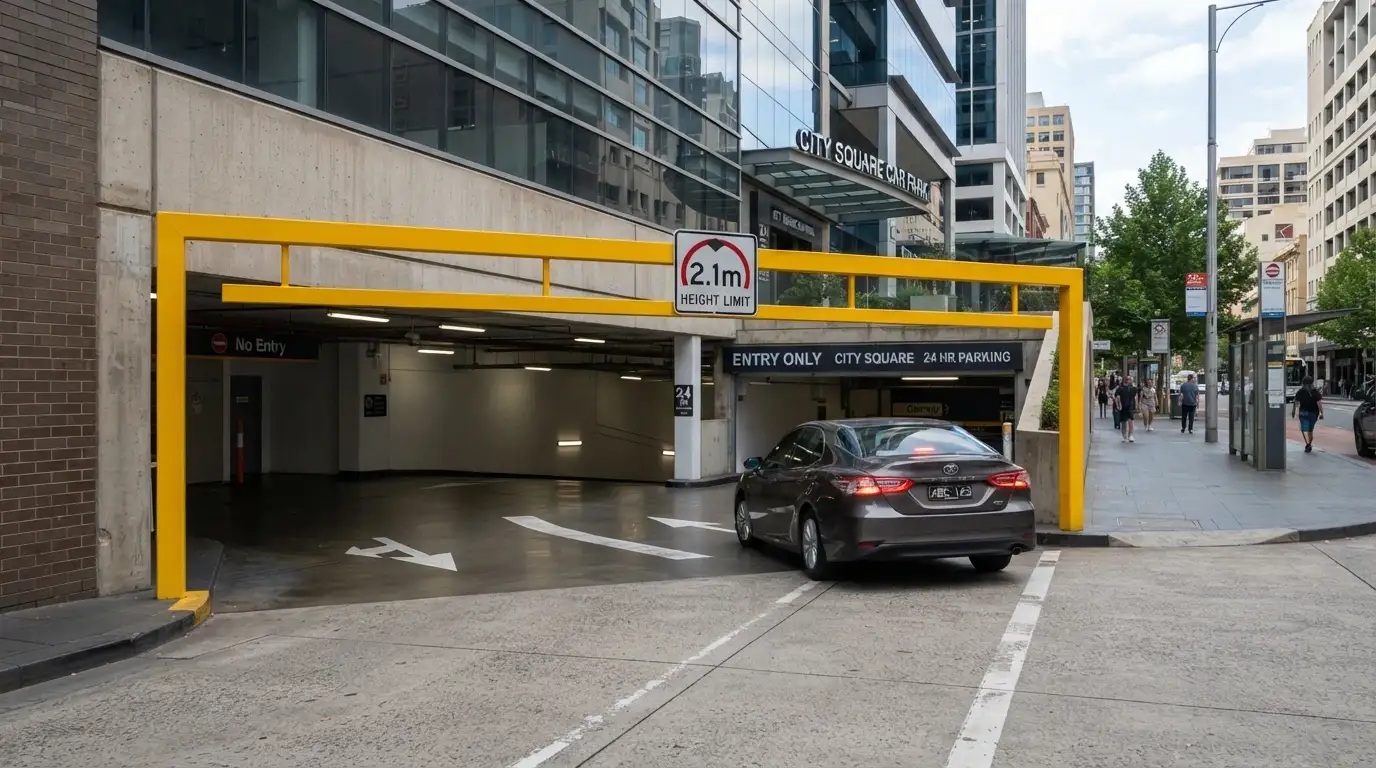
The logistics of a Star Brisbane visit reduce to three questions: how to get there, what to wear, and where to leave the car. The address is 33 William Street, Brisbane City QLD 4000, and the two phone lines are +61 7 3306 8885 and the toll-free 1800 104 535. The venue operates 24 hours a day, seven days a week, and so does the car park. The three car park entrances — William Street, Queens Wharf Road and Margaret Street — handle vehicles around the clock, with a maximum vehicle height of 2.1 metres.
The dress code and parking rates deserve their own treatment because both are the kind of detail that surprises a first-time visitor. The car park charges from free for the first 30 minutes up to A$80 for the day, and the only free-parking route for a casual visitor is to hold a Gold Members card or to earn five Tier Points as a Bronze or Silver member on a single visit.
Parking at The Star Brisbane: Rates, Entrances and How to Park for Free
The casual rate card reads from the cheap end upward. The first 30 minutes is free. From 30 minutes to one hour costs A$30, one to two hours A$40, two to three hours A$50, three to four hours A$60, four to five hours A$70, and five or more hours — the daily maximum — runs A$80. There is no separate evening rate, no weekend discount, and no validation from a restaurant or a show ticket. A visitor who parks at 7pm and leaves at 11pm pays the 30-minute-to-one-hour rate of A$30 for the privilege of a four-hour stay.
The free-parking route runs through the membership programme. Gold Members and above park free as a standing entitlement. Bronze and Silver members can earn free parking by accruing five Tier Points on a single visit, which corresponds to a defined level of table-game or pokie play. The membership tiers and the parking benefit are linked, and a casual visitor who is not a member has no path to free parking beyond the first 30 minutes.
For a punter planning the visit: budget A$30–A$80 for parking depending on stay length, or join the membership programme and earn the entitlement through play. The casual rate is what most visitors pay, and the building’s edge on the gaming floor is not the only one a visitor meets on the way in.
Address, Phone, Opening Hours and How to Get There
The postal address is 33 William Street, Brisbane City QLD 4000, and the three car park entrances handle vehicle access from William Street, Queens Wharf Road and Margaret Street. The main pedestrian entrance sits on William Street, the riverside walk connects from the Goodwill Bridge end of South Bank, and the public-transport options include the Citycat ferry terminal at the Riverside Centre and a short walk from Central Station.
The two phone lines are the standard venue line on +61 7 3306 8885 and the toll-free 1800 104 535. The venue line handles general enquiries, the toll-free line handles the booking and membership side, and both route through the same switchboard. Operating hours are 24 hours a day, seven days a week, with no announced closure days. The car park opens and closes on the same 24/7 schedule.
Dress Code: What You Can Wear — and What Will Get You Refused
The dress code is “neat and tidy appearance,” enforced at the door under the venue’s conditions of entry. The prohibited-items list reads longer than a typical pub: face-concealing headwear, steel-cap footwear, disguises, face paint, swimwear, backpacks and luggage. Religious and medical exemptions apply to the headwear rule. Entry can be refused for inappropriate dress, and the refusal is final rather than negotiable.
For practical planning, the rule is to dress as if going to a decent CBD restaurant rather than a beach or a worksite. Closed shoes, a collared shirt or equivalent, no workwear. The steel-cap rule catches tradies heading straight from a job site, and the backpack rule catches tourists with their day-pack still on. Neither is negotiable at the door.
Inside Brisbane’s Casino Floor: Every Game Worth a Seat
The Star Brisbane’s gaming floor holds 180 tables and around 1,600 pokies in the initial phase, against an entitlement of 2,500 machines. The split between tables and pokies — roughly nine per cent of the floor’s banked games by count, ninety-one per cent by machine — describes a venue that runs a casino’s full spread but tilts its volume toward electronic gaming. A punter who walks in for table games gets nine distinct games to choose from; a punter who walks in for pokies gets more machines than the floor can show at once.
The table minimum is the line that determines who the venue is built for. Minimum bets at the main floor start from A$15, which puts the venue’s table games above the casual entry point that a Crown Melbourne or Star Sydney can offer. The A$15 minimum carries across blackjack, roulette, baccarat and the other games; high-limit tables in The Club and the Sovereign Room run higher minimums reserved for Gold Members and platinum tiers.
Table Games: Blackjack, Roulette, Baccarat and Every Other Game Dealing
The Star Brisbane’s table games roster covers nine game types on the main floor. Each game suits a different kind of punter, and the minimums start at A$15 across the floor.
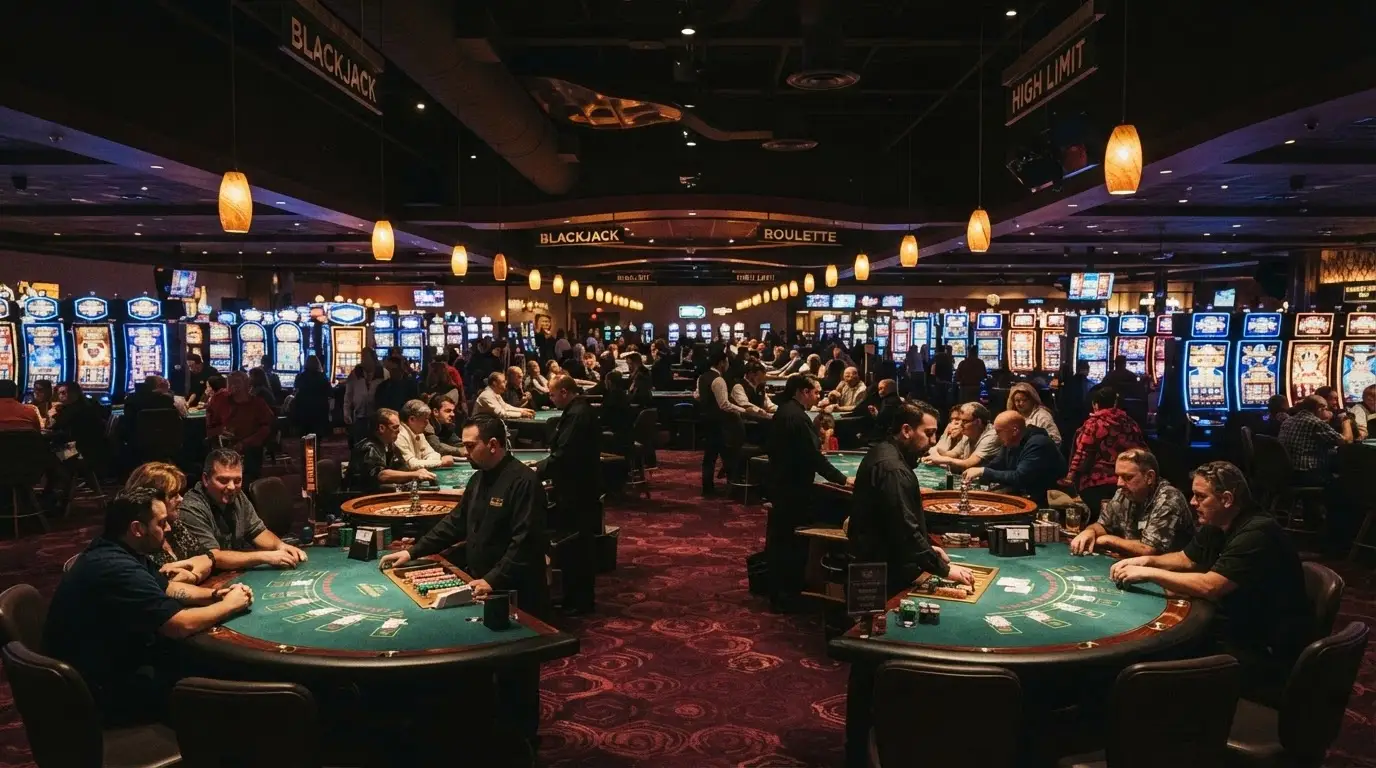
- Blackjack — the most accessible table game on the floor, simple rules, low house edge with basic strategy. Best for first-time table players.
- Roulette — the wheel game, single-zero and double-zero variants depending on table. Best for players who want a familiar format.
- Baccarat — the banker-versus-player format with the lowest house edge of the table games when betting the banker. Best for high-stakes regulars.
- Craps — the dice game, intimidating rules, social atmosphere. Best for experienced players with a working strategy.
- Caribbean Stud Poker — house-banked poker with a progressive jackpot side bet. Best for players who want a poker flavour without a dedicated poker room.
- Sic Bo — the dice game of Chinese origin, three dice, multiple betting combinations. Best for players who know the bet structure.
- Money Wheel — the wheel with numbered slots, simple outcomes. Best for casual play.
- Rapid Roulette — electronic terminal-style roulette with a live dealer feed. Best for players who want speed and a lower minimum.
- Mini-Baccarat — the smaller-table baccarat variant with lower minimums than the full baccarat pit. Best for entry-level baccarat players.
The table minimum of A$15 is the floor’s baseline rather than a universal figure. Higher minimums sit on the high-limit floor, and promotional minimums can sit lower during quiet periods. The honest reading is that a punter planning a session budgets for A$15 minimums with the understanding that some tables may run higher.
The Poker Room: Cash Games, Tournaments and How to Get a Seat
The Star Brisbane runs a dedicated poker room under the Star Poker Brisbane brand. The room offers cash games and tournaments on a published schedule, separate from the table-games floor. The poker room sits inside the Casino Control Act 1982 framework rather than a separate licence class, and the buy-ins and tournament fees operate as standard poker room commerce.
The specific buy-in amounts and the tournament calendar do not sit in the available research for this venue. The operational picture is straightforward: a dedicated poker room with cash games and tournament scheduling, operated by the same team that runs the rest of the floor, with buy-ins set per game rather than per venue. The poker room’s structures — the no-limit hold’em stakes, the mixed-game schedule, the tournament buy-ins — sit on the Star Poker Brisbane information channel rather than in a published rate card.
For a punter planning to play poker at The Star Brisbane: contact the venue through the standard phone line, ask for the poker room schedule, and confirm the buy-ins on the day. The poker room is the right place to play tournament poker in Brisbane, and the schedule is the operational document that controls when.
Pokies and Electronic Gaming: How Many Machines and What to Expect
The Star Brisbane’s pokie floor holds around 1,600 machines in the initial phase, against a licensed entitlement of 2,500 machines. The gap between current count and entitlement sits on the operator’s build schedule rather than a regulatory ceiling, and the floor is built out as demand supports it. A punter walking the floor in 2026 sees roughly 1,600 machines in action across multiple denominations and title types.
The Queensland pokies landscape puts that 1,600 in context. Approximately 50,000 active electronic gaming machines operate across Queensland, with about 8,500 of those in the 187 venues in the Brisbane region. Of the Brisbane-area machines, more than 3,200 sit in casinos and roughly 5,200 sit in pubs, clubs and hotels. The Star Brisbane’s pokie floor is the single largest concentration in the region by venue count, but the cumulative pub and club machine count across the Brisbane region is larger.
The pokie floor’s specific title mix and return-to-player figures do not sit in the available research for this venue. The honest framing is that The Star Brisbane runs a large-scale pokie floor with mainstream title categories, a licensed entitlement that exceeds current operation, and a harm-minimisation overlay — carded play, pre-commitments, time limits — that distinguishes it from a pub pokies room.
Beyond the Tables: Where Brisbane’s Casino Eats, Drinks and Comes Alive
The non-gaming side of The Star Brisbane’s precinct is where the 95 per cent figure lands. The casino is 5 per cent of the precinct by floor area; the other 95 per cent holds nine restaurants, three Sky Deck venues, a sports bar with 100 square metres of LED screens, a live music venue, an open-air leisure deck, a cinema, and 6,000 square metres of retail and dining space. A punter who visits the precinct for a meal and a drink without stepping onto the gaming floor has plenty of options.
The dining roster spans fine dining to a quick bite. Aloria sits 23 floors up with 120 seats and a European menu. Sokyo runs Japanese. Fat Noodle runs South-East Asian. Cucina Regina runs Italian. Dark Shepherd runs Mediterranean. Azteca runs Latin American. Babblers runs all-day. Cicada Blu runs cocktail. Pompette runs French champagne. The mix is curated rather than comprehensive, and the price points span the CBD dining range from a quick bowl of noodles to a tasting menu.
The non-gaming draw is the precinct’s main differentiator against the gaming rooms that trade under the word “casino.” A punter weighing the visit does not weigh only the 180 tables and 1,600 pokies; the question is whether the precinct as a whole — the dining, the entertainment, the hotel — is worth the trip alongside the gaming.
Restaurants at Queen’s Wharf: From Fine Dining to a Quick Bite
The Queen’s Wharf precinct runs nine distinct dining rooms across the complex. The list below describes each venue’s cuisine and positioning.
- Aloria — European fine dining, 120 seats, 23 floors up. Perched above the river with a view that justifies the booking.
- Sokyo — Japanese, the established Star brand’s flagship Japanese venue. The right answer for sushi and sashimi at precinct scale.
- Fat Noodle — South-East Asian, fast and flavourful. The right answer for a quick bowl before or after the gaming floor.
- Cucina Regina — Italian, the precinct’s pasta-and-pizza room. The right answer for a casual dinner with a group.
- Dark Shepherd — Mediterranean, the precinct’s answer to shared-plate dining. The right answer for a slower evening.
- Azteca — Latin American, the precinct’s taco-and-tequila room. The right answer for a louder night.
- Babblers — all-day dining on the Sky Deck. The right answer for a daytime visit without committing to a full dinner.
- Cicada Blu — cocktail bar on the Sky Deck. The right answer for a drink with a view rather than a meal.
- Pompette — French champagne bar. The right answer for a celebration or a special occasion pour.
The dining tier ranges from fine dining to a quick bowl, and the price points span accordingly. The research does not carry per-venue pricing for this run, so the honest framing is that Aloria sits at the fine-dining end of the range and Babblers or Fat Noodle sit at the casual end, with the other venues between.
Bars, Sky Deck and the Sports Bar: Drinks With a View
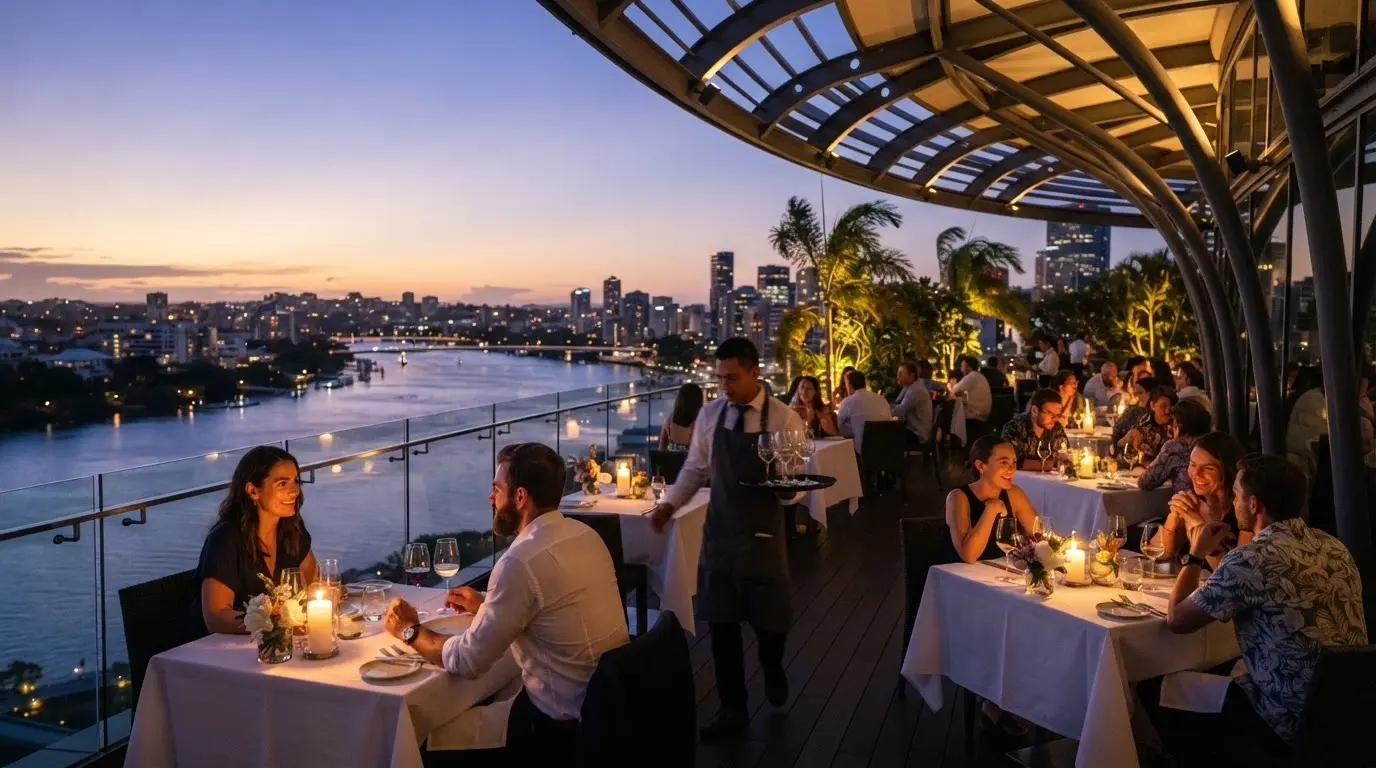
The Sky Deck sits 100 metres above the streets and operates as a public viewing platform, free to enter from 6:30am to late. Three venues sit on the deck — Aloria, Babblers and Cicada Blu — and the platform’s height puts the Brisbane River and the CBD skyline in line of sight. A visitor who wants the view without the commitment of a dinner booking can walk the platform during opening hours and stop at Cicada Blu for a drink.
The Sports Bar sits at the precinct level rather than the Sky Deck level, and the venue carries 100 square metres of LED screens and private booths. The screen setup makes the Sports Bar the venue of choice for a major fixture rather than a quiet drink, and the booth layout supports group viewing.
The Leisure Deck sits 12,000 square metres of open-air space 35 metres above street level, separate from the Sky Deck’s 100-metre height. The deck hosts outdoor events and casual gathering space, and the precinct’s open-air footprint gives visitors room to move between dining and entertainment without crossing the gaming floor.
Entertainment sits alongside the dining and bars. LiveWire runs a live music programme inside the precinct, Skyline Cinema runs screenings, and the Sports Bar carries the major fixtures on its screens. The entertainment programme runs alongside the dining rather than competing with it, and the precinct’s design treats a night out as a multi-venue experience rather than a single destination.
Why Staying at Queen’s Wharf Changes a Casino Visit
The Star Grand, the on-site hotel at Queen’s Wharf, turns a casino visit into a precinct stay. The hotel holds 340 rooms across standard rooms, 60 suites and four Skyline Penthouse Suites, and the room count puts the on-site hotel at the centre of the precinct’s accommodation rather than at the edge of it. A visitor who books a Star Grand room steps from the hotel lobby into the dining, entertainment and gaming floors without leaving the building.
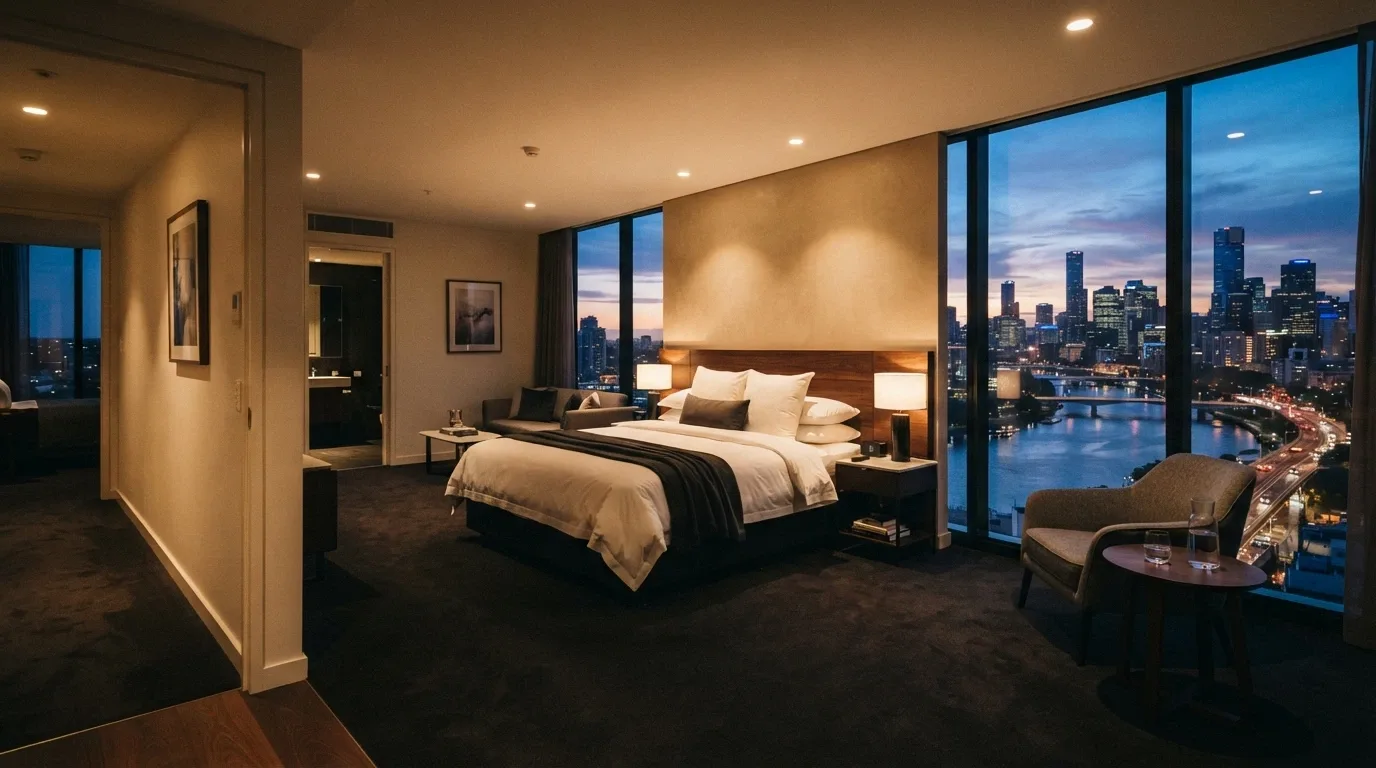
The Skyline Penthouse Suites sit on levels 16 and 17 of the hotel tower, with 217 square metres of space across the four penthouse units. The penthouse tier is the headline accommodation offer, and the standard rooms below it cover the bulk of the hotel’s capacity. The on-site hotel’s location — inside the same building as the gaming floor and the dining rooms — is the differentiator against an off-site Brisbane CBD hotel that requires a walk or a short drive.
The Star Grand: Rooms, Suites and the Skyline Penthouses
The Star Grand holds 340 rooms in total: standard rooms, 60 suites, and four Skyline Penthouse Suites on levels 16 and 17. The Skyline Penthouses span 217 square metres each, putting them in the upper tier of Brisbane hotel accommodation rather than the standard business-traveller range.
The Star Grand sits inside the Queen’s Wharf precinct rather than at the edge of it, and the room-to-floor distance is short. A guest who wants the gaming floor steps out of the room and down the lift. A guest who wants Aloria walks through the building rather than catches a taxi. The precinct’s design treats the hotel as part of the destination, and a casino visit that extends overnight becomes a precinct stay rather than a casino trip with a hotel attached.
The on-site hotel’s pricing is not carried in the available research for this run, so the honest framing is that The Star Grand runs at the top of the Brisbane CBD hotel market, with the Skyline Penthouse Suites at the top of the top. A visitor who books through the standard channels gets the room count and the suite positioning, and the rate is set by the booking date rather than the article.
Hotels Within Walking Distance: What Is Nearby
The Brisbane CBD and South Bank areas carry multiple hotel options within a 10–15 minute walk of the Queen’s Wharf precinct, ranging from budget chains to five-star properties. The off-site accommodation market around the precinct is broad rather than thin, and a visitor who does not want to pay the Star Grand’s rate has multiple alternatives within walking distance.
The off-site options trade convenience for rate. A guest staying at a CBD hotel walks 10–15 minutes to the precinct, or catches a short taxi or ferry across the river. The Star Grand’s on-site location is the differentiator against the off-site market, and the off-site market is the alternative for a visitor who wants the precinct visit without the on-site rate. Specific competing hotel names and rates are not carried in the available research for this run, so the framing is the broader CBD and South Bank hotel market rather than a specific named property.
How We Evaluated Brisbane’s Casino and Gaming Venues
The venues in this comparison were checked against the Queensland casino licence register and Gaming Machine Act venue listings. The Casino Control Act 1982 and the Interactive Gambling Act 2001 sit as the two regulatory anchors — the first for land-based casino licensing in Queensland, the second for the federal online prohibition. The Office of Liquor and Gaming Regulation administers the Casino Control Act, and the Australian Communications and Media Authority enforces the federal ban on online casino services.
The ranking uses licence type as the primary differentiator, then gaming scale, then ancillary offering. A Casino Control Act venue ranks above a Gaming Machine Act venue because the former runs banked table games and the latter does not. A 1,600-pokie casino ranks above a 40-machine pub because the floor scale and game spread differ by an order of magnitude. Within the Gaming Machine Act venues, the machine count and the title mix determine the ranking.
The “casino” name on venues like Embassy Hotel, Regatta Hotel and the Fitzy’s locations is treated as a marketing label rather than a licence class. The comparison includes these venues because a Brisbane punter searching for “casino” meets them, and the comparison benefits from a clear distinction between a Casino Control Act venue and a Gaming Machine Act venue operating under the casino label. The distinction is signalled in the table’s “Type” column and in the operator write-ups.
No weighting system, percentage score or star rating is applied. The comparison is qualitative rather than scored, and the operator write-ups describe what each venue delivers rather than ranking them against each other on a numeric scale. A reader who wants a full casino goes to The Star Brisbane. A reader who wants a CBD pub with Keno goes to Embassy Hotel. The two are different kinds of venue, and the comparison sets them side by side without forcing them into a single ranking.
Is Brisbane’s Casino Worth the Trip? What the Verdict Turns On
The honest verdict turns on what kind of visit the reader is planning. The Star Brisbane is the only casino in Brisbane, and the 99-year licence with 25-year exclusivity means it will stay the only one until at least 2049. A punter who wants a full casino experience — banked table games, a large pokie floor, a poker room, high-limit rooms — has one option in the city, and that is The Star Brisbane.
The precinct is the differentiator against the gaming rooms that trade under the word “casino.” The five per cent figure — the casino’s share of the total precinct floor area — describes a venue that has been built as part of a destination rather than as a standalone gaming hall. The 340-room hotel, the nine restaurants, the three Sky Deck venues, the Sports Bar and the open-air leisure deck all sit inside the precinct, and the casino is the licensed gambling component of the larger whole. A reader who wants a casino trip with dining and entertainment gets that at The Star Brisbane. A reader who wants a quick pokie session closer to home gets a pub gaming room.
The trade-offs are real. Parking runs from free for the first 30 minutes to A$80 for the day, and the only free-parking route for a casual visitor is the membership programme. The dress code is enforced at the door and is tighter than a typical CBD hotel. The A$15 table minimum puts the venue above the casual entry point that some alternatives offer. The Star Entertainment’s corporate transition — the March 2026 sale to CTFE and FEC — has not changed the floor, but the underlying ownership is different from opening.
The serious gambler, the curious tourist, and the dining-and-entertainment visitor get different value from the trip. The serious gambler finds the largest scale of any casino in Brisbane and the only poker room. The curious tourist finds a venue that sits inside a destination precinct and does not require a gambling interest to justify the visit. The dining-and-entertainment visitor finds nine restaurants, three Sky Deck bars, a sports bar and a live music venue — none of which require walking through the gaming floor.
The verdict: for a casino visit in Brisbane, The Star Brisbane is the answer. For a meal and entertainment in Brisbane, the precinct is the answer. For a quick pokie session closer to home, a Gaming Machine Act venue is the answer. Finding the “best casino in Brisbane” points to one outcome: the only licensed casino in the city, set inside a precinct that offers a destination experience even for visitors who never step foot on the gaming floor.
Frequently Asked Questions About Brisbane’s Casino
What is the best casino in Brisbane for visitors?
The Star Brisbane is the only licensed casino in Brisbane, with 99-year licence terms and 25-year exclusivity within 60 kilometres of the CBD. The venue sits inside the Queen’s Wharf precinct with 180 table games, around 1,600 pokies, a dedicated poker room, and the precinct’s dining and entertainment. Full comparison sits above.
What table games are available at The Star Brisbane?
The Star Brisbane’s main floor deals nine game types: Blackjack, Roulette, Baccarat, Craps, Caribbean Stud Poker, Sic Bo, Money Wheel, Rapid Roulette and Mini-Baccarat. Minimum bets generally start at A$15, with higher minimums in the high-limit rooms. The full roster and minimum bet details sit in the Inside Brisbane’s Casino Floor section.
Is there a dress code for Brisbane’s casino?
Yes. The dress code is “neat and tidy appearance,” enforced at the door as a condition of entry. The prohibited items include various headwear, heavy footwear, and large bags or luggage, with religious and medical exemptions for headwear. The full rules sit in the Dress Code section.
Can I stay overnight at The Star Brisbane hotel?
Yes. The Star Grand, the on-site hotel at Queen’s Wharf, holds 340 rooms including 60 suites and four Skyline Penthouse Suites on levels 16 and 17. The Skyline Penthouses span 217 square metres each. The full room breakdown sits in the Why Staying at Queen’s Wharf section.
What is the difference between The Star Brisbane and the old Treasury Casino?
The Star Brisbane replaced Treasury Brisbane as Brisbane’s licensed casino when it opened on 29 August 2024. The Treasury’s heritage building at 130 William Street now sits inside the Queen’s Wharf precinct rather than operating as a standalone casino. The Treasury’s 100 tables and 1,300 machines are historical figures, not current operations.
Created by the ”Trusted Casinos Australia” editorial team.