Best Live Casino Online in 2026: Tables, Bonus Maths and the Law Most Reviews Skip
 Available in AU
A live dealer game is a real dealer, real cards or a real wheel, streamed from a purpose-built studio into a betting grid that pays out in seconds. It is the closest thing to a casino floor an Australian player can reach from home. Every site that runs one is offshore. None holds an Australian licence. None can. Section 15 of the Interactive Gambling Act 2001 makes offering online casino games to Australians a criminal offence, and no licence for the product exists anywhere in the country.

Last checked 18 October 2026 against the ACMA blocking register and the IGA prohibition as published by the regulator.
Table of Contents
- What Live Casino Actually Is (and Why Australia Plays Offshore)
- The 10 Live Casino Sites Australians Actually Use in 2026
- Live Dealer Games That Give You the Best Shot
- Why Your Live Casino Bonus Is Smaller Than It Looks
- Can You Play Live Casino for Free? Here Is What Is Possible
- Live Casino on Your Phone: What Works and What Does Not
- The Studios Behind Every Live Table Australians See
- The Law No Australian Casino Site Mentions
- When the Fun Stops: Gambling Harm and Where to Get Help
- How We Chose and Ranked These Live Casino Sites
- What Every Australian Should Know Before Playing Live Casino
- Frequently Asked Questions
What Live Casino Actually Is (and Why Australia Plays Offshore)
A live casino streams a real dealer running a real game from a studio to a player’s browser or app. Blackjack, roulette, baccarat, game shows — the categories differ, the engine is the same. A person, a table, equipment, multiple cameras, a software layer that records bets, reads results and pays them out. The dealer sees the bets on the overlay, plays the hand in real time, and the player watches from wherever they are sitting.
The Australian twist is structural. Online casino is prohibited under the Interactive Gambling Act 2001 — “It’s illegal to offer online casino gambling in Australia.” No licence for the product exists at federal level, no state or territory issues one, no path would turn an operator into a legal Australian online casino. The Australian Communications and Media Authority is the regulator that enforces this. The enforcement record is in the next section; what it means here is that every live dealer table an Australian player sits down at is run by an offshore operator under a licence issued somewhere else.
The player is not prosecuted — the Act targets the provider. The player gets no Australian consumer protection, no BetStop coverage and no Australian court to appeal to if the operator refuses to pay. That is the situation this entire page describes within.
How a Live Dealer Table Actually Works
The studio is a real room. The dealer is a real person in a real shirt standing behind a real table with real cards, a real wheel or a real money wheel, depending on the game. Multiple cameras capture the action: one wide for context, one overhead for the bet placement grid, one close-up for the cards or wheel result. The stream runs in HD to the player’s browser or app, typically 1080p, sometimes 4K depending on the operator’s integration.
Bets are placed on a digital overlay. The chip denominations, the bet placement, the win/loss display — all of this is software drawn over the video. Once betting closes, the dealer plays the game in front of the camera as they would on a casino floor. Card values are read by optical character recognition: small cameras under the felt identify each card as it lands and push the result to every player’s screen in real time. Roulette and game-show wheels use sensors or cameras to detect the winning pocket.
The chat function lets a player type to the dealer. The dealer reads it and responds out loud. Pace of play is real time. A blackjack hand takes around fifteen seconds once betting closes, a roulette spin around forty-five seconds to a minute, a Crazy Time bonus round closer to two minutes once it triggers. There is no spin button. The result is whatever the dealer and the equipment produce. A player who wants a faster pace moves to RNG; a player who wants to see the result come out of a real shoe or off a real wheel stays at the live table.
Live Dealer vs RNG: Why the Difference Matters
The other engine running online casino games is the random number generator — software that produces outcomes without a person or physical device involved. RNG powers every online pokie, every digital blackjack hand, every virtual roulette spin at the casinos this page covers. The maths is identical at scale: both engines produce random outcomes across millions of rounds. The difference is what the player can see and verify.
Live dealer games carry published house edges because the rules are visible. A standard live blackjack table at Evolution AU tables running S17 — dealer stands on soft 17 — with basic strategy plays at a house edge of around 0.5%. European roulette, single-zero, runs at 2.70%. American roulette, double-zero, runs at 5.26%. These are not marketing figures; they are mechanical results of the wheel and the rules, identical at every casino running the same game. Lightning Roulette, an Evolution variant, drops the straight-up payout from 35:1 to 29:1 to fund the random multipliers — that lifts its house edge to roughly 2.9%, above even standard European roulette.
RNG pokies vary by provider. An RTP of 96% on one pokie and 94% on another can mean a swing of two percentage points of every dollar wagered, and the player has no way to verify the result of any individual spin. The RNG title’s house edge is published but the mechanism is sealed. Live dealer games expose the mechanism on camera. That transparency carries a cost.
Live dealer tables almost always run higher minimums than their RNG equivalents. A digital roulette spin might cost ten cents; a live dealer roulette spin typically starts at A$1, sometimes A$2 or A$5 depending on the operator. An RNG blackjack hand can run for a few cents; live blackjack starts in the A$5 to A$20 range at most tables. The player trades cheapness for sight, and on most live casino floors that trade is worth making for the games where the maths is closest to even.
The 10 Live Casino Sites Australians Actually Use in 2026
Every operator on this list is offshore. None holds an Australian online casino licence — no such licence exists. The list is drawn from market-share data tracking Australian offshore casino play and from each brand’s live-casino fit — provider depth, live-specific offers and confirmed title range. Ranking is by live-casino topical fit, not by market share or revenue.

What was checked: market-share data from operator tracking, search-result analysis of AU-facing affiliate pages and direct operator research. Each operator’s status as an offshore brand was verified against the Interactive Gambling Act 2001 and the ACMA enforcement record. What could not be verified: specific licence numbers for most operators in the set, because affiliate pages do not carry regulator-verified licence data and the search results this run did not turn up regulator-level documentation for every brand. Where data is thin, the write-up says so.
The comparison table below ranks the featured operators by live-casino fit. Cells research could not fill appear as an em dash. The column-by-column judgements in the write-ups beneath the table go further than the table can — they say which operator suits which reader, and which ones a player should approach with the lights on.
| Operator | Welcome Bonus | Live Providers | Game Count | Market Share |
|---|---|---|---|---|
| Skycrown Casino | Up to A$8,000 + 400 FS across 4 deposits | Evolution Gaming, Pragmatic Play Live, NetEnt | 8,000+ | 8.55% |
| Bizzo Casino | A$2,500 + 300 FS | Evolution Gaming (full suite) | 2,000+ | 0.57% |
| King Billy Casino | A$2,500 + 250 FS | Evolution Gaming, Pragmatic Play Live | 3,000+ | — |
| Playfina Casino | A$1,670 + 600 FS + 25 no-deposit FS | Evolution Gaming, Pragmatic Play Live | 4,000+ | — |
| BitVegas | A$1,500 + 100 FS (no-sticky bonus) | Evolution Live, Pragmatic Play | 2,500+ | — |
| Rocket Play | — | — | — | 9.4% |
| Fair Go Casino | Match + spins package range | — | — | 0.8% |
| WinSpirit | — | — | — | 1.55% |
| Stake | — | — | — | 1.28% |
| Royal Reels | — | — | — | 2.51% |
Skycrown Casino
Skycrown is the brand where live-specific offers sit at the centre of the value proposition. The welcome package runs to A$8,000 plus 400 free spins across four deposits — 120% up to A$1,200 plus 125 spins on the first deposit, 100% up to A$2,500 plus 75 on the second, 75% up to A$2,300 plus 50 on the third, 50% up to A$2,000 plus 150 on the fourth — and on top of that, 10% weekly cashback on live casino losses up to A$1,500 with no wagering requirement. The cashback is the line that earns this brand the top of the ranking. Cashback with no wagering lands as cash, not as bonus credit behind another turnover wall.
The game library sits at 8,000+ titles, with live providers Evolution Gaming, Pragmatic Play Live and NetEnt. Market share tracks at 8.55% with revenue of A$436.07 million — the second-highest revenue offshore casino in Australia by operator tracking. Payment options named in the live-dealer-facing affiliate pages include PayID, Visa and nine cryptocurrencies.
Skycrown is worth the spot at the top because the no-wagering cashback is the rare offer in this set that does not need to be unlocked twice.
Bizzo Casino
Bizzo is the operator where the live-table detail runs deepest in the public-facing record. Evolution Gaming’s full live suite is integrated — Crazy Time, Lightning Roulette, Monopoly Live, Funky Time and the rest — and table limits run from A$1 to A$1,000+ per hand, which covers both ends of the live-casino bankroll. The wider library holds 2,000+ titles sourced from 40+ software providers, with Evolution as the live pillar. Welcome package is A$2,500 plus 300 free spins, 35x to 40x wagering typical for the market. Market share is 0.57%.
The depth here is the value: if a player wants a specific live title at a specific table limit, Bizzo’s lobby is the most likely of the ten to surface it. The welcome bonus is mid-pack against Skycrown’s headline figure or King Billy’s high-roller track, but the live-dealer fit is what the page ranks this brand on, and on that score Bizzo sits ahead of most of the set.
King Billy Casino
King Billy runs a two-track bonus structure. The standard welcome package is A$2,500 plus 250 free spins at typical 35x to 40x wagering. A separate high-roller track offers 500% up to A$9,750 — an offer aimed at the player willing to deposit in the thousands rather than the hundreds. The brand runs 13% cashback every Thursday, and the live providers confirmed are Evolution Gaming and Pragmatic Play Live across a library of 3,000+ total games.
The medieval theme is cosmetic. The split between a standard package and a high-roller package is the more interesting structural choice: a player depositing A$200 gets a different offer than a player depositing A$2,000, and the high-roller track is one of the largest single-deposit bonus figures in this set. The wagering area of 35x to 40x sits squarely in market norms.
Market-share data does not place King Billy in the top 20 tracked offshore casino brands in Australia — a neutral observation, not a negative one. The brand is real but small relative to the set’s revenue leaders.
Playfina Casino
Playfina carries the most generous free-spin count in the featured set — 600 free spins layered onto a welcome package of A$1,670, plus 25 no-deposit free spins on signup that require no deposit at all. Daily cashback runs up to 20%. Live providers confirmed are Evolution Gaming and Pragmatic Play Live, with named live titles including Crazy Time, Monopoly Live and Lightning Roulette, sitting inside a 4,000+ game library.
The mobile angle is what separates this brand: Playfina publishes iOS and Android apps, where most offshore operators ask the player to use the mobile browser. For a player who streams live tables over mobile data — the bandwidth-intensive experience covered later on this page — an app that is purpose-built for the casino saves the buffer-wheel spin that mobile browsers can hit on HD streams.
The 600 free spins are the headline; the 25 no-deposit spins on signup are the genuinely distinctive line.
BitVegas
BitVegas is the operator on the list running a no-sticky bonus structure — the bonus funds sit in a separate balance from the deposit, so a player who wins early can withdraw the deposit balance and keep playing with the bonus. Welcome package is A$1,500 plus 100 free spins. Cashback runs 15% weekly. Withdrawals are advertised at under 24 hours. Payment mix is crypto-native — BTC, ETH, LTC — alongside PayID.
The live providers confirmed are Evolution Live and Pragmatic Play, across a 2,500+ total game library. The no-sticky bonus is the structural point worth understanding: a sticky bonus is added to the deposit and the whole balance has to clear wagering before any withdrawal. A no-sticky bonus can be forfeit by withdrawing the deposit balance — the bonus evaporates, but the winnings are not trapped behind a turnover wall.
The no-sticky bonus is the structural point: a player who wins early can withdraw the deposit balance and keep playing with the bonus, with no trapped balance behind a turnover wall.
Rocket Play
Rocket Play is the highest-revenue offshore casino brand in Australia by operator tracking — 9.4% market share and revenue of A$632.69 million. That is the figure that put this brand on the page. What the public-facing record this run could not turn up is the live-casino detail. Live providers are not confirmed. Game count is not confirmed. Welcome bonus details are not confirmed. Market share and revenue are confirmed.
The revenue figure tells the reader one thing clearly: a large number of Australian players are using this brand. What it does not tell the reader is what those players are finding when they open the live casino tab. For a player comparing this brand to Skycrown or Bizzo, the live-dealer fit comparison is the gap that has to be filled by the operator’s own site — which, given that this page covers unlicensed offshore operators, carries no Australian consumer protection if the lobby turns out to be thinner than the player hoped.
Approach Rocket Play on the live-casino side with the same care any of the others in this set deserve.
Fair Go Casino
Fair Go is an AU-facing brand with AUD accounts and PayID support, the deposit floor at A$10. Welcome package sits in a match-plus-spins range of around A$500 to A$5,000, with 35x to 40x wagering typical. Market share is 0.8% — small relative to the set’s leaders, but the AUD-native positioning and PayID support are the structural feature that earns the brand a spot.
What the public-facing record this run could not confirm: live providers, exact game count and exact welcome bonus detail. The PayID and AUD support is what an Australian player notices first — a deposit in dollars, instant through the local banking rails, no currency conversion. That is the practical reason a player might pick Fair Go over a brand with a bigger headline bonus but a USD or EUR default.
Fair Go is the practical pick for an Australian player prioritising PayID deposits and AUD accounts over a larger match figure. The live-casino detail is worth a quick check on the operator’s site before committing.
WinSpirit
WinSpirit runs high-match-percentage campaigns in the affiliate-cited snippets, with wagering around the 40x area. Market share tracks at 1.55%. What this run could not confirm: the live providers, the game count, or the exact welcome bonus structure beyond the high-match profile.
The honest reading is that WinSpirit shows up in the AU offshore market and runs offers that compete on percentage rather than on absolute bonus size. A 200% match on a smaller cap and a 100% match on a larger cap can deliver similar real value depending on the deposit — both routes push the player toward the same wagering turnover.
WinSpirit belongs on the shortlist for a player chasing high-percentage match offers — and live-casino verification is the precondition before any deposit.
Stake
Stake is a major global crypto-first brand with 1.28% market share in Australia and Curaçao licensing context noted in market-side research. What this run could not confirm: the specific live providers, game count and welcome bonus operating in the Australian-facing version of the platform.
The brand recognition is the value here. A player who already has a Stake account from elsewhere, or who prefers a globally known crypto casino over a smaller AU-facing brand, has reason to look here first. The trade-off is the same one every brand in this set carries: no Australian consumer protection, no BetStop coverage, no AU regulator behind the operator’s decisions.
Stake suits a player who prefers a globally known crypto casino over a smaller AU-facing brand. The live-casino detail is worth checking on the operator’s own site before depositing.
Royal Reels
Royal Reels carries 2.51% market share in the AU offshore market — mid-pack against the set — and AU-targeted branding. What this run could not confirm: live providers, game count, welcome bonus detail or the payment methods in active use on the AU-facing version of the site. The brand shows up in the market tracking; the public-facing detail available to this analysis does not.
A player evaluating Royal Reels against the rest of the set is in the same position as a player evaluating any brand with thin third-party data: the operator’s own site is the source, and the operator is offshore and unlicensed in Australia. The recommendation is the same as for any brand where the data trail runs cold.
For Royal Reels, the practical steps are: read the bonus terms, check the live-casino lobby, deposit only what the player can afford to lose entirely before any larger commitment.
Live Dealer Games That Give You the Best Shot
Live dealer games run on a hierarchy of house edges, and the hierarchy is the single most useful piece of information a player can carry onto the floor. The maths does not change between operators — European roulette carries the same 2.70% edge at every site running it, Lightning Blackjack the same 99.56% RTP at every Evolution-integrated lobby. What changes is which game the player picks, and whether the game-show colour and noise hides the cost.
The broad shape, top to bottom: live blackjack at around 0.5% with basic strategy, Lightning Blackjack at 99.56%, French roulette at 1.35% on even-money bets with La Partage, Evolution baccarat up to 98.94% RTP, Lightning Baccarat at 98.76%, European roulette at 2.70%, American roulette at 5.26%, and the live game shows ranging from Cash or Crash at 99.59% down to Funky Time at 95.99%. The spread between the best and the worst seat in the live casino is roughly five percentage points of every dollar wagered. Over many spins, that is a meaningful sum.
| Game | RTP | Provider | Volatility |
|---|---|---|---|
| Cash or Crash | 99.59% | Evolution | — |
| Lightning Blackjack | 99.56% | Evolution | — |
| Lightning Baccarat | 98.76% | Evolution | — |
| Quantum Roulette | 97.30% | Playtech | — |
| Lightning Roulette | 97.30% | Evolution | — |
| XXXtreme Lightning Roulette | 97.30% | Evolution | — |
| Dream Catcher | 96.58% | Evolution | — |
| Monopoly Live | 96.23% | Evolution | Medium |
| Crazy Time | 96.08% | Evolution | — |
| Funky Time | 95.99% | Evolution | — |
The volatility column is mostly empty because research did not carry per-title volatility for most games on this list — Monopoly Live is the one that comes in with an explicit medium-volatility classification. The absence is information in itself: a player who wants volatility-rated live tables will need to read each game’s paytable directly.
Blackjack: The Game With the Thinnest House Edge
Live blackjack with standard S17 rules — dealer stands on soft 17 — at Evolution AU tables runs at a house edge of around 0.5% with basic strategy. That is the thinnest line the live casino carries. Six decks, dealer hits to 16, stands on soft 17, blackjack pays 3:2 — those are the standard rules, and on those rules a player using basic strategy loses roughly fifty cents per A$100 wagered over time. The skill component is real but bounded: basic strategy closes most of the gap that rule variation opens, and deviations from basic strategy cost the player rather than the house.
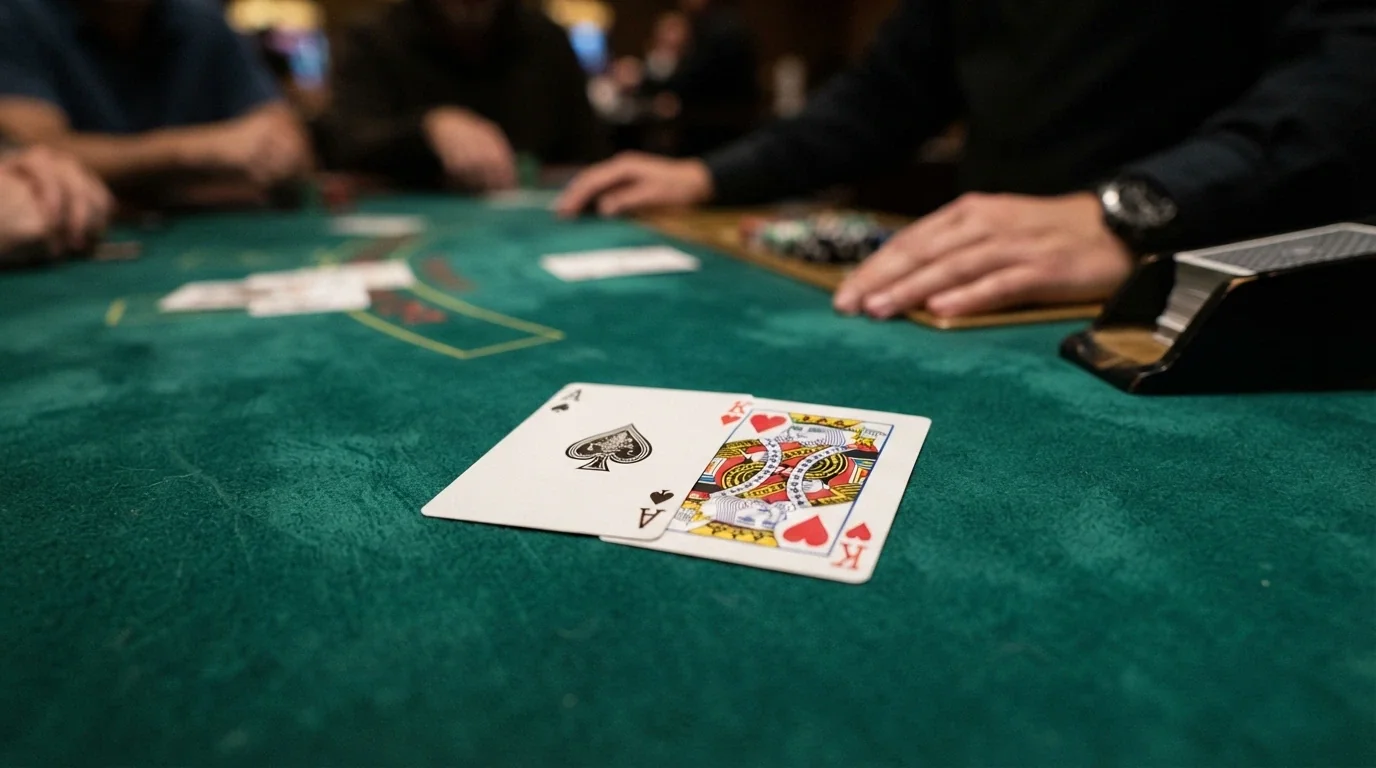
Lightning Blackjack, an Evolution variant, runs at 99.56% RTP with basic strategy — the trade-off being the random multipliers on winning hands, funded by the same kind of payout adjustment that runs through Lightning Roulette. The mechanic pushes the game above the standard live blackjack edge, but the multipliers apply only to wins and the base game’s wagering rules still apply. The expected return lands close to standard blackjack once the multiplier distribution averages out, but the variance is higher.
Table limits in live blackjack run from A$5 at the lower-stake tables to A$1,000+ at the high-roller rooms at operators like Bizzo. Pace of play is around fifty to sixty hands per hour once the round structure settles, faster than a land-based table because the betting interface cuts out chip-handling time. For a player who wants the best seat in the live casino and is willing to learn basic strategy, live blackjack is the answer.
Roulette: European, French and the Lightning Variants
Three wheels matter in live dealer roulette, and the difference between them is a doubling of the house edge in the worst case. European roulette uses a single-zero wheel and runs at 2.70% house edge. American roulette uses a double-zero wheel and runs at 5.26%. The extra zero is the entire reason for the gap. A player who finds themselves at an American wheel is paying the casino almost twice as much per spin as a player at a European wheel for what looks like the same game.
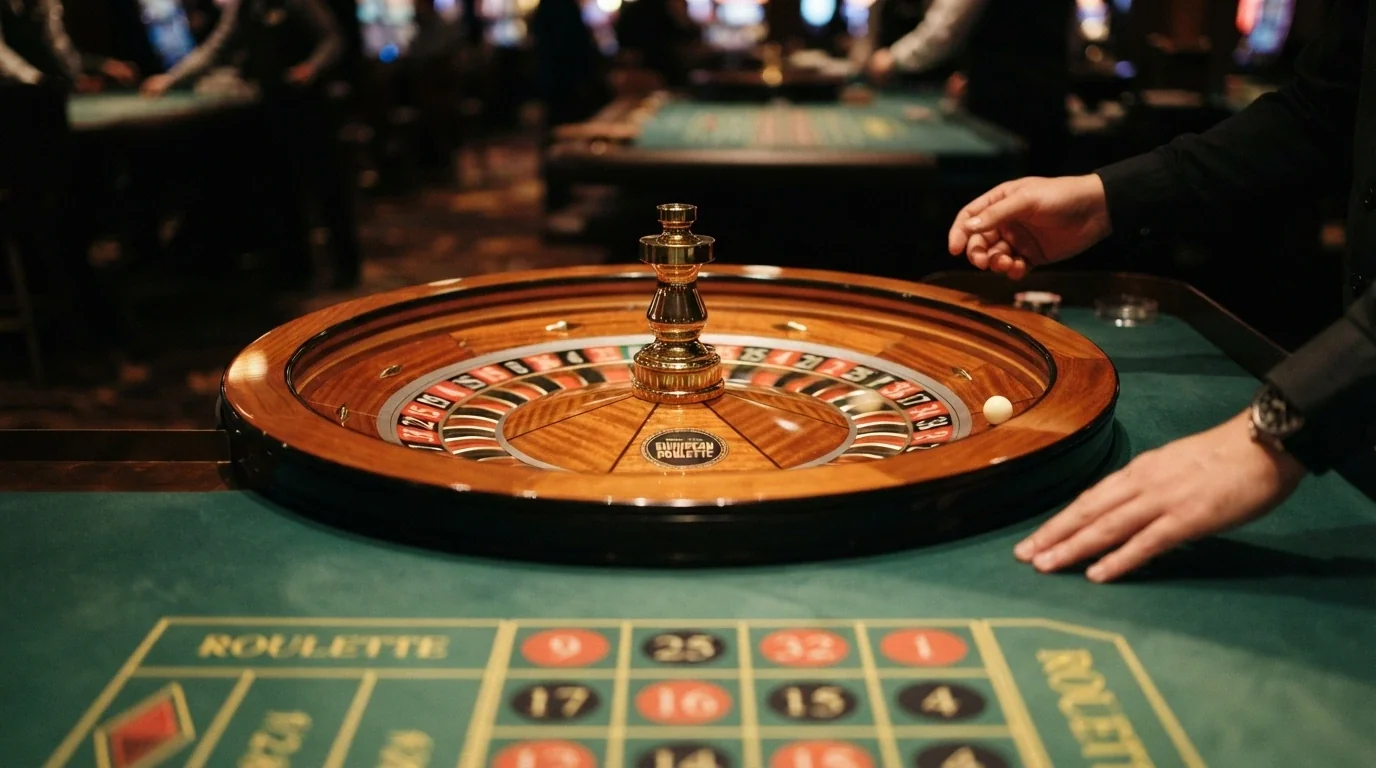
French roulette adds the La Partage rule — on even-money bets, half the stake is returned if the ball lands on zero — which halves the house edge on those bets to 1.35%. La Partage applies only to even-money bets (red/black, odd/even, high/low), not to straight-up numbers. The single-zero wheel is already in play, so the base edge on inside bets is the standard 2.70%.
Lightning Roulette, an Evolution variant, runs at 97.30% RTP on straight-up bets — but its house edge is roughly 2.9%, higher than standard European roulette’s 2.70%, because straight-up payouts are reduced from 35:1 to 29:1 to fund the random Lightning Numbers. Each spin generates one to five Lightning Numbers with multipliers from 50x to 500x. The trade is a worse base game for a shot at a multiplier on one or two numbers per spin. XXXtreme Lightning Roulette sits at 97.30% RTP with multipliers up to 2,000x, same structural trade, bigger ceiling.
Quantum Roulette by Playtech uses a European single-zero wheel at 97.30% RTP on straight-up bets — same base maths as Lightning Roulette, different multiplier mechanic. For a player who wants the single-zero wheel, the choice is French roulette for the even-money La Partage discount, standard European for the inside-bet maths, and Lightning or Quantum variants for the multiplier ceiling at a small base-game cost.
Game Shows: Crazy Time, Monopoly Live and the Rest
The live game shows are where the maths moves furthest from the player’s favour and the production value climbs highest. Crazy Time by Evolution runs at 96.08% RTP on the main number segments, with a theoretical range of 94.41% to 96.08% depending on where the player bets — the bonus rounds carry worse returns than the number segments. The Crazy Time bonus game reaches a 20,000x multiplier ceiling. The chance of landing any bonus round on a given spin is roughly one in six.
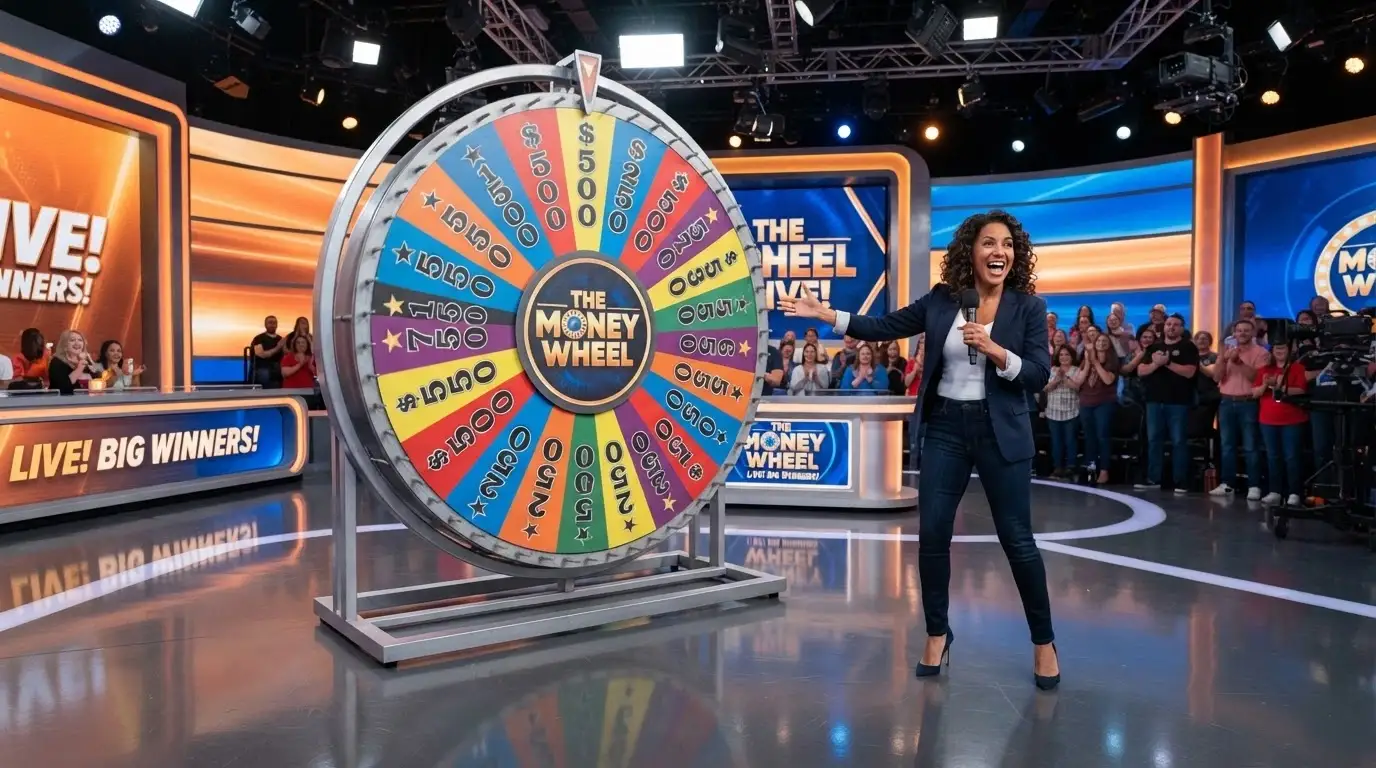
Monopoly Live sits at 96.23% RTP with a medium volatility classification, the only game show in this set with an explicit volatility rating carried in the data. Dream Catcher at 96.58% sits at the simpler end of the money-wheel family. Funky Time, the newer Evolution release, comes in at 95.99% — the lowest-RTP game show in this section and the one a player should approach knowing the house edge runs above 4%.
The outlier at the top is Cash or Crash at 99.59% RTP, the highest-RTP game show by a wide margin. The trade-off is the format: a slower game-paced decision tree with fewer spectacle elements than Crazy Time. Lightning Baccarat, the baccarat-show hybrid, sits at 98.76% on Banker bets — close to standard baccarat’s RTP and well above the game-show average, with the multiplier mechanic layered on top.
The honest reading of the live game-show floor: the production value is the point, and the maths is what pays for it. A player who wants the best return in the live casino sits at a blackjack or baccarat table. A player who wants the spin-the-wheel experience pays for it in house edge.
Why Your Live Casino Bonus Is Smaller Than It Looks
The headline figure on a live casino welcome bonus — A$8,000, A$2,500, A$1,500 — is not what the player ends up with. It is the ceiling of what a deposit can be matched by, before the wagering requirement turns the bonus balance into a turnover target that most players never clear.

The structure is the same across most offers in this set. A percentage match on the deposit, capped at a maximum bonus amount, with a wagering multiple — typically 35x to 40x the bonus amount — that has to be met in bets before the bonus balance converts to withdrawable cash. Free spins often come attached, credited against specified pokie titles — Skycrown’s 400 spins credit on BGaming and Booongo titles, for instance. Some operators add a live-specific cashback layer on top — Skycrown’s 10% weekly live cashback up to A$1,500 with no wagering, King Billy’s 13% Thursday cashback, Playfina’s daily cashback up to 20%.
The wagering multiple is where the offer shrinks. A A$1,200 bonus at 40x wagering means A$48,000 in bets before withdrawal. Assuming only the bonus amount is wagered and the player sits at live blackjack with the standard S17 rules and a house edge of around 0.5%, the expected loss on A$48,000 in turnover is A$240. That is the cost of clearing the bonus at the table with the best odds.
A “free” A$1,200 that costs A$240 to clear is not free, and a player who never finishes the wagering forfeits the whole bonus balance. The expected-loss calculation above assumes only the bonus amount is wagered; it does not account for variance, for the player who runs hot and clears the wagering early, or for the player who runs cold and loses the deposit before the bonus is touched. It is an average across many spins, not a guarantee for any single session.
The contribution-rate gap makes the maths worse. Live-dealer games often contribute at a reduced rate toward wagering — sometimes 10%, sometimes excluded entirely from bonus play. A player who deposits, takes a bonus, then plays live tables expecting the bets to count toward the 40x turnover may find they are only ticking the wagering bar at a fraction of the rate they assumed. That detail sits in the bonus terms, not on the bonus headline, and it is the one to read before claiming.
Wagering 101: Why Your Bonus Balance Is Not Real Money Yet
A wagering multiple is the number of times the bonus amount has to be wagered in bets before the bonus balance becomes withdrawable. A 40x multiple on a A$1,200 bonus is A$48,000 in cumulative bets. A 35x multiple on a A$1,800 bonus — the Zotabet offer — is A$63,000 in cumulative bets. The number is large because the casino is pricing in the house edge — the player is expected to lose a percentage of every dollar wagered, and the multiple is calibrated so that the expected loss plus the bonus paid out roughly balance.
The reason the bonus balance is “not real money yet” is exactly that: until the wagering is complete, the balance is the casino’s money held in the player’s account, and any withdrawal attempt voids the bonus portion. The marketing word is “bonus”; the substance is a target.
Live-dealer games and wagering interact unevenly. Most operators in this set exclude live games from bonus wagering or contribute them at a reduced rate — 10% is a common contribution rate, meaning every A$100 wagered on a live table counts as A$10 toward the 40x target. A player who deposits, claims the bonus, then sits at a live blackjack table expecting A$100 in bets to move A$100 of wagering is going to find their wagering bar moves ten times slower than they thought.
The practical reality of the wagering requirement on a live-casino bonus is that most players never complete it. The expected-loss calculation assumes a player who grinds through the entire turnover. A player who plays for an hour, loses some, wins some, and withdraws before clearing forfeits the bonus and gets back only their deposit balance minus net losses. That is not a flaw in the system; it is the system.
When Live Cashback Beats a Deposit Match
A live cashback offer with no wagering is structurally different from a deposit-match bonus. The cashback returns real losses as cash — withdrawable, no turnover wall, no contribution-rate complication. The deposit match returns a bonus balance behind a turnover target. Both are offers, but they pay out in different currencies.
Skycrown’s 10% weekly live cashback up to A$1,500 is the cleanest version in this set. A player who loses A$1,000 on live tables in a week gets A$100 back as withdrawable cash. King Billy’s 13% Thursday cashback works the same way on a different day of the week. Playfina’s daily cashback up to 20% is the most generous on paper, though the daily reset changes the maths — a smaller loss recovery over more periods can deliver a different real-world return than a weekly 10%.
The structural case for cashback is straightforward: a smaller cashback percentage with zero wagering is worth more to most players than a larger match bonus. The math reason is the expected-loss calculation above — every dollar of bonus carries an expected cost to clear, and a dollar of cashback carries none. The decision reason is the contribution-rate complication: cashback lands on live play by definition, so the operator’s wagering exclusions on live games are irrelevant to a cashback offer in a way they are not to a deposit match.
For a player whose primary play is live dealer tables, a 10% weekly cashback offer with no wagering is worth more than a A$2,500 deposit match at 40x wagering with live games contributing 10% toward turnover.
Can You Play Live Casino for Free? Here Is What Is Possible
Live dealer tables do not have a demo mode. There is no “play for fun” button on a live blackjack table, no free spins on a live roulette wheel, no practice balance at a Crazy Time money wheel. The reason is mechanical: a live dealer table costs money to run — the studio, the dealer, the camera crew, the OCR — and every player who sits down is paying for that cost through the house edge on their bets. A demo mode would let a player experience the production cost without contributing to it, and no operator runs that model.
Where free play does exist: RNG table games and online pokies carry demo modes at most operators in this set, where the player runs a practice balance against the software. The free-play experience is complete for slots — the player sees the bonus rounds, the paytable, the volatility — without spending anything. It is partial for RNG table games — the player sees the interface, less of the strategic depth because basic strategy is the same regardless of platform.
The closest thing to free live casino play is the no-deposit free spin offer. Playfina runs 25 no-deposit free spins on signup — the only no-deposit offer confirmed in this set — that the player can claim without making a deposit. What those spins buy is a session on a specified pokie, not a live dealer table, but the win from those spins can carry into a real-money balance subject to wagering. The free-to-watch but not free-to-play dynamic of live streams is the honest framing: a player can sit at a live table and watch without betting, but a player cannot play at a live table without betting.
No-Deposit Free Spins: The Closest Thing to Free Live Play
The 25 no-deposit free spins offered by Playfina on signup are the only no-deposit live-casino-adjacent offer confirmed in the featured set. The mechanic is standard: register, claim, spin, any winnings carry a wagering multiple before they become withdrawable. The spins themselves are typically credited against a specific pokie or a small set of pokies, not against a live dealer table — the same cost-to-run logic that excludes demo mode excludes no-deposit live play.
What the no-deposit spins actually deliver is a free shot at a real-money balance with a chance to test the operator’s platform — the deposit flow, the game-loading speed, the verification process — without any commitment of the player’s own money. The free-roll is real, and the wagering on the winnings is the standard cost.
The honest reading: no-deposit spins are a marketing tool that lets a player try the operator before depositing. They are not a route to free live dealer play, because no route to free live dealer play exists at any operator in this set or anywhere else in the live casino industry. The mechanical cost of running a live table precludes the model.
Live Casino on Your Phone: What Works and What Does Not
Mobile live-dealer play is mature. Every operator in this set runs an HTML5 mobile interface that streams the live video feed into a phone or tablet browser at the same resolution as a desktop stream. No download is needed for the majority of the set, and the experience on a modern smartphone — iPhone from the 12 onward, any flagship Android from the last three years — is functionally identical to the desktop version of the same operator’s site.
Where dedicated apps exist, they add incremental features: faster loading, biometric login, push notifications for live-game drops or bonus offers. Playfina publishes iOS and Android apps in this set — the only confirmed dedicated mobile app among the ten. For the other nine operators, the mobile experience is browser-based, and the player should expect the same performance as the desktop site rendered on a smaller screen.
The data and screen-size reality is worth understanding. An HD live stream — and live dealer streams run at 1080p or higher at most studios — uses around 1.5 to 3 GB of data per hour at typical compression. On a mobile data plan that runs out at 10 to 20 GB, a player streaming live tables is consuming a meaningful share of the monthly allowance. Wi-Fi is the practical choice for sessions longer than an hour, particularly at higher resolution. A player who streams live tables on a phone over mobile data should expect the data cost to show up on the next bill — that is the practical constraint no operator discloses on the bonus page.
The download-availability gap is structural. Most offshore operators do not publish apps on the Australian Google Play or Apple App Store — the iOS and Android app ecosystems route differently in Australia for gambling apps than in some other markets, and offshore brands tend to publish Android APKs from their own sites rather than through the Play Store. A player who wants the app experience at an offshore brand will most often need to download from the operator’s site rather than from the app store.
For an Australian player who wants to play live casino on a phone: the browser works, the apps exist where they exist, and the data cost is the practical constraint that no operator discloses on the bonus page.
The Studios Behind Every Live Table Australians See
Two companies supply nearly every live dealer stream an Australian player sees: Evolution Gaming and Pragmatic Play Live. Evolution is the dominant force — the studio scale, the game catalogue, the titles that define the live casino category all sit inside Evolution’s portfolio. Crazy Time, Lightning Roulette, Monopoly Live, Lightning Blackjack, Lightning Baccarat, Cash or Crash, Dream Catcher, Funky Time, XXXtreme Lightning Roulette — every one of those titles is an Evolution product. Pragmatic Play Live is the primary rival, with overlapping game-show offerings and a growing roulette and blackjack catalogue, present at most operators in this set.
The B2B model is what makes this concentration possible. Evolution and Pragmatic Play Live do not run player-facing casinos — they build and operate the studios, train the dealers, certify the games, and sell the stream to operators who embed it into their own lobbies. Bizzo’s 40+ software providers cover the RNG side of the library; Evolution is the live pillar. The operator’s brand sits on the lobby, the deposit flow, and the bonus terms; the live game itself, the dealer, the camera work, the OCR — all of that comes from the provider.
Playtech is the third name worth knowing, primarily for Quantum Roulette — a European single-zero wheel at 97.30% RTP on straight-up bets with random multipliers layered on top, structurally similar to Evolution’s Lightning Roulette. NetEnt Live appears in some catalogues, including Skycrown’s. Other live studios exist in the global market — OnAir Entertainment, Vivo Gaming, Ezugi — but their presence in the AU-accessible live casino market is limited compared to Evolution and Pragmatic Play Live.
The practical reading for an Australian player: nearly every live table at every operator in this set is running on an Evolution or Pragmatic Play Live stream. The live casino is, in effect, a duopoly — and the operator’s role is closer to a shopfront than to a casino.
Why the Provider Matters More Than the Casino Brand
The operator chooses the games, the table limits and the bonus terms. The provider sets the odds, the rules and the stream quality. A casino cannot change the house edge of a Lightning Roulette table — that number sits inside the Evolution game engine and is identical at every operator running the same game. The operator can decide to offer the game or not, at what limits, and wrapped in what bonus — but the maths underneath is fixed by the provider.
That separation matters for a player doing what this page does — comparing operators. Two operators running the same Evolution live blackjack table, with the same S17 rules and the same 0.5% house edge, offer a player the same odds on the felt. The difference between them sits in the lobby, the deposit flow, the bonus terms and the customer support. On the felt, they are the same game.
Evolution’s certification and game-integrity infrastructure is one of the reasons the live casino industry runs on Evolution’s terms. The studios are licensed in multiple jurisdictions, the games are tested by independent laboratories, the OCR is independently audited. The player cannot verify any individual hand, but the system is engineered to a higher standard than the typical RNG pokie on the same operator’s site.
How to identify the provider from the lobby: most live casino lobbies label each game with the provider’s name in a small line under the title, and most operators carry the same provider logos in the footer of the live casino section. A player who wants to know whether the blackjack they are about to play is an Evolution table or a Pragmatic Play Live table can find out in the game info panel before sitting down.
The Law No Australian Casino Site Mentions
Online casino is prohibited in Australia under section 15 of the Interactive Gambling Act 2001. There is no licence for online casino anywhere in the country — not federally, not in any state or territory. The Australian Communications and Media Authority is the federal regulator that enforces this, and the regulator has had 1,564 illegal gambling and affiliate sites blocked by Australian ISPs since the first blocking request in November 2019, with more than 225 illegal services withdrawing from the Australian market since 2017.

What is licensable in Australia is wagering on races and sport placed before the event begins, lotteries and keno — through operators licensed by a state or territory. The Northern Territory Racing and Wagering Commission, administered through Licensing NT, is the de facto national licensor for online bookmakers; large operators including Sportsbet, bet365 and Ladbrokes hold NT licences running for up to 20 years. None of those licences covers online casino games. The product is prohibited outright.
The player is not prosecuted under the IGA. The Act targets the provider of the prohibited service, not the person in Australia using it. That is the legal technicality that lets the page exist as a reader guide. What it does not do is give the player any consumer protection. The offshore casino the player deposits at is not covered by Australian consumer law, by BetStop, by any AU dispute resolution scheme, or by any AU regulator the player can complain to if the operator refuses a withdrawal.
The 2026 reform passed both Houses of Parliament on 19 August 2026, and its measures commence on 1 January 2027. The reform bans wagering advertising during live sporting event coverage (15 minutes before to 5 minutes after); caps broadcast wagering ads at three per hour between 5 am and 8:30 pm; bars athletes, celebrities and influencers from promoting wagering products; establishes a national wagering advertising opt-out register called AdStop; and prohibits direct marketing of inducements for 14 days after a customer signs up and for three months after a person deregisters from BetStop. None of these measures legalises online casino. The product remains prohibited; the reform is about the licensed wagering market’s advertising and inducement rules.
The credit card and crypto ban for licensed online wagering, effective 11 June 2024 under the Interactive Gambling Amendment (Credit and Other Measures) Act 2023, is the line that does the most signalling for an Australian player. Penalties for non-compliance reach A$247,500. If a site asks a player to deposit by credit card or cryptocurrency, that site is operating outside Australian rules — because the only operators legally required to comply with the credit-card and crypto ban are the licensed wagering operators, and those operators do not offer online casino games.
What Offshore Means for Your Money
No Australian licence means no Australian consumer protection. The offshore casino the player deposits at owes the player nothing under Australian law, because the relationship does not exist under Australian law. The offshore licence that does cover the operator — wherever it sits, Curaçao, Anjouan, Tobique, the Philippines — runs under that jurisdiction’s dispute resolution, and the practical experience of an Australian player trying to enforce a withdrawal complaint through Curaçao’s gaming authority is poor at best.
The specific risks a player takes on by playing at an unlicensed offshore casino:
- No BetStop coverage. BetStop binds only Australian-licensed wagering services. Self-excluding from BetStop does not stop the player from depositing at the offshore site.
- No recourse on a refused withdrawal. If the operator decides to void a win, refuse a payout or close the account, the player has no Australian regulator to complain to. The offshore licence holder’s complaint process is the only option.
- Balance trapped by blocking. The ACMA can direct Australian ISPs to block an offshore casino at any time. If the site is blocked while the player has a balance on it, the balance is effectively stranded. The operator has no obligation to refund and no AU regulator the player can compel to do so.
- The credit-card and crypto tell. The ban referenced in the law section binds only licensed operators. The offshore casino asking for those deposit methods is, by definition, the operator that has no AU consumer law behind it.
The verdict on offshore play, in plain terms: the absence of Australian consumer protection is the price of admission, and a player should size the deposit accordingly.
When the Fun Stops: Gambling Harm and Where to Get Help
The scale of gambling harm in Australia is larger than the affiliate pages ever print. A model-based national estimate published in the Journal of Gambling Studies in 2026 puts the number of Australians aged five years and over affected annually by their own or another person’s gambling at approximately 3.29 million. Within that, an estimated 1.97 million adults are classified as at-risk or problem gamblers under the PGSI 1+ classification. Roy Morgan data from March 2026 shows 15.1% of the Australian adult population — an estimated 3.32 million people — experiencing some level of gambling harm.
The clinical prevalence sits at roughly 1% of adults for gambling disorder, with an additional 3 to 5% at risk. People who regularly gamble on poker machines are three times more likely than the general population to develop gambling problems. The annual health loss associated with gambling-related harm in Australian adults runs above 400,000 Years Lived with Disability. These are the figures behind the marketing.
The 2026 reform adds harm-reduction measures to the licensed wagering market. The AdStop opt-out register, the inducement marketing ban for 14 days post-signup and three months post-BetStop deregistration, the live-sport advertising blackout, the bank-blocking authority for illegal operators — all of these are aimed at licensed wagering, not at the offshore casino market that this page covers. The reform does not reach the operator at which a player has an account offshore.
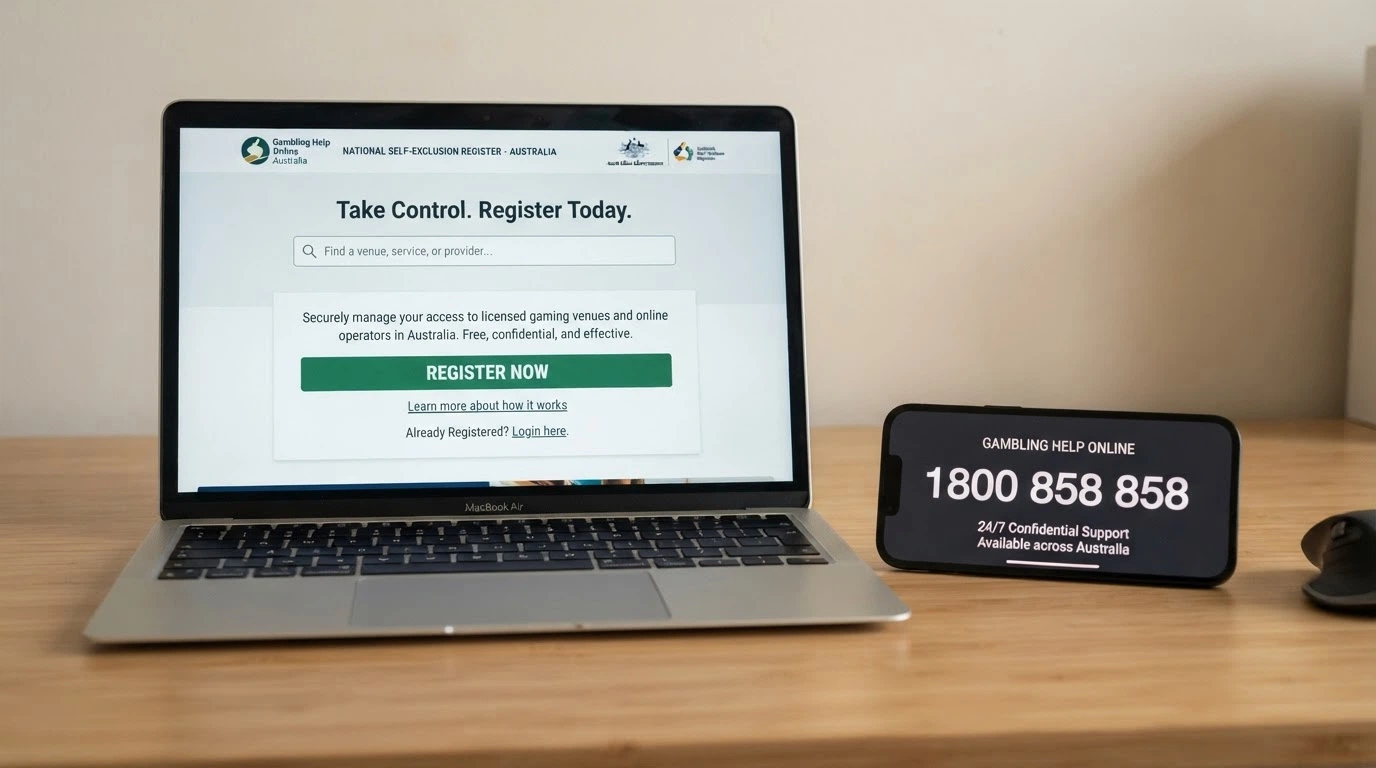
For an Australian player who feels the activity is no longer entertainment, the help that exists is real and confidential.
BetStop, Helpline and Where to Turn
- BetStop — National Self-Exclusion Register: Register at betstop.gov.au to exclude from all approximately 150 licensed Australian wagering providers in a single step. By 31 July 2026, 67,480 people had registered, with 41,290 exclusions still active. Of those who ever registered, 78% were under 40 and 38% chose lifetime exclusion. BetStop does not cover offshore casinos.
- National Gambling Helpline: 1800 858 858 — free, confidential, available 24 hours a day, 7 days a week.
- Gambling Help Online: gamblinghelponline.org.au — online chat and counselling services.
From 1 January 2027, the inducement marketing ban applies for 14 days after a customer signs up with a licensed wagering provider and for three months after a person deregisters from BetStop. The AdStop register, administered by the ACMA, lets a player opt out of licensed wagering marketing across the operators covered. None of these measures reach offshore casinos, but they shape the licensed environment around the player.
How We Chose and Ranked These Live Casino Sites
The ranked set was drawn from market-share data tracking Australian offshore casino play and from search-result analysis of AU-facing affiliate pages. The criteria that ordered the ranking were live-casino topical fit — provider depth, live-specific offers, confirmed title range and table limits — over market share or revenue alone. Skycrown tops the list because the no-wagering live cashback is a structural feature the rest of the set does not match. Bizzo runs second because the Evolution full-suite integration and the table-limit range are the deepest in the set. King Billy ranks third on the dual-track bonus structure and the high-roller ceiling. The list continues through Playfina’s free-spin and app offering, BitVegas’s no-sticky bonus structure, Rocket Play’s revenue scale, Fair Go’s AU-native positioning, and the remaining brands where the data trail runs thinner.
What was checked: market-share data, welcome bonus structure, live-provider line-up where confirmed, payment methods where named, the ACMA blocking register for offshore status, and the IGA prohibition as the benchmark all operators were measured against. Each operator’s status as an offshore brand was verified against the Interactive Gambling Act 2001 section 15 and the ACMA enforcement record.
What could not be verified: specific licence numbers for most operators in the set. Affiliate pages do not carry regulator-verified licence data, and the search results this run did not turn up regulator-level documentation for every brand. Where data is thin — for Rocket Play, WinSpirit, Stake and Royal Reels on live-provider and game-count specifics, and for Fair Go on the same — the write-ups state the gap rather than filling it with guesswork.
The ranking is not market-share driven. A brand at 9.4% market share ranks sixth because the live-casino detail available in this analysis is thinner than the live-casino detail for the brands ranked above it. A brand at 0.57% market share ranks second because the Evolution full-suite integration is the best-documented live offering in the set. The page ranks by topic fit, and the market-share column in the comparison table is there as context, not as the ordering principle.
What Every Australian Should Know Before Playing Live Casino
The maths, the bonus, the law. Three realities, each one sharper than the marketing lets on.
The maths reality: the games with the best odds in the live casino are live blackjack at around 0.5% house edge with basic strategy, French roulette on even-money bets at 1.35% with La Partage, Lightning Blackjack at 99.56% RTP. The games with the worst odds are American roulette at 5.26%, and at the game-show end, Funky Time at around 4% house edge. The spread between the best and worst seat is roughly five percentage points of every dollar wagered — meaning a player who picks the worst game at the worst table limit is paying the operator roughly ten times as much per dollar as a player who picks the best game at a European roulette wheel.
The bonus reality: a A$2,500 bonus at 40x wagering means turning over A$100,000 in cumulative bets before the bonus balance converts to withdrawable cash. The expected loss on that turnover at live blackjack’s 0.5% house edge is A$500 — the same calculation as the A$1,200 Skycrown example in the bonus section, applied at the larger scale. A player who never finishes the wagering forfeits the bonus. A player who finishes the wagering on live tables may find the live-dealer contribution rate cuts the effective wagering speed to a fraction of what the headline implies. The expected loss is an average across many spins under the stated assumptions; it promises no individual outcome.
The legal reality: every operator on this page is offshore. None is licensed in Australia. None is bound by Australian consumer law. None is covered by BetStop. None can be compelled by an Australian regulator to pay a disputed withdrawal. The credit-card and crypto ban for licensed wagering means that if a site asks the player to deposit by either method, the site is operating outside the rules that Australian-licensed wagering operators must follow. The player is not prosecuted, but the player is unprotected.
The practical verdict: if a player chooses to play, the best return in the live casino comes from live blackjack with basic strategy or from European or French roulette — not from game shows. A cashback offer with no wagering is worth more than a larger deposit match. Read the bonus terms before claiming anything. Never deposit by credit card or cryptocurrency at an offshore casino. Save the gambling-harm helpline number before the first session — it belongs somewhere the player can reach without thinking.
Frequently Asked Questions
Is it legal to play live casino games online in Australia?
Online casino games are prohibited under section 15 of the Interactive Gambling Act 2001 — no licence exists in Australia and no Australian-licensed operator offers live dealer games. The sites Australian players use are offshore, unlicensed in Australia, and not covered by Australian consumer law. The player is not prosecuted, but is unprotected.
Which live casino games have the highest RTP?
Cash or Crash leads at 99.59%, Lightning Blackjack sits at 99.56% with basic strategy, Lightning Baccarat on Banker bets is 98.76%, and Lightning Roulette, Quantum Roulette and XXXtreme Lightning Roulette all sit at 97.30% on straight-up bets. Among the classics, live blackjack at around 0.5% house edge with basic strategy is the strongest seat on the floor.
How do live casino welcome bonuses work and what are the wagering requirements?
A welcome bonus matches a percentage of the deposit up to a cap, with a wagering multiple — typically 35x to 40x the bonus — that must be met before the bonus converts to cash. A A$1,200 bonus at 40x means A$48,000 in bets. Live-dealer games often contribute at a reduced rate toward wagering — sometimes 10%, sometimes excluded entirely.
Can I play live casino games on my mobile phone in Australia?
Yes — every operator in this set runs an HTML5 mobile interface that streams live games into a phone browser with no download. Playfina publishes dedicated iOS and Android apps, the only confirmed app in the featured set. Most offshore operators do not publish apps on the Australian app stores; mobile data usage on an HD stream runs at roughly 1.5 to 3 GB per hour.
What payment methods can I use at Australian live casinos?
Offshore live casinos accepting Australian players typically support PayID, Visa debit, bank transfer, and various cryptocurrencies. Credit cards are banned for Australian-licensed wagering since 11 June 2024 — a site asking for credit card or crypto is operating outside Australian rules. PayID deposits at AU-facing offshore sites typically start at A$10.
How does BetStop work for live casino players?
BetStop is the National Self-Exclusion Register at betstop.gov.au. It excludes a player from all approximately 150 licensed Australian wagering providers in a single step. By 31 July 2026, 67,480 people had registered, with 41,290 active exclusions. BetStop does not cover offshore casinos — registering does not stop play at any of the operators on this page.
Written by the editors at Trusted Casinos Australia.