
Crypto casinos and Australian players: the offshore picture for 2026
 Available in AU
Ten brands. Every single one of them operating from outside Australia. None licensed to take a cent from a person sitting in Sydney, Brisbane, Perth or anywhere else on the mainland. That is the entire market for “Aussie crypto casinos” in 2026, and the rest of this page is what those ten brands actually offer, what the maths on their bonuses looks like once you sit down with a calculator, and what the legal framework says about your position if a withdrawal goes sideways. The page does not recommend any operator. It does the harder job: it lays the terms next to each other and lets you read them.

Current as of 18 October 2026. Every licence claim on this page has been checked against the ACMA register and the operators’ own terms pages.
Table of Contents
- What an Aussie crypto casino actually is (and isn’t)
- The 10 crypto casinos Aussies are playing at in 2026
- New crypto casinos worth a look this year
- Why your crypto casino bonus is harder to clear than it looks
- How fast your crypto withdrawals really land
- Playing without ID — the no-KYC crypto casino reality
- Crypto pokies and slots — what you’re actually spinning
- How to pick a crypto casino that won’t disappear overnight
- The legal reality every Aussie crypto player needs to know
- Staying in control when the casino is offshore
- How we evaluated these crypto casinos
- Your move — playing smart in a market with no safety net
- Frequently asked questions
What an Aussie crypto casino actually is (and isn’t)
The phrase covers a real product and a regulatory vacuum. The product is straightforward: an online casino that accepts deposits in cryptocurrency — Bitcoin, Ethereum, Tether, sometimes a dozen more altcoins — and pays out winnings the same way. The vacuum is Australian. No licence for an online casino, for online pokies, or for in-play sports betting exists anywhere in Australia. The Interactive Gambling Act 2001 closes that door, and the 2017 amendment strengthened the lock. Any site that takes a real-money bet on a slot reel from a person physically in Australia is operating outside the law that governs that activity.
That is why every brand a player in Australia meets under this label is an offshore brand. The operator behind the screen is registered in Curaçao, Anjouan, or somewhere similarly remote from ACMA’s reach. The site accepts Australian dollars, displays AUD alongside BTC and ETH, runs a sportsbook alongside the pokies, and markets itself as if it were just another local bookie. It isn’t. The licence it does hold explicitly does not permit offering services to customers in Australia. The licence it doesn’t hold — the Australian one — is the one that would bind the operator to Australian consumer law, to BetStop, and to dispute resolution an Australian player can actually use.
What counts as a crypto casino — and what the label hides
Three things get blurred in the marketing and are worth pulling apart. The first is the currency naming. “Crypto casino”, “cryptocurrency casino” and “Bitcoin casino” all describe the same product — a casino that takes and pays in digital currency — but they map to different search terms, and the affiliate ecosystem uses whichever one ranks best for a given audience. The game software is the same. The maths is the same. The licence situation is the same.
The second is the platform shape. There is no land-based crypto casino. Every site under this label is online-only, and the surface an Australian player meets takes one of three forms: an individual operator’s lobby (BitStarz, BC.Game and so on), a comparison-and-review site that aggregates operators and earns a commission for sending players there, or a Telegram casino — a bot-led, message-based interface that has emerged as a niche channel for players who want minimal friction. The third form is small and growing, and it tends to carry the lightest KYC of the three.
The third thing the label hides is the licence gap. Every operator in this space is offshore. Some carry Curaçao licences, some carry Anjouan licences, some carry whatever combination the parent company chose this year. None of those licences authorises the operator to take Australian customers. So when a site describes itself as “licensed and regulated”, the licence being described is one for the jurisdiction the operator is registered in — not the one the player is sitting in.
The 10 crypto casinos Aussies are playing at in 2026
The table below compares the ten brands Australians actually search for in this niche. Every one of them is offshore. Every one of them is unlicensed in Australia. The welcome bonus column provides specific figures where available; the empty cells represent operators whose offers are described in the prose sections below. Cells without a figure take the no-data marker.

| Operator | Licence | Welcome bonus |
|---|---|---|
| BitStarz | Curaçao — unlicensed in AU | 100% up to A$2,000 + 180 free spins, 40x wagering |
| Lucky Block | Curaçao — unlicensed in AU | — |
| BC.Game | Curaçao — unlicensed in AU | Up to 740% match in BCD stablecoin, 500x wagering |
| Mega Dice | Curaçao — unlicensed in AU | — |
| Metaspins | Curaçao — unlicensed in AU | — |
| Jackbit | Curaçao — unlicensed in AU | 100 free spins, wager-free |
| Vave | Curaçao — unlicensed in AU | 100% up to 4 BTC + 100 free spins |
| Bets.io | Curaçao — unlicensed in AU | 225% up to 1 BTC + 225 free spins |
| Ignition | Curaçao — unlicensed in AU | A$3,000 casino and poker package |
| Cloudbet | Curaçao — unlicensed in AU | Zero-rollover welcome |
The spread tells the story. Two of the ten offer their welcome bonus with no wagering requirement attached at all (Jackbit and Cloudbet). One asks the player to turnover the bonus 40 times. One asks for 500 times. The marketing on the rest tends to talk around the multiple. The wagering requirement is the number that decides what a bonus is actually worth, and the section on bonus maths handles that in detail.
BitStarz
BitStarz runs a 100% match up to A$2,000 with 180 free spins attached and a 40x wagering requirement on the bonus. The 40x is the line on this one — a touch above what most fiat-licensed sites ask for, and on the heavier end of what an offshore crypto casino typically imposes. The platform itself is an established all-rounder: pokies, table games, a live dealer lobby and a sportsbook, with Curaçao at the foot of the licence page and no Australian registration anywhere in the corporate filings. The cashout terms are described in qualitative terms by the operator — a daily and weekly ceiling, a verification process at withdrawal — but no specific figure was carried in research. The 40x multiplier is what a player has to clear, and at A$2,000 in bonus money that comes to A$80,000 in turnover before any winnings become withdrawable.
Lucky Block
Lucky Block runs a Curaçao licence and markets itself as a crypto-native casino and sportsbook, which it is — Bitcoin, Ethereum, USDT and a handful of altcoins at the cashier, plus a sportsbook with the same wallet behind it. The welcome bonus is available; the terms are described qualitatively here: a deposit-gated package with a wagering requirement that sits in the ordinary range for this market, free spins included, and standard time-limit conditions. The operator targets Australian players through affiliate channels, and the licence footer on the site is Curaçao — not Australia. The cashout ceiling and the verification triggers follow the offshore norm rather than anything an Australian player could complain to ACMA about.
BC.Game
BC.Game goes loud. The headline offer is up to 740% matched across the first four deposits, paid in BCD — the platform’s own stablecoin. The wagering requirement is 500x. Read that twice. Five hundred times the bonus amount in turnover before a withdrawal unlocks. On a four-deposit package that scales into the thousands of dollars, the implied turnover is the kind of number a player could spend a year trying to clear at standard spin speeds. The platform itself is massive: thousands of games, in-house titles, sports betting, the works. The Curaçao licence sits underneath all of it. The 740% is the bait. The 500x is the hook.
Mega Dice
Mega Dice runs the same shape as the rest: Curaçao licence, casino and sportsbook on the same wallet, welcome bonus described qualitatively rather than by a specific number. The platform is crypto-native in the practical sense — deposits settle in minutes, the sportsbook and casino share a balance, and the marketing leans hard on the speed of the payout. The offer sits as the operator describes it: a deposit-gated package, free spins included, ordinary validity terms, a cashout ceiling that follows the standard offshore template. The licence is Curaçao, and the operator does not hold an Australian licence of any kind.
Metaspins
Metaspins runs over 6,800 games under a Curaçao licence held by Metaspins N.V., and the operator structure is unusually clear for this space — a named company behind a named brand, registered in a named jurisdiction. The game library is the main selling point, and 6,800-plus titles is in the upper third of what an offshore crypto casino carries. The welcome bonus terms are qualitative here: a specific percentage or wagering multiple is not provided for this brand. The cashout limits and verification processes follow the same template as the rest of the list — daily and weekly ceilings, KYC triggered at withdrawal, no Australian registration.
Jackbit
Jackbit is the standout offer in the no-strings column. The welcome is 100 free spins with a 0x wagering requirement — the winnings land as real, withdrawable cash rather than as bonus money that has to be turned over a multiple of times before it unlocks. The game library sits at over 6,000 pokies, which puts Jackbit in the same bracket as Metaspins and Bets.io. The licence is Curaçao, and no Australian registration sits behind it. A wager-free welcome is the rarest thing in this market, and the reason is the obvious one: most operators prefer the bonus money to stay locked until a multiple of play has happened, because the house edge does the work for them during the clearing period. Jackbit’s choice to skip the multiplier is the most generous thing on this list.
Vave
Vave carries a 100% match up to 4 BTC plus 100 free spins. The bonus ceiling in BTC rather than AUD tells you the operator is leaning into the crypto-native framing, and 4 BTC is a large headline — though it moves with the dollar value of Bitcoin. The bonus terms are qualitative. The platform sits behind a Curaçao licence with no Australian registration, and the cashout ceiling and verification processes follow the standard offshore template. The sportsbook shares the wallet with the casino, which is the standard play for a brand in this space.
Bets.io
Bets.io carries the biggest game library on this list — over 11,000 titles — alongside a welcome package of 225% up to 1 BTC plus 225 free spins. The 225% match is a heavier percentage than the 100% line that BitStarz or Vave sit on, but the wagering multiple and the rest of the fine print are not provided for this brand. The licence is Curaçao and the operator does not hold an Australian registration. Cashout limits and verification triggers follow the standard offshore template.
Ignition
Ignition is the hybrid on this list: a casino and poker platform on the same wallet, with a A$3,000 casino and poker package as the welcome. The poker room is the differentiator — most of the other brands here are casino-plus-sportsbook, and a working poker room is a separate product. The licence is Curaçao, and no Australian registration sits behind the operator. The wagering and validity terms are qualitative. The cashout ceiling follows the standard offshore template.
Cloudbet
Cloudbet is the second zero-rollover welcome on this list, alongside Jackbit. The bonus amount is described qualitatively. Cloudbet is a long-established crypto brand — one of the older names in the Bitcoin-casino space — and the platform covers casino, sportsbook and live dealer across the same wallet. The licence is Curaçao. The wagering requirement is zero. For a player who can read a zero in the wagering column as a meaningful number, this is one of the two offers on the page worth taking the math on.
New crypto casinos worth a look this year
The offshore crypto casino market turns over faster than the licensed market does. A brand can launch in one quarter, run a generous welcome to grab early deposits, and either consolidate into a long-running operator or quietly disappear in the next. The “new” label in this space is less about recency of incorporation and more about how visible the brand has been in the past twelve months.
Three trade-offs are worth keeping in mind. A new casino may offer a bigger promo than an established brand would, because early-stage operators compete harder for first deposits. A new casino carries less operating history, which means less verifiable track record on withdrawals, complaint handling and dispute resolution. And a new casino may not have survived its first big payout test — the moment a site has to send five figures back to a player in BTC and do it cleanly is the moment that tells you what the licence and the management are actually worth. The established brands on the earlier list have done it. The new ones haven’t, yet.
None of the ten featured brands here is a newcomer. The newer operators in this space tend to be smaller, leaner brands that ride on Telegram or invite-only affiliate channels rather than the mainstream comparison sites. Research did not pin a specific launch date to any new entrant in this market, so the offer is qualitative: bigger promos, lighter track record, and the same offshore licence gap that applies to every other brand on this page.
Why your crypto casino bonus is harder to clear than it looks
A welcome bonus is three numbers stacked on top of each other: the match percentage, the cap, and the wagering multiplier. The first two are the marketing. The third is the maths. A 100% match up to A$2,000 looks like “free money” on the banner. A 40x wagering requirement attached to it means the player has to turnover A$80,000 before the bonus balance converts to withdrawable cash. At A$2,000 in bonus money, that is A$80,000 of play required, not a flat extra $2,000 to pocket. The bonus is not a gift. It is a play requirement with a cashback attached at the end of it, conditional on the house not taking the cashback back first.

The wagering multiplier is where the brands on this list separate into three camps. Jackbit and Cloudbet sit at 0x — the winnings land as cash and can be withdrawn without further play. BitStarz sits at 40x, which is heavy by the standard of a fiat-licensed Australian sportsbook but ordinary for an offshore crypto casino. BC.Game sits at 500x, which is a different category entirely. Most of the other featured operators describe their wagering in qualitative terms without naming a specific multiplier, which itself is information — an operator that doesn’t publish the number is usually one that doesn’t want you reading it.
No-deposit bonuses — the offer that barely exists
None of the ten featured operators currently carries a no-deposit bonus as the headline offer. That absence is structural rather than coincidental. A no-deposit bonus — free spins or a small cash credit handed over without requiring a deposit first — is the most generous thing an operator can offer, and offshore crypto casinos have largely stopped competing on it. The economics don’t favour it: a no-deposit bonus is open to every new account, including ones that sign up, claim the offer, win something, and never deposit again. The deposit match is the operator’s preferred alternative: it filters for actual paying customers, the wagering multiple does most of the work of returning the bonus to the house over time, and the marketing still reads as generous.
If a no-deposit offer does appear at one of these brands, it will look like this: a small bundle of free spins — twenty to fifty — on a single named title, or a token cash credit (A$5 to A$20 in bonus money), with a high wagering multiplier attached and a maximum cashout ceiling that caps what the player can actually walk away with. Read the multiplier and the cashout cap before anything else on the bonus page.
Welcome match bonuses — why the wagering matters more than the percentage
The percentage is what the banner leads with. The wagering is what decides what the player walks away with. A 100% match at 40x is a different offer from a 225% match at the same multiple — the larger the match, the larger the turnover requirement in absolute dollars. A 740% match at 500x is a different category entirely: BC.Game’s headline number is the biggest on this page by a wide margin, and the wagering requirement is the biggest by a wider one.
The wagering maths at BitStarz works like this. Claim the full A$2,000 bonus and the playthrough required is A$80,000 — forty times the bonus, not forty times the deposit. At a A$1 spin, that’s 80,000 spins. At five seconds a spin, that’s 400,000 seconds of play, which comes to roughly 111 hours of uninterrupted spinning. A working week, give or take, of continuous play to clear one welcome bonus, and none of it counts the deposit you put in to qualify for the offer in the first place. The free spins that come attached ride on top of the same maths unless the operator exempts them.
Two things shrink the value of a match bonus in practice, and both are buried in the fine print. Game weighting gives slots a 100% contribution to wagering but reduces table games and live dealer to 10% or 20%, meaning the same dollar of turnover on blackjack clears a fraction of the requirement that the same dollar on a pokie does. Time limits turn a generous offer into an impossible one if the player doesn’t clear the requirement within the stated window — typically seven to thirty days. Maximum cashout caps set a ceiling on how much of the bonus balance can ever be withdrawn, which can turn a five-figure bonus clearing into a four-figure payout. None of these are negotiable after the bonus is claimed.
How fast your crypto withdrawals really land
Crypto is fast. The blockchain doesn’t care where you are, doesn’t close for weekends, and doesn’t take a cut proportional to what banks take for cross-border transfers. The deposit lands in minutes. The withdrawal can land in minutes too — at one end of the market, Moonbet advertises payouts in about four minutes. That number is the optimistic case and it’s worth understanding exactly what it’s claiming.
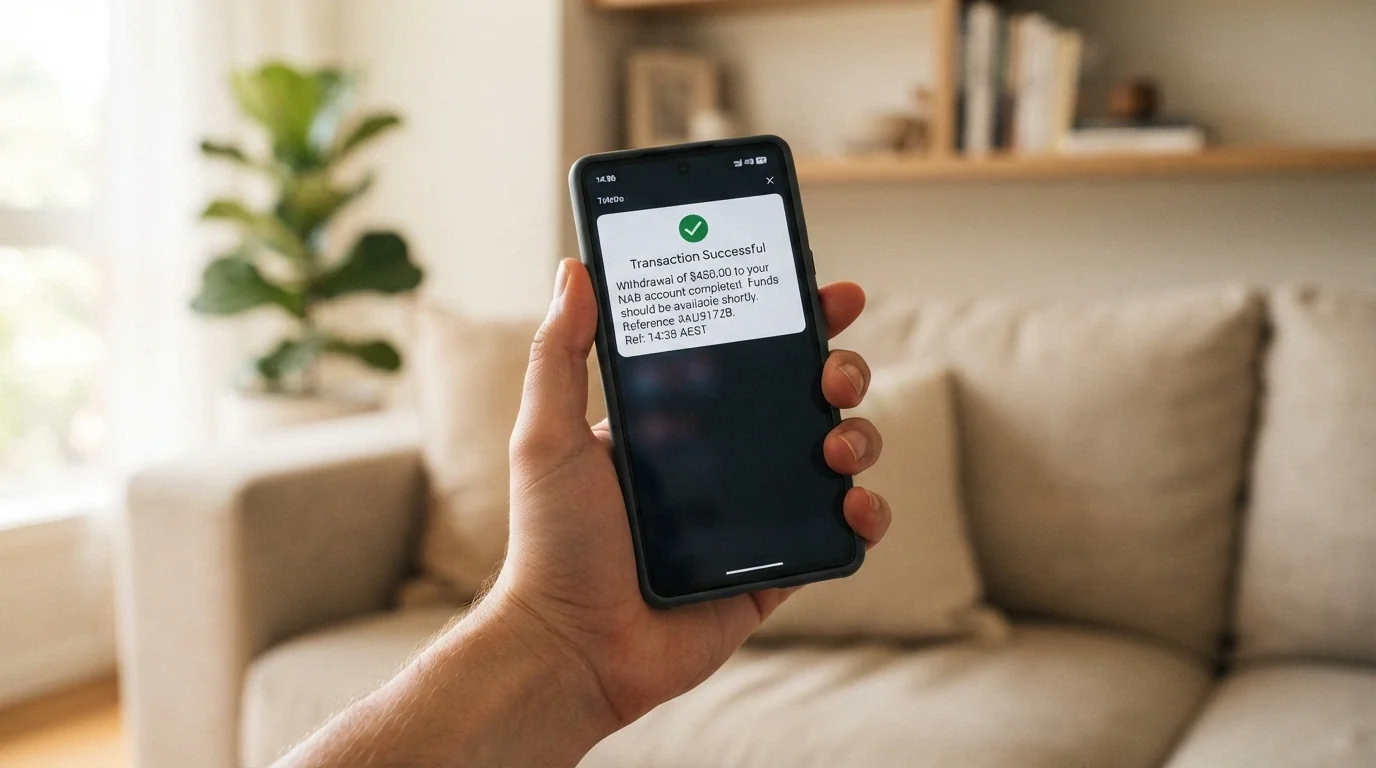
The four-minute number covers the time from the operator pressing “approve” on a withdrawal request to the funds appearing in the player’s wallet. It does not cover the time the operator takes to approve the request in the first place. It does not cover the KYC check the operator runs if it decides one is needed. It does not cover the days or weeks a withdrawal can sit in “pending” status while the operator’s risk team reviews it. And it does not cover the moment the operator decides not to pay.
The licensed Australian wagering market has spent years building the infrastructure to make payouts fast and predictable. Since 11 June 2024, licensed wagering services in Australia cannot accept credit cards or digital currency as payment — that prohibition is the regulator’s answer to a payments layer it couldn’t supervise. Offshore crypto casinos are not bound by it. They sit outside the licensed payments framework entirely, which is why they can offer crypto in the first place and also why a player who has a problem with one has no Australian payments regulator to complain to.
What slows down a crypto withdrawal — and what the operator won’t tell you
Three layers sit between the player clicking “withdraw” and the funds arriving in a wallet. The first is the operator’s own processing time — a manual review, a fraud check, sometimes a deliberate queue designed to give the operator time to re-engage the player on more play. The second is KYC. Many operators that let a player deposit without identity documents will demand them at withdrawal — a passport, a utility bill, a selfie. The verification step can take 24 hours; it can also take a week if the documents don’t pass review on the first pass. The third is liquidity. A small operator that doesn’t hold enough crypto at its withdrawal wallet to cover a five-figure payout may need to source the funds before sending them. This isn’t a problem at the biggest brands; it is a problem at the rest.
The blockchain confirmation time is the smallest part of the equation. Bitcoin blocks settle every ten minutes on average. Ethereum blocks settle every twelve seconds. The wait at the blockchain layer is the smallest delay in the chain, and the operator’s own processing is usually the largest. The marketing talks about blockchain speed because blockchain speed is the part the operator can advertise; the part it controls is the part it doesn’t.
Playing without ID — the no-KYC crypto casino reality
The appeal of a no-KYC casino is the frictionless sign-up: an email address, a password, sometimes a username, and the player is in. No passport upload. No utility bill. No selfie holding today’s newspaper. For a player who values privacy, or who simply doesn’t want to send identity documents to an offshore operator whose data security is unknown, the appeal is obvious.

The trade-off is the same thing described from the other direction. No identity verification means no identity-based recourse. If the operator refuses a withdrawal, freezes funds, or disappears, the player has no documented identity on file with which to pursue a complaint, a chargeback or a regulator. The operator’s argument for not requiring KYC is privacy. The player’s cost of accepting no KYC is the same: no verifiable identity the operator is bound to recognise.
Offshore casinos are not bound by Australian AML/KYC rules. The Anti-Money Laundering and Counter-Terrorism Financing Act applies to Australian reporting entities, and an offshore crypto casino accepting Australian customers is not one of them. The operator may voluntarily impose KYC checks; it may not. The player has no guarantee either way until they hit a withdrawal.
Anonymous casinos — the privacy pitch and the catch
The anonymity spectrum in this space runs from “email-only sign-up” to “no sign-up at all, just a wallet address and you’re playing”. The marketing tends to describe either end as “fully anonymous”, which is a stretch on both sides. An email-only sign-up is pseudonymous, not anonymous — the operator has the email address and can tie it to the wallet, the deposit history and the gameplay. A wallet-address-only sign-up is closer to anonymous at the account level but leaves a permanent record on the blockchain that any analyst with a block explorer can follow.
The catch surfaces at withdrawal. An operator that didn’t ask for ID at sign-up will frequently ask for it when the player wants to take money out — the same passport, the same utility bill, the same selfie. The justification is anti-fraud. The effect on the player who wanted no-KYC all along is that they get KYC at the worst possible moment, and they have no leverage to refuse because the money is already on the operator’s side of the line.
The VPN question sits alongside the privacy pitch. Some players use a VPN to mask their Australian location when they sign up and play at an offshore site. The VPN doesn’t create legal protection — the IGA targets the provider, not the player, and a VPN does not change which side of the operator’s terms the player is on. What it does change is the operator’s ability to verify the player’s location, which can matter at withdrawal if the operator decides to enforce its own geo-restriction clause. The privacy gain is real. The legal gain is none.
Crypto pokies and slots — what you’re actually spinning
A crypto pokie is a regular pokie. The reels, the paylines, the bonus features, the random number generator behind them — all of that is the same software regardless of whether the player bets in AUD, USD, BTC or USDT. The crypto layer is the cashier, not the game. The maths of the slot is the maths the slot shipped with from the studio.
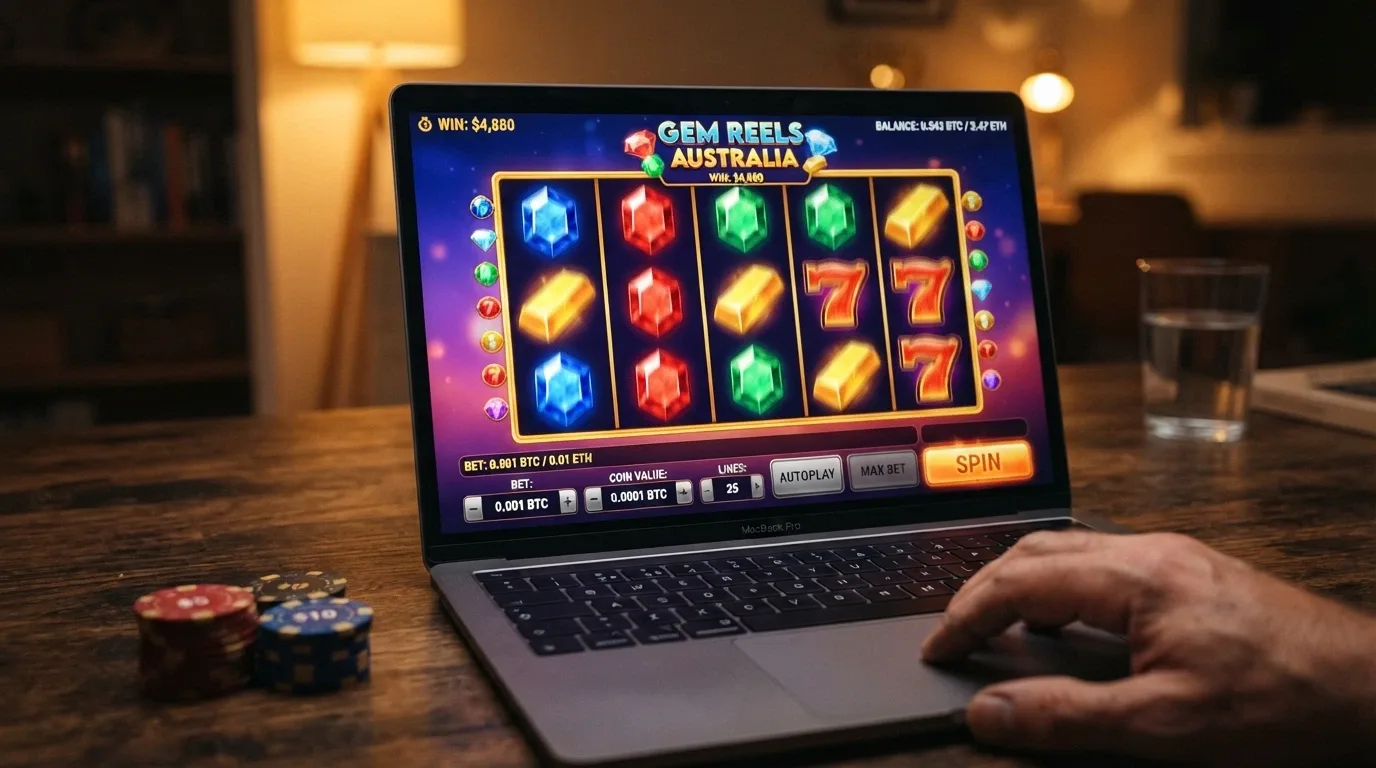
What changes at a crypto casino is the betting interface. Spins are placed in fractions of a coin — 0.0001 BTC, 0.001 ETH, 1 USDT — rather than in dollar amounts, and the display updates with the live exchange rate. The win comes back in the same denomination. The game underneath doesn’t know or care.
What most offshore crypto casinos do not publish is the per-title RTP. Licensed operators in many jurisdictions are required to publish return-to-player percentages for every game they host; offshore operators are not, and most don’t. A player who wants to know the RTP of a specific slot at a specific offshore casino generally can’t find it on the casino’s site and has to fall back on the game studio’s published figure, which may or may not be the version the casino is hosting. This is the single biggest information gap a crypto casino player faces, and it doesn’t have a clean answer.
The game volume at the brands on this list runs from 6,000 titles upward. Jackbit sits at over 6,000 pokies. Metaspins sits at over 6,800 games. Bets.io tops 11,000. The breadth is real. The per-title RTP transparency is not.
Pokies vs slots vs crypto games — what the labels actually mean
Three terms cover what is largely the same product, and the difference is which country you’re standing in. “Pokies” is the Australian word for slot machines — the term comes from the poker machines that originally dominated the local market, and it has stuck for every kind of reel game since. “Slots” is the international default. “Crypto games” is the umbrella term that covers slots, table games, live dealer and the proprietary titles some crypto casinos build in-house, including the provably fair ones.
Provably fair is the genuinely crypto-native feature. A provably fair game lets the player verify that each spin, hand or roll was determined fairly — that the operator didn’t change the outcome after the bet was placed. The verification works through a cryptographic commitment the player can check against the blockchain or the game’s own server seed. Not every crypto casino offers provably fair titles. Among the brands on this list, the ones that lean hardest on the crypto-native framing — BC.Game and the Telegram-style operators — tend to be the ones that offer it most prominently. The mainstream brands lean on studio titles instead, where the provably fair layer isn’t available because the underlying game wasn’t built for it.
The real-money and demo-mode split is the other terminology to keep straight. Most of these operators offer a demo mode — free play with no real money at risk — on the same titles they offer for real-money play. The demo mode is useful for learning a game before committing bankroll to it. The caveat is that the demo mode’s RTP can sometimes be set higher than the real-money version, which makes the demo a flattering preview. The real-money version is the one that matters, and its RTP is the one the operator usually doesn’t publish.
How to pick a crypto casino that won’t disappear overnight
The first filter is the licence, and the licence in this space is a weak filter. Curaçao and Anjouan both issue gambling licences, and neither one offers an Australian player much in the way of recourse. A Curaçao licence means the operator has met Curaçao’s fit-and-proper test, has registered with the Curaçao Gaming Control Board, and is subject to that regulator’s enforcement within its own jurisdiction. It does not mean the operator is licensed in Australia. It does not mean a player in Australia has any way to complain to Curaçao if the operator refuses a withdrawal. What it does mean is that the operator is identifiable, registered, and has something to lose if it behaves badly enough to be struck off.
The second filter is operating history. How long has the brand been live? Have other players been paid out, and has the operator been through at least one big payout test? An operator with five years of operating history is a different proposition from one that launched six months ago, regardless of how generous the welcome bonus looks. The newer operator may well pay out cleanly — many do — but the track record is shorter.
The third filter is the game provider mix. Recognisable studio names — Pragmatic Play, Evolution, NetEnt, Play’n GO, Hacksaw Gaming — are a soft trust signal. A casino that hosts games from major studios has business relationships those studios would not want to see damaged by a payout dispute, and those studios have compliance teams that pull games from operators who behave badly. The brand on the licence page matters less than the brand on the games lobby.
The fourth filter is the user review pattern, and it is the filter most likely to mislead. Affiliate review sites earn a commission on the players they send to an operator, which means the four-star rating they publish is rarely the same four stars an independent complaint forum would give. Look for unresolved complaints rather than average ratings. Look for operators that have dealt with disputes publicly rather than ones that have shut down comment sections.
Legit, trusted, secure — what those words mean when the casino is offshore
Three words appear in nearly every offshore casino’s footer, and each one means something specific. “Legit” tends to mean “licensed somewhere” — which, as above, is a thin claim. “Trusted” tends to mean “other people have used it” — which is true of every brand on this list and tells you nothing about whether those people were paid out. “Secure” tends to mean “SSL encryption and 2FA available” — which is the lowest bar a legitimate site clears and tells you nothing about what happens to your funds after they pass through the secure layer.
SSL and 2FA are necessary and not sufficient. A padlock icon in the browser bar means the connection between the player and the casino is encrypted. It does not mean the casino is licensed where the player lives. It does not mean the casino will pay out. It does not mean the casino will still be operating next year. The padlock protects the data in transit. It does nothing for the funds in the cashier.
The operator’s track record is what matters, and it has to be researched outside the casino’s own marketing. Look for withdrawal disputes on player forums. Look for the operator’s response history. Look for whether the licence regulator has any public enforcement actions against the operator or its parent company. The AU-specific absence is the part the marketing will never tell you: there is no ACMA oversight, no Australian Financial Complaints Authority route, and no state-based gambling regulator an Australian player can complain to about an offshore operator. The only Australian authority with a role is ACMA, and ACMA’s role is to block the site at the ISP level — not to recover a player’s money.
The legal reality every Aussie crypto player needs to know
The Interactive Gambling Act 2001 is the statute that decides what is and isn’t permitted in this market. What it prohibits is straightforward: online casino games, online pokies, and in-play betting. What it permits is the list of things an Australian-licensed operator can offer — pre-event race and sport wagering, lotteries, keno — and that list does not include a crypto casino. Any operator offering crypto casino games to a person in Australia is offering a prohibited interactive gambling service, regardless of the licence the operator holds elsewhere.
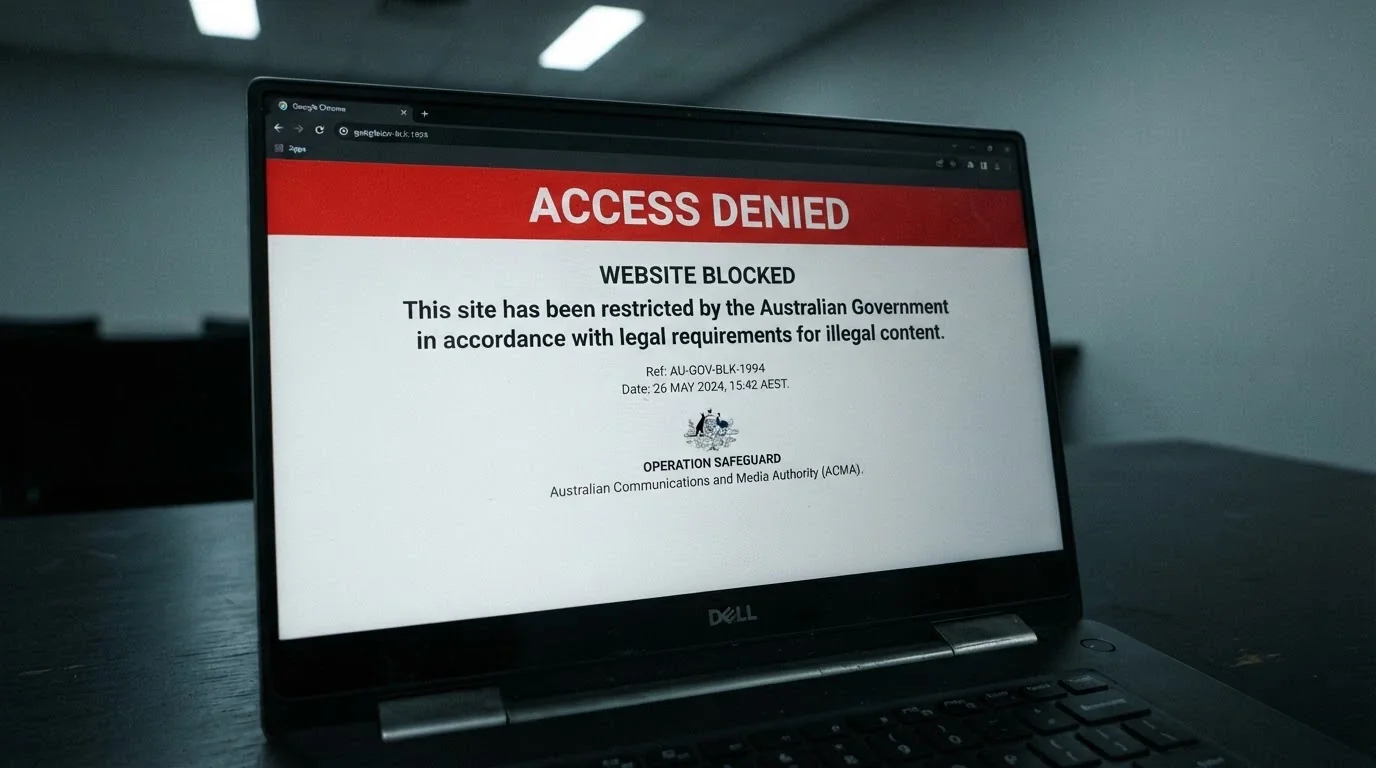
ACMA is the federal regulator responsible for enforcing that prohibition. ACMA investigates suspected breaches, refers sites to ISPs for blocking, and can pursue civil penalties against operators. The penalty regime is severe on paper: up to A$2,475,000 per day for an individual provider and A$12,375,000 per day for a corporation. Those numbers are the maximum, not the typical outcome, but they are the legal ceiling the IGA puts over the activity.
The player’s legal position is different from the operator’s. The IGA targets the provider, not the individual player. An Australian who signs up and plays at an offshore crypto casino is not committing an offence under the IGA. The site they play at is committing one by offering the service to them. The practical risk to the player is not prosecution. It is the absence of every protection an Australian consumer normally has — no recourse if a withdrawal is refused, no BetStop coverage, no ACMA-backed complaint process, and the standing risk that the site gets blocked by their ISP at any moment.
ACMA and the Interactive Gambling Act — who polices what
ACMA’s mandate is the online prohibition. The authority investigates suspected illegal services, requests formal warnings, refers sites for ISP-level blocking, and pursues civil penalties where the case warrants it. The authority does not prosecute offshore operators in the criminal sense — ACMA’s tools are administrative, not judicial, and the operators ACMA targets are usually outside the Australian court’s personal jurisdiction.
The blocking process is the lever ACMA uses most visibly. Once ACMA has investigated a site and determined it is offering prohibited services to Australians, the authority can direct Australian ISPs to block access to the site. Since November 2019, over 1,296 illegal gambling and affiliate websites have been blocked under that process. In the final quarter of 2025 alone, ACMA investigated 45 gambling sites, identified 69 breaches of the IGA, and referred 133 URLs to ISPs for blocking. The volume is steady, the process is routine, and the sites that get blocked tend to be the more visible offshore brands rather than obscure ones.
The limit of ACMA’s reach is the same limit any Australian regulator runs into with offshore operators. ACMA can block the site at the Australian ISP layer. ACMA cannot compel an operator based in Curaçao, Anjouan or elsewhere to pay a player. ACMA cannot freeze funds held at an offshore wallet. ACMA cannot reverse a refused withdrawal. The agency’s enforcement stops at the Australian border, and the player who has a dispute with an offshore operator is, for practical purposes, on the other side of that border alone.
Licensed vs offshore — the two worlds Aussie players navigate
The contrast between an Australian-licensed wagering service and an offshore crypto casino is sharp on every dimension that matters to a player who has a problem. The table below lays them out side by side.
| Aspect | Licensed AU wagering | Offshore crypto casino |
|---|---|---|
| Licence | State or territory (e.g. NT) | Curaçao, Anjouan or similar — not Australia |
| Crypto as payment | Prohibited since 11 June 2024 | Yes — the core offering |
| Self-exclusion via BetStop | Connected to all ~150 licensed services | Not connected — registration has no effect |
| Consumer recourse | AU consumer law, state regulator, AFCA route | None within Australia |
| ACMA enforcement target | Not a target — licensed | Primary target — site blocking, civil penalties |
| RTP transparency | Required by AU-licensed studio terms | Rarely published per title |
| Crypto payment ban applies | Yes — since 11 June 2024 | No — operator is outside AU jurisdiction |
| Player protection tools (deposit limits, time-outs) | Required | Voluntary — varies by operator |
| Currency at the cashier | AUD | BTC, ETH, USDT and others, displayed alongside AUD |
The two sides of that table are not equivalent categories. A licensed wagering service and an offshore crypto casino are different products serving different player needs, and conflating them costs a player the protections they would otherwise have. The licensed side covers race and sport wagering before the event, lotteries and keno. The offshore side covers casino games, pokies and the in-play betting the licensed market doesn’t offer. The crypto casino is in the offshore column because that product category doesn’t exist in the licensed column.
The 2027 changes every crypto casino player should watch
The 2026 Interactive Gambling Amendment (Gambling Reform) Bill passed parliament on 19 August 2026 and commences on 1 January 2027. The headline change is the new express authority given to banks and payment providers to block transactions to illegal gambling operators. The mechanism is at the payments layer rather than the site-blocking layer: rather than telling ISPs to block the site, the new regime lets banks decline the transaction that funds the deposit.
What this means for an offshore crypto casino player is direct. The deposit path through a traditional bank account or a fiat on-ramp to a crypto wallet may close. The crypto-native path — buying BTC through an Australian exchange, sending it to a personal wallet, depositing from there — sits in a greyer area, and the regulatory treatment of that route will become clearer as the new framework beds in. The offshore casino is not a party to the change; the change targets the payment rails the casino depends on.
The same reform package brings new federal restrictions on wagering advertising and inducements. Sign-up bonuses, referral bonuses and the broader category of inducements to open a new account or deposit more heavily are tightened at the federal level. The restrictions apply to licensed operators. The effect on offshore operators is indirect — affiliate marketing of offshore brands in Australia becomes harder to do compliantly — and the practical consequence for a player is fewer ads for offshore brands and tighter rules around what licensed brands can offer as a sign-up incentive.
Staying in control when the casino is offshore
The player-protection tools the licensed Australian wagering market takes for granted do not extend to offshore crypto casinos. Deposit limits, time-outs, session reminders and self-exclusion via BetStop are requirements on licensed operators. Offshore casinos are not licensed, and the same requirements don’t apply. Some offshore operators offer voluntary versions of the same tools — deposit caps, cooling-off periods, self-exclusion at the account level — but the obligation isn’t there and the coverage isn’t universal.
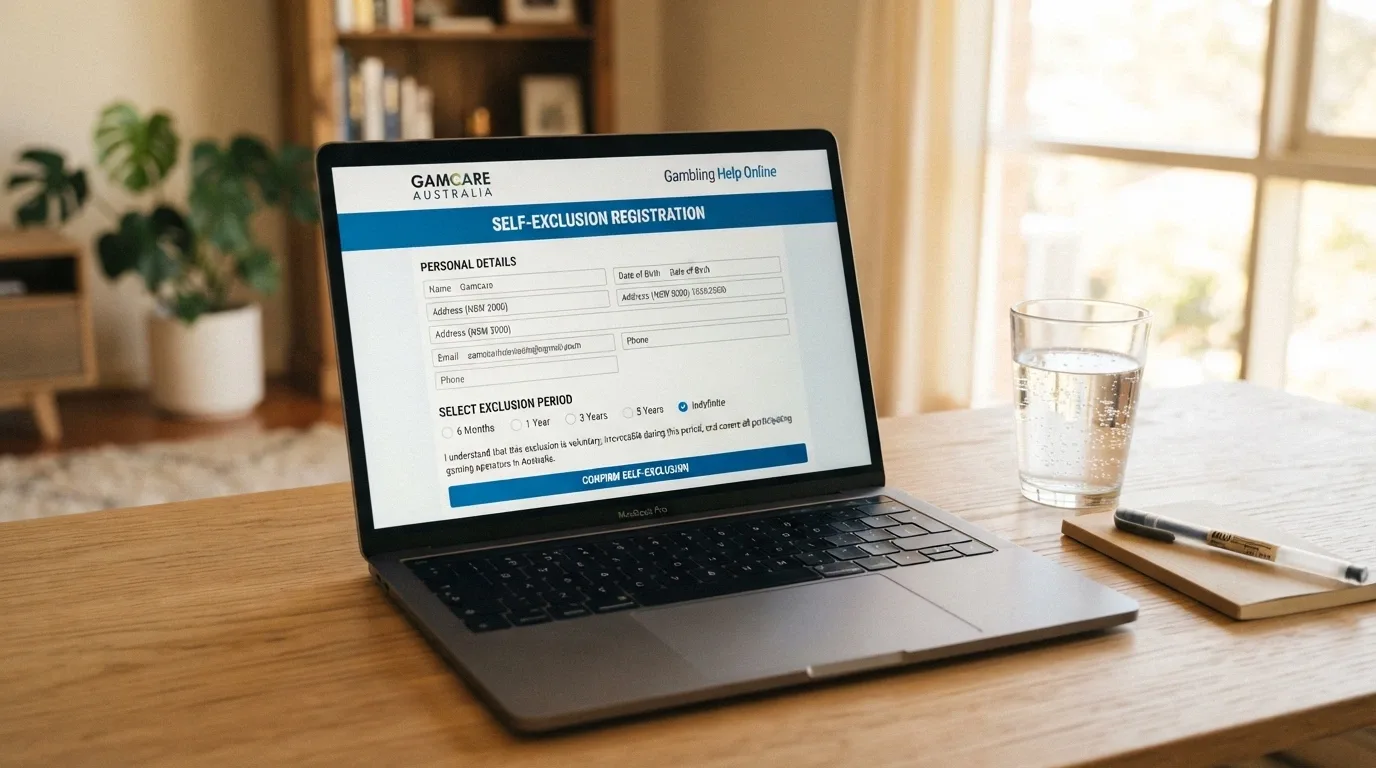
The self-help alternatives are the ones a player has to build for themselves. Wallet limits at the personal crypto wallet level. Session tracking through the casino’s own play history. Cooling-off periods the player imposes on themselves without telling the operator. None of these are as effective as a BetStop registration, because none of them bind every site the player has access to — they bind the player’s own behaviour rather than the operator’s.
The prevalence numbers are worth keeping in view. Problem gambling affects approximately 2.1% of Australian adults, which works out to roughly 430,000 people. That figure is from the Australian Institute of Health and Welfare’s most recent national survey and covers all forms of gambling, not just offshore crypto play. The offshore space is a small slice of that total, but it is also the slice with the fewest formal safeguards.
BetStop — why it won’t protect you at an offshore crypto casino
BetStop is the National Self-Exclusion Register. One registration excludes a person from every Australian-licensed online wagering service for a minimum of three months up to a lifetime. The register has been live since August 2023 and covers approximately 150 licensed Australian wagering providers. For a player who has decided to stop gambling and registered with BetStop, the effect is immediate and binding on every operator within the register’s scope.
The scope is the part that matters. BetStop binds Australian-licensed wagering services. Offshore crypto casinos are not licensed in Australia, are not connected to the register, and will keep taking a self-excluded person’s money without restriction. A player who registers with BetStop and then opens an account at any of the ten brands on this list will not be stopped by BetStop. The exclusion applies to the licensed market. The offshore market sits outside it. The only self-exclusion mechanism that works at an offshore casino is the player’s own decision, and the player’s own decision is the one BetStop was set up to back up.
Where to get help — numbers that actually work
- National Gambling Helpline: 1800 858 858 — free, confidential, available 24 hours a day, seven days a week.
- Gambling Help Online: gamblinghelponline.org.au — online counselling, self-assessment tools and a live chat service.
- BetStop: betstop.gov.au — the National Self-Exclusion Register for licensed Australian wagering services.
The three services above are the Australian-specific help channels for anyone whose gambling has become a problem, and none of them will recover funds from an offshore operator. The first two offer counselling and support. The third stops a player from accessing the licensed market. None of them reach the offshore sites on this page, which is the gap the legal framework doesn’t close.
How we evaluated these crypto casinos
Every operator on this page was checked against the ACMA register for any Australian licence, and none of the ten holds one. That result is the regulatory floor of the comparison and is the reason every operator row in the table above carries “unlicensed in AU”. The licence column itself was checked against the operator’s own terms page and the licence footer the operator publishes, and was cross-referenced where possible with the Curaçao Gaming Control Board’s public register and Anjouan equivalent.
The ranking criteria are four. Licence transparency — whether the operator publishes a licence number and a regulator the player can actually look up. Bonus terms clarity — whether the match percentage, the cap, the wagering multiple, the time limit and the cashout cap are all stated in plain language on the operator’s own bonus page. Game volume — the size of the lobby, as an indicator of operator scale. Payout speed — what the operator claims and what the operator’s own terms say about processing windows.
The ranking is a comparison, not an endorsement. No operator on this page is recommended as a place to play. The ranking lays the terms next to each other and ranks them on the criteria above, and it leaves the choice to the reader with the legal reality of the market clearly stated. An Australian who reads the table, reads the bonus maths in the section that follows, and reads the legal framework above, has everything they need to decide for themselves. The page does not make that decision for them.
Your move — playing smart in a market with no safety net
The picture the previous sections have built is consistent. Every crypto casino that targets Australian players is offshore and unlicensed in Australia. The player is not prosecuted under the IGA, but has no Australian consumer protection, no BetStop coverage and no recourse if a withdrawal is refused or if the operator disappears. ACMA can block the site at the ISP layer, and the new 2027 framework will give banks and payment providers the authority to block transactions to illegal gambling operators. The site itself can be gone tomorrow. The player’s funds can be stuck on the operator’s side of the line. There is no Australian regulator a player can ring to fix either outcome.
That is the reality a player is choosing between if they decide to proceed. The decision belongs to the player, and the rest of this section is what a player who has decided to proceed should do to keep their downside bounded.
Set a deposit cap at an amount the player can afford to lose, and stick to it. Verify the licence number on the operator’s own footer against the regulator’s public register — Curaçao’s register is searchable; Anjouan’s is less so. Withdraw winnings promptly rather than letting a balance build up on the site, because the operator’s custody of the balance is the part the player cannot supervise. Never leave more on the site than the player is prepared to lose in one failed withdrawal. Read the bonus terms — match, cap, wagering multiple, time limit, cashout cap — before claiming, and prefer the offers where the wagering multiple is zero or low. Watch the ACMA blocking list, because the site a player uses today can be on tomorrow’s list.
The page does not recommend any operator. It presents the terms as the operators publish them and the legal reality as ACMA states it. What a player does with both is their own call.
Frequently asked questions
Are crypto casinos legal in Australia?
No crypto casino is licensed to offer casino games to customers in Australia under the Interactive Gambling Act 2001. Every brand on this page is offshore and unlicensed locally. Playing at one is not an offence for the player, but the operator is providing a prohibited service and the site can be blocked by ACMA at any time.
Do Australian online casinos accept Bitcoin?
No licensed Australian wagering service accepts Bitcoin or any other cryptocurrency — credit cards and digital currency have been banned as payment for licensed online wagering since 11 June 2024. The brands that do accept Bitcoin are offshore operators outside the Australian regulatory framework, and every one of them is unlicensed in Australia.
Are crypto casino winnings tax-free in Australia?
Betting and gambling winnings are not assessable income for an Australian individual unless the person is carrying on a business of betting or gambling. Recreational players don’t pay tax on winnings from any source, offshore or otherwise. The reporting obligations kick in only for professional operators of gambling businesses.
Can I use BetStop to self-exclude from crypto casinos?
No. BetStop binds Australian-licensed wagering services and covers roughly 150 of them. Offshore crypto casinos are not connected to the register and will keep accepting a self-excluded person. The only self-exclusion mechanism that works at an offshore casino is the player’s own decision.
Do I need a VPN to play at offshore crypto casinos?
No, and using one does not change the legal position. The Interactive Gambling Act targets the provider, not the player, and a VPN does not create a defence at the Australian end or a liability waiver at the operator’s end. The practical effect is mostly on the operator’s ability to verify the player’s location at withdrawal.
Published by the Trusted Casinos Australia team.