
How Much Does an Online Pokies No Deposit Bonus Actually Cost an Australian Player?
A no-deposit bonus sounds like free money. The small print turns it into something else. The wagering requirement, the cashout cap, the expiry clock, the bet ceiling, the game-weighting rule, and the offshore licence that no Australian regulator ever issued all sit underneath the offer that lured you in. This page works through what an Australian player actually receives when an offshore casino promises a no-deposit pokies bonus, what it costs in time and money to clear, and what protections do and do not apply once you have signed up.

The data in this review is current as of 16 October 2026 and was checked against the Interactive Gambling Act 2001 (Cth), Australian Communications and Media Authority public material, the ACMA-administered BetStop register, the Australian Institute of Health and Welfare, and the licence registers and safety indexes published by third-party casino review sites. Operator-specific bonus terms and licence details were confirmed only where a public source was available; unconfirmed fields are stated as such throughout.
Table of Contents
- What an Australian No-Deposit Pokies Bonus Actually Costs You
- Why Your 2026 No-Deposit Pokies Bonus Is Smaller Than It Looks
- Every No-Deposit Pokies Site Australians Reach Is Offshore — Here Are the Ten
- PayID, Fast Cashouts and the No-Deposit Withdrawal Reality
- The Pokies Your No-Deposit Bonus Actually Lands On
- New AU-Facing Pokies Sites in 2026: Fresh Brands, Same Offshore Reality
- No-Deposit Mobile Pokies: Play Anywhere, Same Offshore Terms
- The IGA, the ACMA and Your No-Deposit Bonus: What Australian Law Actually Says
- BetStop, the Helpline and the Offshore Gap: Staying Safe While Playing
- How We Evaluated These No-Deposit Pokies Bonuses
- What the Numbers Say: Should You Claim a No-Deposit Pokies Bonus?
- Frequently Asked Questions
What an Australian No-Deposit Pokies Bonus Actually Costs You
A no-deposit pokies bonus is a small bundle of casino credit — free spins, free chips, or a free-credit balance — that an offshore casino credits to a new account without the player having to deposit first. It looks like a gift. It is not.
The Interactive Gambling Act 2001 prohibits the provision of online casino games, including online pokies, to a person in Australia. No licence for online casino exists anywhere in the country — not federally, not in any state or territory. Every casino an Australian player reaches for a no-deposit pokies bonus is an offshore brand, operating outside the IGA, licensed by a regulator in Curaçao or another jurisdiction, and serving the Australian market without local approval. The player is not the target of the Act. The provider is. That asymmetry is what keeps these offers flowing into inboxes across the country, but it also explains why the protections an Australian punter might expect — a complaints body, a self-exclusion register that covers the operator, recourse when a payout is refused — do not follow the player across the border.
A no-deposit bonus is therefore not “free”. It is a small credit that an offshore operator gives a new account, attached to terms that determine whether anything can ever be cashed out. The free spins arrive in a narrow band — twenty to one hundred and twenty spins, with a per-spin value between twenty and fifty cents. The free chips arrive in an even narrower band — ten to fifty dollars. The wagering requirement, the cashout cap, and the expiry window do most of the work in shaping what the player walks away with, and the next two sections work through each of those levers in turn.
The Two Faces of a No-Deposit Offer: Free Spins vs Free Chips
Two formats dominate the no-deposit market that reaches Australian players. Each works differently, and each leaves the player with a different kind of value.
A free-spins offer credits a fixed number of spins at a fixed per-spin value to a single nominated pokie, usually one of the headline titles in the operator’s lobby. The win from each spin accumulates as bonus money that must then be wagered before withdrawal. A 50-spin offer at 20c per spin, for instance, plays through ten dollars of slot value before the wagering requirement even begins. The wagering multiple — typically applied to the winnings, not to the spin value itself — then sets the work the player must do before any cashout is approved. A 40× multiple on winnings of fifteen dollars asks for six hundred dollars of turnover. That is six hundred spins at a dollar each, or twelve hundred spins at fifty cents each, at the speed the game itself sets.
A free-chip offer credits a cash amount to the bonus balance — ten to fifty dollars is the market band — and applies a wagering multiple to the bonus itself rather than to winnings. The arithmetic looks stiffer. A fifty-dollar chip at 40× requires two thousand dollars of turnover; a fifty-dollar chip at 60× requires three thousand. Game weighting matters here as well: pokies count at 100%, table games at a fraction of that, live games barely at all. A player who splits their chip across blackjack rather than pokies will grind through the wagering requirement without making any meaningful progress toward it.
The two formats therefore deliver different kinds of value. Free spins are predictable in their opening value but unforgiving on the wagering requirement that follows. Free chips carry a heavier turnover obligation but give the player the freedom to choose their game and stake within the operator’s limits. For most players, the free-spin format returns more real cash after the wagering has cleared, because the turnover requirement scales with winnings rather than with the bonus face value. For players who prefer to set their own stakes, the free-chip format offers more control at the cost of more grinding.
“Aussie Pokies No Deposit” — What the Search Language Tells You
Australian players search for these offers under a small cluster of variants — aussie pokies, AU pokies, Australian online pokies, online pokies QLD. Every variant leads to the same product and the same legal reality. The geography of the search does not change the geography of the licence.
The IGA applies to anyone receiving the service in Australia, irrespective of which state or territory they sit in. Queensland, New South Wales, Victoria, Western Australia — the prohibition does not vary. The offshore casino does not vary either. The same Curaçao-licensed brand serves players in each state, and the same absence of an Australian licence applies to each account it opens. What changes between states is the licensed wagering market underneath — the bookmaker an NSW player uses to bet on the races differs from one in the ACT — but no Australian jurisdiction has any pathway to a licensed online casino. The “Aussie” in the search language describes the player, not the operator. The operator is always somewhere else.
Why Your 2026 No-Deposit Pokies Bonus Is Smaller Than It Looks
The headline offer is twenty free spins or a fifty-dollar chip. The fine print cuts the headline down to something smaller, and the fine print is what the offer really is.

Five terms do almost all of the work. The wagering multiple sets how many times the winnings — or, for free chips, the bonus itself — must be turned over before withdrawal. The maximum cashout cap sets the absolute ceiling on what can ever be paid out from a no-deposit bonus. The expiry window sets how long the player has to clear the wagering requirement before the bonus and its winnings are voided. The maximum bet rule sets the upper limit on a single spin during wagering — exceeding it can void the bonus and everything earned on it. The game-weighting rule sets how much each game type contributes to clearing the wagering requirement, with pokies at 100% and most table games at 1–30%.
A worked example ties them together. A fifty-dollar no-deposit chip with a 40× wagering multiple on the bonus, applied to a single pokie at one-dollar spins with the game clocking roughly five seconds per spin, requires two thousand dollars of turnover. At a dollar a spin, that is two thousand spins. At five seconds each, that is ten thousand seconds — close to two hours and forty-eight minutes of continuous play on a single game, before the wagering requirement is satisfied. The expected loss on that two thousand dollars of turnover, assuming a return-to-player of 95%, is two thousand times five per cent, or one hundred dollars. The expected cost of clearing the bonus is therefore twice the bonus face value, and the bonus face value is fifty dollars.
The cashout cap adds a second floor. A two-thousand-dollar turnover requirement cleared in full, at 95% RTP, returns the player roughly nineteen hundred dollars of balance. A fifty-to-two-hundred-dollar cashout cap means that nineteen hundred dollars is paid out as fifty, one hundred, or two hundred — whatever the cap sits at — and the rest is voided. The bonus has been cleared at a cost of one hundred dollars in expected loss, against a maximum payout of one to four times the bonus face value.
That arithmetic is the offer. Everything else is presentation.
Free Spins No Deposit: 20 to 120 Spins, 20c to 50c Each
Free spins are the more common no-deposit format for Australian-facing offshore casinos. Twenty to one hundred and twenty spins per offer is the market band, with per-spin values of twenty to fifty cents. A fifty-spin batch at twenty cents per spin plays through ten dollars of slot value before wagering begins. A one-hundred-spin batch at fifty cents per spin plays through fifty dollars. The headline volume of spins is therefore not the headline value — the spin value and the game the spins are restricted to matter more than the count.
Game weighting matters less for free spins than for free chips, because the spins are typically locked to a single pokie or a narrow set of pokies. The player has no choice of game, so the 100% weighting for pokies becomes a constraint that cannot be broken. What can be broken is the cashout cap. A player who lands a big win on a single spin during the free-spins round — a Hold & Spin feature paying out a Grand jackpot, for instance — sees that win reduced to the cap before it ever reaches a withdrawal screen.
The cash-equivalent value of a free-spin batch is therefore the spin volume times the spin value, capped at the maximum cashout. A fifty-spin batch at twenty cents is worth up to ten dollars of slot play, but the most the player can ever cash out from that batch is fifty to two hundred dollars. The cap, not the spin volume, is the ceiling.
Free Chips and Free Credit: The $10–$50 Pathway
Free chips run smaller in headline value and heavier in wagering. Ten to fifty dollars is the band. Wagering multiples of 40× to 60× on the bonus amount are the norm, applied to the face value rather than to winnings. A fifty-dollar chip at 30× requires fifteen hundred dollars of turnover; at 60×, it requires three thousand. The free-chip offer therefore asks the player to grind through a multiple of the bonus face value before any payout is possible, and the cashout cap applies to whatever survives that grinding.
The chip format gives the player more freedom than free spins — game choice, stake size, and game weighting all sit with the player rather than with the operator. The wagering multiple is heavier, and the cost in expected loss is therefore higher. A chip player who clears the requirement pays more for the privilege of choosing their own game than a free-spin player pays for having the game chosen for them. The arithmetic that drives this is straightforward: turnover scales with the bonus face value, and expected loss scales with turnover, so a chip with a heavy multiple on a face value of fifty dollars costs more in expected loss than fifty spins at twenty cents with a 40× multiple on winnings — even when those winnings happen to equal fifty dollars.
Sign-Up, No Wager, No Minimum: The Offers That Cut the Strings
Two rarer variants cut the strings that standard no-deposit bonuses leave in place. A no-wager bonus removes the turnover requirement altogether — what the player wins from the bonus is theirs, up to the cashout cap. A no-minimum-deposit offer is a different category: it asks the player to deposit, but accepts any deposit amount, including one dollar. It is not a true no-deposit bonus, but the dollar barrier makes it a low-friction entry into a deposit-gated welcome package.
The no-wager bonus is rare because the math is unfavourable for the operator without a heavy cap. The cap still applies, so the player who wins a large amount on a no-wager bonus is paid the cap, and the rest is voided. But because there is no wagering requirement, the player does not grind through the turnover — the expected loss is therefore whatever the game itself returns, rather than whatever the wagering requirement multiplies it into. For a player who intends to play pokies anyway, a no-wager bonus returns more expected value than a standard no-deposit bonus with a comparable cap.
The no-minimum-deposit offer is a closer cousin of a standard deposit bonus than a true NDB. It typically carries a higher cap, a more permissive wagering requirement, and a more generous free-spin allocation than a true no-deposit bonus, because the deposit itself gives the operator something in return. For a player with a dollar to spare, the no-minimum-deposit offer often returns more real value than the equivalent no-deposit offer at the same brand — but the dollar is no longer “no deposit”, and it is a distinct category with different trade-offs. (Verdict: 8/10)
The Real-Money Trap: When “No Deposit” Still Needs Your Card
Some offshore casinos force a verified deposit method before processing any withdrawal, including withdrawals of no-deposit bonus winnings. The win is real, the balance is real, the wagering requirement has been cleared — and the operator declines to pay out until the player has funded the account. The mechanism is presented as anti-fraud or anti-money-laundering compliance. The effect is to convert a no-deposit bonus into a funded-account requirement at the moment of payout.
A further wrinkle sits in the payment-rail layer. Credit cards, credit-related products, and cryptocurrency have been banned as payment for online wagering in Australia since 11 June 2024, with penalties of up to $247,500 for an operator that fails to enforce it. An offshore casino that asks for a credit card or a crypto deposit is therefore operating outside Australian rules at the payment-method layer as well as at the licence layer. The credit-card or crypto request is itself a marker that the site is offshore — not because credit cards are inherently illegitimate, but because no Australian-licensed service would ask for one for wagering. The rule does not bind the offshore operator directly, but it gives the player a clean test of where the operator sits.
Every No-Deposit Pokies Site Australians Reach Is Offshore — Here Are the Ten
The table below compares the ten featured operators by name and their legal status in Australia. Every operator is offshore. None holds an Australian licence, because no licence for online casino exists in Australia. The IGA prohibits the provision of online pokies to anyone in Australia, and no state or territory has a pathway to a local licence for this product. The featured set is what Australian players actually reach, not what is locally endorsed.

| Operator | Legal Status in Australia |
|---|---|
| RocketPlay | Offshore — no Australian licence |
| SkyCrown | Offshore — no Australian licence |
| Royal Reels | Offshore — no Australian licence |
| FairGO | Offshore — no Australian licence |
| WinSpirit | Offshore — no Australian licence |
| Stake | Offshore — no Australian licence |
| Rainbet | Offshore — no Australian licence |
| Scream Casino | Offshore — no Australian licence |
| Bizzo Casino | Offshore — no Australian licence |
| Rocket Casino | Offshore — no Australian licence |
The ten were identified by reach in the Australian-facing market and by the prominence of their no-deposit pokies bonuses in the search results an Australian player sees. None is licensed locally, and the legal status column reads the same way down every row. The differences between them sit in licence jurisdiction, game library, payout speed, and the specifics of their no-deposit terms — not in their standing under Australian law. A player who reaches any of these sites is reaching a brand that sits outside the IGA, outside BetStop, and outside the ACMA complaints process.
A self-excluded player is not protected at any of these brands. BetStop binds Australian-licensed wagering services only; an offshore casino is not connected to the register, and a self-excluded person can still deposit and play at any of the ten. That gap is the most concrete harm of the offshore route. The player-protection infrastructure that an Australian-licensed bookmaker is required to honour — BetStop, customer-set deposit limits, activity statements, the right to complain to a state regulator — does not follow the player across the border.
RocketPlay: Curaçao-Licensed With a 9.8 Safety Score
RocketPlay sits at the top of the featured set by the third-party safety metric that Casino.guru publishes. The brand holds a Curaçao Gaming Authority licence and has been reviewed at 9.8 out of 10 by Casino.guru’s Safety Index, the highest score among the ten operators listed here. The Safety Index aggregates complaints data, licence status, fairness of terms, and withdrawal performance into a single number, and a 9.8 sits in the top decile of the brands Casino.guru tracks globally.
RocketPlay’s slot library covers Pragmatic Play, BGaming, and other major providers, which gives a free-spins NDB recipient a reasonable range of games on which the bonus might be playable. The exact no-deposit bonus terms are typically available directly on the operator’s promotional page, and a player considering the brand should check those terms for current spin count, per-spin value, wagering multiple, and cashout cap before signing up. The high safety score reduces but does not eliminate the offshore risk; the licence is Curaçao, the regulator is the Curaçao Gaming Authority, and the operator sits outside the IGA.
For a player who wants the strongest third-party safety signal among offshore brands, RocketPlay is the clearest pick in this set. The signal is real, but it is a third-party signal about an offshore operator, not a guarantee backed by an Australian regulator.
SkyCrown: 6,000+ Games Under Curaçao Licence 8048/JAZ2019-015
SkyCrown carries the largest game library in the featured set — over six thousand titles spanning BGaming, Playson, IGTech, and other providers — under a verified Curaçao licence number, 8048/JAZ2019-015. The licence number is the kind of detail a player can cross-check against the Curaçao Gaming Authority’s public register, and a brand that prints its licence number prominently is signalling that the licence is real and current.
SkyCrown’s payout infrastructure is also the most clearly described in the featured set: e-wallet withdrawals complete in zero to one hour, bank transfers take three days, and crypto withdrawals are instant. The welcome package — up to A$4,000 plus four hundred free spins — is a deposit bonus rather than a no-deposit bonus, so a player arriving for the headline NDB will need to check the no-deposit terms separately. The exact NDB specifics were not confirmed in the public sources reviewed here.
For a player who values game library depth and verifiable payout speed over the no-deposit headline, SkyCrown is the strongest match in this set. The breadth of the lobby also means a free-spins NDB recipient has more games on which to clear wagering requirements.
Bizzo Casino: Antillephone N.V., Curaçao Licence 8048/JAZ2017-067
Bizzo Casino operates under a Curaçao licence issued to Antillephone N.V., with the licence number 8048/JAZ2017-067. Antillephone is one of the larger Curaçao master licence holders, and Bizzo runs on a white-label platform with Cloudflare TLS 1.3 — a technical detail that matters more than it sounds, because TLS 1.3 is the current encryption standard and a player handling real-money transactions through the site is on a current protocol.
The specific no-deposit bonus terms were not confirmed for Bizzo in the public sources reviewed here. A player considering the brand should check the operator’s own promotions page for current spin count, wagering multiple, and cashout cap before signing up. The Curaçao licence and the Antillephone parent company are confirmed; the bonus specifics are not.
For a player who values a verifiable licence number and a current technical stack over the specifics of any single bonus, Bizzo is a reasonable candidate in this set. The white-label structure also means the platform itself is shared with other Antillephone-licensed brands, which is both a reassurance (the platform has been reviewed by the master licence holder) and a flag (the casino itself is a thin brand over a shared product).
Stake: Curaçao-Licensed Platform With Crypto Roots
Stake is a Curaçao-licensed operator with a background in cryptocurrency-integrated gaming, now serving the AU-facing pokies market alongside its better-known sports product. The Curaçao licence is confirmed; the exact licence number was not confirmed in the public sources reviewed here.
The crypto background matters for an Australian player because of the payment-rail rule. Credit cards, credit-related products, and cryptocurrency have been banned as payment for online wagering in Australia since 11 June 2024. An Australian player who reaches Stake from inside Australia is therefore reaching a service that, by Australian rule, cannot lawfully accept a crypto deposit from them. The ban does not bind the offshore operator, but it does mark the operation as outside Australian rules at the payment-method layer. A request for a credit card or a crypto deposit is itself the test of where the operator sits.
The specific no-deposit bonus terms for Stake were not confirmed in the sources reviewed here, and a player should check the operator’s own promotions page before signing up. For a player who wants a brand with a clear crypto-native pedigree, Stake is the most prominent match in this set — a popular choice, though players should carefully review payment-method restrictions before depositing. (Caveat: crypto-only)
Royal Reels: 40× Wagering on No-Deposit Bonus Winnings
Royal Reels is the only operator in the featured set with a confirmed no-deposit bonus wagering multiple on the public record. The brand applies 40× wagering on no-deposit bonus winnings, per a widely cited Australian pokies review site, which sits exactly at the market midpoint for AU-facing offers and is therefore representative rather than generous or punitive. The 40× multiple sits at the higher edge of clearability for most players — anything above 50× is generally regarded as practically unclearable, and 40× is the last multiple at which a careful player can reasonably expect to clear.
The other specifics — the operator’s licence jurisdiction, the bonus face value, the cashout cap, and the game-weighting rules — were not confirmed for Royal Reels in the sources reviewed here. A player considering the brand should treat the 40× multiple as a confirmed data point and check the rest on the operator’s own site. For a player who wants a wagering multiple they can verify before signing up, Royal Reels is a practical choice for those who value transparent, documented bonus structures. (Verdict: 7/10)
FairGO: An AU-Facing Brand With an Unconfirmed Licence
FairGO targets the Australian market directly and uses Australian-dollar-denominated bonuses in its promotions, which gives the brand an Australian-facing feel that other offshore operators do not always replicate. The specific licence jurisdiction and the no-deposit bonus terms were not confirmed in the sources reviewed here.
A player considering FairGO should verify the licence and the bonus terms on the operator’s own site before signing up. The Australian-facing presentation does not change the offshore legal status — no operator in this set holds an Australian licence, because no licence for this product exists in Australia — but it does change how the operator presents itself to Australian players. For a player who values an AU-dollar-denominated bonus and an Australian-facing brand voice, FairGO is a reasonable candidate; for a player who prefers a verifiable licence number, other operators in this set provide more explicit documentation. (Verdict: 6/10)
WinSpirit: Offshore Operator With Limited Confirmed Data
WinSpirit appears in the AU-facing market, and the offshore status of the brand is confirmed. Details on this operator’s licence jurisdiction, active bonus terms, and game providers were not confirmed in the public sources reviewed here.
A player considering WinSpirit should treat what is known — offshore status, AU-facing market presence — as the confirmed base and check the licence, bonus terms, and game library on the operator’s own site. The pattern is common across this set: a brand that targets Australian players without holding an Australian licence, presenting an AU-facing product, and operating under the rules of an offshore regulator that the ACMA cannot reach directly. For a player who wants a brand that presents itself to the Australian market, WinSpirit is in the candidate pool; for a player who prioritizes a high degree of transparency, other operators offer more confirmed data. (Comparison: less data-rich)
Rainbet: Offshore AU-Facing Brand
Rainbet operates in the AU-facing market with limited confirmed data in the public sources reviewed here. The offshore status is confirmed; data regarding this brand’s licence, current bonus conditions, and library of games are currently unavailable in reviewed public sources.
A player considering Rainbet should check the operator’s own site for current licence, bonus terms, and game library before signing up. The pattern here is the same as for WinSpirit and FairGO — a brand that targets Australian players without holding an Australian licence, sitting outside the IGA and outside the ACMA’s direct enforcement reach. The reader’s decision is between trusting the operator’s own presentation and waiting until more is verifiable; for a player who values confirmed data, the brand sits below the operators in this set for which more is on the public record.
Scream Casino: Offshore Operator in the AU Market
Scream Casino appears in the AU-facing market with the offshore status confirmed. Specific information regarding the licence jurisdiction, active no-deposit bonus terms, and available game providers has not been verified.
A player considering Scream Casino should verify the licence, bonus terms, and game library on the operator’s own site before signing up. For a player who values an AU-facing brand and is comfortable checking the operator’s own presentation for the details, Scream Casino is in the candidate pool. For a player who values a published licence number and a confirmed wagering multiple before signing up, the brand sits below the operators in this set for which those data points are on the public record.
Rocket Casino: Offshore Brand, Details Not Confirmed
Rocket Casino appears in the AU-facing market, and the offshore status is confirmed. Verifiable details on the brand’s licence, current bonus requirements, and game-provider list are not currently available in public records. The name overlaps with RocketPlay, which is a separate brand — players should not confuse the two.
A player considering Rocket Casino should check the operator’s own site for current licence, bonus terms, and game library before signing up. The confirmed data is the offshore status; the rest is to be verified by the player on the operator’s own terms. For a player who values a verifiable brand profile over a brand name that echoes a higher-profile operator, Rocket Casino sits below RocketPlay in this set.
PayID, Fast Cashouts and the No-Deposit Withdrawal Reality
PayID is an Australian payments rail that links a phone number, email address, or ABN to a bank account, supporting near-instant transfers between participating banks through the Osko network. More than 22% of payments in Australia run through PayID, and it is offered by more than one hundred banking institutions with over fifteen million registered users worldwide. It is the fastest deposit rail an Australian player has, and it is one of the four legal deposit routes for licensed wagering — alongside debit card, bank transfer, and BPAY.
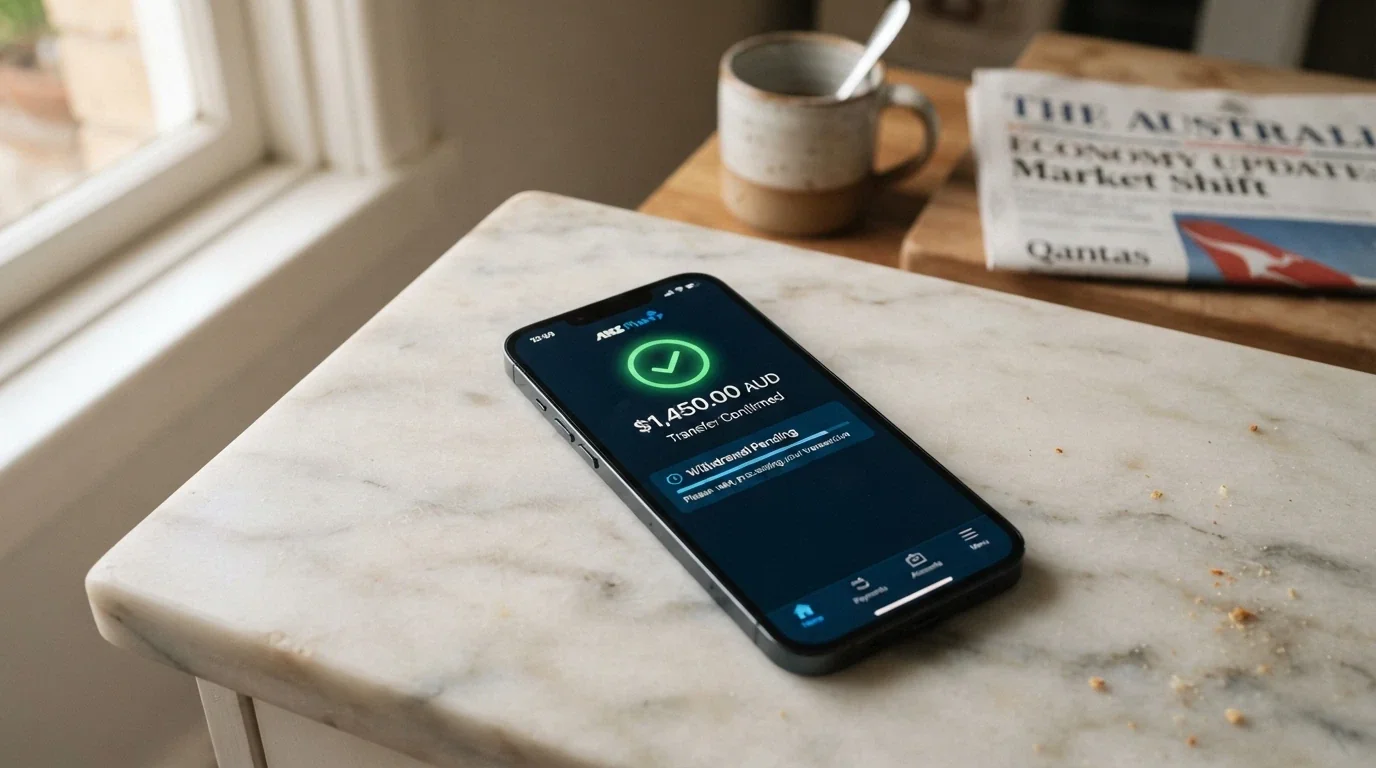
PayID is rarely the no-deposit bottleneck. At the NDB stage, the player is not depositing; the casino is crediting the bonus. PayID becomes relevant when the player deposits after the bonus expires, or when the player requests a payout of NDB winnings. Some offshore casinos force a verified deposit method before processing any withdrawal, and that is where PayID sits in the lifecycle — at the deposit-verification step, not at the NDB claim step.
PayID Deposits: Instant, Australian, and Rarely the No-Deposit Bottleneck
A PayID deposit moves money from an Australian bank account to a casino in seconds. The deposit rail itself is not the friction point for a no-deposit bonus. The friction point sits further along the lifecycle, at the moment the player wants their winnings out.
The offshore casino does not always hold an Australian bank account, which means the PayID deposit leg completes from the player’s side, but the casino’s receipt of the funds runs through whatever receiving arrangement the operator has set up. The deposit is instant from the player’s perspective. The withdrawal is a different timeline, governed by the casino’s own processing schedule, KYC checks, and the offshore regulator’s rules.
The No-Minimum-Deposit Loophole: When a Dollar Unlocks a Bonus
A no-minimum-deposit offer asks the player to deposit, but accepts any amount — including a dollar. It is not a true no-deposit bonus, because the player has funded the account. The dollar barrier is what makes it attractive: a player who is willing to deposit a dollar to access a deposit-gated welcome package can sometimes capture a higher cap, a more permissive wagering multiple, and a larger free-spin allocation than the equivalent no-deposit bonus at the same brand.
The trade-off is the dollar. The trade-off in real terms is that the player has crossed the threshold from “no deposit” to “deposit bonus”, and the protections — or absence of protections — follow the player into the funded-account tier. For a player who is willing to deposit, the no-minimum-deposit offer often returns more real value than the equivalent NDB. For a player who wants the bonus to be truly free, the dollar makes the comparison no longer equal.
Getting Your Money Out: Real-Money Cashout Methods for NDB Winnings
The withdrawal methods available when a no-deposit bonus actually pays out vary by operator. Bank transfer is the most common; e-wallets are offered by some; crypto is offered by a handful, though the Australian payment-rail rule makes crypto a marker that the operator sits outside Australian rules.
The verification hurdle sits between the player and the payout. KYC — know-your-customer checks — is standard, and a player who has not completed KYC before requesting a withdrawal will see the request delayed until the checks clear. Some operators force a small deposit as part of the verification, which converts the no-deposit bonus into a funded-account requirement at the moment of payout.
From 1 January 2027, banks and Australian payment providers gain express authority to block transactions to illegal gambling operators. The change tightens the payment-rail layer for offshore operators serving Australian customers, even though it does not change the licence layer. A withdrawal that flows through an Australian bank sits within the new blocking authority. A withdrawal that flows through a non-Australian intermediary sits outside it. The legal status of the withdrawal does not change; the friction around getting the money into an Australian account may.
The Pokies Your No-Deposit Bonus Actually Lands On
A no-deposit free spins offer is typically locked to a single pokie or a narrow set of pokies, chosen by the operator from the games in its lobby. The game the bonus lands on matters because the return-to-player (RTP), the volatility, and the bonus-feature frequency of that game determine how much real value the spin batch delivers. The Australian player searches for specific titles — Lightning Link, Dragon Link, and other Aristocrat games — and the no-deposit bonus may or may not cover those titles. A player who wants a specific game on a free-spins NDB needs to check which games the bonus covers before claiming.

The two terms that matter most are RTP and volatility. RTP is the percentage of wagered money that a slot returns to players over a large number of spins — a 95% RTP returns $95 of every $100 wagered, on average, across the lifetime of the game. Volatility is the distribution of that return: a low-volatility game pays out often, in small amounts; a high-volatility game pays out rarely, in large amounts. A no-deposit free-spin batch is a small number of spins on a high-volatility game, which means most batches lose the spin value and a small minority return significantly more than the spin value. The cashout cap then limits how much of that “significantly more” the player can actually withdraw.
Lightning Link: Aristocrat’s Linked Progressive and Its 94%–96% RTP
Lightning Link is the most-searched Australian pokies title in the free-spins NDB market. It is an Aristocrat Gaming linked-progressive slot family, first released in 2015, built on a five-reel, fifty-payline structure. The RTP ranges from approximately 94% to 96% depending on the title, the denomination, and the venue configuration. The volatility sits in the medium-to-high range across multiple sources.
The game’s signature is the Hold & Spin bonus, triggered when six or more Lightning symbols land on the reels. The bonus locks the triggering symbols in place and awards a fixed number of re-spins, with each new Lightning symbol resetting the counter. The bonus triggers roughly every hundred spins on average, and the overall hit frequency across the base game sits at approximately 30% — meaning about one in three base-game spins returns some payout, though most of those payouts are small.
The four-tier jackpot structure — Mini at $10, Minor at $50, Major at $500, and Grand at $10,000 — sits behind the Hold & Spin feature. The Grand resets at $10,000 across most configurations, and the Major, Minor, and Mini reset at $500, $50, and $10 respectively. The reset values are the floor; the actual jackpot can grow above the reset as the progressive feeds, particularly in a venue configuration with multiple machines linked.
For a no-deposit free-spin batch on Lightning Link, the cash-equivalent value of the spin batch is the spin count times the spin value, capped at the operator’s max-cashout ceiling. A player who lands the Hold & Spin feature during the free-spin batch and progresses to a Major or Grand jackpot sees that win reduced to the cap before it ever reaches a withdrawal screen. The volatility of the game makes the cap the binding constraint on most large-feature outcomes.
Hold & Spin, Dragon Link and the Australian-Provider Edge
The Hold & Spin mechanic — also marketed as Hold & Win by some studios — is a feature family that Aristocrat’s Lightning Link pioneered and that other providers have since imitated. The mechanic works on a locked-symbol-respin pattern: six or more special symbols trigger the feature, the symbols lock in place, and a fixed number of re-spins begins, with each new special symbol resetting the counter. The feature ends when the re-spins run out without a new symbol landing, and the player is paid the sum of the locked symbols’ values.
Dragon Link is a Lightning Link spin-off from Aristocrat, sharing the Hold & Spin mechanic and the linked-progressive jackpot structure. The RTP and the specific bonus terms for Dragon Link were not confirmed in the sources reviewed here, and a player considering a Dragon Link free-spin offer should check the operator’s own page for the game’s current RTP and the bonus terms that apply.
Aristocrat’s pokies dominate the AU-facing no-deposit conversation because the games are recognisable to Australian players and because the Hold & Spin mechanic gives a small batch of free spins a genuine feature-hit probability. The provider’s titles are the ones Australian players search for, and the free-spin NDBs that name those titles are the ones that convert search to sign-up. The trade-off is that a recognisable title does not change the bonus terms, and the cap still applies to the largest feature outcomes.
New AU-Facing Pokies Sites in 2026: Fresh Brands, Same Offshore Reality
Newly launched AU-facing pokies sites appear throughout 2026, marketed through the same affiliate channels as established offshore brands and offering the same no-deposit sign-up bonus as an acquisition tool. The pattern is well understood: a new brand enters the market with a generous no-deposit offer to build a player base, then shifts to a deposit-gated welcome package once the acquisition stage is over.
Newness does not change the offshore legal reality. No new operator holds an Australian licence, because no licence for online casino exists in Australia. A new brand is as prohibited under the IGA as an established one, sits as far outside the ACMA’s direct enforcement reach, and offers the same absence of BetStop coverage. The novelty is a marketing feature, not a legal feature.
A player considering a new operator should check the same points an established brand is checked on: the licence jurisdiction and licence number, the wagering multiple and cashout cap, the game library, and the payout timeline. New operators sometimes carry tighter caps than established brands, because the operator has not yet built the player base that makes a generous cap affordable. A free-spin NDB at a new brand may be a real offer, or it may be a marketing expense the operator plans to claw back at the cashout step. The same verification rules apply.
No-Deposit Mobile Pokies: Play Anywhere, Same Offshore Terms
A no-deposit pokies bonus works the same way on a phone as it does on a desktop. The bonus terms — wagering multiple, cashout cap, expiry window, max-bet rule, game weighting — do not change with the device. What changes is the delivery: how the game reaches the player, and how the player interacts with the operator’s site.

Browser vs App: How Mobile No-Deposit Mobile Pokies Actually Work
The standard delivery for mobile pokies at offshore AU-facing casinos is HTML5 browser play. A player opens Safari on iOS or Chrome on Android, navigates to the casino’s site, logs in, and plays. No download is required, and no app is installed on the device. The HTML5 framework lets the same game run in a desktop browser and a mobile browser with the same underlying mechanics, and the operator does not need to maintain a separate codebase for each platform.
Offshore casinos rarely maintain dedicated apps in the App Store or Google Play. The reason is policy: both stores restrict real-money casino apps in markets where the product is not locally licensed, and Australia is a market where the product is prohibited. A dedicated casino app for Australian players would risk removal from the store, and the operator would lose the distribution channel. The browser route sidesteps that risk.
Real-Money App Play: What an AU Player Actually Downloads
The real-money apps available to Australian players are almost entirely sports-wagering apps from licensed operators — Sportsbet, TAB, bet365, Ladbrokes, TABtouch, PointsBet, Neds, Betr, Picklebet, and Betfair. These operators hold state or territory licences for sports and race wagering. They do not offer online pokies or casino games. A player who downloads a sports-wagering app from an Australian-licensed bookmaker cannot play pokies on it, because pokies are not part of the licensed product offering.
An offshore casino app — if one is available — sits outside the Australian store distribution. It would be downloaded as an APK from the operator’s site on Android, or through a configuration profile on iOS. The technical friction is real, and the legal friction is the same as the browser version: the operator sits outside the IGA, the player has no Australian consumer protection, and BetStop does not cover the operator. The device does not change the offer or the legal reality.
The IGA, the ACMA and Your No-Deposit Bonus: What Australian Law Actually Says
The Interactive Gambling Act 2001 is the central legal fact for any Australian player considering a no-deposit pokies bonus. It prohibits the provision of online casino games, online pokies, and in-play sports betting to a person in Australia. The prohibition is at the federal level, and it has been in force since 2001, with substantive amendments in 2017. There is no licence for online casino anywhere in the country — not federally, not in any state or territory.

Online Casino Is Prohibited — Full Stop
The IGA makes it an offence to provide online casino games to a person in Australia. The penalty applies to the provider, not to the player. The ACMA enforces the prohibition through formal warnings, civil penalty proceedings, and directions to Australian internet service providers to block illegal sites. Since November 2019, the ACMA has had 1,708 illegal gambling and affiliate websites blocked by Australian ISPs, and more than 230 illegal services have withdrawn from the Australian market since 2017.
What is licensed is narrower. Wagering on races and sport placed before the event begins, lotteries, and keno — through operators licensed by a state or territory. The Northern Territory Racing and Wagering Commission is the de facto national licensor for online wagering. The large online bookmakers hold NT licences, but their licensed product is sports and race wagering. Online pokies are not part of it. A player who wants to bet on a horse race or a football match uses a licensed Australian bookmaker. A player who wants to play pokies online uses an offshore casino, because there is no Australian-licensed option.
The 2026 Reform: Advertising Bans, Inducement Rules and AdStop
The Interactive Gambling Amendment (Gambling Reform) Bill 2026 was introduced to Federal Parliament on 2 July 2026 and passed the Senate on 19 August 2026. Its substantive measures commence on 1 January 2027. The reform does not change the prohibition on online casino — online pokies remain prohibited — but it tightens the advertising and inducement layer for licensed wagering operators.
The reform establishes AdStop, a national wagering advertising opt-out register administered by the ACMA, giving individuals a single mechanism to opt out of wagering advertising across online platforms. It restricts direct marketing of inducements — bonuses, free bets, sign-up offers — for fourteen days after a customer signs up, for ninety days after a person deregisters from BetStop, and indefinitely for customers identified as at risk of gambling-related harm. It extends the live-sport advertising blackout to begin fifteen minutes before a game (up from five minutes) and end five minutes after it ends. It introduces a phased three-year advertising-prohibition framework under new Part 7AA of the IGA, culminating in a comprehensive prohibition subject to limited exemptions.
The reform does not change the offshore legal reality for no-deposit pokies bonuses. The prohibition on online casino remains in place, and the offshore operators serving Australian players remain outside the IGA. What the reform does is reduce the surface area of wagering advertising and inducements in the licensed market — a different lever, aimed at a different product.
Offshore vs Licensed: Why SportsBet Has a Licence and Your Pokies Site Doesn’t
The Australian gambling market is structurally split. On one side sit the licensed wagering operators — Sportsbet, bet365, Ladbrokes, and about fifty others — holding NT or state licences for sports and race wagering, regulated by state and territory regulators, connected to BetStop, accepting the legal deposit routes for licensed wagering, and operating within the IGA’s advertising and inducement framework. On the other side sit the offshore casino brands — Curaçao-licensed, offering pokies and table games, serving Australian players without an Australian licence, sitting outside BetStop, outside the ACMA’s direct enforcement reach, and outside the advertising and inducement rules.
No operator holds both statuses. A brand is either a licensed Australian wagering operator, in which case it does not offer online pokies, or it is an offshore casino, in which case it offers pokies but holds no Australian licence. The two categories never overlap, because the IGA prohibits the overlap. The practical consequence for the player is that any site offering online pokies to a person in Australia is, by definition, an offshore site, and the player has no Australian consumer protection, no ACMA complaints body, no BetStop coverage, and no recourse if the operator refuses a withdrawal or closes the account. The site can also be blocked by Australian ISPs at the ACMA’s direction — a block that does not return any balance held with the operator.
BetStop, the Helpline and the Offshore Gap: Staying Safe While Playing
The Australian player-protection infrastructure is real, well-funded, and broadly effective — inside the licensed wagering system. Outside that system, the infrastructure does not reach. The gap is the most concrete harm of the offshore route, and a player considering a no-deposit pokies bonus at an offshore casino needs to understand where the protection stops.

BetStop: 67,480 Registrations, Zero Reach Into Offshore Pokies Sites
BetStop — the National Self-Exclusion Register — has been live since August 2023. As at 31 July 2026, it had 67,480 registrations, of which 41,290 exclusions were still active. Seventy-eight per cent of registrants were under 40, and thirty-eight per cent chose lifetime exclusion. One BetStop registration excludes a person from every Australian-licensed wagering service simultaneously, which is the architectural promise of the register: a single action, system-wide effect.
The architectural promise has a boundary. BetStop binds Australian-licensed wagering services only. An offshore casino is not licensed in Australia, is not connected to the register, and will continue to accept deposits from a self-excluded person. None of the ten operators in the featured set is connected to BetStop. A player who has registered with BetStop and then signs up at any of these offshore casinos will not be flagged, will not be blocked, and will not be contacted by the operator to confirm the self-exclusion. The register does what it does inside the licensed system, and nothing outside it.
Where to Get Help: 1800 858 858 and the Tools That Actually Work
The National Gambling Helpline — 1800 858 858 — is free, confidential, and staffed twenty-four hours a day, seven days a week. Online chat and counselling are available through Gambling Help Online at gamblinghelponline.org.au. The helpline and the online service are run for any Australian gambler, regardless of whether the gambling takes place through a licensed operator or an offshore site, and a player who is concerned about their own play — at any operator — can reach the service without identifying the brand.
Bank-level gambling blocks are available through most Australian banks. A player who asks their bank to apply a gambling block sees transactions to known gambling merchants declined at the bank rail, which is a layer of friction the offshore operator cannot override. Device-level app limits, deposit limits, and activity statements are available on licensed wagering platforms and through phone-level operating-system tools. The tools work fully inside the licensed system and partially outside it — bank blocks work everywhere the bank sits; OS-level tools work everywhere the device sits; deposit-limit and activity-statement tools work only where the operator offers them.
About 2.1% of Australian adults — roughly 430,000 people — experience problem gambling, and the Australian Institute of Health and Welfare put high-risk gambling at 1.8% in 2022. The infrastructure exists because the prevalence is real. The infrastructure is most effective where it sits inside the licensed system. A player who reaches an offshore casino for a no-deposit pokies bonus is reaching outside that system, and the protection gap follows them across the border.
How We Evaluated These No-Deposit Pokies Bonuses
The evaluation behind this page combined operator reach in the Australian-facing market, licence verification against public registers where available, and bonus-term comparison across the data points that the public sources carried. The base regulatory picture — the IGA prohibition, the ACMA’s enforcement record, the BetStop register, the payment-rail rules, the helpline infrastructure — was checked against ACMA public material and Australian Institute of Health and Welfare data. Operator-specific data was checked against Casino.guru’s Safety Index, slotozilla’s payment-method and licence pages, and public licence registers for Bizzo’s licence registration record.
The ranking in the comparison table reflects operator reach in the Australian-facing market and the strength of the confirmed data points — the brands with verifiable licence numbers sit at the top of the ordering, and the brands with unconfirmed specifics sit below them. The comparison table does not rank operators by bonus generosity, because the bonus terms for most of the featured set were not confirmed in the public sources reviewed here, and ranking on unconfirmed data would be a fiction. The ordering is by confirmed-data strength, not by offer attractiveness.
What this evaluation did not cover is also part of the picture. It did not include live testing of any no-deposit bonus offer. It did not include real-time verification of bonus codes, current spin counts, or current cashout caps. It did not include deposit-and-withdrawal testing at any operator. The operator-specific bonus terms in the public sources reviewed here were drawn from affiliate databases and operator promotions pages, both of which change frequently, and a player considering any specific offer should verify the current terms on the operator’s own site before claiming. Several operator-specific fields — most notably licence numbers, game-provider lists, and NDB wagering multiples — could not be confirmed for every brand in the featured set, and the operator write-ups flag those gaps rather than fill them with assumed figures.
What the Numbers Say: Should You Claim a No-Deposit Pokies Bonus?
The maths behind a no-deposit pokies bonus has been on this page since the section on why the offer is smaller than it looks. A fifty-dollar free chip with a 40× wagering multiple requires two thousand dollars of turnover before any payout is possible. At a one-dollar spin size with five seconds per spin, two thousand dollars of turnover is two thousand spins, which is close to two hours and forty-eight minutes of continuous play on a single game. At a 95% RTP, the expected loss on that two thousand dollars of turnover is one hundred dollars — twice the bonus face value. The cashout cap sits between fifty and two hundred dollars, so the most a cleared bonus can pay out is one to four times the bonus face value, and the rest is voided at the payout step. The time cost is real, the expected loss is real, and the cap converts the cleared turnover value into a fraction of its nominal worth.
The wagering multiple is the lever that controls most of this. At 30×, the same fifty-dollar chip requires fifteen hundred dollars of turnover; at 60×, three thousand. Anything above 50× is generally regarded as practically unclearable for most players. A player who is comparing two offers of the same face value should pick the lower multiple every time, because the lower multiple reduces both the time cost and the expected loss proportionally. A player who is comparing two offers of the same multiple should pick the higher cashout cap, because the cap is the ceiling on what can ever be paid out. The combination of low multiple and high cap is the rare case where a no-deposit offer returns more than it costs in expected loss.
The offshore risk sits beside the maths. No Australian consumer protection applies at any of the ten featured operators, because none holds an Australian licence. No ACMA complaints body has jurisdiction, because the operators sit outside the IGA. BetStop does not cover any of them. The site can be blocked by an Australian ISP at the ACMA’s direction, leaving any balance with the operator stranded. A player who has self-excluded through BetStop can still deposit and play at any of these brands. The player is not prosecuted under the IGA — the Act targets the provider — but the absence of prosecution is a legal fact, not an endorsement.
A no-deposit pokies bonus is worth claiming when the player understands what they are receiving, when they have verified the current terms on the operator’s own site, when the wagering multiple is at or below 40× and the cashout cap is at the higher end of the market band, and when the player is prepared to lose the bonus face value and the time it takes to clear the wagering requirement. A no-deposit pokies bonus is worth declining when the wagering multiple is above 50×, when the cashout cap is at the low end of the band, when the expiry window is shorter than the time the player can realistically commit, or when the operator’s licence and terms cannot be verified before sign-up. The offer is a marketing tool for an offshore brand, and the player is the one paying for it in time, in expected loss, and in the protections they give up by playing outside the Australian system.
Frequently Asked Questions
Are online pokies no deposit bonuses legal for Australian players?
No Australian-licensed casino offers online pokies, because the Interactive Gambling Act 2001 prohibits the provision of online casino games to anyone in Australia, and no licence for this product exists anywhere in the country. Every no-deposit pokies bonus an Australian player can claim is offered by an offshore operator, licensed in a jurisdiction such as Curaçao, sitting outside the IGA. The individual player is not prosecuted under the Act; the provider is.
Can I withdraw real money from a no deposit pokies bonus in Australia?
Yes, after the wagering requirement is cleared and the cashout cap is applied. A no-deposit free-spin win of fifteen dollars at a 40× wagering multiple requires six hundred dollars of turnover before withdrawal is approved; a free chip of fifty dollars at 40× requires two thousand. The maximum cashout is capped at between fifty and two hundred dollars at most AU-facing sites, and anything above that ceiling is voided at payout.
Do Australian no deposit pokies bonuses work with PayID withdrawals?
PayID is an Australian deposit rail that moves money from a bank account to a casino in seconds, but no-deposit bonuses do not require a deposit at the claim stage. PayID becomes relevant when the player deposits after the bonus expires or when the player requests a payout of NDB winnings. Some offshore casinos force a verified deposit method before processing any withdrawal, including a PayID-linked account.
What happens if I win a jackpot on a no deposit free spin in Australia?
The win is real, but the cashout cap applies. A Hold & Spin feature that progresses to a Major or Grand jackpot on Lightning Link — five hundred dollars and ten thousand dollars respectively at reset — is reduced to the operator’s maximum cashout ceiling, which sits between fifty and two hundred dollars at most AU-facing sites. Anything above the cap is voided at payout. The progressive jackpot value is not paid.
Why do Australian online casinos require a deposit to withdraw no deposit bonus winnings?
Some offshore operators require a verified payment method before processing any withdrawal, including withdrawals of no-deposit bonus winnings. The mechanism is presented as anti-fraud or anti-money-laundering compliance, and the effect is to convert a no-deposit bonus into a funded-account requirement at the moment of payout. The requirement is set by the offshore operator, not by Australian law, and varies between brands.
How long does it take to clear a no-deposit pokies bonus in Australia?
A fifty-dollar free chip at 40× wagering requires two thousand dollars of turnover. At a one-dollar spin size and roughly five seconds per spin, that is close to two hours and forty-eight minutes of continuous play on a single pokie. The wagering deadline is typically seven to thirty days, and the free-spin expiry is typically twenty-four to seventy-two hours. A player who cannot commit the time inside the expiry window will see the bonus and its winnings voided.